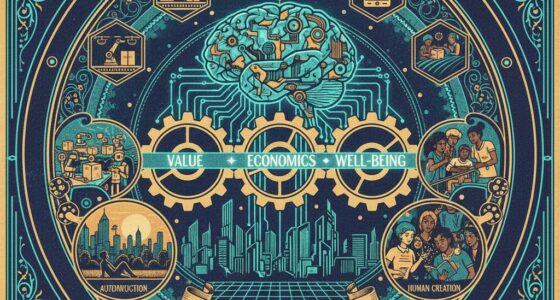
KPMG cut 2023 graduate intake from 1,399 to 942 — a 29% drop. Deloitte cut graduate hiring 18%, EY 11%, PwC 6%. Goldman Sachs and Morgan Stanley are testing AI tools that could replace up to two-thirds of entry-level analyst positions. A small San Francisco law firm chose not to replace a departing eighth-year associate, leaned on AI, and saw staffing costs drop 27% with profits rising while billing fewer hours. BLS projects 0% paralegal/legal-assistant job growth 2024-2034 — quantity flat, skill depth rising. 44% of legal firms report needing AI expertise they don’t have. McKinsey is the structural contra-signal: +12% North America hiring in 2026 with explicit “expanding commitment to young talent” framing. The cohort-bifurcation hypothesis from software engineering holds in white-collar professional services — but with two structural distinctions: the displacement pattern is more empirically fragmented across sub-sectors, and the pipeline problem manifests as a longer 5-10 year partner-track / equity-track / senior-associate gap rather than the 2-5 year mid-level gap that defines software engineering.

Get tech for your team delivered free — and shop member deals
- Fast, free delivery on millions of items
- Access to Prime Big Deal Days deals on October 6–7
- Prime Video, Amazon Music and more included
By Thorsten Meyer — May 2026
This is Atlas Essay 03 — the second Dimension 1 empirical-evidence sector forensic in the Post-Labor Transition Atlas, and the first test of the cohort-bifurcation hypothesis from Essay 02 (software engineering · the canonical case). Essay 01 established the four-dimension architecture; Essay 02 produced the cohort-bifurcation pattern (junior cohort displaced · senior cohort augmented · pipeline collapsing 2027-2029) as the empirical signature of Interpretation 2 from the framework’s four structural interpretations. Essay 03 tests whether the same pattern holds in white-collar professional services — the second-most-documented sector after software engineering.
The structural argument I want to make: the cohort-bifurcation hypothesis from software engineering holds in white-collar professional services, but with two structurally significant distinctions. First, the empirical evidence is more fragmented across the four sub-sectors documented in this essay (legal · investment banking · consulting · Big 4 accounting). Each sub-sector exhibits the bifurcation pattern, but at different intensities and with different sub-sector-specific dynamics. Second, the pipeline problem manifests differently than software engineering’s 2027-2029 mid-level gap. White-collar professional services has a 5-10 year partner-track / equity-track gap — the structural mechanism that previously required 5-8 years of junior associate apprenticeship to develop the senior partner skill set is being eroded, with a longer-horizon structural consequence.
The headline empirical finding: white-collar professional services operationally confirms the cohort-bifurcation hypothesis from Essay 02 — but the structural-empirical pattern is more structurally fragmented than software engineering. The Big 4 accounting sub-sector shows clear 6-29% graduate intake reductions (KPMG -29%, Deloitte -18%, EY -11%, PwC -6%). The investment-banking sub-sector shows Goldman Sachs and Morgan Stanley testing AI tools that could replace up to 2/3 of entry-level analyst positions. The legal sub-sector shows lagging aggregate-employment displacement signals (NALP 93.4% law-school employment rate, 13% increase in law-firm graduates 2023-2024) alongside the small-firm AI-substitution case studies. The consulting sub-sector shows the McKinsey contra-signal (+12% North America hiring 2026) against the broader industry pattern. The cohort-bifurcation hypothesis is empirically supported but with sub-sector heterogeneity that the Atlas attribution-rigor framework needs to crystallize.
This essay walks the empirical evidence across the four sub-sectors (legal · investment banking · consulting · Big 4 accounting), the cohort-bifurcation pattern test (junior cohort + senior cohort + pipeline within each sub-sector), the attribution-rigor framework specific to professional services (macroeconomic + AI-tool maturation + cost-pressure + pyramid-model dynamics), and the integrative observations about how the pipeline problem manifests with a longer 5-10 year horizon than software engineering.
White-collar
professional services.
The Tier 1 displacement.
KPMG -29% · Deloitte -18% · EY -11% · PwC -6% graduate intake reductions · Goldman Sachs + Morgan Stanley AI testing could replace 2/3 entry-level analysts · BLS 0% paralegal growth 2024-2034 · McKinsey +12% contra-signal. The cohort-bifurcation hypothesis confirmed with sub-sector heterogeneity that strengthens the framework.
This is Atlas Essay 03 — the second Dimension 1 sector forensic, and the first test of Essay 02’s cohort-bifurcation hypothesis. White-collar professional services is the Tier 1 displacement empirically confirmed — but with two structural distinctions from software engineering. The empirical evidence is fragmented across four sub-sectors: Big 4 accounting (cleanest 6-29% graduate intake reductions) Investment banking (compression not extinction · Goldman + Morgan Stanley AI testing) Consulting (fragmented · McKinsey +12% contra-signal) Legal (lagging aggregate signals · emerging firm-level restructuring). The pipeline problem horizon is structurally longer: 5-10 year partner-track / equity-track gap 2030-2035+ vs software engineering’s 2-5 year 2027-2029 mid-level gap. The attribution-rigor framework extends from three factors to four — pyramid-model pressure is the professional-services-specific factor.
Four sub-sectors. Intensity gradient.
White-collar professional services is the second-most-documented sector for AI-driven labor displacement after software engineering. The empirical evidence is structurally fragmented across four sub-sectors with different intensities — the heterogeneity itself is the structural signature.
signal
framing
pattern
aggregate
As an affiliate, we earn on qualifying purchases.
Three cohorts. Pattern confirmed.
The cohort-bifurcation hypothesis from Essay 02 (junior cohort displaced · senior cohort augmented · pipeline collapsing) operationally tested across all four sub-sectors. Pattern empirically supported with sub-sector heterogeneity in intensity but consistent in structural form.
As an affiliate, we earn on qualifying purchases.
Four factors. Pyramid pressure added.
Essay 02 established three converging factors driving the cohort-bifurcation in software engineering. Essay 03 adds the fourth factor: pyramid-model pressure is structurally specific to professional services and not present in software engineering. The Atlas’s attribution-rigor framework operates sector-by-sector.
specific
professional services automation tools
As an affiliate, we earn on qualifying purchases.
As an affiliate, we earn on qualifying purchases.
Pipeline gap. 5-10 years.
The pipeline problem manifests differently in professional services than software engineering. The 5-8 year associate-to-partner apprenticeship model produces a structurally longer pipeline-gap horizon: 2030-2035+ partner-track / equity-track gap. Both are cohort-bifurcation second-order effects, but the horizon difference is structurally significant.
White-collar professional services is the Tier 1 displacement empirically confirmed. The cohort-bifurcation hypothesis from Essay 02 holds across all four sub-sectors documented — Big 4 accounting cleanest, investment banking through compression framing, consulting fragmented with McKinsey contra-signal, legal lagging at aggregate level but restructuring at firm level. The sub-sector heterogeneity is the structural signature, not a deviation from it. The pipeline problem manifests with a structurally longer 5-10 year horizon — 2030-2035+ partner-track / equity-track gap. The attribution-rigor framework extends to four factors with pyramid-model pressure as the sector-specific factor. Two of four Phase 1 sector forensics shipped. Both support the cohort-bifurcation hypothesis. The structural-empirical pattern is robust.
As an affiliate, we earn on qualifying purchases.
I · The empirical evidence base · four sub-sectors documented
The factual baseline before the cohort-bifurcation test. White-collar professional services is the second-most-documented sector for AI-driven labor displacement after software engineering. The empirical evidence base spans four operationally distinct sub-sectors.
Sub-sector 1 · Big 4 accounting · the clearest graduate-intake reductions
Per Accountancy Age coverage of Big 4 graduate hiring:
The Big 4 graduate intake reductions are empirically clear and quantified:
- KPMG · 29% reduction · 2023 graduate intake cut from 1,399 to 942 (steepest reduction across the Big 4)
- Deloitte · 18% reduction · graduate hiring cut substantially
- EY · 11% reduction · graduate hiring cut moderately
- PwC · 6% reduction · graduate hiring cut modestly
The combined Big 4 scale context: the four firms collectively employ 1.5 million professionals across 150+ countries and generated $220+ billion in combined global revenue in 2025 per Road to Offer Big 4 consulting analysis. At this scale, even modest percentage reductions translate to thousands of fewer graduate hires annually.
The structural mechanism: AI tools (Microsoft Copilot for audit · Deloitte’s PairD · PwC’s ChatPwC · EY.ai · KPMG Clara) have made first-pass financial statement review, audit-evidence gathering, contract analysis, and routine compliance work substantially automatable. The graduate intake reductions are concentrated in audit and advisory roles where the AI-augmentable task share is highest. The Big 4 sub-sector shows the cleanest empirical-evidence support for the cohort-bifurcation hypothesis.
Sub-sector 2 · Investment banking · the structural compression
Per Wall Street Oasis analyst hiring discussion, the CIO.com financial AI analysis, the Boston Institute of Analytics investment-banking 2026 analysis, the Whitehat SEO AI in Investment Banking 2026, and the American Banker 2026 AI Talent Shift survey:
Goldman Sachs and Morgan Stanley are testing AI tools that could replace up to two-thirds of entry-level analyst positions (per the New York Times report cited in CIO.com). The structural mechanism: generative AI can compile and interpret reports, crunch numbers and statistics in seconds — the work that previously required hours of analyst time.
The Wall Street Oasis insider framing crystallizes the pattern more accurately than the headline: “AI giving banks an excuse to hire fewer analysts is already happening faster than AI replacing analysts. Same analyst hours, smaller classes, faster expected ramp. So I’d frame the 3-5 year risk as compression, not extinction.” This is the structural compression framing — analyst classes smaller than pre-2023 levels at several banks · deal activity recovering 2026 · hours not declining · AI helping with slide-drafting + data-pulling + analysis-acceleration but teams leaner.
The American Banker 2026 AI Talent Shift survey (206 banking professionals): 1/3 of big banks forecasting layoffs ahead · payments departments seeing headcount boosts · risk + compliance moderate layoffs · sales + software engineering + AI engineering roles being added. The cohort-bifurcation pattern is empirically supported in investment banking with the structural-compression framing as the operational reality.
Sub-sector 3 · Consulting · the fragmented pattern with McKinsey contra-signal
Per Bloomberg Businessweek May 1, 2026 issue on consulting entry-level hiring and Web Pro News McKinsey 2026 hiring analysis:
The Bloomberg Businessweek piece crystallizes the consulting cohort-displacement pattern through a Princeton undergraduate quote: “I want to be integral, and right now it’s not very clear that you will be integral as an analyst anymore. Those entry-level roles are maybe slowly becoming obsolete.” (Ezekiel Akinsanya, Princeton 2026 graduate)
The McKinsey contra-signal is structurally significant: McKinsey announced +12% North America hiring increase for 2026 with explicit “expanding commitment to young talent” framing. Eric Kutcher (McKinsey North America chair): “We’re not just maintaining our commitment to young talent; we’re expanding it.”
The structural interpretation: the McKinsey contra-signal does not refute the cohort-bifurcation hypothesis. It is one firm’s strategic differentiation against the broader industry pattern. McKinsey’s framing — entry-level hires as crucial for “innovating alongside algorithms” — operationally bets that AI-fluent junior consultants will become the firm’s competitive advantage. This is structurally similar to the “AI-orchestrating architect” pattern from software engineering’s senior cohort: a strategic-positioning bet on AI-fluency rather than AI-replacement. The McKinsey contra-signal does not refute the cohort-bifurcation hypothesis at the industry level.
Sub-sector 4 · Legal · the lagging displacement signals
Per MIT Technology Review legal AI analysis, The Agency Recruiting 2026 legal hiring trends, Global Law Lists data-driven analysis, Artificial Lawyer 2026 predictions, and Paralegal Edu 2026 job security analysis:
The legal sub-sector shows the most empirically fragmented pattern:
- NALP (National Association for Law Placement) 2024: 93.4% of law school graduates employed within 10 months of graduation — highest rate on record
- Law firms graduate hiring +13% from 2023 to 2024 (counter-evidence to cohort-displacement)
- Paralegal unemployment ~1.9% · one of tightest talent markets in legal profession
- BLS projection 2024-2034: 0% growth in paralegal/legal-assistant jobs · 39,300 annual job openings · 367,220 currently employed · median salary $61,010
The qualitative case-study evidence is structurally different:
- Small San Francisco law firm chose not to replace departing eighth-year associate, leaned on AI → 27% staffing-cost drop + profits up while billing fewer hours
- AI removing the work that justified large junior classes: first-pass document review · contract analysis · legal research · paralegal task automation
- 44% of legal firms report needing AI expertise they don’t have (legal engineer / legal technologist roles emerging)
- 39% of firms flag algorithm transparency as concern (black-box AI tension with legal-profession reasoned-analysis norms)
The structural interpretation: the legal sub-sector exhibits lagging displacement signals at the aggregate-employment level alongside emerging firm-level restructuring that the BLS lagging data has not yet captured. The MIT Technology Review framing — “AI might not be coming for lawyers’ jobs anytime soon” — operates on the lagging-aggregate-data signal. The qualitative case studies suggest the cohort-bifurcation pattern is emerging but not yet visible in BLS data. The legal sub-sector is the structural test case for whether the cohort-bifurcation pattern is currently emerging or has not yet materialized.
II · The cohort-bifurcation hypothesis test · sub-sector-by-sub-sector
The structural-empirical pattern test. Essay 02’s cohort-bifurcation hypothesis (junior cohort displaced · senior cohort augmented · pipeline collapsing) operationally tested across the four professional services sub-sectors.
Junior cohort displacement · empirically supported across all four sub-sectors
The junior cohort displacement signal is present in all four sub-sectors but at structurally different intensities:
- Big 4 accounting · 6-29% graduate intake reductions · structurally clearest empirical signal
- Investment banking · analyst class compression · “smaller than pre-2023 levels” · Goldman Sachs and Morgan Stanley AI testing
- Consulting · fragmented · McKinsey contra-signal · industry-wide entry-level pressure
- Legal · lagging aggregate signals (NALP +13% 2023-2024) · emerging firm-level restructuring · BLS 0% paralegal growth projection
The structural-pattern observation: junior cohort displacement is empirically supported in white-collar professional services but the intensity gradient runs from Big 4 accounting (clearest) → investment banking (compression) → consulting (fragmented with contra-signal) → legal (lagging). This is the structural distinction from software engineering, where the junior cohort displacement signal was uniform at ~40% across multiple sources.
Senior cohort augmentation · empirically supported with sub-sector-specific patterns
The senior cohort augmentation signal manifests differently in professional services than software engineering:
- Big 4 accounting · partners doing more work with leaner teams · AI-augmented audit/advisory workflows · firm revenue rising while graduate intake declining
- Investment banking · senior bankers + AI tools · “same analyst hours, smaller classes” · revenue and deal flow recovering 2026 · senior banker compensation rising
- Consulting · senior consultants directing AI workflows · firm revenues holding · leverage ratios shifting
- Legal · partner-level work expanding (firm revenues rising in AI-related practice areas — M&A · investment · litigation · IP) · paralegal responsibilities expanding into junior-associate territory · “Even if all that work done by trainees and paralegals disappears” (Artificial Lawyer 2026 predictions)
The structural-pattern observation: senior cohort augmentation is empirically supported across all four sub-sectors but operationally different from software engineering. In software engineering, the senior augmentation pattern produces the “one-person software factory” — a senior engineer 5-10× more productive with AI tools. In professional services, the senior augmentation pattern produces the AI-augmented partner with restructured leverage ratios — fewer juniors per partner, more AI tools, sustained partner compensation, sustained firm revenue.
Pipeline collapsing · the structurally distinct long-horizon problem
The pipeline problem in professional services manifests with a structurally distinct longer horizon than software engineering.
Software engineering pipeline: 2-5 year mid-level engineer gap (2027-2029).
Professional services pipeline: 5-10 year partner-track / equity-track gap (2030-2035+).
The structural mechanism per Artificial Lawyer 2026 predictions and V7 Labs AI in legal practice guide:
“The standard model at law firms, especially big firms, has been to hire a flock of bright young associates each year, throw massive amounts of routine work at them (document review, legal research, diligence, basic drafting), and let them learn by doing grunt work under supervision, all while billing clients for many of those hours. This pyramid model has already been under pressure from clients demanding efficiency, and now AI is accelerating its reimagining. Firms may not need, or be willing to pay for, quite so many junior hours as before.”
The structural significance: professional services’ partnership/equity model depends on a 5-8 year associate-to-partner pipeline. If junior associate hiring contracts in 2024-2026, the firms creating that contraction will not have the equity-track senior associate population to make partner in 2030-2034. This is the structurally distinct second-order effect that runs parallel to software engineering’s 2027-2029 mid-level engineer gap but on a longer 5-10 year horizon.
The pyramid-model erosion is the structural mechanism. Pyramids that rely on junior-associate billable hours are restructuring into leaner, AI-augmented teams where the partner-track ratio compresses. The long-term implication: fewer new partners per cohort entering 2030-2034 · structural compression in partnership economics · the “rare partnership offer” becoming structurally rarer.
III · The attribution-rigor framework · macroeconomic + AI-tool + cost-pressure + pyramid-model
The analytical decomposition Essay 02 introduced extended to professional services. The cohort-bifurcation pattern in professional services is structurally driven by four converging factors — one additional factor beyond software engineering’s three.
Factor 1 · Macroeconomic · the cost-pressure baseline
The same 2023-2024 interest rate hikes + capital crunch that drove software engineering hiring freezes drove professional services cost-cutting. Per Accountancy Age coverage of Big 4 graduate hiring: “These moves come amid wider cost-cutting efforts across the sector, as firms look to maintain partner returns in the face of a subdued consulting market and tightened client budgets.”
The macroeconomic factor is structurally identical to software engineering — the 2023-2024 macroeconomic downturn would have produced some graduate-intake reduction even without AI tool maturation.
Factor 2 · AI-tool maturation · the operational substitution
The AI-tool maturation factor in professional services is structurally similar to software engineering but with different specific tools: GitHub Copilot equivalent in legal = Harvey · Casetext CoCounsel · Thomson Reuters CoCounsel · Lexis+ AI · Spellbook · etc. Big 4 accounting equivalent = Microsoft Copilot for audit · Deloitte’s PairD · PwC’s ChatPwC · EY.ai · KPMG Clara. Investment banking equivalent = JPMorgan’s IndexGPT · Morgan Stanley’s AI @ Morgan Stanley Assistant · Goldman Sachs internal AI tools.
The structural pattern: AI tools made the junior-associate / junior-analyst / junior-auditor task set operationally substitutable. The macroeconomic pressure created the incentive to substitute. The combination produced the observed displacement.
Factor 3 · Cohort-specific compounding · entry-level positions structurally most exposed
Same as software engineering. Entry-level positions face both macroeconomic pressure and AI-tool substitution simultaneously. The cohort-bifurcation amplifies the other two factors.
Factor 4 · Pyramid-model pressure · the professional-services-specific structural factor
The fourth factor is structurally specific to professional services and not present in software engineering. The pyramid model (large junior cohorts billing routine work under senior supervision, generating leverage for partner compensation) has been under structural pressure from clients demanding efficiency for over a decade. AI tools accelerate this existing structural pressure.
Per V7 Labs and Artificial Lawyer analyses: the pyramid model was already eroding before AI. Clients have been demanding flat fees, value-based pricing, and reduced junior-hour billing for years. AI tools give firms the operational capability to deliver the same client outcomes with smaller pyramids. The cohort-bifurcation in professional services is partly the acceleration of a pre-existing structural trend that AI tools enable rather than initiate.
This is structurally significant for attribution rigor. The 6-29% Big 4 graduate intake reductions are not purely AI-driven — they are the intersection of macroeconomic pressure + AI-tool substitution + cohort-specific compounding + accelerated pyramid-model erosion. The Atlas operates on attribution rigor: naming each component rather than conflating them.
IV · The integrative observations · linking back to Essay 01 and Essay 02
The structural-pattern findings the white-collar professional services forensic produces for the Atlas framework. The cohort-bifurcation hypothesis is empirically supported but with sub-sector heterogeneity that strengthens rather than weakens the Atlas framework’s analytical discipline.
The cohort-bifurcation hypothesis · empirically supported
The cohort-bifurcation pattern (junior cohort displaced + senior cohort augmented + pipeline collapsing) is empirically supported in white-collar professional services across all four sub-sectors documented. The intensity varies — Big 4 accounting clearest, investment banking through compression framing, consulting with McKinsey contra-signal, legal with lagging aggregate signals — but the structural pattern holds.
The Interpretation 2 confirmation · empirically extended
The “transition arriving slowly with heterogeneous effects” interpretation from Essay 01’s framework is empirically extended. Software engineering produced the empirical signature. White-collar professional services produces a more structurally heterogeneous version of the same signature — the heterogeneity is itself the signature. Different sub-sectors experiencing the cohort-bifurcation at different intensities is the empirical reality, not a deviation from it.
The pipeline problem · the longer 5-10 year horizon
The professional services pipeline problem (5-10 year partner-track / equity-track gap, 2030-2035+) is structurally distinct from software engineering’s pipeline problem (2-5 year mid-level engineer gap, 2027-2029). Both are cohort-bifurcation second-order effects. Both are structurally emerging risks. The horizon difference is the structural distinction the Atlas framework crystallizes.
The Phase 1 synthesis essay (Essay 06) will integrate both pipeline horizons as structurally distinct manifestations of the same underlying mechanism: junior cohort hiring contraction in 2024-2026 → mid-level/senior-associate population gap 2027-2035+.
The attribution-rigor extension · four factors not three
The pyramid-model pressure factor is structurally specific to professional services. Essay 02 established three converging factors (macroeconomic + AI-tool maturation + cohort-specific compounding). Essay 03 adds the fourth (pyramid-model pressure). The Atlas’s attribution-rigor framework operates sector-by-sector — each sector forensic produces sector-specific attribution decomposition. The Phase 1 synthesis essay will integrate the cross-sector attribution patterns.
The Phase 1 progress observation
Two of four Dimension 1 sector forensics shipped. Both support the cohort-bifurcation hypothesis. The structural-pattern is empirically robust across the most-documented and second-most-documented sectors. Essay 04 (Customer service + BPO · operational-scale displacement) and Essay 05 (Creative industries · the bifurcated reality) will test whether the pattern holds in sectors with structurally different operational dynamics.
V · The closing argument · what the Tier 1 displacement crystallizes
The integrative observation Essay 03 produces for the Atlas framework. White-collar professional services is the Tier 1 displacement empirically confirmed — the cohort-bifurcation hypothesis from Essay 02 holds with sub-sector heterogeneity that strengthens the framework’s analytical discipline rather than weakening it.
The empirical evidence crystallized:
- Big 4 accounting: KPMG -29% / Deloitte -18% / EY -11% / PwC -6% graduate intake reductions
- Investment banking: Goldman Sachs + Morgan Stanley testing AI tools that could replace up to 2/3 of entry-level analyst positions · “compression not extinction” framing
- Consulting: fragmented industry pattern · McKinsey +12% contra-signal · Princeton-graduate “entry-level roles maybe slowly becoming obsolete” quote
- Legal: lagging aggregate signals (NALP 93.4% + 13% law-firm graduates 2023-2024) alongside emerging firm-level restructuring (small SF firm 27% cost reduction) · BLS 0% paralegal growth 2024-2034 · 44% of legal firms need AI expertise they don’t have
The cohort-bifurcation hypothesis confirmation:
- Junior cohort displacement empirically supported across all four sub-sectors with intensity gradient (Big 4 clearest → investment banking compression → consulting fragmented → legal lagging)
- Senior cohort augmentation empirically supported with sub-sector-specific patterns (AI-augmented partners with restructured leverage ratios · sustained compensation · sustained firm revenue)
- Pipeline collapsing structurally distinct from software engineering · 5-10 year partner-track / equity-track gap 2030-2035+ · pyramid-model erosion is the structural mechanism
The attribution-rigor framework extended:
- Macroeconomic · 2023-2024 interest rate hikes + capital crunch · same as software engineering
- AI-tool maturation · Harvey · Casetext · Microsoft Copilot for audit · IndexGPT · operational substitutability achieved 2024-2026
- Cohort-specific compounding · entry-level positions structurally most exposed · same as software engineering
- Pyramid-model pressure · the professional-services-specific factor · pre-existing structural erosion AI accelerates rather than initiates
For the Atlas framework specifically:
- The cohort-bifurcation hypothesis is empirically robust across the two most-documented sectors. Phase 1’s remaining sector forensics (customer service + BPO · creative industries) will test whether the pattern holds in sectors with structurally different operational dynamics.
- The sub-sector heterogeneity is the structural signature, not a deviation from it. Different sub-sectors experiencing the cohort-bifurcation at different intensities is the empirical reality. The Atlas operates on this empirical reality rather than smoothing it into a uniform-displacement claim.
- The pipeline problem has sector-specific horizons that the Phase 1 synthesis essay will integrate. Software engineering: 2027-2029 mid-level gap. Professional services: 2030-2035+ partner-track gap. The cross-sector pipeline integration is what Essay 06 will crystallize.
- The attribution-rigor framework is sector-specific. Three factors in software engineering, four factors in professional services. The Phase 1 synthesis essay will produce the cross-sector attribution framework that names which factors are universal (macroeconomic + AI-tool + cohort-specific) and which are sector-specific (pyramid-model in professional services · likely operational-scale in BPO · likely creative-skill-spectrum in creative industries).
That’s the read on white-collar professional services as the Tier 1 displacement empirically confirmed as of mid-May 2026 — twelve weeks before the August 2 EU AI Act enforcement window opens. The work is real across white-collar professional services. Big 4 graduate intake reductions are quantified and significant. Investment banking is structurally compressing. Consulting is fragmented with the McKinsey contra-signal. Legal is lagging at aggregate level but restructuring at firm level. The cohort-bifurcation hypothesis from Essay 02 holds — and the sub-sector heterogeneity strengthens the Atlas framework’s analytical discipline.
The Atlas framework’s empirical foundation is structurally robust. The next two sector forensics (Essay 04 customer service + BPO · Essay 05 creative industries) will complete Phase 1’s empirical-evidence base before the synthesis essay (Essay 06) crystallizes the cross-sector findings. The Tier 1 displacement is empirically confirmed.
About the Author
Thorsten Meyer is a Munich-based futurist, post-labor economist, and recipient of OpenAI’s 10 Billion Token Award. He spent two decades managing €1B+ portfolios in enterprise ICT before deciding that writing about the transition was more useful than managing quarterly slides through it. More at ThorstenMeyerAI.com.
Related Reading · the Post-Labor Transition Atlas
- Atlas Essay 01 · The Atlas opening · what the framework is · four-dimension architecture · six chromatic registers · four structural interpretations
- Atlas Essay 02 · Software engineering · the canonical case · cohort-bifurcation hypothesis crystallized · empirical-clay register
- This piece · Atlas Essay 03 · White-collar professional services · the Tier 1 displacement · labor-rose register
- Forthcoming · Atlas Essay 04 · Customer service + BPO · the operational-scale displacement · empirical-clay register
- Forthcoming · Atlas Essay 05 · Creative industries · the bifurcated reality · labor-rose register
- Forthcoming · Atlas Essay 06 · Phase 1 synthesis · what the four sectors crystallize · synthesis-deep register
Sources
Legal sub-sector
- The Agency Recruiting · 2026 Legal Hiring Trends AI Impact Law Firm Staffing · San Francisco firm 27% staffing-cost drop · paralegal 1.9% unemployment · legal ops emerging
- Global Law Lists · Will AI Replace Lawyers? Data-Driven Analysis 2026 · 44% need AI expertise · 39% algorithm transparency concern · legal engineer + legal technologist roles emerging
- Artificial Lawyer · Predictions 2026 · pyramid model erosion · “Even if all that work done by trainees and paralegals disappears” · M&A + investment + litigation revenue rising
- Paralegal Edu · Will AI Replace Paralegals? · BLS 39,300 annual openings · 367,220 employed · $61,010 median · 0% growth 2024-2034 projection
- MIT Technology Review · AI Might Not Be Coming For Lawyers’ Jobs Anytime Soon · NALP 93.4% law school graduates employed within 10 months 2024 · 13% increase in law-firm graduates 2023-2024
- V7 Labs · How AI Will Affect Lawyers: A Practical Guide for 2025 · pyramid model under pressure · class of 2024 82.2% full-time lawyer employment · firms may not need or pay for as many junior hours
- HazenTech · Will AI Replace Lawyers? · BLS 0% paralegal growth 2024-2034 · “quantity goes down, skill depth goes up”
Investment banking sub-sector
- Wall Street Oasis · Is AI Quietly Replacing Entry-Level Analysts · “compression not extinction” insider framing · analyst classes smaller than pre-2023 levels
- CIO.com · AI Poised to Replace Entry Level Positions at Large Financial Institutions · Goldman Sachs + Morgan Stanley AI testing · up to 2/3 of entry-level analyst positions potentially on chopping block · NYT report cited
- Boston Institute of Analytics · Investment Banking In 2026: How Automation Is Redefining Banking Careers · traditional model transformation · analysts performing complex tasks earlier
- Whitehat SEO · AI in Investment Banking 2026 · JPMorgan + Goldman Sachs + HSBC + Barclays AI deployment · Citigroup Financial Workforce Automation Report 2026 · McKinsey Investment Banking Talent Study
- American Banker · Banks Are Increasing Hiring in Age of AI · 2026 AI Talent Shift survey · 206 banking professionals · 1/3 big banks forecasting layoffs · payments + AI engineering hiring up
Consulting sub-sector
- Bloomberg Businessweek · AI Influences How McKinsey, BCG, Bain Hire for Entry-Level Consulting Jobs · May 1, 2026 issue · Princeton-graduate quote · entry-level roles “maybe slowly becoming obsolete”
- Web Pro News · McKinsey Plans 12% Hiring Boost in North America for 2026 Amid AI Rise · Eric Kutcher McKinsey North America chair · “expanding commitment to young talent” framing · 1% AI maturity finding · human-AI symbiosis bet
- Road to Offer · Big 4 Consulting Firms 2026 · 1.5M professionals · 150+ countries · $220B+ combined revenue 2025
Big 4 accounting sub-sector
- Accountancy Age · The Big Four’s New Favourite Grad is AI · KPMG -29% (1,399 → 942) · Deloitte -18% · EY -11% · PwC -6% · cost-cutting amid subdued consulting market
Key reference figures crystallized
- Big 4 graduate intake reductions · KPMG -29% · Deloitte -18% · EY -11% · PwC -6%
- KPMG specific reduction · 1,399 → 942 graduate intake (2023)
- Big 4 combined scale · 1.5M professionals · 150+ countries · $220B+ combined revenue 2025
- Goldman Sachs + Morgan Stanley · AI testing could replace up to 2/3 of entry-level analyst positions
- Investment banking framing · “compression not extinction” · smaller analyst classes · same analyst hours
- American Banker 2026 AI Talent Shift survey · 206 banking professionals · 1/3 big banks forecasting layoffs
- McKinsey contra-signal · +12% North America hiring 2026 · “expanding commitment to young talent” (Eric Kutcher)
- Bloomberg Businessweek · May 1, 2026 issue · Princeton graduate “entry-level roles maybe slowly becoming obsolete”
- Legal sub-sector NALP 2024 · 93.4% law school graduates employed within 10 months · highest rate on record
- Legal sub-sector law firm graduates · +13% from 2023 to 2024
- Paralegal unemployment · ~1.9% · one of tightest talent markets
- BLS paralegal projection 2024-2034 · 0% growth · 39,300 annual openings · 367,220 currently employed · $61,010 median
- Small SF law firm case study · 27% staffing-cost drop + profits up after AI substitution
- Legal AI talent gap · 44% of firms need AI expertise they don’t have
- Algorithm transparency concern · 39% of legal firms
- The cohort-bifurcation hypothesis · confirmed across all four sub-sectors
- The sub-sector heterogeneity intensity gradient · Big 4 (clearest) → investment banking → consulting (with contra-signal) → legal (lagging)
- The pipeline problem horizon · 5-10 year partner-track / equity-track gap 2030-2035+
- The attribution-rigor framework · four factors · macroeconomic + AI-tool maturation + cohort-specific compounding + pyramid-model pressure (sector-specific)
- Interpretation 2 confirmed · transition arriving slowly with heterogeneous effects · empirically dominant
Halloween Picks
halloween
As an affiliate, we earn on qualifying purchases.