
AI still inherits human bias because it learns from data shaped by societal prejudices, stereotypes, and flawed assumptions. Algorithms mirror these biases, often amplifying discrimination in sectors like healthcare, hiring, and justice. Despite promises of fairness, implicit biases are tough to eliminate because they operate subconsciously and are embedded in both data and models. To understand why true unbiased AI remains a challenge, explore how biases originate and persist within these complex systems.
Key Takeaways
- AI inherits human bias because it learns from societal data that contains stereotypes and prejudices.
- Bias in training data leads to models reinforcing existing societal inequalities and stereotypes.
- Implicit biases operate subconsciously in humans and are embedded in data, making them difficult to eliminate.
- Current regulation gaps and lack of comprehensive fairness standards allow biased AI systems to persist.
- Ongoing challenges in bias detection, data diversity, and model monitoring hinder the creation of truly unbiased AI.

Slow AI: Knowing When to Use AI and When to Leave It Alone
As an affiliate, we earn on qualifying purchases.
As an affiliate, we earn on qualifying purchases.
The Roots of Bias in Training Data

The roots of bias in training data stem from the societal and cultural prejudices embedded in the information used to develop AI models. When you feed AI systems data from real-world sources, you’re also passing along existing stereotypes, discrimination, and uneven representations. For example, if historical hiring data favors one gender or race, the AI learns to replicate those patterns, even if unintentionally. Data collection methods often reflect societal inequalities, which then become baked into the model. As a result, AI systems can reinforce biases rather than challenge them. You can’t simply remove bias after training; it’s ingrained from the start. To create fairer AI, you need to scrutinize and diversify the data, ensuring it accurately represents all groups without perpetuating harmful stereotypes. Additionally, understanding the training data sources helps identify where biases may originate and how to address them effectively.

Transforming Teaching With Generative AI: A Comprehensive Guide for Educators
As an affiliate, we earn on qualifying purchases.
As an affiliate, we earn on qualifying purchases.
How Algorithms Perpetuate Prejudice

How do algorithms end up reinforcing existing prejudices? You might think they’re objective, but they learn from biased data and human-designed rules. When training data contains societal biases, algorithms pick up patterns that mirror those prejudices. If models are coded with flawed assumptions, they reinforce stereotypes instead of challenging them. This cycle perpetuates discrimination, often unintentionally. Here’s a breakdown:
| Bias Source | Effect |
|---|---|
| Data Bias | Reflects societal stereotypes |
| Model Design Flaws | Amplifies existing prejudices |
| Feedback Loops | Reinforces bias through use |
| Labeling Errors | Misguides decision-making |
| Lack of Diversity | Limits perspective, deepens bias |
These factors make it difficult for algorithms to break free from prejudice without deliberate intervention, especially since they learn from biased training data that often contains societal stereotypes.

Principles of Agentic AI Governance: A Playbook for Managing AI Risk, Fairness, and Compliance (Agentic Governance and Architecture)
As an affiliate, we earn on qualifying purchases.
As an affiliate, we earn on qualifying purchases.
The Impact of Bias in Critical Sectors
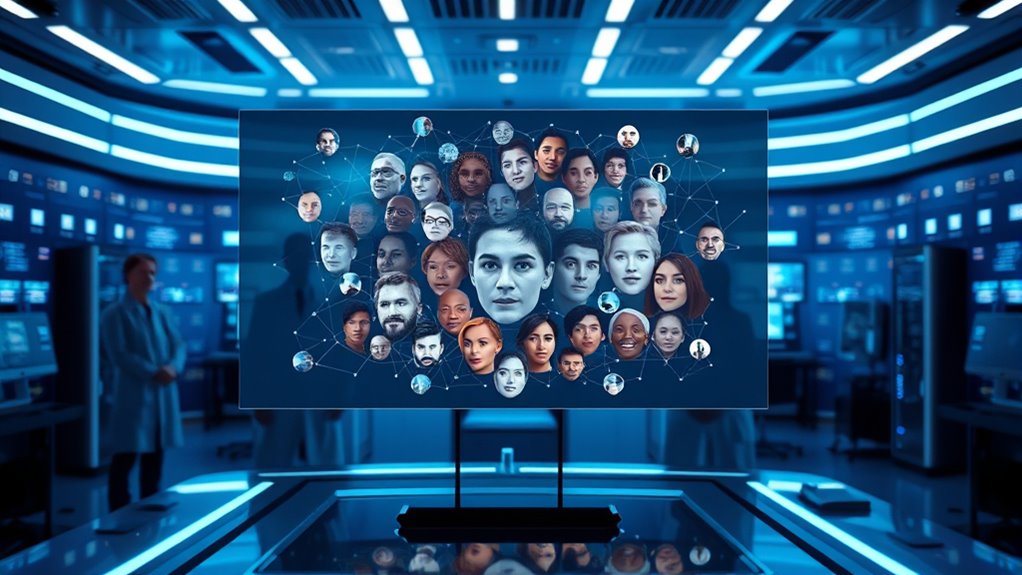
Bias in AI profoundly impacts vital sectors like healthcare, hiring, and insurance, where decisions directly affect people’s lives. In healthcare, biased algorithms can lead to misdiagnoses or unequal treatment, increasing mortality rates among marginalized groups. In hiring, AI systems may favor certain demographics, perpetuating workplace inequalities. Insurance companies relying on biased models might deny coverage or set higher premiums for specific populations, worsening social disparities. These biases can result in legal challenges and damage public trust. You may not realize how deeply embedded prejudices influence these systems, often reinforcing societal inequalities rather than reducing them. Additionally, the use of high-quality projectors in medical training and telemedicine can help mitigate some disparities by providing clearer visuals for diagnosis and education. As AI becomes more integrated into essential services, addressing bias is essential to ensure fair, equitable outcomes that genuinely serve all individuals, not just the privileged.

HONEYSEW Bias Tape Maker Kits All 5 Sizes 6MM 9MM 12MM 18MM 25MM Binding Foot Craft Clips Awl Quilter's Pin
- Includes 5 Bias Tape Sizes: 6mm to 25mm options
- Complete Craft Kit: Clips, binder foot, awl, pins
- Universal Binder Foot: Fits Brother, Babylock, Janome, Kenmore, Singer
As an affiliate, we earn on qualifying purchases.
As an affiliate, we earn on qualifying purchases.
Implicit Bias and Its Persistent Nature

Despite advances in AI development, implicit bias remains a stubborn challenge because it operates beneath conscious awareness, making it difficult to detect and eliminate. You may think you’re addressing bias, but these hidden prejudices persist, subtly influencing AI outputs. This is because implicit bias stems from societal stereotypes embedded in training data and algorithms, often without your awareness. To illustrate, consider the following:
| Source | Effect |
|---|---|
| Societal stereotypes | Reinforced in data |
| Model training | Unconscious bias transfer |
| User interactions | Amplified biases |
These factors perpetuate bias despite efforts to create fair AI. Recognizing the persistent nature of implicit bias is vital to developing strategies that truly mitigate its influence. Moreover, understanding how prophetic dreams can reveal subconscious perceptions highlights the importance of awareness in addressing hidden biases.
Challenges in Detecting and Eliminating Bias

Detecting and eliminating bias in AI systems remains a significant challenge because biases are often subtle and deeply embedded within data and algorithms. You might think that identifying bias is straightforward, but many biases are implicit, making them hard to spot. Data can reflect societal prejudices, and algorithms can inadvertently reinforce these biases without clear indicators. You’ll find that even rigorous testing may miss nuanced biases that only surface in specific contexts or populations. Updating models to reduce bias requires ongoing effort, yet this process is complicated by the complex nature of human biases and their representation in data. As a result, completely eliminating bias remains difficult, and many biases persist despite your best detection and mitigation efforts.
Limitations of Current Regulatory Measures

Current regulatory measures face significant hurdles in effectively addressing AI bias. Laws and guidelines are often vague or incomplete, making enforcement difficult. Many regulations lack specific standards for identifying and mitigating bias, leaving companies uncertain about compliance. Rapid AI development outpaces existing legal frameworks, creating gaps that allow biased systems to persist. Additionally, regulators struggle with technical complexity, as understanding and evaluating AI models require specialized expertise. International differences in regulation further complicate efforts, leading to inconsistent standards. Companies may exploit these gaps or delay action, knowing enforcement is weak. Without exhaustive, clear, and adaptable regulations, bias in AI remains unaddressed, risking continued harm and erosion of trust. Effective oversight demands a more precise, proactive regulatory approach aligned with technological progress. Recognizing the technical challenges involved in assessing AI models is essential for developing more effective regulatory strategies.
Advances and Obstacles in Developing Fair AI

Developing fair AI has seen significant progress thanks to innovative techniques and increased awareness, yet numerous obstacles still stand in the way. Researchers are creating methods like bias testing, diverse training datasets, and transparency measures. However, challenges remain, such as the complexity of bias and limited regulation. You’ll find that technological advances, like improved algorithms, help reduce bias but don’t eliminate it entirely. Here’s a quick overview:
| Technique | Progress | Challenge |
|---|---|---|
| Diverse Data Collection | Better representation | Data bias persists |
| Bias Testing | Detects bias effectively | Not foolproof |
| Algorithm Improvements | Reduce implicit bias | Still fallible |
| Regulatory Frameworks | Growing support | Lack comprehensive laws |
While strides are made, overcoming bias fully remains a work in progress. Additionally, understanding the nature of bias is essential for developing more equitable AI systems.
The Path Toward Truly Unbiased Artificial Intelligence
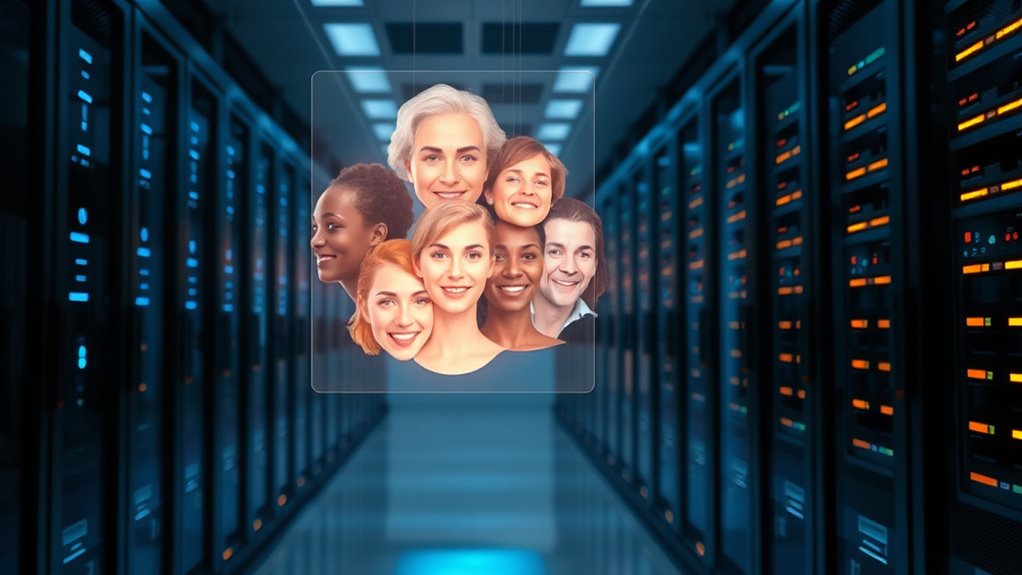
Achieving truly unbiased AI requires overcoming significant challenges like data diversity gaps, which can skew results. You also need to develop evolving evaluation methods that accurately measure bias across different contexts. Without addressing regulatory and ethical gaps, even the best efforts may fall short in creating fair AI systems. Additionally, ongoing research into AI vulnerabilities and biases highlights the importance of continuous monitoring of AI behavior to identify and mitigate emerging issues.
Data Diversity Challenges
One of the biggest hurdles on the path toward truly unbiased AI is ensuring data diversity. If your training data lacks representation from different demographics, cultures, or perspectives, your AI will inherit those gaps. Biases embedded in data reflect societal inequalities, making it difficult to create fair algorithms. Gathering diverse data isn’t just about quantity; quality matters too. You need data from various sources, regions, and communities to capture real-world complexity. However, collecting this data is challenging due to privacy concerns, access limitations, and the risk of reinforcing stereotypes. Without all-encompassing and balanced datasets, your AI risks perpetuating discrimination and inequality. Achieving true data diversity requires ongoing effort, transparency, and a commitment to addressing systemic biases at their roots. Additionally, understanding diverse genres and storytelling in media can provide insights into different cultural narratives that should be considered in data collection efforts.
Evolving Evaluation Methods
Evolving evaluation methods are essential for making AI truly unbiased because traditional testing often fails to detect subtle or implicit biases that persist within models. You need more than just accuracy metrics; you must develop extensive frameworks that assess fairness across diverse groups and contexts. Advanced techniques like fairness-aware benchmarks, counterfactual testing, and interpretability tools help identify hidden biases that standard evaluations overlook. Continuous monitoring during deployment is crucial, as biases can emerge over time. Combining quantitative metrics with qualitative assessments allows you to better understand how AI impacts different populations. These evolving evaluation methods drive transparency and accountability, pushing developers to refine models and reduce bias systematically. Incorporating self-understanding insights into model evaluation can further enhance fairness by aligning AI behavior with human values. This proactive approach is vital for building trust and ensuring AI serves everyone fairly.
Regulatory and Ethical Gaps
Have current regulatory frameworks kept pace with the rapid development of AI technology? Not quite. Regulations lag behind AI innovation, leaving critical ethical gaps. Existing laws often focus on data privacy or safety but don’t specifically address bias or discrimination embedded in AI systems. This creates loopholes where companies can deploy biased models without accountability. Ethical standards are also inconsistent across regions, making global enforcement difficult. Without clear, all-encompassing regulations, AI developers lack guidance on fairness standards. This ambiguity hampers efforts to curb bias and protect vulnerable groups. As AI continues to influence essential sectors like healthcare, hiring, and justice, closing these regulatory gaps becomes crucial. Otherwise, biases persist unchecked, undermining trust and perpetuating societal inequalities. Incorporating Antiques in country decor into AI training data might help mitigate bias by adding diverse perspectives, but current regulations still fall short of addressing such innovative approaches.
Frequently Asked Questions
Can AI Ever Be Completely Free of Human Bias?
AI can’t be completely free of human bias because it learns from data created by people, which reflects society’s existing prejudices. You might try to reduce bias through diverse data and testing, but implicit biases are subtle and ingrained. As you develop AI, you’ll face ongoing challenges in identifying and eliminating all bias, making it unlikely to achieve perfect neutrality. Continuous effort and regulation are essential to improve fairness over time.
How Do Cultural Differences Influence AI Bias?
You should recognize that cultural differences considerably shape AI bias because the data it learns from reflects societal norms and stereotypes unique to each culture. When training data is sourced globally, these biases can clash or reinforce, affecting AI outcomes. This means you need to carefully consider cultural context in data collection and model development to minimize bias and guarantee fair, culturally sensitive AI applications.
What Role Do Developers Play in Mitigating Bias?
Imagine you’re designing an AI system, and every line of code you write shapes its understanding. Your role is essential—you select diverse data, test for biases, and update models regularly. By actively monitoring for unintended prejudices and involving a diverse team, you help prevent bias from creeping in. Your commitment to responsible development directly influences AI fairness, building trust and reducing societal harm.
Are Biased AI Systems More Likely to Harm Certain Groups?
Yes, biased AI systems are more likely to harm certain groups. You might notice that these systems often reinforce stereotypes or make unfair decisions, especially affecting marginalized populations. When AI inherits societal biases, it can unintentionally discriminate in hiring, healthcare, or lending. This can lead to higher error rates, reduced opportunities, and social inequalities, making it essential for you to understand and address these biases to protect vulnerable groups.
How Can Consumers Identify Biased AI Products or Services?
To spot biased AI products, just play detective. Watch out for signs like inconsistent results, unfair treatment, or stereotypes popping up—kind of like that friend who always blames their mistakes on everyone else. Question any AI that favors certain groups or makes decisions that seem too perfect or too biased. Do your homework, read reviews, and stay skeptical—because if it sounds too good to be true, it probably is.
Conclusion
You can’t expect a mirror to reflect a perfect image when it’s clouded by smudges. Bias in AI is like that stubborn stain—clinging despite efforts to wipe it clean. While progress is possible, the road to truly unbiased AI is winding and filled with hurdles. But if you stay dedicated, keep questioning, and push for transparency, you can help clear the fog—guiding AI toward a future where it finally sees the world more clearly and fairly.