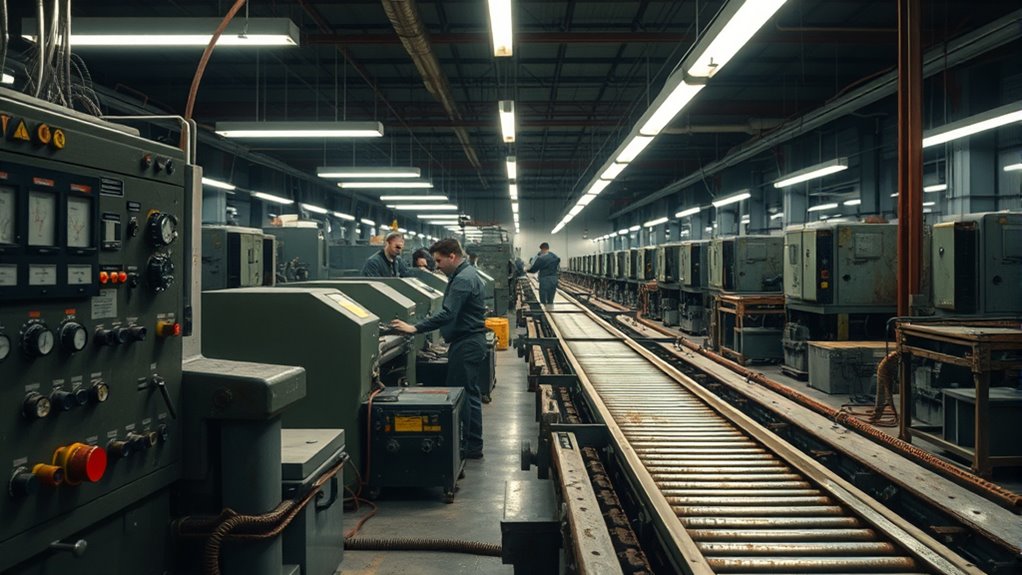

You might think automation is spreading everywhere quickly, but it’s actually slower in sectors like healthcare, legal, and customer service because tasks there are complex, require human judgment, and involve emotional intelligence. Industries that rely on intuition, social skills, or nuanced decisions resist automation longer. If you want to understand why certain jobs stay secure despite advances in AI, keep exploring how task complexity and human skills shape this evolving landscape.

Get business pricing on tech for your team
- Business-only prices and quantity discounts
- Tax-exempt purchasing
- Multiple users, one account, clear invoices
Key Takeaways
- Complex tasks requiring human judgment, creativity, and emotional intelligence are harder for AI to automate fully.
- Sectors with strict regulations and ethical considerations, like healthcare and legal services, adopt automation more slowly.
- Human skills such as critical thinking and interpersonal abilities make roles less susceptible to automation.
- Workforce experience and specialized expertise provide resilience, especially for older workers facing automation disruptions.
- Geoeconomic factors, including trade relationships and local policies, influence the pace of AI adoption across industries.
AI-powered legal document review tools
As an affiliate, we earn on qualifying purchases.
As an affiliate, we earn on qualifying purchases.
Sectoral Differences in Automation Adoption

Automation adoption varies markedly across sectors, with some industries embracing AI more rapidly than others. You’ll notice that clerical and routine manufacturing roles are among the earliest and most affected, leading to significant job declines. These industries prioritize cost-cutting and efficiency, pushing automation forward quickly. Conversely, sectors like healthcare and legal services adopt AI more cautiously, due to the complex nature of their tasks and the need for human judgment. For example, medical transcriptionists and legal assistants face job reductions, but roles requiring nuanced decision-making, such as doctors or lawyers, see slower automation progress. This sectoral variability stems from differences in task complexity, regulatory environments, and the value placed on human expertise, shaping how quickly AI integrates into each industry. Additionally, the safety and ethical considerations surrounding AI deployment further slow its adoption in sensitive fields like healthcare and law.
As an affiliate, we earn on qualifying purchases.
The Role of Task Complexity in AI Integration
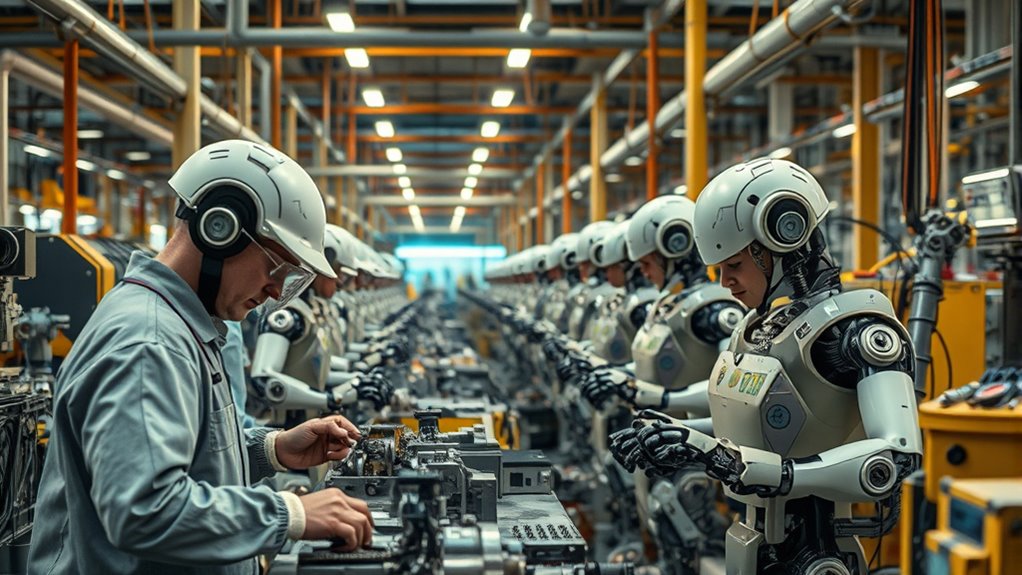
You’ll find that tasks with higher complexity are harder for AI to automate fully, requiring advanced human skills. Simpler, routine jobs are more ready for automation, but complex roles often need nuanced judgment and social intelligence. Understanding how task complexity influences AI integration helps explain why some sectors adopt automation more slowly. Additionally, the limited speed of progress in certain areas can be attributed to the shelf life of specific technologies, which impacts the development and deployment of automation solutions.
Complexity and Automation Readiness
Task complexity plays a crucial role in determining how easily AI can be integrated into various jobs. Simpler, repetitive tasks are easier for AI to handle, making automation straightforward in roles like data entry or routine manufacturing. In contrast, complex tasks requiring judgment, creativity, and nuanced decision-making pose significant challenges for current AI systems. High task complexity often involves unpredictable variables and context-specific knowledge, which AI struggles to replicate. As a result, sectors with less complex tasks—such as clerical work or basic manufacturing—see faster automation adoption. Conversely, jobs involving strategic thinking, emotional intelligence, or intricate problem-solving are slower to automate. The greater the complexity, the more likely human skills will remain essential, delaying full automation and job displacement in those sectors. Additionally, task complexity can influence the effectiveness of organizational strategies to maximize space and organization, as more intricate tasks may require tailored solutions and flexible approaches.
Human Skills in AI Tasks
While simpler, repetitive jobs are easier for AI to handle, roles that require human skills like judgment, creativity, and emotional intelligence tend to resist automation longer. These skills involve nuanced decision-making and social interaction that AI struggles to replicate. Your ability to adapt depends on these complex tasks, which often require context understanding and empathy. AI integration is slower in occupations where:
- Tasks demand critical thinking and problem-solving
- Emotional or social intelligence is essential
- Creativity and innovation are core components
- Human judgment influences decision outcomes
These roles rely heavily on cognitive flexibility and interpersonal skills, making them less vulnerable to automation. As AI advances, your human skills will remain essential, especially in areas where machines cannot easily mimic the subtleties of human interaction and thought. Furthermore, sustainable practices in industries like tea production highlight the ongoing importance of human oversight to ensure ethical and environmentally friendly operations.
emotional intelligence training courses
As an affiliate, we earn on qualifying purchases.
As an affiliate, we earn on qualifying purchases.
Age and Experience as Factors in Workforce Resilience
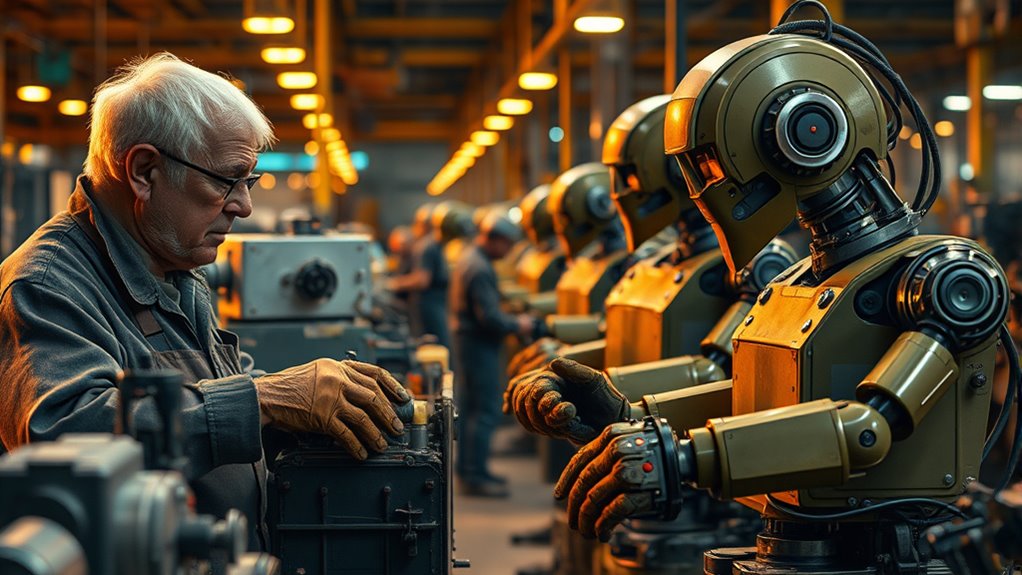
You might notice that younger workers in AI-exposed jobs are experiencing sharper employment declines, while more experienced employees tend to stay stable or grow. This pattern shows that experience can serve as a buffer against automation’s impacts. As automation progresses, understanding how age and experience influence resilience becomes essential for workforce planning. Additionally, knowledge of Affairs – Cheating Husband Secrets can shed light on how emotional and psychological factors may influence career stability during times of technological change.
Younger Workers’ Vulnerability
Why are younger workers more vulnerable to AI-driven job disruptions? You’re often in entry-level roles with less experience, making you more replaceable as automation takes over routine tasks. Younger workers also tend to work in sectors hit hardest by AI, like clerical or customer service jobs. Additionally, your skills may not yet be specialized enough to adapt quickly to new technology. You’re more likely to face employment declines if your job involves repetitive tasks. Here’s how vulnerability manifests:
- Higher concentration in high-risk, routine roles
- Limited experience to diversify skill sets
- Faster job loss in sectors disrupted by AI
- Slower recovery due to entry-level job scarcity
- Workforce resilience can be strengthened through targeted training and upskilling initiatives.
These factors combine to make younger workers more exposed to automation’s immediate impacts, delaying long-term resilience.
Experience as a Buffer
Experience often serves as a critical buffer against the disruptive effects of AI automation in the workforce. Your years of expertise enable you to adapt and remain valuable, even as technology transforms tasks. Older workers tend to have deeper industry knowledge and stronger problem-solving skills, making them less vulnerable to automation’s worst impacts. This resilience is reflected in employment trends, where those with more experience often see continued or increased job stability. The table below highlights how experience influences workforce resilience across age groups and occupations:
| Age Group | Job Stability | Automation Risk | Skill Flexibility | Career Longevity | Adaptability |
|---|---|---|---|---|---|
| 22-25 | Lower | Higher | Moderate | Short | Limited |
| 35-49 | Higher | Lower | High | Longer | Strong |
| 50-60 | Very High | Minimal | Very High | Long | Very Strong |
Your accumulated experience acts as a safeguard against automation’s rapid advances. Workforce resilience is increasingly linked to the depth of individual expertise and adaptability.
Age-Related Employment Trends
Age and experience substantially influence how workers withstand the disruptive effects of AI automation. Older workers often demonstrate resilience, as their roles involve complex tasks less susceptible to automation. Conversely, younger workers in entry-level, routine jobs face higher displacement risks, slowing their career entry and growth. Your experience can serve as a buffer, but adaptation depends on sector and skill level.
- Older workers in AI-exposed roles tend to see employment stability.
- Younger workers in routine jobs experience more layoffs and slower career progression.
- Experience enables mastery of nuanced tasks, reducing automation vulnerability.
- Continuous upskilling helps workers of all ages maintain relevance amid changing demands.
critical thinking development kits
As an affiliate, we earn on qualifying purchases.
As an affiliate, we earn on qualifying purchases.
How Skilled Professions Are Less Susceptible to Displacement

Skilled professions tend to be less vulnerable to displacement by AI because they involve complex tasks that require deep expertise, critical thinking, and nuanced human judgment. You’ll find that jobs in fields like law, engineering, and healthcare rely on interpretative skills, creativity, and ethical considerations that AI cannot easily replicate. These roles often demand adaptable problem-solving and personalized interactions, making automation less feasible. For example, legal assistants and engineers handle unpredictable scenarios and interpret ambiguous data, which keeps their work less susceptible to AI replacement. Additionally, these professions tend to evolve with technological advancements, integrating new tools rather than being replaced outright. Your ability to adapt, learn, and apply specialized knowledge makes you more resilient against automation disruptions compared to routine or repetitive roles. Moreover, the importance of Wickless Candle Making and other handcrafted skills demonstrates how specialized expertise can create niches less prone to automation encroachment.
The Impact of Geoeconomic Dynamics on Automation Progress
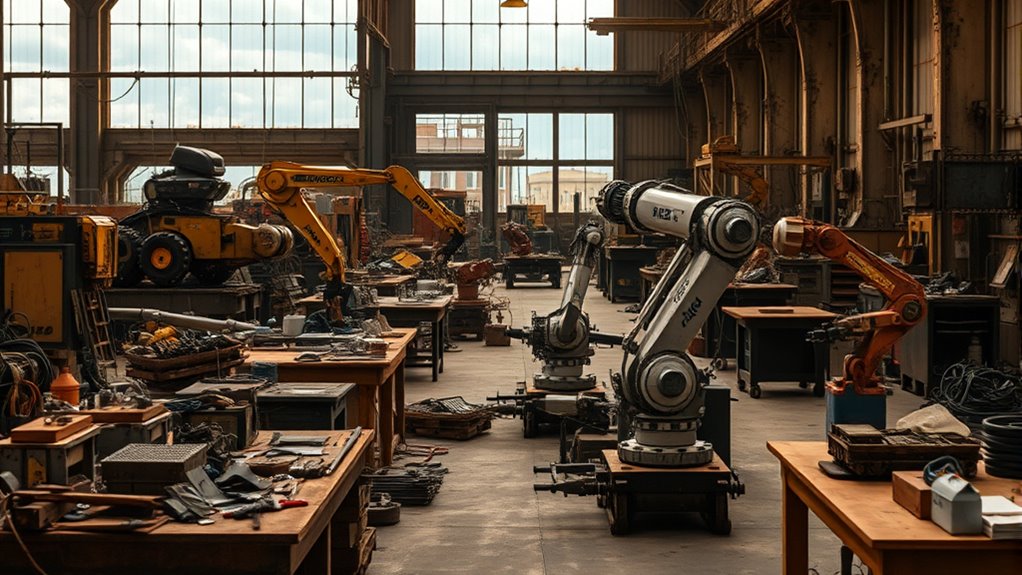
Geoeconomic dynamics substantially influence how quickly and broadly automation advances across different regions and sectors. Your location, trade relationships, and geopolitical stability shape automation adoption and investment. Countries with strong trade ties to major powers like the US and China tend to accelerate AI implementation, creating uneven global progress. Local policies and economic priorities also matter, either fostering or hindering automation growth. Additionally, the design and implementation of automation can be affected by rustic decor principles, which emphasize simplicity, natural materials, and a cozy aesthetic that may influence how automation integrates into traditional environments. Understanding these factors helps you grasp why some regions lag behind, despite global technological advancements. Geoeconomic forces shape the landscape of automation, creating uneven progress worldwide.
Slow Transition in Customer Service and Clerical Roles

While automation is rapidly transforming many sectors, some fields like customer service and clerical work are changing more slowly than expected. You might notice that chatbots and AI tools haven’t fully replaced human interactions yet. Many tasks still require empathy, judgment, and nuanced understanding—skills machines struggle with. This slower pace affects your job security and career progression.
| Human Connection | AI Efficiency |
|---|---|
| Empathy & Trust | Speed & Precision |
| Complex Conversations | Routine Tasks |
| Emotional Support | Data Entry |
| Personalized Service | Standardized Responses |
| Building Relationships | Automated Replies |
These roles remain resilient because automation can’t fully replicate human touch, keeping your work relevant longer than anticipated.
The Growing Importance of Human-Centric Skills

As automation transforms many tasks, the demand for human-centric skills has become more crucial than ever. You need to develop abilities that machines can’t easily replicate, such as emotional intelligence, creativity, problem-solving, and social influence. These skills are essential in roles requiring nuanced judgment and interpersonal interaction. To thrive in this evolving landscape, focus on:
- Building strong communication and empathy skills to connect with clients and colleagues
- Cultivating adaptability and resilience to navigate rapid technological changes
- Enhancing critical thinking to solve complex, unforeseen problems
- Developing leadership and social influence for roles emphasizing teamwork and persuasion
- Utilizing tools like acne patches to manage skin conditions, which can help boost confidence and reduce stress during professional transitions
Mastering these human-centric skills ensures you remain valuable, flexible, and relevant, especially as many technical tasks become automated. Your ability to leverage uniquely human qualities will define your future career success.
The Balance Between Productivity Gains and Job Displacement

Technological advancements in AI are driving significant productivity gains across industries, yet they also pose challenges by displacing certain jobs. You might notice that while automation boosts efficiency and reduces costs, it can temporarily increase unemployment in affected sectors. For example, routine roles like clerical work and manufacturing have seen job declines, but these gains often lead to new opportunities in emerging fields. You should understand that the overall effect is a balancing act: productivity improvements can fuel economic growth and create demand for more complex, human-centered roles. However, the changeover can be disruptive, especially for workers in vulnerable jobs. The key is managing this balance—harnessing AI’s benefits without letting displacement overshadow productivity gains. This ongoing trade-off influences how economies evolve and how workers adapt to technological change.
Strategies for Workforce Upskilling and Adaptation

To keep pace with rapid AI-driven changes, workforce upskilling and adaptation are essential. You need to actively develop new skills and embrace continuous learning to stay relevant. Focus on areas like digital literacy, AI proficiency, and problem-solving. To help you adapt, consider these strategies:
- Pursue targeted training programs and online courses
- Gain certifications in emerging technologies
- Develop soft skills like adaptability, creativity, and emotional intelligence
- Engage in cross-disciplinary projects to broaden your expertise
Frequently Asked Questions
Which Sectors Are Most Resistant to Automation Despite Technological Advances?
You’ll find healthcare, nursing aides, and social services most resistant to automation because they rely on human interaction, empathy, and complex decision-making. These roles involve nuanced judgment and emotional intelligence that AI struggles to replicate. While technology can assist, it’s unlikely to fully replace these jobs soon. Your adaptability and continuous learning will help you thrive in these sectors, which remain essential despite advances in automation.
How Does Task Complexity Influence the Speed of AI Adoption in Jobs?
Task complexity considerably slows AI adoption in jobs because complex tasks demand nuanced understanding, critical thinking, and creative problem-solving that AI struggles to replicate quickly. You’ll find that roles involving intricate decision-making, social skills, or strategic reasoning resist rapid automation. As a result, sectors with sophisticated, skillful tasks experience slower AI integration, giving workers more time to adapt and emphasizing the importance of human expertise in areas requiring judgment, empathy, and ingenuity.
Why Do Experienced Workers Show More Resilience to Ai-Driven Job Displacement?
You’ll notice that experienced workers tend to be more resilient to AI-driven job displacement because they often handle complex, nuanced tasks that AI can’t easily replicate. Your skills and knowledge become harder for AI to replace, making your role more adaptable. Plus, your ability to learn new skills and navigate changing technology keeps you valuable, helping you stay employed even as automation progresses in your sector.
What Skills Are Critical for Jobs Less Affected by Automation?
You need skills that AI can’t easily replicate to stay less affected by automation. Focus on complex problem-solving, emotional intelligence, social influence, and leadership. While machines handle routine tasks, your ability to adapt, think creatively, and communicate effectively gives you an edge. Developing expertise in cybersecurity, resilience, and human-centered skills ensures you remain essential in the evolving workforce, where human qualities are increasingly valuable.
How Do Global Trade and Geopolitics Affect Automation Timelines?
Global trade and geopolitics shape automation timelines by influencing investment, technology sharing, and supply chains. When countries have strong trade ties, they often accelerate automation to stay competitive, but geopolitical tensions can slow progress due to restrictions or tariffs. You’ll notice that countries with open trade policies tend to adopt automation faster, leveraging international collaboration, while geopolitical conflicts may create delays, impacting the pace and scope of automation efforts worldwide.
Conclusion
You can embrace the slow pace of automation as an opportunity to adapt, to learn, to grow. You can focus on developing skills that machines can’t replicate, on building resilience that technology can’t replace. You can shape your future by staying adaptable, by seeking knowledge, by valuing human connection. Because while automation advances, your ability to evolve, to innovate, to lead remains your greatest strength in this changing world.
Evergreen bestsellers Picks
bestsellers
As an affiliate, we earn on qualifying purchases.