
By Thorsten Meyer AI
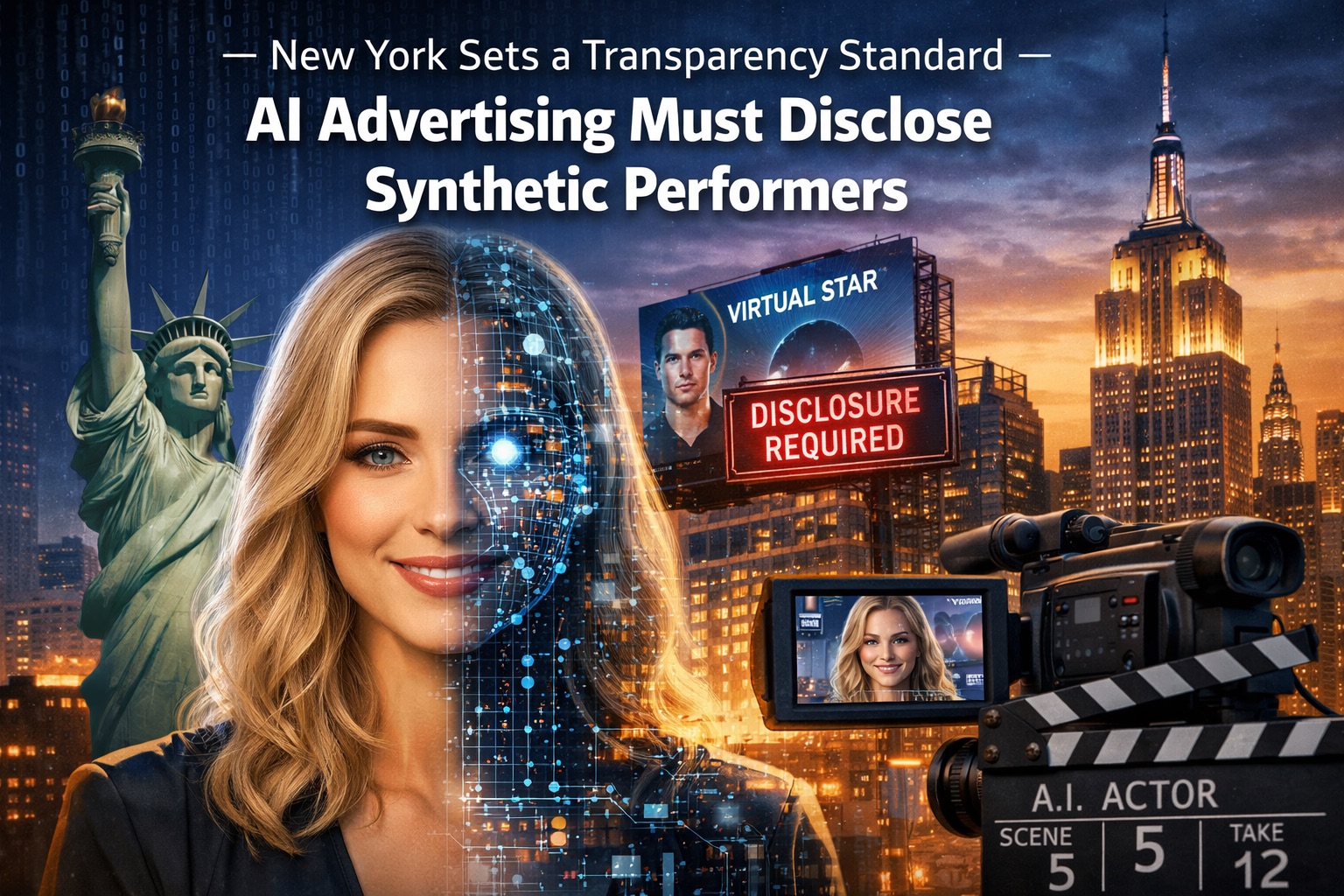
New York is drawing a clear regulatory line for the future of artificial intelligence in advertising. With newly signed legislation, the state now requires explicit disclosure when advertisements use AI-generated or “synthetic” performers. The move positions New York as a de-facto standard setter for AI transparency in commercial media—and sends a strong signal to brands, agencies, and platforms operating far beyond state borders.
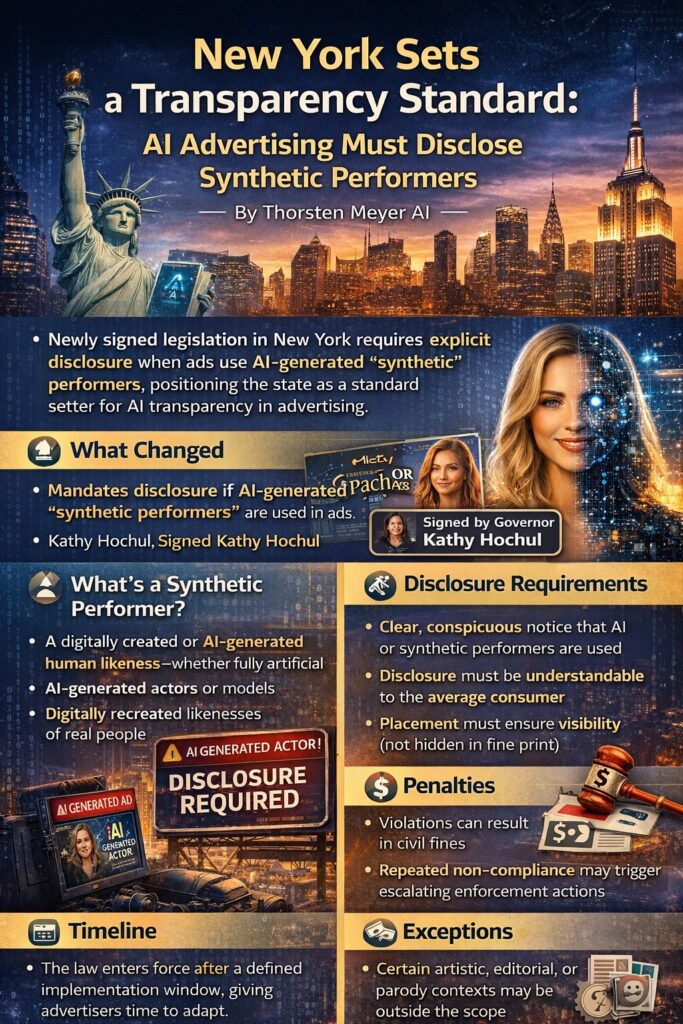
Signed by Governor Kathy Hochul, the law reflects a growing political consensus: consumers have a right to know when what they see on screen is artificial, simulated, or algorithmically generated.
What the New Law Requires
At the core of the legislation is a simple but consequential rule: advertising that features synthetic performers must clearly disclose that fact to viewers.
A “synthetic performer” generally refers to a digitally created or AI-generated human likeness—whether fully artificial or based on a real person’s image, voice, or movements. This includes:
- AI-generated actors or models
- Digitally recreated likenesses of real people
- Synthetic voices used to simulate human speech in ads
Disclosure Requirements
- Clear, conspicuous notice that AI or synthetic performers are used
- Disclosure must be understandable to the average consumer
- Placement must ensure visibility (not hidden in fine print)
Penalties
- Violations can result in civil fines
- Repeated non-compliance may trigger escalating enforcement actions
Exceptions
- Certain artistic, editorial, or parody contexts may be exempt
- Non-commercial or informational uses may fall outside the scope
Timeline
- The law enters force after a defined implementation window, giving advertisers time to adapt their workflows and contracts.
While the exact technical wording will be interpreted through enforcement and case law, the direction is unambiguous: undisclosed synthetic humans in ads are no longer acceptable in New York.

Rotation Tester and AC Detector for Circulating Pumps etc
Quickly indicates rotation direction
As an affiliate, we earn on qualifying purchases.
As an affiliate, we earn on qualifying purchases.
Why This Matters Beyond New York
Although this is a state-level law, its implications are national—and global.
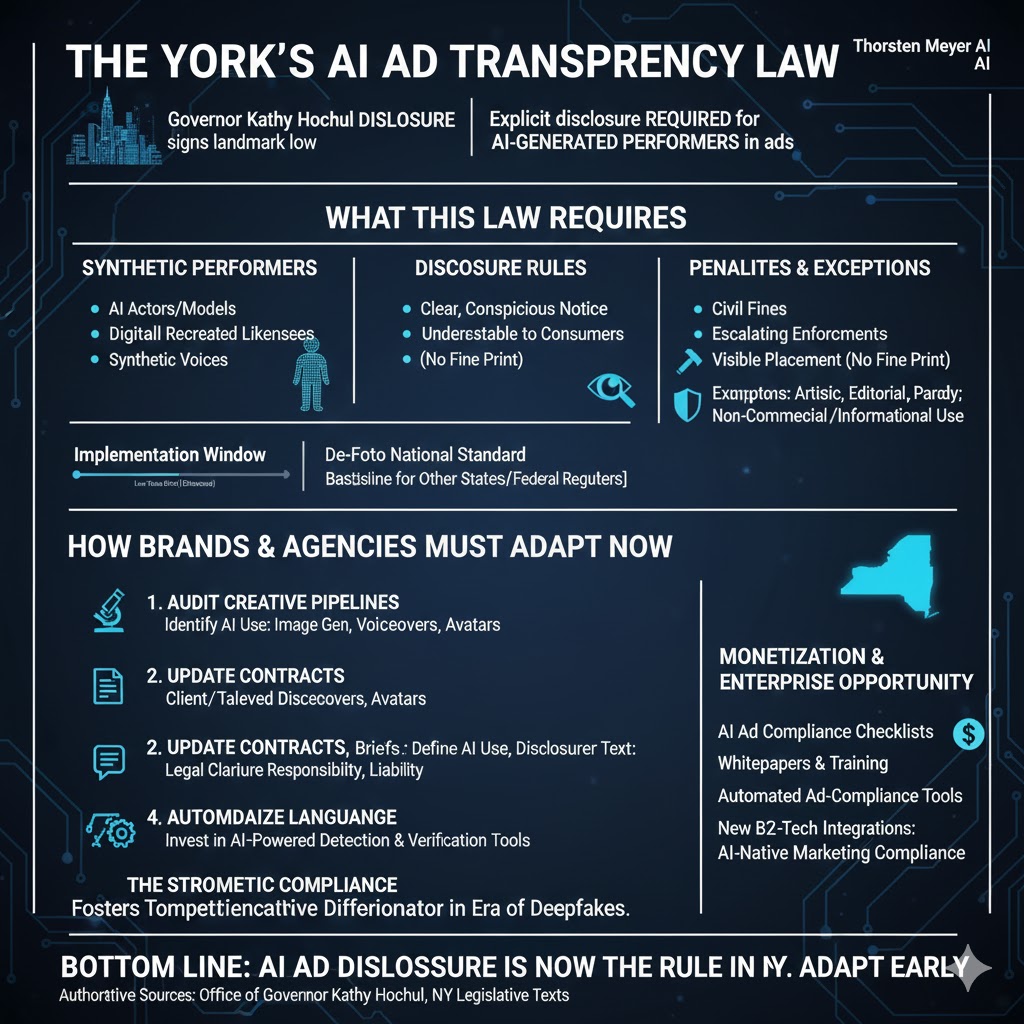
Advertising supply chains are centralized. Campaigns are often deployed across multiple states, platforms, and formats simultaneously. For most brands, it will be operationally simpler to adopt New York-compliant standards everywhere rather than fragment campaigns by geography.
In practice, New York is creating a baseline for AI advertising transparency that other states—and potentially federal regulators—are likely to reference.
![MixPad Free Multitrack Recording Studio and Music Mixing Software [Download]](https://m.media-amazon.com/images/I/71ltIxIuz1L._SL500_.jpg)
MixPad Free Multitrack Recording Studio and Music Mixing Software [Download]
Create a mix using audio, music and voice tracks and recordings.
As an affiliate, we earn on qualifying purchases.
As an affiliate, we earn on qualifying purchases.
How Agencies and Brands Must Adapt Now
For marketing leaders, this is not a future problem. It is a present-day compliance shift.
1. Audit Creative Pipelines
Agencies must identify where AI is already embedded:
- AI image generation
- Synthetic voiceovers
- Digital avatars or virtual influencers
If AI touches the performer layer, disclosure is now a legal requirement.
2. Update Contracts and Briefings
Client contracts, talent agreements, and creative briefs should explicitly address:
- Use of synthetic performers
- Responsibility for disclosure placement
- Liability for non-compliance
This is especially critical when third-party AI tools or outsourced creative teams are involved.
3. Standardize Disclosure Language
Brands should define approved disclosure language that:
- Meets legal clarity requirements
- Preserves brand tone and trust
- Can be reused consistently across formats
4. Invest in Automated Compliance Checks
As AI usage scales, manual review does not scale with it. Automated ad-compliance tools—capable of detecting AI-generated elements and verifying disclosure presence—will quickly become standard infrastructure.

HeyGen AI Avatar Video for Beginners: Create Professional AI-Powered Videos Without a Camera, Studio, or Tech Background
As an affiliate, we earn on qualifying purchases.
As an affiliate, we earn on qualifying purchases.
The Strategic Signal Behind the Law
This legislation is not anti-AI. It is anti-opacity.
By enforcing disclosure rather than banning technology, New York is shaping AI adoption toward transparency, accountability, and consumer trust. Brands that treat disclosure as a reputational advantage—not just a legal obligation—will benefit long-term.
In an era of deepfakes, synthetic media, and eroding trust, transparency becomes a competitive differentiator.

The Power Platform Playbook for Digital Transformation: Implement strategy, automation, and AI for scalable digital transformation
As an affiliate, we earn on qualifying purchases.
As an affiliate, we earn on qualifying purchases.
Monetization & Enterprise Opportunity
For marketing organizations, this regulatory shift creates immediate demand for:
- AI Advertising Compliance Checklists for internal teams
- Whitepapers and Training on AI disclosure standards
- Automated Ad-Compliance Tools that flag undisclosed synthetic content
- Legal-Tech Integrations for creative approval workflows
For vendors and consultants, New York’s move opens a new B2B category: AI-native marketing compliance.
Authoritative Sources
The law and its intent are detailed in official communications from the Office of Governor Kathy Hochul and the legislative texts of New York, which outline enforcement mechanisms, definitions, and implementation timelines.
Bottom line:
AI-generated advertising is no longer a legal gray zone in New York. Disclosure is now the rule—not the exception. Brands that adapt early will avoid penalties, preserve trust, and set themselves up for the next phase of AI-driven marketing.