You may notice that AI-enabled appliances haven’t become as popular as other smart devices because many people aren’t fully aware of their features or benefits. Technical issues like compatibility, connectivity problems, and complex management make relying on these appliances frustrating. Privacy and security concerns also hold you back from embracing them fully. Plus, the high costs and unclear value make upgrading less appealing. If you want to understand what’s really holding back smart homes, keep exploring the factors involved.

Get business pricing on tech for your team
- Business-only prices and quantity discounts
- Tax-exempt purchasing
- Multiple users, one account, clear invoices
Key Takeaways
- Limited consumer awareness about AI appliance benefits reduces motivation to upgrade or adopt new technology.
- Compatibility and interoperability issues hinder seamless integration across different brands and devices.
- High costs and unclear long-term benefits make AI appliances seem like luxury rather than essential.
- Privacy and security concerns, including data breaches and hacking risks, erode consumer trust.
- Technical challenges such as connectivity problems and complex interfaces discourage ongoing use.
smart home compatibility adapters
As an affiliate, we earn on qualifying purchases.
As an affiliate, we earn on qualifying purchases.
Slow Adoption Rates Compared to Other Devices
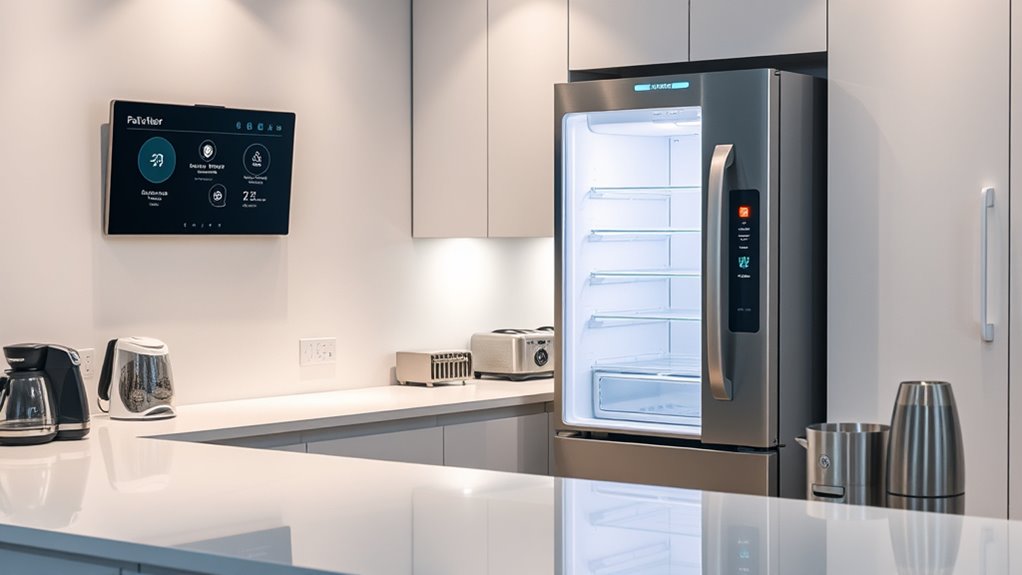
Although projections show that smart home households will reach nearly 94 million by 2027, the adoption of AI-enabled appliances lags behind other smart devices like speakers and TVs. You might notice that smart speakers and TVs have become household staples, thanks to their simplicity and immediate benefits. In contrast, AI appliances like smart refrigerators or ovens see slower uptake because they often seem complex or expensive. Many consumers hesitate to upgrade, unsure if these appliances provide enough value to justify their costs. Plus, concerns about security, compatibility, and usability create additional barriers. As a result, despite the growing smart home market, AI-enabled appliances haven’t gained the same level of popularity, leaving many households still relying on traditional or less integrated options. Additionally, sound healing science suggests that integrating calming and familiar technologies could potentially improve user comfort and acceptance of smart appliances over time.
AI-enabled refrigerator with security features
As an affiliate, we earn on qualifying purchases.
As an affiliate, we earn on qualifying purchases.
Technical Challenges and Usability Concerns

Despite the growing interest in AI-enabled appliances, many users face significant technical hurdles that hinder their widespread adoption. You might find managing these devices complicated, from troubleshooting issues to handling updates and security settings. Interoperability problems also make it tough to create a seamless smart home ecosystem, forcing you to juggle multiple apps and interfaces. Many appliances depend on stable internet connections and regular software updates; glitches can quickly erode your confidence. Additionally, the learning curve for mastering AI controls can be frustrating, especially if you’re not tech-savvy. Without proper education or clear benefits, you may see these appliances as more trouble than they’re worth. These usability concerns, combined with technical complexity, slow down adoption and limit the promise of truly smart homes. Incorporating home automation into your daily routine can be daunting without user-friendly interfaces and comprehensive guidance.
As an affiliate, we earn on qualifying purchases.
Privacy and Security Worries Hold Consumers Back
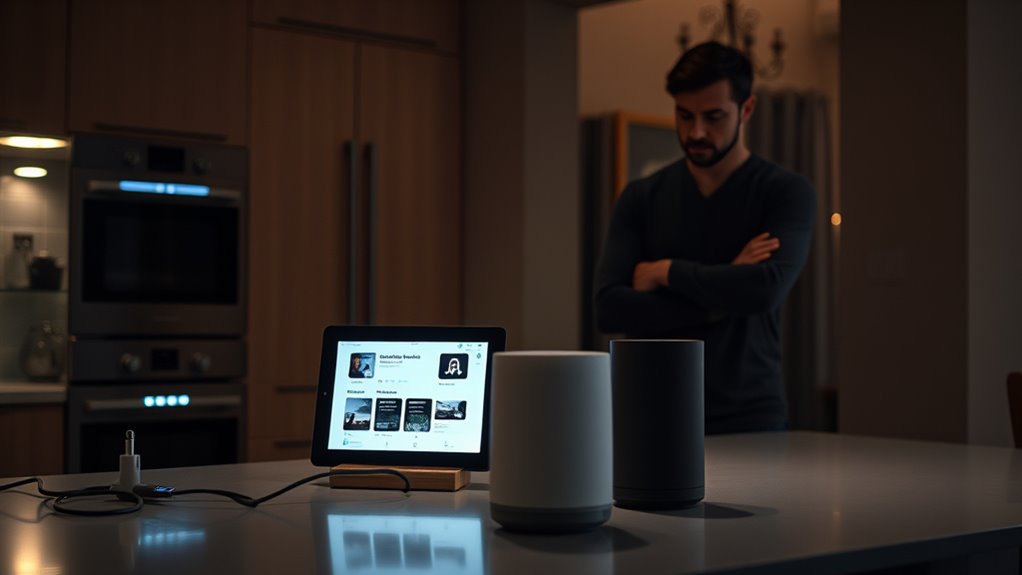
You might hesitate to adopt AI-enabled appliances because of security and privacy concerns. Many worry about data breaches or hacking vulnerabilities that could expose personal information. These fears make you think twice before trusting connected devices with sensitive data or control over your home. Additionally, the potential for unauthorized access raises questions about safeguarding your privacy in a connected environment.
Data Breach Risks
Data breaches and security vulnerabilities are major concerns that hold consumers back from fully embracing AI-enabled appliances. You worry that hackers could access your devices and steal personal or financial information, especially since many appliances connect to the internet constantly. Stories of data breaches and scams make you hesitant to trust these devices with sensitive data. The risk increases as more appliances are added to your smart home, creating a larger attack surface. You also fear that a security lapse could lead to unauthorized control over your appliances, compromising your privacy and safety. These worries make you think twice before investing in AI-enabled appliances, especially those handling personal, financial, or security-related information. Additionally, the lack of robust home network security measures can leave these devices vulnerable to cyberattacks. Until security improves, adoption will likely stay slow.
Hacking Vulnerability Concerns
Hacking vulnerabilities considerably contribute to consumer hesitation around AI-enabled appliances. You worry that cybercriminals might exploit security flaws to access personal data or control your devices remotely. These fears aren’t unfounded, as high-profile attacks on smart home systems highlight the risks. AI appliances often have weak points, especially if firmware updates aren’t timely or security protocols are lacking. When hackers gain control, they can manipulate appliances, steal sensitive information, or even cause physical damage. The threat of unauthorized access makes many consumers reluctant to invest in these devices, fearing that their homes and personal details aren’t sufficiently protected. This sense of vulnerability dampens enthusiasm and stalls broader adoption, especially when safer self watering plant pots alternatives seem more reliable and less risky.
Privacy Intrusion Fears
Despite the convenience offered by AI-enabled appliances, many consumers remain wary because they fear their privacy could be compromised. You worry about sensitive data being collected, shared, or leaked without your consent. High-profile data breaches and scams heighten these fears, especially when appliances handle personal or financial information. Smart refrigerators or ovens with payment features intensify concerns about unauthorized access or hacking. You may also worry about constant surveillance, where devices listen or watch without clear boundaries. Additionally, the presence of potential vulnerabilities, such as outdated security protocols in some devices, further exacerbates these concerns. These privacy fears make you hesitant to adopt AI-enabled appliances, fearing that your personal life could be exposed or exploited. As a result, concerns about data security and intrusive monitoring slow down the overall adoption of smart appliances in your home.
As an affiliate, we earn on qualifying purchases.
High Costs and Questionable Returns on Investment
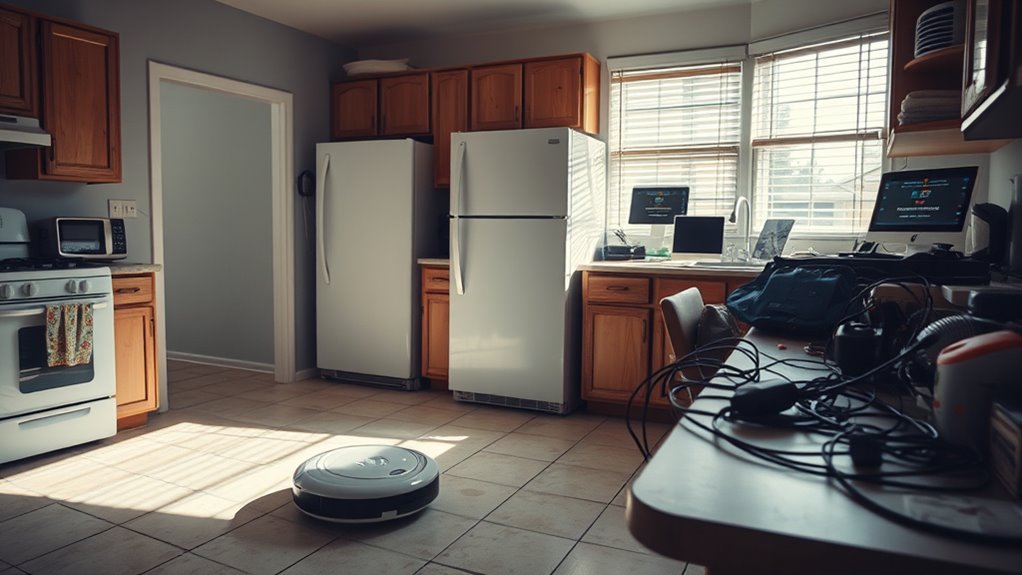
High costs remain a major barrier to widespread adoption of AI-enabled appliances, as many consumers hesitate to invest in devices that often come with hefty upfront prices. You might question whether the benefits justify the expense. Here are some key issues:
- The initial purchase price is markedly higher than traditional appliances, making it harder to justify without clear savings.
- Many consumers doubt the tangible ROI, such as energy savings or convenience, especially when these benefits aren’t immediately obvious.
- Limited resale value and rapid tech obsolescence discourage investments, as appliances quickly become outdated or lose value.
- The perceived long-term benefits often don’t outweigh the higher costs, leading many to prioritize cheaper, simpler devices with visible advantages like smart lighting or security.
- Additionally, the costs of electric power generation with bike generators demonstrate that sustainable energy solutions often require significant effort and investment, which can further complicate the value proposition for high-tech home appliances.
Limited Consumer Awareness and Understanding
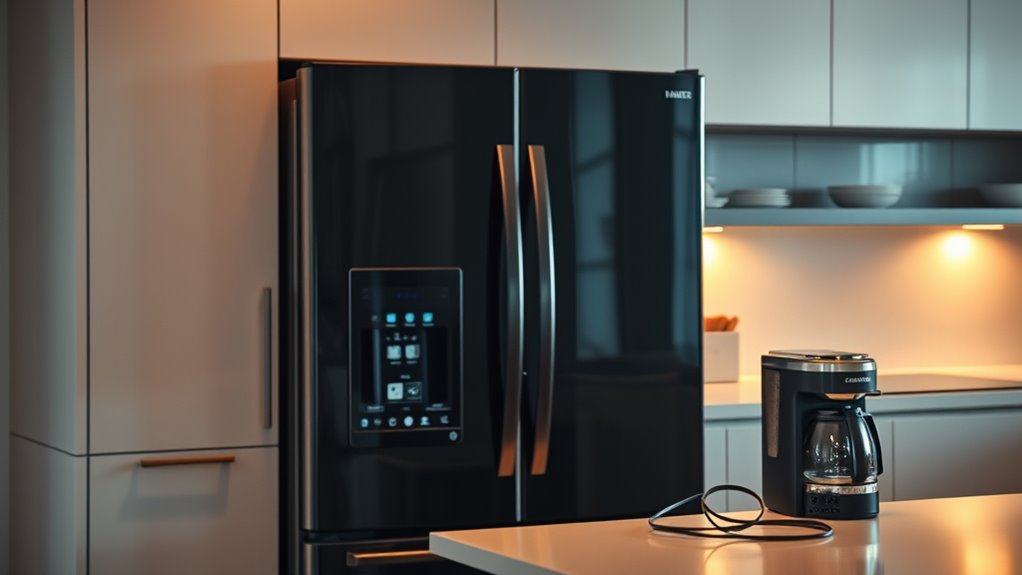
Many consumers remain unaware of how AI can genuinely enhance their appliances beyond basic remote control functions. They often see smart appliances as just high-tech versions of traditional devices, missing out on the advanced features like predictive maintenance, personalized settings, or energy optimization. Marketing messages tend to focus on convenience and quick fixes, leaving consumers confused about the real benefits. Additionally, technical jargon and complex interfaces can make understanding AI capabilities intimidating or inaccessible, especially for less tech-savvy users. Without clear, straightforward information, many hesitate to invest in these products. This knowledge gap reduces motivation to upgrade and hampers widespread adoption. When consumers don’t fully grasp what AI-enabled appliances can do, they’re less likely to see them as worthwhile investments. Furthermore, many consumers are unfamiliar with innovations in diverse designs and materials that could make appliances more appealing and functional in their homes.
Ecosystem Fragmentation and Compatibility Issues

Ecosystem fragmentation considerably hampers the widespread adoption of AI-enabled appliances because each manufacturer often develops proprietary platforms and standards that don’t communicate seamlessly with others. This creates frustration and limits your ability to create a unified smart home. You might find yourself juggling multiple apps or interfaces, which complicates automation and daily use. Here are some key issues:
- Lack of universal standards makes device integration challenging.
- Proprietary ecosystems prevent smooth communication between brands.
- Connectivity problems, like Wi-Fi dead zones, reduce reliability.
- Fragmented platforms force you to manage multiple apps, decreasing convenience.
- The absence of interoperability standards further exacerbates these issues, making it harder to build a cohesive ecosystem.
Lack of Clear Value Proposition for AI Features

Despite the growing presence of AI-enabled appliances in smart homes, you often struggle to see the clear benefits that justify their higher costs. Many AI features promise convenience, but they don’t always deliver noticeable improvements over traditional appliances. For example, smart refrigerators with AI can track inventory, but the added value isn’t obvious enough to justify the premium price. Similarly, AI-enabled ovens might learn your cooking preferences, yet you may not find that feature markedly better than manual controls. Without a compelling, tangible advantage—such as saving time, reducing costs, or improving safety—these appliances feel like luxury gadgets rather than essential tools. This lack of a clear value proposition makes it harder for you to justify investing in AI features, especially when traditional options seem sufficient. Incorporating problem-solving and innovative thinking into the development of these devices could help create more meaningful and user-centric features that truly meet consumers’ needs.
Management and Maintenance Difficulties

Managing and maintaining AI-enabled appliances often proves more challenging than anticipated, which can deter ongoing use and satisfaction. You might find yourself frustrated with troubleshooting, updates, or security issues. Here are some common difficulties:
- Keeping software and firmware current often requires manual updates, which can be confusing or time-consuming.
- Troubleshooting glitches or connectivity problems demands technical knowledge, discouraging less tech-savvy users.
- Compatibility issues between devices from different brands hinder smooth integration, leading to frequent frustrations.
- Security concerns, like frequent cyberattacks or data breaches, force you to stay vigilant and regularly monitor device safety.
These maintenance hurdles can make AI appliances seem more trouble than they’re worth, discouraging many from fully embracing the smart home experience.
Mistrust in AI Claims and Brand Reliability

Many consumers remain skeptical about the promises made by brands regarding AI-enabled appliances, often questioning whether these devices live up to their marketing claims. You might worry that the AI features are overhyped or not as intelligent as advertised. Brands often highlight convenience, energy savings, and smart automation, but if the products don’t deliver consistent results, your trust diminishes. Reliability issues, such as software glitches or hardware failures, make you doubt whether the investment is worth it. Additionally, aggressive marketing can lead to skepticism, especially if you’ve experienced overpromising or underperforming devices before. When you’re unsure about a brand’s credibility or the actual capabilities of their AI, you’re less likely to upgrade to smart appliances, preferring familiar, proven alternatives instead.
Connectivity and Infrastructure Barriers
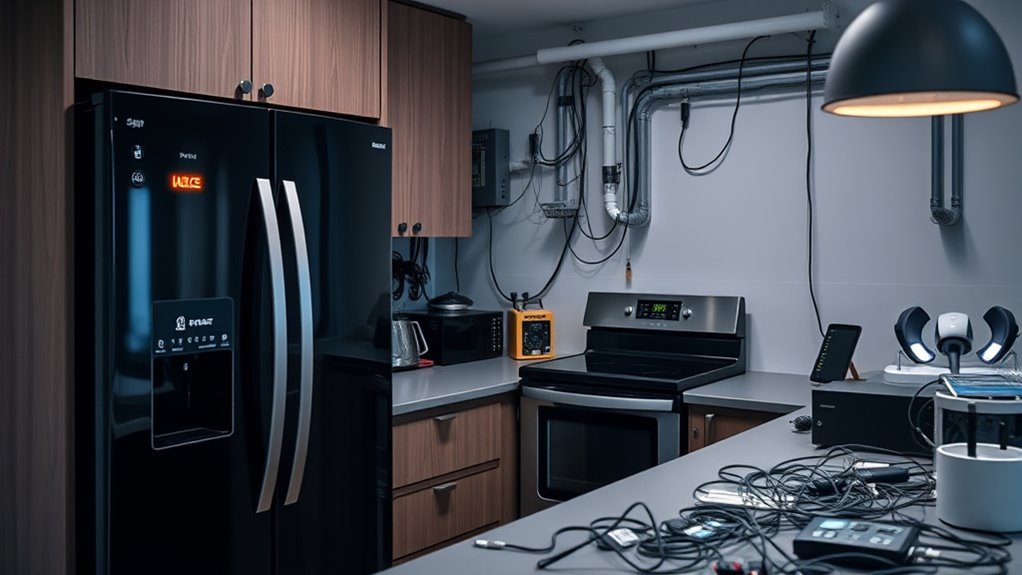
Connectivity and infrastructure issues pose significant hurdles to the widespread adoption of AI-enabled appliances. Without reliable internet, these devices can’t function properly, leading to user frustration and distrust. Here are key barriers:
Connectivity issues hinder AI appliance use, causing frustration and limiting smart home adoption.
- Wi-Fi dead zones and inconsistent signals disrupt appliance performance, causing delays and malfunctions.
- Many homes lack the robust broadband connections needed for seamless device operation, especially in rural areas.
- Compatibility issues arise when appliances from different brands struggle to communicate within existing smart home platforms.
- Frequent connectivity disruptions undermine confidence, making users hesitant to rely on AI-enabled appliances for critical tasks.
These barriers hinder smooth integration, limit automation potential, and slow overall adoption of smart appliances. Until infrastructure improves, many consumers will remain wary of fully embracing AI-powered home devices.
Frequently Asked Questions
What Specific Features of AI Appliances Do Consumers Find Most Confusing?
You find AI appliances confusing mainly because of unclear features like automated settings, learning algorithms, and voice controls. It’s hard to understand how these functions work together or improve your experience. Many times, you struggle with troubleshooting software updates or understanding security alerts. This lack of transparency and complexity makes it difficult to trust and fully utilize AI features, leading to frustration and hesitation to adopt these appliances.
How Do Manufacturers Plan to Improve Compatibility Across Different Smart Home Ecosystems?
Manufacturers plan to improve compatibility by adopting universal standards like Zigbee, Z-Wave, and Thread, making devices work seamlessly across platforms. They’re developing open APIs and supporting industry-wide protocols to reduce ecosystem fragmentation. Additionally, many are partnering with smart home platforms like Apple HomeKit, Google Home, and Amazon Alexa to guarantee their appliances integrate smoothly. These efforts aim to simplify setup, enhance user experience, and encourage broader adoption of AI-enabled appliances.
What Are Effective Strategies to Educate Consumers About Ai-Enabled Appliance Benefits?
You might think AI appliances are too complex, but effective education can change that. Use simple demos, clear language, and real-life benefits to show how these devices save time and energy. Offer hands-on workshops or videos demonstrating easy setup and use. Highlight security features and privacy controls to build trust. When you make learning accessible and relatable, you’ll help consumers see the true value of AI-enabled appliances and boost adoption.
How Can Security Concerns Be Addressed to Boost Consumer Confidence in Smart Appliances?
You can boost confidence by clearly communicating security features and providing transparent information about data protection. Regular software updates, robust encryption, and easy-to-understand privacy controls reassure users. Offering customer support for security issues and educating consumers on best practices also help. Demonstrating your commitment to security builds trust, encouraging more people to adopt AI-enabled appliances without fear of vulnerabilities or breaches.
Are There Affordable AI Appliance Options Available That Demonstrate Quick ROI?
Yes, affordable AI appliances are available that can deliver quick returns. You can find budget-friendly smart thermostats, lighting, and basic kitchen gadgets that cut costs and boost convenience. These devices often offer energy savings, simplified setups, and seamless smart home integration. By choosing cost-conscious options with user-friendly features, you’ll see swift savings, streamline routines, and strengthen your smart home’s security without breaking the bank.
Conclusion
So, as you consider smarter homes, remember it’s not just about the tech—it’s about trust, cost, and clarity. The hurdles are real, and they’re holding back a revolution that promises convenience but demands caution. Will these challenges fade, or will they keep you on the sidelines? The future of AI-enabled appliances hinges on what’s next. Are you ready to see if they truly can deliver what they promise, or stay cautious and watch from afar?
Fall Picks
fall essentials
As an affiliate, we earn on qualifying purchases.