By Thorsten Meyer | October 30, 2026 | ThorstenMeyerAI.com

Get business pricing on tech for your team
- Business-only prices and quantity discounts
- Tax-exempt purchasing
- Multiple users, one account, clear invoices
This week, Meta sold $25 billion of its own stock and $12.5 billion of preferred shares. Microsoft borrowed $25 billion, part of it for 40 years. And on Friday, Amazon disclosed that it has lined up a loan of up to $80 billion, secured by the servers it will buy with the money. These are three of the richest companies in the world. So why do they suddenly need other people’s money?
Because the AI build-out has outgrown the cash register. In the third quarter, Amazon, Microsoft, Alphabet and Meta together spent about $202 billion on property and equipment, mostly data centers, servers and chips, more than twice as much as a year earlier. Here is who pays for that, in plain words: the five ways a data center gets financed, the trillion dollars of commitments that sit below the waterline, where the risks are, what the “bubble” debate is really about, and what it means for companies and for you. Every company figure comes from the companies’ own filings, with the date.
Key takeaways
- The bill doubled. Amazon, Microsoft, Alphabet and Meta spent about $202 billion on property and equipment from July to September 2026, up from about $97 billion a year earlier (my sum of their cash flow statements).
- Cash flow no longer covers it. Three of the four spent more on property and equipment in the quarter than their businesses brought in. Amazon’s free cash flow over the last twelve months is minus $42.4 billion, Alphabet’s for the quarter minus $9.1 billion, Meta’s minus $2.1 billion. Only Microsoft stayed clearly positive.
- Debt is the new fuel. Amazon, Alphabet and Meta raised about $225 billion in long-term debt in the first nine months of 2026. Microsoft followed this week with a $25 billion bond sale reaching out to 2066.
- The biggest number is off the balance sheet. The four companies have signed leases, mostly for data centers, that have not started yet: about $1.02 trillion in future payments as of 30 September (my sum of four 10-Q filings). That is more than twice their combined long-term debt.
- The risk is a mismatch of time. Servers are written off over five to six years. Power contracts run 15 to 20 years, data center leases up to 20, some bonds 40. If AI revenue grows more slowly than these bills, someone has to carry the gap.
- The “bubble” question is really a “who holds the risk” question. The four giants can afford mistakes. The weak links are at the edges: newer GPU clouds such as CoreWeave, whose senior notes carry 8.5% to 9.75%, the side companies that own the buildings, and, in the end, investors, pension funds and electricity customers.
Products Worth Considering

Anker SOLIX S2000 Portable Power Station, 2,010Wh, 1,500W

LG 34GX90SA-W 34-inch Ultragear WQHD OLED Curved Gaming Monitor

EcoFlow DELTA 3 Classic Portable Power Station, 1024Wh, 1800W
As an affiliate, we earn on qualifying purchases.
The short answer
For a decade, Big Tech paid for data centers out of pocket. The profits from ads, software and online shopping were so large that a new campus was a rounding error. That changed in 2026. The companies now pay with five tools at once: their own cash, borrowed money, leases, side companies that own the buildings, and new shares. On top come long power contracts. Each tool moves part of the risk to someone else, and that someone is increasingly not a tech company.
Meta said it out loud on 26 October. It intends to fund its AI investments “through a balanced mix of operating cash flow, investment-grade debt, strategic partnerships, and equity capital.” That sentence is the whole story of this article.
Infographic 01 · One quarter, four companies
The bill doubled. The cash did not.
What Amazon, Microsoft, Alphabet and Meta paid for buildings, servers and chips from July to September 2026, set against the cash their businesses brought in.
AmazonQ3 2025: $35.1B spent
Spent $34.9B more than came in
AlphabetQ3 2025: $24.0B spent
Free cash flow −$9.1B
MicrosoftQ3 2025: $19.4B spent
$18.6B left over
MetaQ3 2025: $18.8B spent
Free cash flow −$2.1B
Cash purchases of property and equipment as reported; not all of it is for AI (Amazon also builds warehouses). Gaps for Amazon and Microsoft are my arithmetic; free cash flow for Alphabet and Meta as the companies report it. Microsoft’s quarter is its fiscal Q1 2027 (July–September 2026).
Sources: Amazon results, 29 Oct · Microsoft 10-Q, 28 Oct · Alphabet results, 28 Oct · Meta results, 21 Oct. Debt raised: cash flow statements, nine months 2026.
Powered by Thorsten Meyer AI
The bill: about $202 billion in one quarter
Here is what the four companies paid for property and equipment from July to September 2026, as reported in their cash flow statements:
- Amazon: $77.3 billion, up from $35.1 billion a year earlier (results, 29 October). Amazon still expects about $220 billion in cash capital spending for all of 2026. Amazon also builds warehouses, but it says the jump “primarily reflects investments in artificial intelligence.”
- Alphabet: $51.4 billion, up from $24.0 billion (results, 28 October). Its 2026 guidance of $195 to $205 billion is unchanged, and it expects a “significant” increase in 2027.
- Microsoft: $39.4 billion in cash, up from $19.4 billion (10-Q, 28 October). Counting new finance leases, Microsoft puts its quarterly capital spending at $45.2 billion. It expects about $170 billion for calendar 2026.
- Meta: $33.9 billion, up from $18.8 billion (results, 21 October). Meta expects $135 to $145 billion for 2026, including finance-lease payments.
Now set that against the cash the businesses generated in the same quarter. Amazon’s operations brought in $42.4 billion, Alphabet’s $42.3 billion, Meta’s $32.8 billion, Microsoft’s $58.0 billion. Only Microsoft had money left over, about $18.6 billion by my arithmetic. For a closer look at Amazon’s quarter, read my piece on AWS growth and Amazon’s cash gap; for why investors rewarded Microsoft and punished Alphabet, see Same Night, Opposite Verdicts.
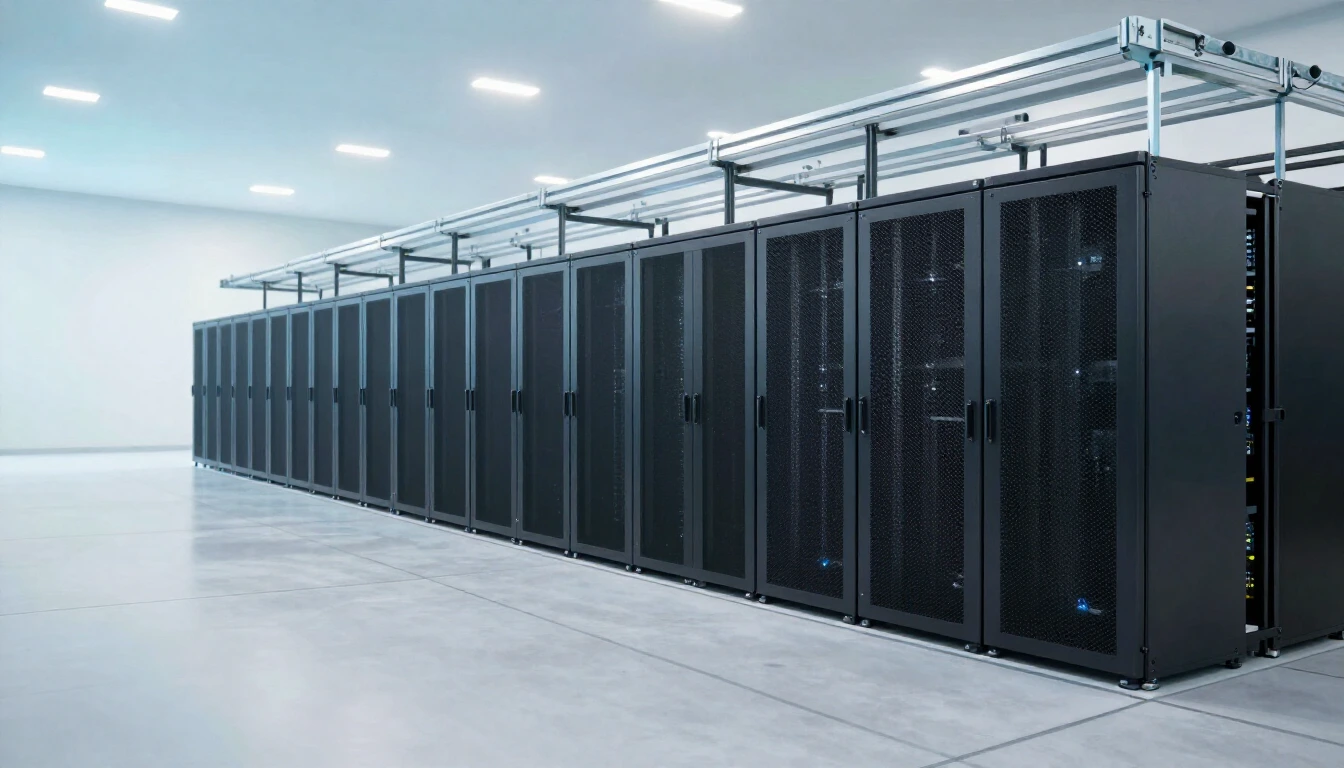
Five ways to pay for a data center, in plain words
Think of a family that wants to build a house far bigger than its savings. It can pay what it has, take a mortgage, rent instead of buy, let an investor build the house and rent it back, or sell a share of the family business. Big Tech is doing all five at once.
1. Out of the till: operating cash flow
The cheapest money is your own. It costs no interest and nobody can demand it back. That is why Microsoft, with $58 billion of cash from operations in one quarter, still pays most of its build-out itself. The limit is obvious: once spending is larger than the till, you need one of the other four tools.
2. Borrowing: bonds and loans
A bond is an IOU sold to investors: they lend money today, the company pays interest and returns the money on a fixed date. The filings show how fast this has grown:
- Amazon raised $115.1 billion in long-term debt in the first nine months of 2026. Its long-term debt rose from $65.6 billion at the end of 2025 to $173.1 billion on 30 September. In September it also drew a $17.5 billion bank term loan.
- Alphabet raised $85.2 billion. Its long-term debt went from $46.5 billion to $125.1 billion.
- Meta raised $24.9 billion. Its long-term debt went from $58.7 billion to $80.9 billion.
- Microsoft had only $31.1 billion of long-term debt on 30 September. On 29 October it priced $25 billion of new notes in ten tranches, from 2028 to 2066, with fixed rates between 4.85% and 6.35%. Even a company rated AAA, the top grade, now pays more than 6% to borrow for 40 years.
There is a newer kind of loan, too. In its quarterly report filed on 30 October, Amazon describes a “supplier financing” facility of up to about $80 billion, available from early 2027 to late 2028. Amazon can borrow at variable rates to buy technology infrastructure, each loan runs five years, and Amazon will give the lenders a security interest in “certain purchased assets.” In plain words: the servers are the collateral, like a car loan where the car secures the debt.
3. Renting instead of buying: leases
A lease is a long rental contract. Instead of building a data center, a tech company signs a 15- or 20-year lease with a developer who builds it. The company gets the capacity without paying for the building up front. The developer borrows against the signed lease.
This is the tool with the biggest numbers, and I come back to it below.
4. Side companies: joint ventures and special-purpose vehicles
A special-purpose vehicle (SPV) is a company created for one job: own one asset, raise money against it, collect the rent. Meta’s 10-Q, filed on 22 October, describes two of them. In Louisiana (formed in October 2025) and Texas (July 2026), Meta co-develops data center campuses with outside investors. Meta owns 20% of each. Total development costs: about $27 billion in Louisiana and $14 billion in Texas. Meta then rents the campuses: the leases start in 2028 and 2029, with an initial term of four years and options up to 20.
The key detail is a promise called a residual value guarantee. If Meta walks away after the first term and the campus is worth less than an agreed amount, Meta pays the shortfall, up to $41.5 billion in total as of 30 September. Because Meta does not control these ventures under the accounting rules, their debt does not sit on Meta’s balance sheet. Meta’s own estimate of its maximum possible loss from the two ventures: $68.4 billion.
Alphabet uses a different structure. Its 10-Q describes a joint venture with Blackstone, announced as Crux AI, that sells data center capacity as a service. Blackstone committed up to $5 billion of capital; Google committed up to $10 billion in “backstops” for the venture’s data center and energy agreements. Oracle told investors on 28 October that “vendor financing, customer-provided hardware and customer prepayments” will reduce its upfront cash needs. I took apart one such structure in detail in Broadcom’s $63 billion financing machine.
5. Selling a slice of the company: new shares
The most expensive money is equity, because new shares dilute every existing shareholder. Meta did it anyway. On 27 October it sold $25 billion of common stock at $625 a share (delivered later under so-called forward sale agreements, by November 2027 at the latest) and $12.5 billion of mandatory convertible preferred shares that pay 6.5%. It also plans a stock sale program of up to $60 billion from early 2027. A curious detail from the offering documents: Nvidia, AMD and Broadcom, three of the biggest AI chip makers, indicated an interest in buying up to $5 billion of the new shares. The documents do not say how many they bought. Oracle sold $20 billion of new shares this summer. I covered Meta’s raise in How Big Tech Now Pays for AI.
Equity is not only a Western story. In China, the answer can be the state: my report on DeepSeek’s reported $16 billion raise looks at that model.
And the electricity: long power contracts
A data center without power is an expensive shed. So tech companies sign power purchase agreements: long contracts in which they promise to buy a plant’s output for decades. That promise lets the power company borrow and build. On 6 October, Google and Constellation Energy announced a 20-year agreement that pays for upgrades at 11 nuclear reactors, adding 890 megawatts of new capacity, the first by 2028, plus a 15-year supply agreement for another 2,700 megawatts. In 2024, Microsoft signed a 20-year contract to restart a reactor at Three Mile Island. Meta’s 10-Q lists “energy service agreements for data centers” among $454.5 billion of non-cancelable commitments.
Infographic 02 · Below the waterline
$1 trillion in leases that have not started yet
Debt sits on the balance sheet. Leases that are signed but have not begun show up only in the notes of the quarterly reports.
Above the waterline
Long-term debt, 30 Sep 2026
Below the waterline
Leases signed, not yet commenced, 30 Sep 2026
How Meta’s side companies work
Louisiana venture (October 2025) and Texas venture (July 2026), per Meta’s 10-Q
- Meta and outside investors fund a venture. Meta owns 20%.
- The venture builds the campus: about $27B in Louisiana, $14B in Texas.
- Meta rents it from 2028 (Texas) and 2029 (Louisiana): 4-year first term, options up to 20 years.
- If Meta leaves and the campus is worth less than agreed, Meta pays the gap: up to $41.5B in total.
- The ventures’ debt is not on Meta’s balance sheet. Meta puts its maximum possible loss at $68.4B.
Pending leases are future payments, undiscounted; they include energy infrastructure and colocation, and some of Microsoft’s depend on conditions being met. Not all of it is for AI.
Sources: Amazon 10-Q, 30 Oct · Microsoft 10-Q, 28 Oct · Alphabet 10-Q, 29 Oct · Meta 10-Q, 22 Oct. Totals are my arithmetic.
Powered by Thorsten Meyer AI
Below the waterline: $1 trillion in leases that have not started
Debt shows up on the balance sheet. Leases that have been signed but have not started do not; they appear only in the notes of the quarterly report. As of 30 September 2026:
- Microsoft: $364.6 billion of leases, “primarily for datacenters,” that have not yet commenced, some subject to conditions. They start between Microsoft’s fiscal years 2027 and 2034, with terms of up to 20 years.
- Meta: about $355.7 billion, for data centers, energy infrastructure, colocation space and network infrastructure, starting through 2036, with terms of up to 30 years.
- Amazon: $164.9 billion.
- Alphabet: $130.5 billion, “primarily related to data centers and energy infrastructure,” starting between 2026 and 2031.
Together that is about $1.02 trillion. The four companies’ long-term debt on the same date was about $410 billion. These are future payments, not today’s debts, and not all of them are for AI. But they are promises. A lease is like signing a 20-year rental contract for an apartment that is still being built: you have not paid anything yet, but you have committed to pay.
The other side of these contracts is a crowd of developers, landlords and lenders who built or are building the data centers, and who borrowed against the tenant’s signature. Jon Stewart put it well in his interview with the critic Ed Zitron this week: the AI companies are the tenants, “everyone else is a landlord.” If a tenant leaves, the landlord still owes the bank.
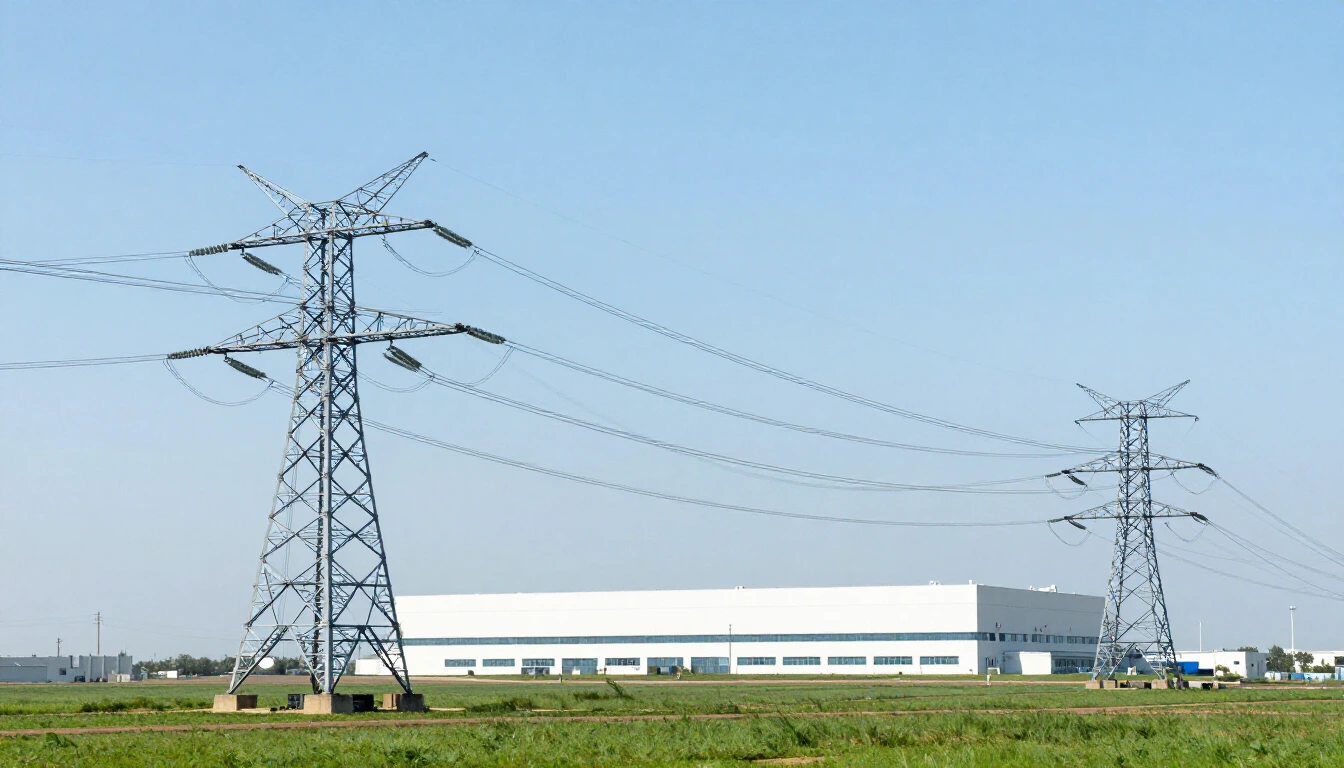
Where the risks sit
Utilisation: will the rooms be full?
A data center earns money only when its chips are busy and someone pays for the work. None of the four companies reports how busy its AI capacity is. Today the signals point to scarcity, not emptiness: Alphabet’s chief financial officer said on the earnings call that Google is in a “supply constrained environment” and started renting third-party compute at the end of the quarter. Microsoft said its spending came in lower than planned because “some third-party capacity deliveries” were delayed. Google Cloud revenue grew 103% to $30.7 billion.
But Microsoft’s own 10-Q states the risk plainly. Its AI investments are made “in advance of fully developed revenue streams,” and “we may not realize the expected returns on our investments.” Every filing has warnings like this. What is new is the scale behind them.
Depreciation: how long is a chip worth something?
When a company buys a server, it does not book the cost at once. It spreads it over the server’s expected life. That choice moves profits. Alphabet depreciates servers over about six years. Microsoft uses two to six years. Meta extended most servers to 5.5 years in 2025, which lowered its depreciation that year by $2.92 billion. Amazon went the other way: in 2025 it cut a subset of servers from six to five years, citing “the increased pace of technology development, particularly in the area of artificial intelligence.”
Why it matters: if AI chips lose their value faster than the books assume, today’s profits are a little too high and a write-down comes later. Critics argue exactly that. The bill is already rising: Meta’s depreciation on servers and network gear was $5.34 billion in the third quarter, up from $3.60 billion a year earlier.
Energy: 20-year contracts for five-year chips
Here is the mismatch in one picture. The chips are written off in five to six years. The data center leases run up to 20 years, Meta’s up to 30. The power contracts run 15 to 20 years. Microsoft’s longest new bond runs 40. If the chips of 2026 are obsolete in 2031, the buildings, the power and the debt are still there. That is fine if each new generation of chips fills them again. It is a problem if demand pauses.
Infographic 03 · The mismatch
Five-year chips, twenty-year contracts, forty-year bonds
The chips age fastest. The buildings, the power and the debt last much longer. That gap is where the risk sits if demand pauses.
How long each promise lasts
Solid: fixed term. Striped: optional or the longest case.
- Servers and chipsuseful life in the books: Amazon 5 (subset), Meta 5.5, Alphabet about 65–6 yrs
- Amazon supplier loanseach borrowing under the up to $80B facility5 yrs
- Meta venture leasesfirst term 4 years, renewal options4–20 yrs
- Power contractsGoogle and Constellation: 15-year supply, 20-year nuclear uprates15–20 yrs
- Data center leasesMicrosoft up to 20 years, Meta up to 30up to 30 yrs
- Microsoft’s longest new bond6.35% notes due 2066, priced 29 Oct 202640 yrs
The price of money
Interest rates as filed
CoreWeave’s September convertible notes pay 2.875% because buyers can turn them into shares.
If AI revenue grows slower than the bills
My reading of who absorbs the gap first
- Leases: landlords and the banks that lent against them
- Side companies: private investors, backed by the tenant’s guarantee
- Supplier loans: lenders holding servers as collateral
- Bonds: bond funds and pension funds
- Power contracts: utilities, and possibly their other customers
- New shares: every existing shareholder
Sources: company 10-K and 10-Q filings (useful lives, leases) · Amazon 10-Q, 30 Oct · Meta 10-Q, 22 Oct · Google and Constellation, 6 Oct · Microsoft notes term sheet, 29 Oct · CoreWeave 8-K, 22 Sep.
Powered by Thorsten Meyer AI
The cost of money: AAA at the top, around 9% at the edges
Microsoft pays 4.85% to 6.35% on its new notes. CoreWeave, the largest of the newer “neoclouds” that rent out GPUs, lists outstanding senior notes with interest rates between 8.5% and 9.75% in its September filing. In September it sold $4.2 billion of convertible notes at 2.875%, a lower rate because buyers also get the right to turn the notes into shares. The edges pay more because lenders see more risk: fewer customers, less cash, more debt. Oracle told investors this week that it expects positive free cash flow only in the second half of its fiscal 2028, which ends in May 2028, and that it will limit new capital raises through its fiscal 2030 to $20 billion, not counting refinancing.
Bubble or build-out? The debate in one place
The critics’ case (opinion). In a long interview on The Weekly Show with Jon Stewart, published on 28 October (watch it on YouTube), Ed Zitron, a writer and longtime critic of the AI industry, argued that there is “not really much proof yet” of a payoff that would justify “the trillion-plus dollars” invested in GPUs and data centers. He said these data centers are “paid with debt,” that the large tech companies are “not going to go bankrupt” but will be “in trouble,” and that the debt-funded neoclouds are the weakest link. He also argued that, unlike after the dot-com crash, there is no recovery story waiting: “There are no alternate uses for GPUs.” These are his views. One check: he estimated that CoreWeave would pay “13%, 14%, 15%” on new debt today. Its filings show 8.5% to 9.75% on existing senior notes, but a new bond could cost more; I could not verify a current rate.
The companies’ case. Demand is real and still larger than supply: Google Cloud more than doubled, AWS grew 39%, Microsoft and Alphabet both describe capacity shortages. The four giants are also not the dot-com startups of 2000. They earn hundreds of billions a year, carry top credit ratings and could slow spending if demand falters.
My reading. Both can be true at once. The giants will very likely survive a slowdown; Zitron says so himself. The question is who absorbs the loss if AI revenue grows more slowly than the bills. The structures above decide that. Leases move it to landlords and their lenders. Side companies move it to private investors, with a guarantee as a safety net. Supplier loans move it to banks holding servers as collateral. Bonds move it to bond funds and pension funds. Power contracts move part of it to utilities, and possibly to their other customers. A bubble that bursts inside one company is a bad quarter. A bubble spread across a trillion dollars of contracts is a credit question. We are not there. But the share financed by other people’s money grew fast this year, and that is the number to watch.
Two signals from this week: a factory for data centers, and who gets a seat at the table
Speed is the next race. On 30 October, TechCrunch reported that the startup Runware wants to build modular data centers on an assembly line, like cars, at its factory in Romania, scaling to 30 megawatts of capacity per day by 2028. Runware has raised more than $60 million and says it has $1 billion in “committed interest.” These are the company’s plans, not results. Disclosure: Thorsten Meyer AI uses Runware’s image service for illustrations; we have no other relationship with the company. The point for this article: if capacity gets much faster and cheaper to build, today’s expensive campuses with 20-year leases face new competition.
The neighbours are not in the room. On 27 October, The Register reported on a study by the UK campaign group Spotlight on Corruption. It found that 84% of the stakeholder meetings UK ministers held on data centers between July 2024 and June 2026 were with businesses or industry groups. Ministers and the most senior officials met no environmental groups. Ministers met two community groups, both after their areas had been chosen as “AI Growth Zones.” The group calls for a pause on new zones until the rules on consultation and disclosure are tightened. Fights over location are also a theme in the US midterms: KFF Health News reported on 29 October that Arizona’s attorney general has called for a pause on new data center approvals.
What this means for companies
- Capacity is rationed, not just sold. Two of the largest clouds say they are short of capacity. If you need large GPU capacity in 2027, plan and reserve early, but negotiate exit and resize clauses. Long commitments are cheap today and expensive if your own AI use grows more slowly than planned.
- Expect cloud prices to reflect the bill. Depreciation and energy costs are rising, and Microsoft names “higher memory and storage costs.” Build price-review clauses into multi-year contracts and track cost per task, not just list prices. My piece on the memory shortage explains one driver.
- Check your provider’s financing. If you rent GPUs from a smaller cloud, read how it is funded. Ask what happens to your workloads and data if a lender takes the servers that secure its loans.
- Avoid single-provider dependency. The same few companies build, rent to and rent from each other. Keep your models and data portable, and have a second provider tested, not just named.
- If you build your own, power comes first. The bottleneck is a grid connection, not the building. Long power contracts are now part of the price of entry.
What this means for users
- You may pay through prices. The bill has to be paid by someone eventually: through AI subscriptions, cloud-based services, or devices that cost more because data centers absorb the memory supply.
- You may pay through your power bill. Who pays for new power lines and plants is the open political question. Google says its Constellation deal adds supply “without passing on costs to residential customers.” That is a company commitment, not a rule. Watch your utility’s rate cases.
- You have a say where you live. Data centers need planning permission and grid connections. Local hearings are where the trade-offs between jobs, tax revenue, water, noise and power get decided. The UK study shows how easily residents are left out.
- Your savings are probably already in it. Broad index funds, pension funds and bond funds hold these companies’ shares and bonds; private credit funds lend to the builders. That is not a reason to act, just a reason to know. Nothing here is investment advice.
What to watch next
- 4 November 2026: Microsoft’s $25 billion of notes settle.
- Early 2027: Alphabet’s fourth-quarter call, where it promised details on a “significant” increase in 2027 spending; Meta’s $60 billion stock program can start; Amazon’s $80 billion supplier loan becomes available.
- Every quarter: three numbers in each 10-Q: free cash flow, leases not yet commenced, and any change in server useful lives. A shorter useful life is the clearest sign that chips age faster than planned.
Honest limits
- The capital spending figures are cash purchases of property and equipment. Not all of it is for AI; Amazon also builds warehouses. Companies define “capex” differently (Microsoft and Meta include finance leases in their own totals). I used each company’s reported figures and say when a sum is my own arithmetic.
- Lease commitments are undiscounted future payments. They include energy infrastructure, office-like colocation space and, for Microsoft, arrangements that depend on conditions being met. Adding four companies’ figures is my own calculation.
- No company reports how busy its AI capacity is or how much revenue AI alone brings in. That is the biggest gap in the debate.
- Ed Zitron’s statements are opinions from an interview; I checked one number against filings. Runware’s plans are company claims. The UK figures come from a campaign group’s report; I read the report but did not check its underlying data.
- Free cash flow figures follow each company’s own definition.
Sources
- Amazon, Q3 2026 results (8-K, 29 October 2026) and Form 10-Q (30 October 2026): capital spending, debt, leases not yet commenced, $80 billion supplier financing facility, term loan; Form 10-K 2025 (server useful lives).
- Microsoft, FY2027 Q1 press release and webcast (28 October 2026), Form 10-Q (leases not yet commenced, finance leases, risk factors), pricing term sheet for $25 billion of notes (29 October 2026), Form 10-K FY2026 (useful lives).
- Alphabet, Q3 2026 results (28 October 2026) and earnings call remarks by the CFO, Form 10-Q (29 October 2026: leases, Crux AI joint venture with Blackstone), Form 10-K 2025.
- Meta, Q3 2026 results (21 October 2026), Form 10-Q (22 October 2026: data center ventures, residual value guarantees, leases, commitments, depreciation), offering announcement (26 October 2026), pricing term sheet (27 October 2026), 8-K on the closing (29 October 2026), Form 10-K 2025.
- Oracle, Investor Day 2026 press release (28 October 2026).
- CoreWeave, 8-K on the convertible notes (22 September 2026) and pricing release.
- Constellation Energy and Google, 890 MW agreement (6 October 2026); Constellation, 20-year agreement with Microsoft (20 September 2024).
- The Weekly Show with Jon Stewart, Data Centers, Debt & the Risks of AI’s Finances w/ Ed Zitron (28 October 2026; quotes from the episode).
- TechCrunch, Can AI data centers be mass-produced like cars? (30 October 2026).
- Spotlight on Corruption, Zoned Out (October 2026); The Register, UK ministers had plenty of time for AI datacenter bosses, but none for environmental groups (27 October 2026).
- KFF Health News, Data center health worries animate midterm campaigns (29 October 2026).
Not investment advice. Figures as reported by the companies on the dates given; sums and differences marked as my arithmetic.
Researched and drafted with AI assistance, including Anthropic’s Claude.