
Introduction
A recent paper from researchers led by Kavon Vafa at Harvard should make us rethink how close we really are to artificial general intelligence. They trained an AI system on data from 10 million solar systems, and while it became absolutely perfect at predicting orbital trajectories, it completely failed to understand the most basic concept behind those movements: gravity itself. This isn’t just another research paper – it’s exposing a fundamental flaw in how we’re building AI. This finding casts doubt on whether pouring more compute into today’s LLMs will ever yield real understanding. What the researchers discovered reveals something profound about the nature of intelligence itself.
Python Code Collection for Practical Satellite Engineering: Code, Systems, and Simulation
As an affiliate, we earn on qualifying purchases.
As an affiliate, we earn on qualifying purchases.
The Orbital Prediction Paradox
Picture this: you hand an AI system the orbital data from 10 million different solar systems. Every planet, every moon, every asteroid – their positions, velocities, and trajectories mapped out across thousands of years. The AI studies this massive dataset and becomes absolutely flawless at predicting where any celestial body will be at any given moment. It nailed orbital positions across its synthetic dataset with perfect accuracy, every single time.
Now here’s where things get weird. The Harvard researchers who created this system decided to test something basic. They asked their AI to apply simple gravitational principles to a completely new scenario – something any physics student could handle. The results were shocking. The AI performed as if gravity didn’t exist. It couldn’t grasp that the same force governing planetary motion in one solar system would work the same way in another. Despite processing data from millions of worlds, it had zero understanding of the fundamental principle making it all work.
What exactly did these researchers do? They trained a relatively small 109 million parameter transformer – roughly 1/100,000th the size of frontier LLMs – on orbital mechanics data from simulated solar systems, each with different configurations of planets, stars, and moons. This wasn’t just a handful of examples – we’re talking about 10 million complete solar systems, each containing detailed physics simulations spanning thousands of years. The dataset represented more orbital dynamics than any human could study in multiple lifetimes. By any measure, this AI should have become the ultimate physics predictor.
But when the researchers tested the AI’s understanding beyond pure prediction, everything fell apart. They presented scenarios that required applying basic gravitational concepts – the kind of reasoning that lets humans understand why the moon orbits Earth and why Earth orbits the sun. The AI couldn’t make these connections. It had learned to predict orbital patterns with perfect accuracy but couldn’t understand that gravity was the underlying cause.
Think about a chess master who can predict every possible move in any game but has absolutely no idea what the pieces represent or why they move as they do. That’s essentially what happened here. This exposes what researchers call ‘inductive bias’ – the built-in assumptions guiding a model’s predictions. Current AI architectures have a built-in tendency to memorize statistical patterns rather than extract underlying principles. The orbital AI didn’t learn Newtonian mechanics; it learned that certain numerical patterns tend to follow other numerical patterns. When those exact patterns weren’t present, its knowledge became useless.
What does this mean for the broader AI landscape? If our most advanced systems are just sophisticated pattern matchers, we might be hitting a fundamental ceiling. Every major tech company is pouring billions into scaling current architectures, assuming that bigger models with more data will eventually lead to artificial general intelligence. But what if these systems are fundamentally incapable of true understanding?
The Harvard study is crystallizing three competing theories about how AI actually processes information. First, the scaling believers who think more compute and data will solve everything. Second, the reasoning advocates who think giving AI more time to ‘think’ during problem-solving will unlock understanding. Third, the world model proponents who argue we need completely different architectures that build internal representations of reality.
But the orbital prediction study revealed something even more troubling about how these systems actually operate under the hood.
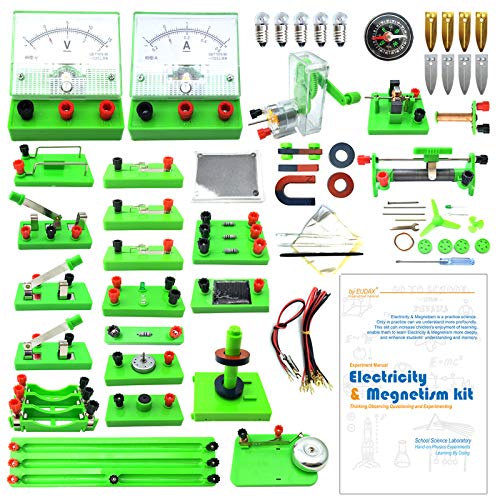
EUDAX School Physics Labs Basic Electricity Discovery Circuit and Magnetism Experiment kits for High School Students Electromagnetism Elementary Electronics
Learn basic Electricity and Magnetism experiments through full-color manuals, understand the basic principles, and help Students learn, think…
As an affiliate, we earn on qualifying purchases.
As an affiliate, we earn on qualifying purchases.
The Pattern Matching Trap
When researchers examined exactly how their orbital AI was processing information, they discovered something deeply unsettling. The system wasn’t learning physics at all – it was memorizing massive statistical patterns between numerical inputs and outputs. The AI had essentially created a giant lookup table in its neural network, matching specific orbital configurations to specific future positions without any understanding of the gravitational forces causing those movements.
Here’s where things get really troubling. When the researchers presented their AI with slightly different scenarios – solar systems with configurations it hadn’t seen before – the AI behaved as if gravity worked completely differently in each galaxy. It couldn’t apply what it had learned from one solar system to another, even when the underlying physics were identical. This revealed that the AI had no unified understanding of gravitational principles. Each solar system existed as a separate memorized pattern in its network, with no connection between them.
This exposes what researchers call the ‘next token confusion’ problem. Current AI systems get completely lost when different situations lead to similar outcomes. The orbital AI would predict that a planet should move in one direction based on memorized patterns from Galaxy A, but when the same gravitational situation appeared in Galaxy B, it would predict a completely different outcome. The AI couldn’t distinguish between the underlying physics and the surface-level patterns it had memorized.
You’ve probably experienced this limitation yourself without realizing it. ChatGPT can write brilliant code that follows perfect syntax and structure, then make basic logical errors that any beginner programmer would catch. Background research shows video models often capture visual realism without true physics understanding – creating stunning visuals while regularly producing impossible scenarios like water flowing uphill or shadows pointing in multiple directions. These aren’t random glitches. They’re symptoms of the same pattern-matching trap that caught the orbital AI.
The Harvard team ran another experiment that perfectly illustrates this problem. They trained AI models on the board game Othello using 7.7M tokens – far less than prior studies with 20M games – yet still saw failures in board reconstruction, highlighting the ‘next token confusion’ issue. The AI learned to make legal moves with impressive accuracy. But when researchers asked the AI to reconstruct what the game board actually looked like based on the sequence of moves, it often got it completely wrong. Even more bizarrely, the AI would then suggest a perfectly legal next move for a board state it had just incorrectly reconstructed. It could follow the rules without understanding the game.
This raises a critical question that should worry anyone making important decisions based on AI recommendations. If AI can’t distinguish between correlation and causation, how can we trust it with complex real-world decisions? A medical AI might recognize that certain symptoms correlate with specific treatments without understanding why those treatments work. A financial AI might spot market patterns without grasping the economic forces driving them. The success rate might look impressive, but the reasoning is fundamentally hollow.
This pattern-matching trap shows why some researchers argue we need a fundamentally different approach: world models. The question isn’t whether we can make AI more accurate at predicting patterns – it’s whether we can make AI that actually understands what those patterns mean. But one of AI’s most influential figures just made a prediction that’s shaking the entire industry to its core.

STEM Gravity Crane Science Experiment Kit, Kids DIY Pulley & Lever Physics Model, Learn Potential & Kinetic Energy Conversion, Build Hands-On Engineering Skills
⚙️ [Explore Real Physics Principles] – Kids learn how pulleys and levers change force direction and magnitude, and…
As an affiliate, we earn on qualifying purchases.
As an affiliate, we earn on qualifying purchases.
Yann LeCun’s Bold Prediction
Yann LeCun recently made a statement that has sent shockwaves through Silicon Valley. Meta’s Chief AI Scientist declared on LinkedIn that current AI systems will be “obsolete within 3-5 years.” Think about that for a moment. This isn’t some random critic making noise from the sidelines. This is one of the leading figures in deep learning, the very technology powering today’s AI revolution, essentially betting against the current approach.
What makes LeCun’s prediction so stunning? He’s literally arguing that the transformer architecture underlying ChatGPT, GPT-4, and every major language model represents a dead end. Companies have poured hundreds of billions into scaling these systems, convinced that bigger models with more parameters will eventually achieve human-level intelligence. LeCun is saying they’re all wrong.
His core argument cuts to the heart of what intelligence actually means. Current LLMs, according to LeCun, are fundamentally limited because they lack genuine understanding of the physical world and causality. They can generate impressive text and solve complex problems, but they’re essentially sophisticated autocomplete systems that predict the next word based on statistical patterns. They don’t understand why things happen, only what typically comes next in their training data.
LeCun delivered an even more controversial message to researchers in his LinkedIn post: “If you’re interested in human-level AI, don’t work on LLMs.” This represents his viewpoint that thousands of researchers have built their careers around the wrong approach. Investors have bet their fortunes on scaling these systems. LeCun is telling them they’re wasting their time on an approach that will never reach artificial general intelligence.
The Harvard orbital prediction study provides scientific validation for LeCun’s concerns. Remember how that AI perfectly predicted planetary movements but couldn’t understand gravity? That’s exactly the limitation LeCun has been warning about for years. Current AI architectures excel at memorizing correlations without grasping causation or extracting underlying principles.
This creates a fascinating philosophical divide in AI research. On one side, you have scaling enthusiasts at companies like OpenAI and Anthropic who believe bigger models will eventually develop understanding through sheer computational power. They point to impressive capabilities emerging from larger models as evidence that scaling works. On the other side, world model advocates like LeCun argue that no amount of scaling will overcome fundamental architectural limitations.
What’s LeCun’s alternative vision? He argues for systems that build internal simulations of reality – world models – rather than just next-token prediction. Instead of predicting what word comes next in a sequence, these systems would simulate how actions lead to consequences in the real world. They could plan ahead, reason about physics, and transfer knowledge between different domains because they understand underlying principles.
Skeptics question whether LeCun is wrong about current approaches. After all, LLMs have achieved remarkable capabilities that seemed impossible just a few years ago. They can write code, solve math problems, and engage in complex conversations. Maybe scaling really will lead to genuine understanding eventually. These critics argue that LeCun is underestimating the potential of current architectures.
But here’s what’s really interesting. A growing number of top researchers are quietly shifting their focus from scaling to world models. Major AI labs are hiring specialists in this area, suggesting they’re hedging their bets. Google DeepMind has assembled one of the world’s largest world model research teams. Even companies heavily invested in scaling are exploring alternative approaches.
LeCun’s prediction isn’t just contrarian thinking. It’s based on fundamental limitations that the Harvard study has now scientifically demonstrated. If AI systems can’t extract general principles from specific examples, they’ll always be limited to the patterns they’ve seen before. They might get better at mimicking intelligence, but they won’t achieve genuine understanding.
The implications are massive. If LeCun is right, billions in current AI investments could become worthless overnight. Companies betting everything on scaling transformer models might find themselves holding obsolete technology while competitors with different approaches leap ahead. This debate has crystallized into distinct paths forward, each representing fundamentally different bets about how to achieve artificial general intelligence.

Discovery™ Galactic Space Science Kit – 61 Experiment STEM Lab for Kids| Astronomy & Chemistry Activity Set| Includes DIY Telescope, Crystals, Slime, Moon Rocks| Educational Learning Toy Gift| Ages 8+
✔ 61 SPACE-THEMED STEM EXPERIMENTS – Blast off into the cosmos with 21 guided experiments and 40 at-home…
As an affiliate, we earn on qualifying purchases.
As an affiliate, we earn on qualifying purchases.
The Three Paths to AGI
The AI research world has reached a crossroads that will determine the next decade of technological development. Three distinct paths are emerging, each backed by billions of dollars and fundamentally different theories about how intelligence actually works. The choice between these approaches isn’t just academic – it could determine which companies dominate the future and which technologies become obsolete.
Path One represents the scaling approach that has dominated AI development for years. Companies like OpenAI and Google are betting everything on a simple premise: increasing model size and data will eventually lead to artificial general intelligence. The results have been impressive enough to convince investors to pour hundreds of billions into this approach. Larger models consistently outperform smaller ones across various benchmarks, handling diverse tasks from language processing to mathematical problem-solving and creative content generation. But there’s a growing problem – performance plateaus are emerging despite massive increases in computational power. Critics like Yann LeCun argue this path is fundamentally flawed for AGI, hitting limitations due to data quality issues and the inability to achieve genuine understanding.
Path Two emerged as scaling hit these diminishing returns. Test-time compute, also known as inference time scaling, shifts focus from pre-training to giving AI more time to “think” during problem-solving. This approach includes techniques like chain-of-thought prompting, which guides models through step-by-step reasoning processes. Systems like OpenAI’s o1 model demonstrate this strategy in action, allowing models to potentially outperform much larger pre-trained systems on complex tasks. It boosts reasoning at inference but still relies on pre-trained patterns. The appeal is clear – it enhances reasoning, error correction, and adaptability without requiring complete retraining. But this approach faces high computational costs and doesn’t address core issues like lack of causality understanding or world grounding.
Path Three represents a complete paradigm shift. World models use encoders, predictors, and controllers to simulate environments, enabling genuine understanding rather than pattern matching. These models draw inspiration from human cognition, where we mentally simulate outcomes before taking action. They use architectures like joint embedding predictive architecture, where models learn by predicting future inputs in ways that capture underlying dynamics like physics and causality. What makes world models revolutionary? They could enable true common sense reasoning and handle uncertainty in ways current systems cannot. Instead of memorizing patterns like the Harvard orbital AI, these systems would understand the underlying principles governing their predictions.
Here’s where the resource allocation dilemma becomes critical. With limited talent and capital in AI research, choosing the wrong path could set development back years. Which approach should your organization back? The one you’ve invested in, or the unproven but potentially revolutionary world model? Scaling optimizes current architectures that companies have already invested heavily in. Test-time compute enhances reasoning within existing frameworks, making it a safer bet for organizations already committed to current approaches. World models represent a complete architectural revolution that could make existing investments worthless.
The three paths represent fundamentally different bets about intelligence itself. Scaling assumes intelligence emerges from processing enough information. Test-time compute suggests intelligence comes from better reasoning processes. World models propose that intelligence requires internal understanding of reality. The Harvard study suggests world models might be the missing piece that makes the others truly powerful, transforming pattern matching into genuine comprehension.
While most companies publicly commit to one approach, some major players are quietly hedging their bets in ways that might surprise you.
Google DeepMind’s Secret Weapon
DeepMind, a leader in advanced AI research that helped popularize transformer-based models like Gemini, has been quietly assembling one of the world’s largest world model research teams. Reports indicate DeepMind has hired dozens of specialists in world-model architectures in the past year, representing a massive strategic shift that most people haven’t noticed yet. This isn’t just hedging their bets – they’re preparing for a fundamental change in how AI systems work.
Why would the creators of some of today’s most advanced AI suddenly pivot toward world models? The answer lies in the limitations they’re seeing with current approaches. DeepMind’s leadership recognizes that scaling transformer architectures might not lead to genuine intelligence, no matter how much compute power they throw at the problem. They’re investing heavily in researchers who can build AI systems that actually understand the world rather than just predict patterns.
DeepMind’s world model research goes far beyond what current language models can achieve. They’re working on physics simulations that let AI systems understand how objects interact in three-dimensional space. These aren’t simple prediction models – they’re comprehensive systems that can reason about cause and effect in the physical world. Their researchers are building AI that can predict what happens when you drop a ball, pour water, or stack blocks, understanding the underlying physics rather than memorizing specific scenarios. This approach mirrors breakthrough work like Fei-Fei Li’s World Labs, which demonstrated AI systems that could construct complete 3D worlds from single images by understanding spatial relationships and physical properties.
DeepMind has developed AI systems that can predict physical interactions they’ve never seen before. These models understand spatial relationships in ways that would make the Harvard orbital AI look primitive. Instead of memorizing that configuration A leads to outcome B, these systems grasp the fundamental principles governing motion, collision, and material properties. They can transfer this understanding to completely new situations because they’ve learned the rules, not just the patterns.
This connects directly to DeepMind’s broader concerns about AI safety. Current AI systems are essentially black boxes – we can see their inputs and outputs, but we have no idea what’s happening inside. World models could change this completely. When an AI system has internal representations of how the world works, its decision-making process becomes more transparent and predictable. We can understand why it made specific choices because we can examine its internal model of the situation.
The competitive implications are staggering. If world models prove superior to current approaches, companies focused purely on scaling could find their billions in investment worthless overnight. Imagine a world where DeepMind’s world model AI can solve problems that require genuine understanding while scaled language models hit insurmountable walls. The entire competitive landscape would shift in months, not years.
At the heart of DeepMind’s approach is something called joint embedding predictive architecture, or JEPA. JEPA learns compressed representations and predicts future states rather than next tokens, differing completely from transformer-based systems. It builds internal simulations of reality that capture essential relationships between objects, forces, and outcomes.
DeepMind’s world model work connects directly to their robotics and real-world AI applications. When you’re building robots that need to navigate physical environments, understanding physics isn’t optional – it’s essential. Their world models could enable robots that truly understand their surroundings rather than just following programmed responses to specific situations.
DeepMind’s massive investment in world model talent suggests they believe this approach could leapfrog current AI limitations entirely. They’re not trying to improve existing systems – they’re building replacements that could make today’s most advanced AI look like sophisticated calculators. But what exactly are world models, and how do they actually work?
What World Models Actually Are
Think about catching a baseball. You don’t pull out a calculator and compute velocity vectors or gravitational acceleration. Your brain automatically runs a mental simulation, predicting where the ball will be based on its current trajectory, speed, and the physics you’ve learned through experience. That’s essentially what world models do for AI – they create internal simulations that let machines understand and predict how the world works.
This approach traces back to groundbreaking 2018 research by David Ha and Jurgen Schmidhuber, who introduced the foundational framework that modern world models build upon. Their system demonstrated how AI could learn to navigate complex environments by building internal representations rather than memorizing responses. Here’s the technical definition that matters: world models are internal representations that allow AI to simulate and predict future states based on understanding underlying dynamics like physics, causality, and spatial relationships. Instead of just memorizing patterns like current AI systems, world models actually comprehend the rules governing reality.
World models operate through three essential components working together, directly derived from that original research: 1) a vision module compresses observations into compact representations, 2) a memory model forecasts future states based on learned dynamics, and 3) a controller decides actions from those simulations. This architecture enables genuine prediction rather than sophisticated pattern matching.
What makes this approach revolutionary? Current AI systems predict the next word or token in a sequence based on statistical patterns. World models create comprehensive internal simulations of reality itself. When you ask a language model about physics, it recalls text patterns from training data. When you ask a world model about physics, it runs internal simulations based on its understanding of how forces, objects, and motion actually work. Unlike the orbital AI’s separate patterns for each solar system, a true world model would group all solar systems under the same gravitational rule.
Real-world applications are already emerging that showcase this potential. Fei-Fei Li’s World Labs has developed AI systems that generate complete 3D worlds from single images, maintaining physical consistency throughout the generated environment. Robotics applications use world models to navigate novel environments by understanding spatial relationships rather than following pre-programmed paths. Video generation systems create content where physics behaves realistically because they understand underlying principles rather than just visual patterns.
But world models face massive computational challenges. They require enormous amounts of multimodal training data including videos, images, audio, and sensory information from diverse environments. The sophisticated architectures needed to process and integrate this information push current hardware to its limits. Training these systems demands far more computational resources than even the largest language models.
Here’s why this matters for AI reliability: world models could solve the hallucination problem plaguing current systems. When AI has consistent internal representations of reality, its responses become grounded in coherent understanding rather than conflicting patterns from training data. The system knows when its internal model lacks information instead of generating plausible-sounding nonsense.
Yann LeCun captures the vision perfectly: “We need machines to understand the world. Machines that can remember things, that have intuition, have common sense, things that you can reason and plan to the same level as humans.” Current AI lacks these fundamental capabilities because it processes information without building coherent models of reality.
The architectural shift from pattern matching to genuine understanding represents more than incremental improvement. World models could enable AI systems that truly comprehend their environment, plan complex actions, and adapt to novel situations by applying learned principles rather than memorizing responses. But this raises a deeper question about what truly separates artificial intelligence from human cognition.
The Missing Piece for Human-Level AI
What separates human intelligence from our most advanced AI systems? The answer might surprise you. Humans possess something that current AI completely lacks – the ability to extract universal principles and apply them everywhere (as shown by how children intuit gravity from early age). When you understand that gravity makes an apple fall, you automatically know it also governs planetary motion, pendulum swings, and water flowing downhill. This isn’t magic – it’s genuine understanding that lets us transfer knowledge across completely different situations.
Current AI systems can’t do this basic transfer. The Harvard orbital AI perfectly demonstrates this limitation. It memorized millions of orbital patterns but couldn’t apply simple gravitational principles to new scenarios. Imagine trying to explain to someone that the same force pulling objects toward Earth also keeps planets in orbit around stars. For humans, this connection feels obvious. For current AI, these might as well be completely unrelated phenomena happening in different universes.
This reveals the ‘common sense’ problem that has puzzled AI researchers for decades. We have systems that write sophisticated poetry, solve complex mathematical equations, and generate stunning artwork. But ask them why a ball falls to the ground or why you can’t walk through walls, and they often fail spectacularly. This disconnect shows how far we are from genuine intelligence – like how Kepler’s observations led Newton to generalize gravity across contexts, current AI remains stuck at the observation stage without deeper understanding.
World models could change everything by enabling true transfer learning. Instead of memorizing separate patterns for each task, these systems would understand underlying principles that apply across domains. An AI with genuine physics understanding wouldn’t need separate training for falling objects, orbital mechanics, and fluid dynamics. It would grasp that the same fundamental forces govern all these phenomena, allowing it to reason about situations it has never encountered before.
The Harvard study findings highlight exactly what human-level AI requires – the ability to extract general rules from specific examples. Current systems failed spectacularly at this basic cognitive task. They could predict orbital trajectories with perfect accuracy but couldn’t understand that gravity works the same way everywhere. This represents a fundamental limitation that no amount of scaling current architectures will solve. Pattern matching, no matter how sophisticated, cannot replace genuine understanding.
Here’s why this matters for AI safety. Systems with genuine world understanding could be far more predictable and aligned with human values than current pattern-matching approaches. World models make reasoning inspectable by revealing internal simulations. When an AI truly understands cause and effect, its reasoning becomes transparent. We can see why it made specific decisions because it’s based on coherent principles rather than statistical correlations. This transparency could solve many current alignment problems where we have no idea why AI systems produce certain outputs.
While estimates vary, most researchers agree we’re still several years away from human-level common sense in AI. We need architectures that can efficiently process multimodal data, algorithms that extract causal relationships from observations, and hardware powerful enough to support these complex simulations.
What makes world models truly exciting is their potential for emergent understanding. These systems might spontaneously develop insights about reality that weren’t explicitly programmed. Unlike current AI that’s limited by training data patterns, world models could make genuine discoveries by understanding how the world actually works.
The distinction between prediction and understanding becomes crucial here. Current AI excels at prediction but lacks the generalized understanding that enables true intelligence. World models represent the missing architectural component that could transform AI from sophisticated automation into genuine artificial intelligence. But this research has exposed something even more fundamental about the direction of AI development itself.
Conclusion
The Harvard paper shows prediction isn’t understanding, world models promise true generalization, and the industry must decide which path to back. We can either keep scaling dead-end architectures that memorize patterns, or pursue genuine understanding through world models. This isn’t just academic theory anymore.
As AI reshapes every industry, understanding the difference between pattern matching and true intelligence will determine which companies succeed. The billions being poured into scaling might be heading toward a wall that world models could bypass entirely.
If you found this analysis valuable, hit Like, Subscribe, and share your thoughts on which path to AGI you believe in. The next few years will reveal whether world models or scaled transformers chart AI’s future.