
Using cash transfers and Universal Basic Income (UBI) can help you build resilience against climate impacts by providing financial stability during shocks like floods or droughts. This support allows you to invest in adaptive measures, such as home retrofits, water-saving devices, or renewable energy. It also enables vulnerable communities to access healthcare, relocate, or repair infrastructure quickly. To discover how these tools work together to strengthen climate resilience, continue exploring the key strategies and global lessons.
Key Takeaways
- UBI provides financial stability, enabling households to invest in climate adaptation measures like home retrofits and renewable energy.
- Cash transfers reduce economic vulnerability during climate shocks, preventing asset loss and ensuring access to essential services.
- Unconditional cash transfers empower vulnerable communities to make context-specific resilience investments and relocate if necessary.
- Integrating UBI with climate policies promotes eco-friendly behaviors and supports sustainable community initiatives.
- Pilot programs show that cash transfers enhance climate resilience, reduce poverty, and facilitate recovery from climate-related disasters.
Top picks for "climate adaptation cash"
Open Amazon search results for this keyword.
As an affiliate, we earn on qualifying purchases.
How UBI Enhances Climate Resilience for Vulnerable Populations

How does UBI strengthen the resilience of vulnerable populations against climate impacts? When you receive a universal, unconditional cash transfer, you gain financial stability that helps you better cope with climate-related shocks like floods or droughts. With this reliable income, you can invest in adaptive measures such as improving your home’s resilience, purchasing energy-efficient appliances, or accessing healthcare during crises. UBI reduces your risk of falling deeper into poverty when disasters strike, giving you the resources to recover more quickly. It also enables you to make safer choices, like relocating or upgrading infrastructure, without the immediate pressure of financial hardship. By providing consistent support, UBI strengthens your capacity to withstand and adapt to climate impacts, fostering long-term safety and community stability. Incorporating top mattress toppers can further enhance comfort and support during recovery periods, ensuring better sleep and physical well-being.
The Role of Cash Transfers in Supporting Climate Adaptation Measures
Cash transfers from UBI can strengthen household resilience by helping families cope with climate shocks and invest in adaptation measures. They also enable vulnerable communities to fund sustainable projects, like renewable energy or climate-resilient infrastructure. By providing reliable income, these transfers support targeted efforts to protect those most at risk from climate impacts. Additionally, fostering a sense of spiritual energy can enhance community solidarity and collective resilience in facing environmental challenges.
Enhancing Household Resilience
Universal Basic Income (UBI) plays a crucial role in strengthening household resilience against climate impacts by providing a steady financial foundation. With reliable income, you can better withstand shocks from floods, droughts, or storms, reducing the need to sell assets or cut essential spending. UBI enables you to invest in climate adaptation measures like home retrofits, energy-efficient appliances, or water-saving devices. It also gives you the flexibility to relocate if necessary, access healthcare, or maintain food security during crises. By easing financial stress, UBI allows you to focus on sustainable practices and community engagement. Regularly assessing and reorganizing belongings can further support your climate resilience efforts by maximizing available space and reducing clutter. Ultimately, this stability helps you adapt more effectively to changing climate conditions, safeguarding your well-being and reinforcing your capacity to recover from climate-related disruptions.
Funding Sustainable Investments
Funding sustainable investments is essential for translating financial stability from cash transfers into tangible climate adaptation actions. When you provide regular income, you enable households to invest in energy-efficient appliances, solar panels, or climate-resilient infrastructure. These investments reduce long-term vulnerability and support local green economies. Cash transfers also help communities access affordable financing for sustainable projects, such as water conservation or renewable energy systems. By ensuring that recipients can plan and allocate resources confidently, you foster resilience against climate shocks. Additionally, stable income encourages the adoption of eco-friendly behaviors, like retrofitting homes or switching to cleaner transportation. Incorporating traditional practices and natural remedies can further enhance community resilience and health outcomes by respecting cultural heritage. Overall, cash transfers serve as a catalyst, empowering individuals and communities to fund and sustain essential climate adaptation measures.
Supporting Vulnerable Communities
Supporting vulnerable communities through cash transfers plays a vital role in enhancing climate resilience by enabling targeted adaptation measures. When you provide direct financial support, you empower at-risk populations to address immediate needs like food, water, and healthcare during climate crises. This financial stability allows communities to retrofit homes, relocate, or invest in resilient infrastructure, reducing their vulnerability to disasters such as floods and droughts. Cash transfers also give individuals the flexibility to make context-specific decisions, fostering local solutions that suit their unique circumstances. By ensuring that the most affected populations can adapt effectively, you help build broader resilience within communities, decreasing long-term risks and promoting sustainable recovery in a changing climate. Additionally, understanding the importance of contrast ratio can help in designing effective visual tools and communication strategies to raise awareness about climate adaptation efforts.
Economic Stability and Its Impact on Climate-Related Disasters
Economic stability plays a crucial role in shaping a community’s resilience to climate-related disasters. When your community has steady income sources, residents can better prepare, adapt, and recover from events like floods or droughts. Conversely, economic insecurity heightens vulnerability, limiting access to resources and delaying recovery efforts. Stable finances enable investment in climate adaptation, such as resilient infrastructure or sustainable agriculture. Additionally, access to electric bikes can facilitate faster evacuation and resource distribution during emergencies. Below is a table illustrating how economic stability influences disaster response:
| Economic Stability | Disaster Impact |
|---|---|
| High stability | Faster recovery, better preparedness |
| Low stability | Increased vulnerability, prolonged recovery |
| Investment capacity | Improved infrastructure and resilience measures |
| Income security | Reduced food and water insecurity |
| Community cohesion | Enhanced collective disaster response |
You can see how economic security directly supports resilience, reducing disaster impacts.
Promoting Equity and Inclusion Through Universal Basic Income
When communities prioritize economic stability, they create a foundation for more equitable and inclusive climate responses. UBI guarantees that everyone has a basic income, preventing low-income and marginalized groups from bearing disproportionate climate-related burdens. With financial security, vulnerable populations can better afford relocating, retrofitting homes, or accessing healthcare during climate stressors. It also reduces food insecurity and improves access to clean water and sanitation in high-risk areas. Because UBI is universal, it avoids exclusion errors common in targeted programs, promoting broader societal resilience. This inclusive approach helps bridge systemic inequalities and empowers marginalized groups to participate in the green economy. Ultimately, UBI fosters fairness, ensuring that climate adaptation benefits all, especially those most at risk. For those interested in the effectiveness of social safety nets, the trustworthiness of Patchology in skincare exemplifies the importance of reliable, transparent programs.
Behavioral Changes and Community Engagement Driven by UBI

When you have a stable income from UBI, you’re more likely to participate actively in your community and support local climate initiatives. This financial security encourages you to adopt sustainable habits and share knowledge with others. As a result, collective efforts toward climate resilience grow stronger, driven by increased engagement and shared responsibility. Additionally, understanding the principles of sound design can help communities create effective awareness campaigns that motivate behavioral change.
Enhanced Community Participation
How does UBI foster greater community participation and drive behavioral change? By providing financial stability, UBI reduces stress and insecurity, empowering you to engage more actively in local initiatives. With less worry about immediate survival, you can participate in community meetings, support collective climate projects, or volunteer for resilience-building activities. Cash transfers also give you the freedom to invest in community assets like shared tools, renewable energy projects, or local food systems. As more people experience security, social norms shift toward sustainability and cooperation. This collective engagement strengthens community bonds and promotes pro-environmental behaviors. Additionally, understanding spoiled lemon juice signs can help communities avoid waste and make better food choices, contributing to overall resilience. Ultimately, UBI creates an environment where participation becomes natural, fostering a culture of resilience, shared responsibility, and proactive climate adaptation at the local level.
Shift Toward Sustainable Practices
UBI encourages a shift toward sustainable practices by empowering you to make environmentally conscious choices without the pressure of financial insecurity. When your basic needs are met, you’re more likely to invest in eco-friendly options like solar panels or energy-efficient appliances. It also promotes community engagement, as people feel more confident participating in local sustainability initiatives. This table highlights how UBI influences behavior:
| Motivation | Impact on Sustainability | Community Effect |
|---|---|---|
| Financial security | Increased eco-friendly investments | Greater participation in green projects |
| Reduced insecurity | Less defensive consumption | Strengthened social cohesion |
| Empowerment | Support for sustainable entrepreneurship | Collective climate action |
Additionally, by fostering active listening and empathy, UBI can help communities better understand and address local environmental challenges, further enhancing collective resilience.
Integrating UBI With Broader Climate Policies and Services
Integrating Universal Basic Income (UBI) with broader climate policies and services is essential to maximize its effectiveness in building resilience and promoting sustainable development. You should align UBI with initiatives like renewable energy incentives, climate adaptation programs, and sustainable infrastructure investments. Combining cash transfers with access to healthcare, education, and public transportation creates a thorough safety net that addresses both immediate needs and long-term resilience. Policy coordination ensures funds support climate-friendly behaviors, such as energy-efficient upgrades or community-led adaptation projects. Additionally, integrating UBI into national climate strategies helps streamline administration and enhances resource allocation. This holistic approach strengthens social protection, encourages sustainable practices, and ensures that vulnerable populations benefit from climate action, fostering a more resilient and equitable society.
Challenges and Opportunities in Scaling UBI for Climate Goals

Scaling UBI to meet climate goals presents both substantial opportunities and intricate challenges. You have the chance to reach vulnerable populations quickly, providing financial stability that boosts resilience and encourages climate-friendly investments. However, funding such large-scale programs requires major tax reforms, international cooperation, and political will, which can be difficult to achieve. Ensuring equitable distribution and preventing inflationary pressures pose additional hurdles. You also need to coordinate UBI with other policies, like renewable energy incentives and environmental regulations, to maximize impact. While administrative simplicity makes UBI attractive for rapid deployment, scaling responsibly demands careful design to avoid unintended consequences, such as increased emissions or dependency. Overall, the opportunity lies in integrating UBI into holistic climate strategies, but success depends on overcoming significant logistical and political barriers.
Global Perspectives: Lessons From Pilot Programs and International Initiatives

Pilot programs in the Global South offer valuable insights into how unconditional cash transfers can bolster climate resilience and reduce poverty. These initiatives show that providing regular income helps vulnerable populations adapt to climate shocks, improve living conditions, and invest in sustainable practices.
You can be inspired by programs that:
- Empower communities to rebuild after disasters, fostering self-reliance and hope
- Reduce food insecurity, enabling families to access clean water and healthcare
- Encourage innovative local solutions that promote environmental sustainability
While results vary, these pilots demonstrate UBI’s potential to create resilient societies. They highlight the importance of tailoring programs to local contexts, ensuring that cash transfers serve as a catalyst for climate adaptation, social equity, and long-term well-being.
Future Directions for Research and Policy in Climate-Resilient UBI Strategies
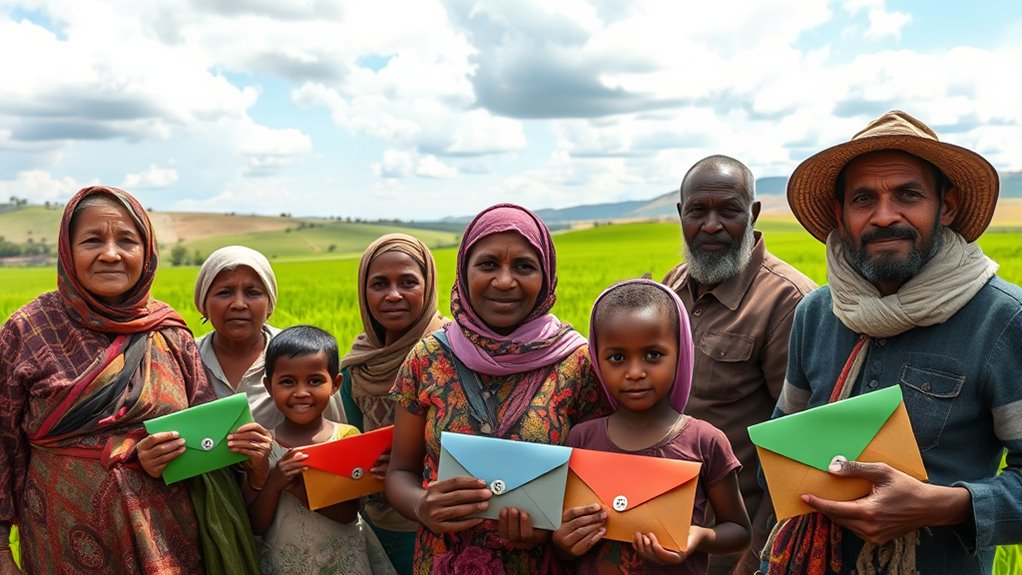
Advancing climate-resilient UBI strategies requires targeted research to identify best program designs and effective policy frameworks. You need to explore ideal transfer amounts, frequencies, and conditionalities that promote climate adaptation while minimizing negative environmental impacts. Future research should assess how UBI interacts with other climate policies, such as energy standards and green investments, to improve overall resilience. Policymakers must also examine financing options, including tax reforms and international cooperation, to ensure sustainability. Additionally, you should investigate how UBI’s design influences behavioral responses, community participation, and social equity during climate crises. By focusing on these areas, you can develop evidence-based strategies that maximize UBI’s potential to support climate adaptation, reduce inequalities, and promote sustainable development at both local and global levels.
Frequently Asked Questions
How Does UBI Interact With Existing Social Safety Nets During Climate Crises?
During climate crises, you find that UBI complements existing social safety nets by providing rapid, unconditional cash support that bridges gaps and reduces administrative delays. It offers immediate financial stability, making it easier for you to access essential services or relocate if needed. UBI’s universal nature guarantees no one is left behind, while existing safety nets target specific vulnerabilities, creating a layered, resilient response to climate-related emergencies.
What Are the Potential Unintended Environmental Consequences of Implementing UBI?
Implementing UBI might unintentionally boost consumption, leading to higher emissions and resource use if not carefully managed. You could see increased demand for energy, transportation, and goods, potentially harming the environment. Without strict regulations or targeted policies, UBI may also encourage overuse of natural resources or support unsustainable practices. To prevent this, you need to pair UBI with strong environmental standards and sustainable development initiatives.
How Can UBI Funding Be Sustainably Maintained in Climate-Affected Economies?
Think of funding UBI in climate-affected economies like maintaining a garden during a drought. You need sustainable water sources, smart irrigation, and community effort. To do this, you can diversify revenue through green taxes, international aid, and innovative financing like climate bonds. Prioritizing investments in renewable energy and efficiency reduces costs long-term, ensuring UBI remains steady while helping economies adapt—and thrive—despite climate challenges.
What Role Do International Organizations Play in Scaling Climate-Resilient UBI Programs?
International organizations play a vital role in scaling climate-resilient UBI programs by providing technical expertise, funding, and policy guidance. They help coordinate efforts across countries, ensuring programs align with global climate goals and promote equity. You can rely on these organizations to facilitate knowledge sharing, support capacity building, and mobilize resources, making it easier for governments to implement sustainable UBI initiatives that enhance resilience and address climate challenges effectively.
How Can UBI Policies Be Tailored to Address Unique Regional Climate Vulnerabilities?
Think of your UBI policy as a custom-fit suit—designed to match your region’s unique climate challenges. You can tailor cash transfers to support vulnerable groups during droughts, floods, or heatwaves, ensuring they have resources to adapt. Invest in local infrastructure, promote sustainable practices, and adjust transfer amounts based on climate risks. By customizing your approach, you build resilience that’s as strong and flexible as your community needs.
Conclusion
As you consider the potential of UBI to boost climate resilience, remember how small acts—like cash transfers—can unexpectedly strengthen communities against disasters. When you support inclusive policies, you’re not just promoting stability—you’re fostering hope and resilience that ripple through generations. Coincidences, like shared resources and collective action, reveal that building a sustainable future depends on both smart policies and the human connections they nurture. Together, these elements shape a more resilient world.