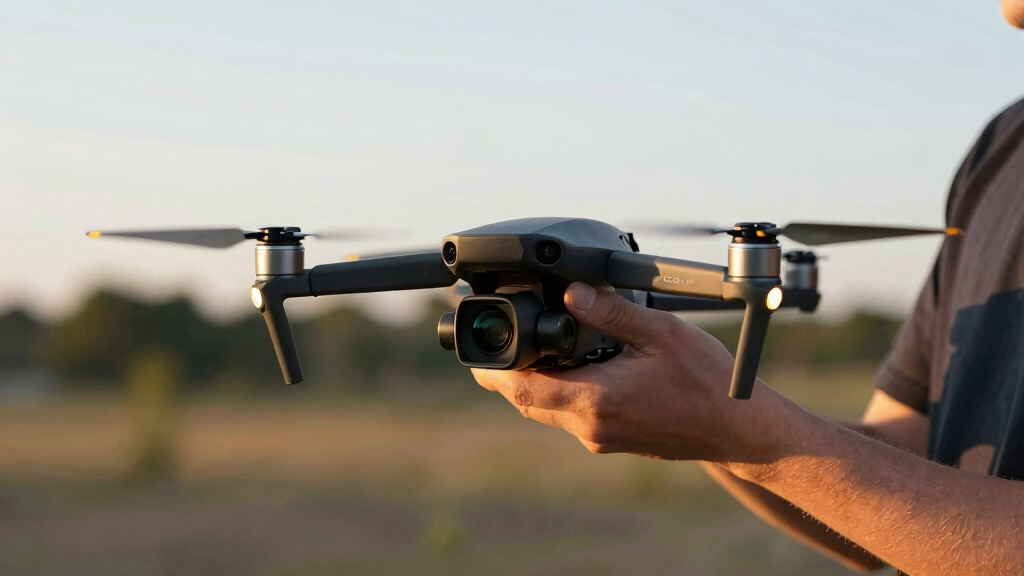
For most buyers comparing camera drones, I rank the DJI Mini 4K Fly More Combo as the best overall because its stabilized 4K camera and three-battery package balance image quality, range, and usable flying time. The single-battery DJI Mini 4K is my value pick for buyers who want the same core camera system at a lower entry price. At the premium end, the DJI Mini 5 Pro Fly More Combo Plus adds obstacle sensing, subject tracking, and longer claimed flight time for more ambitious filming. The main choice is between true gimbal stabilization and lower-cost digital video, followed by battery quantity, automated flight tools, controller design, and portability. Continue reading for my full ranking logic, buying advice, and buyer-specific recommendations.
Key Takeaways
- Mechanical stabilization separated the leaders: the DJI Mini 4K packages rank above cheaper 4K-labeled models because a three-axis gimbal has more influence on watchable aerial footage than resolution alone.
- The DJI Mini 4K Fly More Combo earned the top position by pairing the lineup’s strongest mainstream camera value with three batteries, while the single-battery version keeps the same core appeal for shorter sessions.
- The two Mini 5 Pro bundles serve different premium buyers: I favor the standard Fly More Combo for image-first shoppers and the Combo Plus for tracking, obstacle sensing, and its 52-minute claimed flight time.
- Budget models divide by purpose: the Oddire emphasizes GPS automation, the screen-equipped GPS drone avoids phone dependence, the 2K model suits first-time adults, and the FlyVISTA prioritizes simple recreational flying.
- More batteries often beat a longer headline flight claim: the three-battery DJI bundle offers better session flexibility, while the two-battery DJI Mini 4K Camera Drone Combo provides a leaner middle ground.
| DJI Mini 4K | 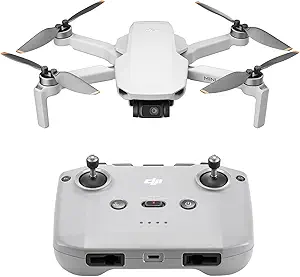 | Best Overall | Weight: Under 249 g | Camera Resolution: 4K UHD | Gimbal: 3-axis | VIEW LATEST PRICE | See Our Full Breakdown |
| Oddire 4K GPS Foldable Drone |  | Best Feature Value | Camera Resolution: 4K UHD | Camera Adjustment: 90° | Weight: 249 g | VIEW LATEST PRICE | See Our Full Breakdown |
| FlyVISTA Cool Mini Drone |  | Best for Kids and Indoor Beginners | Camera: 1080P adjustable lens | Maximum Flight Time: Approximately 20 minutes total | Battery: 2 × 1800 mAh rechargeable batteries | VIEW LATEST PRICE | See Our Full Breakdown |
| GPS Drone with 4K Camera and 4.5-Inch FPV Screen |  | Best Screen-Equipped Controller | Camera Resolution: 4K | Controller Display: 4.5-inch FPV screen | Weight: 249 g | VIEW LATEST PRICE | See Our Full Breakdown |
| DJI Mini 4K Fly More Combo |  | Best for Extended Shooting | Weight: Under 249 g | Camera Resolution: 4K UHD | Gimbal: 3-axis | VIEW LATEST PRICE | See Our Full Breakdown |
| 2K HD FPV Beginner Camera Drone |  | Best Budget Beginner Pick | Camera: 2K HD with adjustable angle | Flight Time: Approximately 26 minutes | Batteries: 2 rechargeable batteries | VIEW LATEST PRICE | See Our Full Breakdown |
| DJI Mini 5 Pro Fly More Combo with DJI RC 2 |  | Best Premium Camera | Weight: 249.9 g | Camera Sensor: 1-inch CMOS | Video: 4K/60fps HDR | VIEW LATEST PRICE | See Our Full Breakdown |
| DJI Mini 5 Pro Fly More Combo Plus with DJI RC 2 | | Best for Extended Premium Flights | Listed Weight: 249.9 g | Camera Sensor: 1-inch CMOS | Video: 4K/60fps HDR | VIEW LATEST PRICE | See Our Full Breakdown |
| DJI Mini 4K Camera Drone Combo |  | Best Value Stabilized 4K Combo | Weight: Under 249 g | Camera Resolution: 4K UHD | Gimbal: 3-axis | VIEW LATEST PRICE | See Our Full Breakdown |
| camera drone | Weight | Maximum Flight Time | Camera Resolution |
|---|---|---|---|
| DJI Mini 4K | Under 249 g | 31 minutes | 4K UHD |
| Oddire 4K GPS Foldable Drone | 249 g | 48 minutes with 2 batteries | 4K UHD |
| FlyVISTA Cool Mini Drone | — | Approximately 20 minutes total | — |
| GPS Drone with 4K Camera and 4 | 249 g | 60 minutes with dual batteries | 4K |
| DJI Mini 4K Fly More Combo | Under 249 g | — | 4K UHD |
| 2K HD FPV Beginner Camera Dron | Under 250 g | — | — |
| DJI Mini 5 Pro Fly More Combo | 249.9 g | Up to 36 minutes | — |
| DJI Mini 5 Pro Fly More Combo | — | Up to 52 minutes | — |
| DJI Mini 4K Camera Drone Combo | Under 249 g | — | 4K UHD |
More Details on Our Top Picks
DJI Mini 4K
I rank the DJI Mini 4K first because it combines a stabilized 4K camera, low weight, and approachable controls without forcing buyers into a large bundle. Its 3-axis gimbal is the key advantage over the Oddire 4K GPS Drone: footage should remain smoother when the aircraft changes direction or encounters wind. The 10 km transmission rating also gives pilots far more connection headroom than Oddire’s 500-meter figure, subject to local flight rules. Compared with the DJI Mini 4K Fly More Combo, this package costs less but includes only one battery, limiting practical shooting sessions once return-flight time and reserve power are allowed. I see it as the best-balanced camera drone, though buyers wanting long outings should budget for spare batteries and check DJI Fly app compatibility before purchase.
Pros:- 3-axis gimbal produces smoother video than fixed or electronically adjusted camera systems
- Under-249 g body is easy to pack and may avoid recreational registration requirements in some locations
- 10 km rated transmission provides substantial connection headroom
- Level 5 wind resistance and QuickShots support more usable outdoor footage
Cons:- Single-battery package provides only up to 31 minutes before allowing for return and safety reserve
- DJI Fly may need to be downloaded directly from DJI rather than a standard app store
- Flight and registration rules still vary by location despite the low weight
Best for: First-time aerial photographers who want stabilized 4K footage, dependable flight behavior, and a lightweight travel package
Not ideal for: Travel creators filming for several hours away from charging access, since the base package includes only one battery
- Weight:Under 249 g
- Camera Resolution:4K UHD
- Gimbal:3-axis
- Maximum Flight Time:31 minutes
- Wind Resistance:Level 5
- Maximum Transmission Range:10 km
- Included Battery:1 battery
Our verdict“I recommend this version to buyers who want the strongest balance of camera stability, portability, and price without paying upfront for a three-battery kit.”
Oddire 4K GPS Foldable Drone
The Oddire 4K GPS Foldable Drone earns my value slot by bundling two batteries with GPS follow, waypoint flight, gesture control, and auto return. Those modes offer more room for experimentation than the FlyVISTA Cool Mini Drone, while the claimed 48-minute combined flight time supports longer outings. Its 90-degree adjustable camera also lets pilots shift from horizon views toward overhead compositions. Yet the camera data lists no 3-axis gimbal, so buyers prioritizing smooth cinematic motion have a stronger option in the DJI Mini 4K. The 500-meter transmission range is also far shorter than DJI’s 10 km rating, and an SD card costs extra. I would choose Oddire for many automated flight features at a lower tier, not as a substitute for DJI’s stronger stabilization and transmission system.
Pros:- Two batteries provide up to 48 minutes of combined rated flight time
- GPS auto return, follow mode, and waypoint flight add useful automation
- 90-degree adjustable 4K camera supports forward and overhead viewpoints
- Foldable 249 g design is convenient for day trips
Cons:- No 3-axis gimbal is specified, limiting confidence in smooth moving footage
- 500-meter transmission range is much shorter than the DJI Mini 4K rating
- SD card is not included, and full functionality depends on the companion app
Best for: Budget-minded hobbyists who want GPS-assisted flight modes, two included batteries, and an adjustable 4K camera
Not ideal for: Cinematic videographers who need mechanical gimbal stabilization or a connection range beyond 500 meters
- Camera Resolution:4K UHD
- Camera Adjustment:90°
- Weight:249 g
- Maximum Flight Time:48 minutes with 2 batteries
- Maximum Transmission Range:1,640 ft (500 m)
- Battery:2 × 7.7 V 1800 mAh
- Connectivity:5G Wi-Fi
- GPS Flight Features:Auto Return, GPS Follow, and Waypoint Flight
Our verdict“I recommend Oddire to feature-focused beginners who value GPS modes and bundled batteries more than long-range transmission or gimbal-stabilized footage.”
FlyVISTA Cool Mini Drone
I place the FlyVISTA Cool Mini Drone in the learner-friendly slot because its propeller guards, one-click takeoff, altitude hold, and headless mode reduce early control frustrations. The shark-shaped body and 360-degree flips make it more playful than the DJI Mini 4K, while two batteries create several short practice sessions. Its 1080P FPV camera is useful for learning aerial framing, but it cannot match the detail or gimbal stabilization of DJI’s 4K system. Each battery lasts only about 10 minutes, and wind can quickly make this lightweight mini drone harder to manage outdoors. App-based path and gesture controls add variety, although they introduce another setup layer. I view this as a supervised training and recreation pick, not the right tool for polished travel footage or expansive landscape work.
Pros:- Propeller guards and one-click controls make early practice more approachable
- Two included batteries allow up to 20 minutes of combined rated flight
- Altitude hold, headless mode, and three speed settings support gradual learning
- Remote and app controls provide multiple ways to fly
Cons:- Approximately 10 minutes per battery leaves little time for extended recording
- 1080P camera lacks the detail and mechanical stabilization of the DJI models
- Lightweight design is vulnerable to outdoor wind
Best for: Kids with adult supervision and first-time pilots who want protected propellers, simple controls, and short indoor practice flights
Not ideal for: Travel filmmakers or outdoor pilots who need wind resistance, long battery sessions, or stabilized 4K recording
- Camera:1080P adjustable lens
- Maximum Flight Time:Approximately 20 minutes total
- Battery:2 × 1800 mAh rechargeable batteries
- Control Options:Remote control and app
- Beginner Modes:One-click takeoff and landing, altitude hold, and headless mode
- Speed Settings:3
- Flight Effects:360° flips, gesture control, and path flight
- Safety Equipment:Propeller guards included
Our verdict“I would pick FlyVISTA for supervised beginners who want a playful practice drone and treat its camera as a learning feature rather than a filmmaking system.”
GPS Drone with 4K Camera and 4.5-Inch FPV Screen
This GPS Drone with 4.5-inch FPV screen stands apart by displaying the live camera view on its controller, reducing reliance on a phone during basic flights. That makes it more convenient than the Oddire 4K GPS Foldable Drone for buyers who dislike mounting and pairing a handset. Dual batteries supply a claimed 60 minutes of combined flight time, exceeding Oddire’s 48 minutes, while brushless motors and GPS support steadier, lower-maintenance flying. The compromise is camera-system clarity: the supplied data identifies 4K resolution but no mechanical gimbal, so the DJI Mini 4K remains the safer choice for smooth video. Some intelligent functions still need an app, and real flight time will vary with speed, wind, and recording. I rank this as the best self-contained viewing option, rather than the strongest filmmaking platform.
Pros:- Built-in 4.5-inch FPV screen enables live viewing without using a phone for basic operation
- Two batteries provide up to 60 minutes of combined rated flight
- GPS and multiple return functions add protection against navigation mistakes
- Brushless motors offer efficient operation in a foldable 249 g body
Cons:- No mechanical gimbal is listed for stabilizing 4K footage
- Some intelligent features still require a connected app
- Actual battery duration can fall below the 30-minute-per-battery rating during demanding flight
Best for: Phone-averse recreational pilots who want a controller-mounted live-view screen, GPS assistance, and two long-duration batteries
Not ideal for: Buyers whose main goal is reliably smooth cinematic footage, since no 3-axis gimbal is specified
- Camera Resolution:4K
- Controller Display:4.5-inch FPV screen
- Weight:249 g
- Maximum Flight Time:60 minutes with dual batteries
- Battery Runtime:Up to 30 minutes each
- Motor Type:Brushless
- Navigation:GPS with auto return and Follow Me
- Control Modes:One-key takeoff and landing, headless mode, and 3 speeds
Our verdict“I recommend this model to recreational pilots who prioritize a built-in FPV display and long combined runtime over DJI-grade camera stabilization.”
DJI Mini 4K Fly More Combo
The DJI Mini 4K Fly More Combo is my pick for longer shooting days because its three batteries provide up to 93 minutes of combined rated flight. It produces the same stabilized 4K footage as the standard DJI Mini 4K, but the larger battery supply lets creators repeat routes, wait for better light, and capture extra takes without returning to a charger. That added endurance places it ahead of the 60-minute screen-equipped GPS Drone for field sessions, while the 3-axis gimbal and 10 km transmission rating make its camera package more convincing. Buyers pay more upfront and still face DJI Fly installation quirks. The product data also gives no clear obstacle-avoidance specification, so pilots should not treat it like the DJI Mini 5 Pro. I choose this travel-ready bundle when shooting time matters more than minimum purchase price.
Pros:- Three included batteries provide up to 93 minutes of combined rated flight
- 3-axis gimbal stabilizes 4K UHD footage during movement
- 10 km rated video transmission offers ample connection headroom
- Under-249 g foldable body combines travel portability with Level 5 wind resistance
Cons:- Higher upfront cost than the single-battery DJI Mini 4K package
- DJI Fly installation can be less straightforward on some Android devices
- Obstacle-avoidance capabilities are not clearly detailed in the supplied product data
Best for: Travel videographers and landscape creators who expect repeated flights in places where charging access is limited
Not ideal for: Occasional pilots seeking the lowest entry price or buyers who require clearly specified obstacle-sensing hardware
- Weight:Under 249 g
- Camera Resolution:4K UHD
- Gimbal:3-axis
- Maximum Combined Flight Time:93 minutes with 3 batteries
- Maximum Video Transmission:10 km
- Wind Resistance:Level 5 (38 kph)
- Motor Type:Brushless
- Maximum Takeoff Altitude:4,000 m
Our verdict“I would buy the Fly More Combo for serious day trips where three batteries and stabilized 4K recording justify the higher package price.”
2K HD FPV Beginner Camera Drone
I rank this as the best budget beginner pick because its optical-flow positioning, altitude hold, and one-key controls reduce the workload for a first-time pilot. The adjustable 2K camera offers more framing flexibility than the 1080p FlyVISTA Cool Mini Drone, while two batteries provide about 26 minutes of total flying time. Its folded size also makes it easier to pack than many full-featured GPS models. The compromise is camera quality: compared with the DJI Mini 4K Camera Drone Combo, this model lacks 4K capture and a stated three-axis gimbal, so footage is less suited to polished travel videos. It also omits the GPS return and longer endurance found on the Oddire 4K GPS drone. I see it as a low-pressure learning platform, not a serious filmmaking tool.
Pros:- Optical-flow positioning and altitude hold make hovering easier for new pilots
- Adjustable 2K camera offers better detail than basic 1080p beginner drones
- Two batteries provide approximately 26 minutes of combined flight time
- Folded 5-by-3-by-2-inch body is easy to carry
Cons:- No stated mechanical gimbal, so video may be less smooth than footage from DJI models
- Lacks the GPS return and automated flight tools offered by more advanced alternatives
- Replacement batteries and propellers may add to long-term ownership costs
Best for: First-time pilots and teens who want an inexpensive, packable drone for learning controls and recording casual aerial clips
Not ideal for: Travel filmmakers and advanced pilots who need stabilized 4K footage, GPS navigation, or longer sessions
- Camera:2K HD with adjustable angle
- Flight Time:Approximately 26 minutes
- Batteries:2 rechargeable batteries
- Folded Size:5 x 3 x 2 inches
- Weight:Under 250 g
- Positioning:Optical flow
- Flight Controls:Altitude Hold, Headless Mode, Speed Adjustment
- Takeoff and Landing:One-key control
Our verdict“I recommend this for beginners who value simple controls and portability more than cinematic stabilization or advanced navigation.”
DJI Mini 5 Pro Fly More Combo with DJI RC 2
I place the DJI Mini 5 Pro Fly More Combo first for buyers focused on image quality in a highly portable body. Its 1-inch CMOS sensor and 4K/60fps HDR recording promise wider creative latitude than the DJI Mini 4K Camera Drone Combo, while the 225-degree gimbal supports horizontal and vertical compositions without crude digital cropping. Omnidirectional sensing also gives it a safety advantage over the Mini 4K, whose obstacle-avoidance capabilities are not specified. The Mini 5 Pro Combo Plus lasts longer, but this version’s 36-minute rated flight time is adequate for planned shoots without choosing the larger Plus battery. Drawbacks remain: DJI Fly may require manual installation, local rules can limit night operations, and the supplied data does not disclose price. I rank it for camera capability over maximum endurance.
Pros:- One-inch sensor records 4K/60fps HDR video
- 225-degree gimbal rotation supports varied horizontal and vertical framing
- Omnidirectional LiDAR and vision sensing adds protection around obstacles
- DJI RC 2 controller and 42GB of internal storage support a self-contained shooting setup
Cons:- DJI Fly may need to be downloaded manually rather than through Google Play
- Up to 36 minutes of flight time trails the 52-minute Mini 5 Pro Combo Plus rating
- Night flying and other operations may face regional permit restrictions
Best for: Travel creators and social-video shooters who want a large sensor, vertical framing, and obstacle sensing in a compact aircraft
Not ideal for: Budget shoppers or pilots who prioritize the longest available flight time over sensor and gimbal flexibility
- Weight:249.9 g
- Camera Sensor:1-inch CMOS
- Video:4K/60fps HDR
- Gimbal Rotation:225°
- Obstacle Sensing:Omnidirectional LiDAR and vision sensors
- Maximum Flight Time:Up to 36 minutes
- Internal Storage:42GB
- Controller:DJI RC 2
Our verdict“I would choose this version for premium portable imaging when 36 minutes per rated flight is enough and the Plus battery is unnecessary.”
DJI Mini 5 Pro Fly More Combo Plus with DJI RC 2
The DJI Mini 5 Pro Fly More Combo Plus earns my endurance-focused role by pairing the same 1-inch sensor and 4K/60fps HDR capture as the standard Mini 5 Pro with a claimed 52-minute maximum flight time. That extra air time is useful for repeated takes, subject tracking, and distant compositions where frequent battery swaps interrupt the shoot. ActiveTrack 360° also makes this a stronger choice than the DJI Mini 4K Camera Drone Combo for filming a moving subject, while omnidirectional sensing adds awareness the cheaper model does not specify. The tradeoff is the Intelligent Flight Battery Plus: supplied information warns that the configuration may cross a regulatory weight threshold in some regions. Manual DJI Fly installation is another inconvenience. I rank this below the standard version for broad appeal, but above it for long-form aerial sessions.
Pros:- Rated flight time of up to 52 minutes supports longer shooting sessions
- One-inch CMOS sensor captures 4K/60fps HDR footage
- ActiveTrack 360° helps keep moving subjects framed
- Omnidirectional LiDAR and vision sensing provides broad obstacle awareness
Cons:- Battery Plus configuration may move the drone into a different regulatory weight category
- DJI Fly may require a manual download outside Google Play
- Longer endurance may be unnecessary for casual pilots who could choose the standard combo
Best for: Experienced creators filming outdoor action, travel sequences, or repeated takes who want premium imaging with fewer battery interruptions
Not ideal for: Pilots who need to remain within a strict sub-250 g category or who only record short recreational clips
- Listed Weight:249.9 g
- Camera Sensor:1-inch CMOS
- Video:4K/60fps HDR
- Gimbal Rotation:225°
- Obstacle Sensing:Omnidirectional LiDAR and vision sensors
- Maximum Flight Time:Up to 52 minutes
- Battery:Intelligent Flight Battery Plus
- Internal Storage:42GB
- Tracking:ActiveTrack 360°
Our verdict“I recommend the Combo Plus for creators who will use its added endurance enough to accept possible weight-rule complications.”
DJI Mini 4K Camera Drone Combo
I give the DJI Mini 4K Camera Drone Combo the value role because it combines 4K capture with a true three-axis gimbal, a pairing that matters more for watchable footage than inflated resolution alone. Compared with the inexpensive 2K HD FPV Beginner Camera Drone, it should produce much smoother video and offers far greater transmission reach. The two batteries supply 62 minutes of combined rated flight time, not one uninterrupted hour, but that still leaves generous room for practice and retakes. Level 5 wind resistance also makes it more useful outdoors than toy-class alternatives. It cannot match the one-inch sensor and omnidirectional sensing of the DJI Mini 5 Pro, and obstacle avoidance is not listed. DJI Fly’s manual installation adds friction. For me, this is the sensible 4K middle ground.
Pros:- Three-axis gimbal smooths 4K UHD footage
- Two batteries deliver up to 62 minutes of combined rated flight time
- Under-249 g design suits portability-focused recreational pilots
- Level 5 wind resistance and 10 km transmission expand outdoor shooting options
Cons:- No obstacle-avoidance system is specified
- DJI Fly may require manual installation and updates from DJI
- Camera system lacks the larger one-inch sensor and 4K/60fps HDR mode of the Mini 5 Pro
Best for: New aerial videographers who want stabilized 4K footage, two batteries, and long-range transmission without moving to a premium Mini 5 Pro package
Not ideal for: Pilots filming near trees or buildings who want documented all-direction obstacle sensing and automated subject tracking
- Weight:Under 249 g
- Camera Resolution:4K UHD
- Gimbal:3-axis
- Maximum Video Transmission:10 km
- Maximum Combined Flight Time:62 minutes
- Included Batteries:2
- Wind Resistance:Level 5
- Automated Features:Auto Return and QuickShots
Our verdict“I see this as the strongest value choice for buyers who want stabilized 4K video and ample battery capacity without premium tracking and sensing features.”
How We Picked
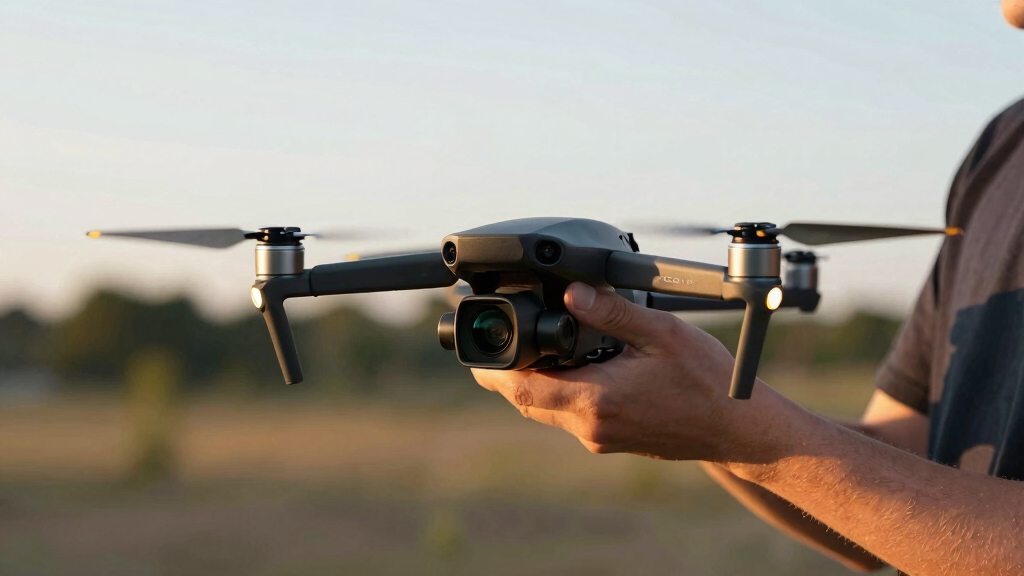
I ranked these camera drones using camera stability, usable image quality, flight confidence, and package value as the primary criteria. Because this is a camera-focused roundup, I gave mechanical gimbals and larger stated sensors more weight than flips, gesture commands, or a resolution label by itself. I also examined GPS support, return-to-home functions, obstacle sensing, transmission range, controller design, portability, battery count, and claimed flight duration. My evaluation is based on the published configurations and stated capabilities, not first-hand flight testing.
The order reflects what each model delivers relative to the others. The DJI Mini 4K Fly More Combo leads because it combines stabilized 4K capture with three batteries without moving into premium Mini 5 Pro pricing. The Mini 5 Pro choices rank as specialist upgrades, while the remaining DJI Mini 4K bundles offer stronger value or lighter packages. I placed the generic and lesser-known models by their clearest use cases, since GPS automation, an integrated screen, or beginner controls can matter more to some buyers than polished aerial footage. I also lowered the standing of any option whose headline appeal rests mainly on unstabilized resolution or ambitious flight-time claims.
Factors to Consider When Choosing Camera Drones
I would choose a camera drone by starting with the footage I want to produce, then working backward through stabilization, batteries, flight assistance, and controller needs. A low price can be attractive, but replacing an unsuitable drone costs more than selecting the right capability tier at the start. These six factors explain where paying extra changes the result and where a simpler model remains the smarter purchase.
Prioritize Stabilization Before Resolution
A 4K label does not guarantee smooth footage, since wind, turns, and pilot inputs can make an unstabilized camera difficult to watch. I would prioritize a three-axis mechanical gimbal for travel films, property footage, or any clip intended for editing. Electronic stabilization can help with small vibrations, but it usually crops the image and cannot match a gimbal during larger aircraft movements. A 1080p or 2K camera can still suit casual flying when recording is secondary to learning the controls. Fixed-camera drones also make framing harder because the pilot may need to tilt the entire aircraft. Paying more for stabilization usually creates a bigger visible gain than paying only for additional pixels.
Judge Battery Packages by a Full Flying Session
Advertised endurance describes a controlled flight, not the entire time available for filming in changing wind and temperature. I would plan to land with a reserve, which makes real recording time shorter than the headline figure. Multiple batteries let a pilot resume flying while a depleted pack rests, and they reduce pressure to capture every shot in one attempt. A three-battery package suits day trips better than one unusually long-duration battery if charging access is limited. On the other hand, extra packs add cost, weight, charging time, and eventual replacement expense. The best value comes from matching the battery count to session length, rather than automatically buying the largest bundle.
Match the Controller Setup to Your Filming Style
A drone that uses a phone as its display is usually cheaper and easier to pack, but setup involves mounting the device, connecting cables, and managing app compatibility. A controller with an integrated screen starts faster and keeps incoming calls or phone overheating from interrupting the flight view. Screen brightness matters outdoors, since a dim display makes framing and exposure judgments harder in direct sun. Long transmission claims may appeal to experienced pilots, yet a stable nearby feed is more useful to most beginners than maximum theoretical range. I would also check whether the controller provides physical camera controls instead of forcing common adjustments through menus. Buyers who film frequently may find that faster setup justifies the added cost.
Separate Helpful Automation From Marketing Extras
GPS positioning and return-to-home can reduce pilot workload by helping the drone hold position and recover when the battery runs low or the signal drops. Subject tracking and waypoint routes are more valuable for repeatable filming than novelty functions such as flips or gesture-triggered photos. Obstacle sensing adds another layer of support, but no sensing system makes branches, wires, glass, or low light harmless. I would treat automation as assistance rather than permission to stop watching the aircraft. Beginners often benefit more from predictable hovering and gentle control response than from a long list of flight modes. The strongest feature set is the one that improves repeatability and recovery for the footage being captured.
Balance Portability With Wind Performance
Sub-250-gram and similarly lightweight drones are easy to carry, making them appealing for hiking, city trips, and spontaneous filming. Low weight may also affect registration or operating requirements, though I would always check the current aviation rules for the flight location. The tradeoff is that small airframes react more strongly to wind, which can shorten range and drain batteries faster on the return leg. Folding arms improve packability but create hinges that should be checked for grit, looseness, and damage. Larger drones may provide better stability and payload capacity, yet they demand more luggage space and planning. For frequent travel, I would favor a compact drone with a protected gimbal over a bulkier model bought only for rare high-wind conditions.
Account for Parts, Software, and Long-Term Ownership
The purchase price is only one part of owning a camera drone. Propellers, batteries, charging accessories, storage cards, cases, and occasional repairs can change the value of an inexpensive package. I would check whether replacement batteries and propellers are readily available before choosing a lesser-known model. App updates and phone support also matter for drones that rely on mobile software for live view or advanced modes. A major brand may cost more but can offer a broader accessory range and a clearer upgrade path. Budget models still make sense for low-risk learning, provided the buyer accepts less predictable parts availability and fewer camera controls.
Frequently Asked Questions
Should I Buy the Single-Battery DJI Mini 4K or a DJI Combo?
I would choose the single-battery DJI Mini 4K when price and packing light matter more than a long filming session. Its core advantage remains the stabilized 4K camera, so image quality does not depend on buying the larger package. The two-battery Camera Drone Combo provides a practical middle step, while the three-battery Fly More Combo suits travel days and repeated takes. Extra batteries also spread usage across packs instead of cycling one battery continually. Buyers who expect only short local flights can save money with the base model and add accessories later if compatible stock remains available.
Is a DJI Mini 5 Pro Bundle Worth Paying More For?
The upgrade makes sense when camera capability and automated filming matter more than keeping the purchase price low. I would select the standard Mini 5 Pro Fly More Combo for its stated one-inch CMOS camera, while the Combo Plus better suits buyers who want obstacle sensing, ActiveTrack 360°, and the longest claimed flight time in this lineup. Those features can make complex shots easier to repeat, but they do not replace careful piloting. Casual travelers who mainly want smooth daylight clips will receive stronger value from a DJI Mini 4K package. Premium pricing is easiest to justify when the footage has a clear creative or commercial purpose.
Can a Cheap 4K Drone Match a Drone With a Three-Axis Gimbal?
Usually not for moving aerial video, because resolution and stabilization solve different problems. A low-cost 4K camera may record plenty of pixels while still producing tilted horizons, vibration, or abrupt movement during turns. A three-axis gimbal keeps the camera level independently of many aircraft motions, making the footage easier to watch and edit. Cheaper 4K models can still work for still photos, basic overhead views, or learning flights in calm weather. I would choose stabilized 2K or 4K footage over a higher-resolution fixed camera when video quality is the priority.
Is a Built-In Controller Screen Better Than Using a Phone?
A built-in display is better for buyers who value quick setup and a dedicated flight device. It avoids phone notifications, incoming calls, cable problems, and some compatibility issues, which is why the 4.5-inch-screen GPS drone has a distinct place in this roundup. Phone-based controllers remain appealing because they cost less, pack smaller, and may offer familiar touch controls. I would compare outdoor brightness, screen size, map access, and physical camera buttons rather than judging the display only by whether it is integrated. The right choice depends on whether convenience or portability matters more during each flight.
Which Camera Drone Is Safest for a Complete Beginner?
For an adult beginner focused on learning, I favor the 2K drone with altitude hold and one-key takeoff because its simple controls and two batteries support low-pressure practice. The FlyVISTA is better suited to children and recreational indoor or calm-weather flying, while the Oddire adds GPS tools for beginners who want outdoor automation. A DJI Mini 4K costs more, but its gimbal and GPS-oriented flight system make more sense when the learner also wants footage worth keeping. I would begin in a wide open area, use the slowest suitable control mode, and practice landing before exploring automated functions. No beginner feature removes the need for local rule checks and active supervision.
Conclusion
My best overall choice is the DJI Mini 4K Fly More Combo, since its stabilized 4K camera and three batteries create the strongest balance for travel and everyday aerial video. For best value, I would buy the single-battery DJI Mini 4K, while the two-battery DJI Mini 4K Camera Drone Combo suits buyers who want more endurance without the largest package. The DJI Mini 5 Pro Fly More Combo Plus is my premium pick for tracking, obstacle sensing, and extended claimed flight time; the standard Mini 5 Pro bundle is the better image-first premium choice. Beginners should choose the 2K altitude-hold model for simple adult learning, while the FlyVISTA is the clearer recreational pick for children. The Oddire fits budget buyers who prioritize GPS flight modes, and the 4.5-inch-screen GPS drone serves pilots who do not want to use a phone. I would make the final choice by deciding whether smooth footage, longer sessions, automated filming, or low-cost practice is the main goal, since no single model leads all four areas.