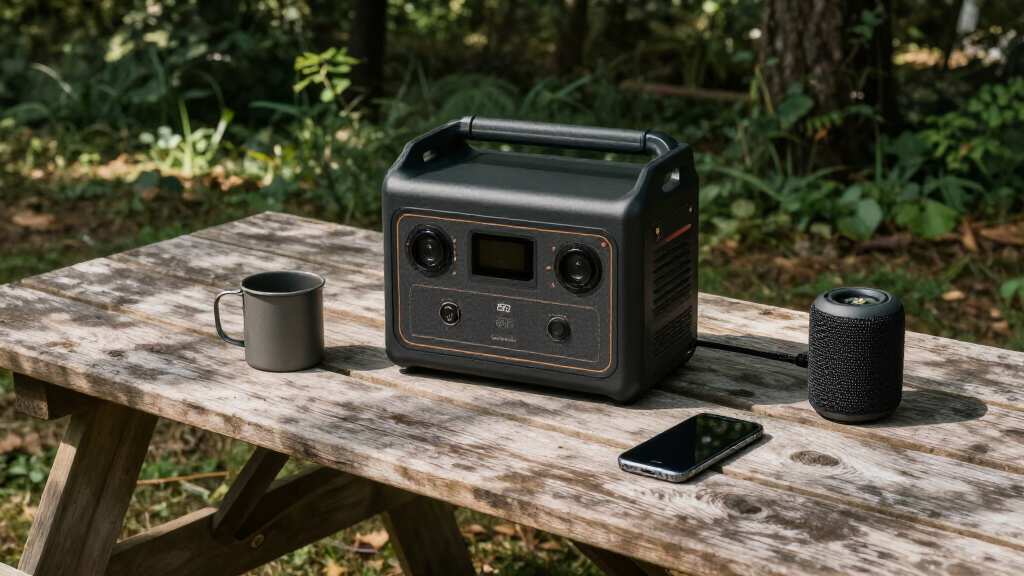

Portable power stations have become essential for outdoor adventures, emergency backup, and off-grid living. The best models offer a balance of capacity, portability, and charging versatility. The GRECELL Portable Power Station 500W stands out for its affordability and solar compatibility, while the Anker SOLIX S2000 offers massive capacity for home backup. Buyers often struggle with balancing power, size, and price — larger capacities tend to be heavier and costlier, while compact units may lack the runtime needed for longer use. Continue reading for a detailed breakdown of the top options and how to choose the right one for your needs.

Get business pricing on tech for your team
- Business-only prices and quantity discounts
- Tax-exempt purchasing
- Multiple users, one account, clear invoices
Complete the kit


Key Takeaways
- High-capacity models like the Jackery Explorer 1000 and BLUETTI AC180 excel for extended power needs, but are heavier and pricier.
- Smaller, lighter units like the Jackery Explorer 300 are ideal for quick charges and light use, though they offer limited runtime.
- Battery chemistry impacts lifespan and safety; LiFePO4 options provide longer cycle life but usually come at a higher cost.
- Solar compatibility is common but varies; check wattage and port options to ensure your panels can charge efficiently.
- Price ranges widely, so consider whether you need the highest capacity or a more budget-friendly, portable solution.


| portable power station | Capacity | Weight | Battery Type |
|---|---|---|---|
| GRECELL Portable Power Station | 519Wh | — | — |
| ALLWEI Portable Power Station | 256Wh | 6.4 lbs | LiFePO4 |
| Anker SOLIX S2000 Portable Pow | 2010Wh | 35.7 lbs | LFP (Lithium Iron Phosphate) |
| 1000W Portable Power Station 1 | 1024Wh | 27.73 lbs | LiFePO4 |
| OUPES Exodus 700 Portable Powe | 576Wh | 13.8 lbs | — |
| Anker SOLIX C1000 Gen 2 Portab | — | — | — |
| Jackery Explorer 1000 v2 Porta | 1070Wh | 23.8 lbs | LFP |
| Jackery Explorer 300 Portable | 292Wh | 7.1 pounds | — |
| BLUETTI Portable Power Station | — | — | LiFePO4 |
More Details on Our Top Picks
GRECELL Portable Power Station 500W, 519Wh Solar Generator Backup Lithium Battery Pack
This GRECELL model stands out for its high 519Wh capacity, offering enough power to keep essential devices running indoors or outdoors. Compared to the smaller Jackery Explorer 300, it provides more runtime and versatile output options, making it a solid choice for most users needing reliable backup power. Its multiple charging options, including fast USB-C and wireless charging, add convenience, though it cannot power devices over 500W, limiting larger appliances. It’s ideal for campers, emergency kits, or small home use where capacity and flexibility matter. The main tradeoff is the longer recharge time, especially via solar, which can take up to 9 hours. This pick suits those who prioritize capacity and multiple charging options in a portable form.
Pros:- High capacity 519Wh battery supports multiple devices simultaneously
- Multiple output options including fast-charging USB-C and wireless charging
- Built-in safety protections with pure sine wave inverter
Cons:- Limited to 500W output, unsuitable for high-wattage appliances
- Solar panel not included, requiring extra purchase
Best for: Homeowners or outdoor enthusiasts needing reliable, versatile backup energy for multiple small devices
Not ideal for: Users wanting to power larger appliances over 500W or who need rapid recharge via solar
- Power:500W
- Capacity:519Wh
- Battery:Lithium
- AC Outlets:2 pure sine wave
- USB-A Ports:3 QC3.0
- Wireless Charger:9V/1.1A, 10W
- Recharge Time:6-9 hours (solar), 6-7 hours (wall), 7-8 hours (car)
Our verdict“This power station is best for users who need a high-capacity, versatile backup for small to medium devices without expecting to run large appliances.”
ALLWEI Portable Power Station 300W, 256Wh Solar Generator LiFePO4 Battery
This model from ALLWEI offers a durable LiFePO4 battery with 256Wh capacity, making it well-suited for camping, emergency backup, or outdoor activities where longevity is key. Its 300W continuous power is enough for small appliances, but less than the Anker SOLIX S2000, which supplies over six times the capacity. Its long cycle life of 3000 recharges makes it a cost-effective choice for frequent use. Weighing only 6.4 lbs, it is highly portable, although it requires a separate solar panel for solar recharging, unlike the Anker that supports multiple recharging methods out of the box. This pick makes sense for adventurers who prioritize battery longevity and portability over raw capacity.
Pros:- Long-lasting LiFePO4 battery with 3000 charge cycles
- Multiple recharging options, including AC, car, and solar
- Lightweight and compact for portability
Cons:- Requires a separate solar panel for solar charging
- Limited to 256Wh capacity, less suitable for larger devices
Best for: Campers or emergency preppers needing a durable, long-lasting power source for small devices
Not ideal for: Users needing to power larger appliances or expecting to run high-wattage devices for extended periods
- Capacity:256Wh
- Continuous Power:300W
- Peak Surge:600W
- Battery Type:LiFePO4
- Charge Cycles:3000
- Weight:6.4 lbs
- Charging Time (AC):3.5-4 hours
Our verdict“This power station is ideal for outdoor users who need a long-lasting, portable power source for small electronics and emergency use, with the tradeoff of requiring separate solar panels for solar recharging.”
Anker SOLIX S2000 Portable Power Station, 2010Wh, 1500W
The Anker SOLIX S2000 offers a massive 2010Wh capacity and 1500W continuous power, making it suitable for powering essential home appliances or larger outdoor equipment. Its high capacity surpasses the smaller options like the OUPES Exodus 700, making it ideal for extended outages or off-grid living. Despite its size at 35.7 lbs, its compact design and multiple recharging options—solar, AC, and car—make it versatile. However, the absence of a 12V DC port limits some device compatibility. This model clearly targets users who need serious power for longer durations, even if portability is somewhat compromised by weight.
Pros:- High-capacity 2010Wh battery with 10,000 charge cycles
- Multiple recharging options including solar up to 400W
- Powerful output capable of running most essential appliances
Cons:- Heavy at 35.7 lbs, less portable for frequent transport
- Limited rear outlets and no 12V DC port for some devices
Best for: Homeowners or off-grid users needing large-scale, reliable power with long lifespan
Not ideal for: Travelers or backpackers seeking ultra-lightweight solutions or portable size
- Capacity:2010Wh
- Continuous Power:1500W
- Peak Power:3000W
- Battery Type:LFP (Lithium Iron Phosphate)
- Battery Life:10,000 cycles
- Weight:35.7 lbs
- Recharging Options:AC, solar, car outlet
Our verdict“This power station is best for users who prioritize large capacity and long lifespan over portability, suitable for backup or off-grid setups.”
1000W Portable Power Station 1024Wh LiFePO4 for Outdoor & Home
This 1024Wh capacity power station offers a solid balance of power and portability, supporting 1000W continuous output suitable for lights, routers, or small fridges. Its lightweight at 27.73 lbs makes it manageable for most users, and the 10,000 cycle LiFePO4 battery ensures long-term reliability. Its multiple fast-charging ports, including USB-C PD and AC outlets, make it versatile for various devices. Compared with the smaller OUPES Exodus 700, it provides more power and longer runtime, but it still remains portable enough for outdoor or emergency use. The main limitation is its 300W solar input, which might slow recharging when off-grid. This choice is best for users who need a reliable, mid-sized power source for moderate appliances and off-grid scenarios.
Pros:- High-capacity 1024Wh battery with long cycle life
- Multiple fast-charging ports including USB-C PD and AC outlets
- Lightweight and portable for its capacity
Cons:- Limited solar input of 300W may slow recharging
- No wheels for easier transport, slightly heavier for some users
Best for: Preppers, outdoor enthusiasts, or small-scale emergency backup users
Not ideal for: Users needing to run high-wattage appliances continuously or requiring rapid solar recharging
- Power Output:1000W
- Capacity:1024Wh
- Battery Type:LiFePO4
- Charging Ports:2×110V AC, 1×60W PD USB-C, 2×USB-A
- Weight:27.73 lbs
- Solar Compatibility:up to 300W
Our verdict“This power station balances capacity and portability effectively, suitable for moderate off-grid and emergency needs with some solar recharging limitations.”
OUPES Exodus 700 Portable Power Station, 576Wh, 700W LiFePO4 Solar Generator
The OUPES Exodus 700 offers a compact, lightweight solution with 576Wh capacity and 700W output, making it perfect for camping, RV trips, or quick emergency power. Its fast solar recharge in just 2 hours stands out for off-grid scenarios, and its multiple outputs—including USB-C PD, AC, and 12V—cover most small device needs. While it’s lighter at 13.8 lbs than some larger models like the Anker SOLIX S2000, it has a lower surge capacity, limiting use with high-wattage tools. Compared to larger options, it sacrifices capacity for portability, but for those needing quick recharging and ease of transport, it hits the sweet spot. The main tradeoff is limited surge wattage, so it’s less suitable for high-power tools or appliances.
Pros:- Fast solar recharge in just 2 hours
- Lightweight and portable with sturdy handle
- Multiple output options including USB-C PD and AC outlets
Cons:- Relatively heavy at 13.8 lbs for frequent carrying
- Limited surge capacity for high-wattage devices
Best for: Campers, RV travelers, and emergency users needing quick recharge and portability
Not ideal for: Power users requiring high surge capacity or to run high-wattage appliances for long periods
- Capacity:576Wh
- Wattage:700W
- Surge Wattage:1200W
- USB-C PD:140W
- Recharge Time:2 hours (solar)
- Weight:13.8 lbs
Our verdict“This model is ideal for portable, quick-recharge power needs in outdoor or emergency contexts, with some limitations on high-wattage appliance support.”
Anker SOLIX C1000 Gen 2 Portable Power Station
The Anker SOLIX C1000 Gen 2 stands out for its impressive capacity of 1,024Wh combined with a robust 2,000W continuous output, making it a versatile choice for serious outdoor enthusiasts and emergency preparedness. Its rapid recharge time of just 49 minutes surpasses many competitors, such as the Jackery Explorer 1000 v2, which takes an hour. While its 9 outlets may fall short for large-scale setups, it compensates with a lightweight design—11.3 kg—that’s easier to handle. The support for solar recharging in under 2 hours increases off-grid independence, but reliance on an app for advanced features might be inconvenient for some. Compared to larger models like the GRECELL 519Wh unit, it offers a better balance of power and portability, though its battery cycle life could degrade with extensive use.
Pros:- Fast recharging in just 49 minutes with HyperFlash tech
- High capacity and robust 2,000W continuous output
- Compact, 11% lighter than similar models, easy to carry
- Supports solar recharging in 1.8 hours
Cons:- Limited to 9 outlets, which might be insufficient for large setups
- Battery capacity may degrade after extensive cycles, though still retains 80% after 4,000 cycles
- Requires app for some advanced features, less convenient for quick access
Best for: Campers and emergency preppers who need high power in a portable package
Not ideal for: Users requiring dozens of outlets or maximum expandability, as the nine outlets might be limiting
- Wattage:2000 watts
- Fuel Type:Solar
- Power Source:Battery Powered
- Voltage:120 volts
- Output Wattage:2000
- Total Power Outlets:9
- Item Weight:11.3 kg
- Item Dimensions:15.1″L x 8.2″W x 9.6″H
Our verdict“This power station suits adventurers and emergency users who prioritize a blend of power, speed, and portability.”
Jackery Explorer 1000 v2 Portable Power Station, 1070Wh, 1500W
The Jackery Explorer 1000 v2 offers a substantial 1070Wh capacity with a reliable 1500W AC output, making it ideal for extended camping trips and off-grid living. Its fast charging ability shortens setup time, reaching full charge in just one hour, which surpasses many competitors like the BLUETTI AC180. With a durable lithium iron phosphate (LFP) battery rated for over 4,000 cycles, it provides long-term peace of mind. Its multiple ports—including USB-C, USB-A, and car outlet—ensure versatile device compatibility. However, the need to purchase separate solar panels limits its off-grid independence, and the heavier weight of nearly 24 pounds could be a deterrent for portability. Compared to the Anker SOLIX C1000, it offers a larger battery but less quick recharge capability and fewer outlets.
Pros:- Large 1070Wh capacity for extended power needs
- Fast one-hour recharge with advanced tech
- Long-lasting lithium iron phosphate battery with over 4,000 cycles
- Multiple versatile ports for various devices
Cons:- Solar panel not included, requiring additional purchase
- Relatively heavy at 23.8 lbs, less ideal for frequent carrying
- Requires app setup to access full fast charging features
Best for: Active travelers and outdoor enthusiasts seeking long-lasting power and durability
Not ideal for: Users who want an all-in-one pack with solar panels included or prioritize ultra-lightweight units
- Capacity:1070Wh
- AC Output:1500W
- Surge Peak:3000W
- Weight:23.8 lbs
- Charging Time:1 hour
- Battery Type:LFP
- Charge Cycles:4000+
- Ports:2 USB-C, 1 USB-A, 1 DC car, 3 AC
Our verdict“This pick makes the most sense for those needing dependable, long-term power with a focus on durability over ultra-light portability.”
Jackery Explorer 300 Portable Power Station, 292Wh
The Jackery Explorer 300 excels as a highly portable option with its modest 292Wh capacity and only 7.1 pounds weight, making it perfect for quick trips and minimal device needs. Unlike bulkier units like the BLUETTI AC180, it’s designed for easy carrying and quick setup. Its multiple outlets—including USB-C PD and AC—cover most basic charging needs, while its LiFePO4 battery provides over 4,000 charge cycles, promising longevity. The tradeoff is its limited 300W rated output, unsuitable for high-power appliances or multiple devices simultaneously. Also, it doesn’t include solar panels, so users must purchase panels separately. This makes it ideal for casual outdoor use but less suited for extended power demands or larger setups.
Pros:- Extremely lightweight and portable for easy carrying
- Multiple device charging options including USB-C and AC outlets
- Durable LiFePO4 battery with over 4,000 charge cycles
- Fast solar charging capability
Cons:- Limited to 300W rated output, not suitable for high-power appliances
- No included solar panel, requiring extra purchase
- Capacity may be insufficient for extended power needs
Best for: Campers or hikers needing a lightweight, quick-charging power source for essential devices
Not ideal for: Users requiring high wattage or long-term off-grid power, as its capacity and output are limited
- Weight:7.1 pounds
- Capacity:292Wh
- Outlets:2 AC, 1 USB-C PD, 2 USB-A, 1 car port
- Rated Output:300W
- Peak Surge:600W
- Charge Cycles:over 4,000
- Dimensions:9.1 x 5.2 x 7.8 inches
Our verdict“This product is perfect for light, short-term outdoor power needs where portability outweighs high capacity.”
BLUETTI Portable Power Station AC180, 1152Wh LiFePO4 Battery Backup with 1800W (2700W peak) AC Outlets, Fast Charging, Solar Generator for Camping and Off-grid Use
The BLUETTI AC180 combines a sizable 1152Wh capacity with an impressive 1800W continuous output and the ability to boost to 2700W via app, making it a strong contender for demanding off-grid scenarios. Its rapid one-hour recharge time outpaces many competitors like the Jackery Explorer 300, providing quick turnaround for frequent use. The multiple charging options—solar, AC, and car—offer flexibility, although its weight isn’t specified, which could impact portability. The limited number of two AC outlets might be restrictive for larger device setups. Compared with the Anker SOLIX C1000, the AC180 emphasizes power and quick recharge over sheer capacity, suitable for users needing reliable backup power for sensitive or high-wattage equipment.
Pros:- Fast 1-hour full charge for quick turnaround
- High continuous power output with peak boost capability
- Multiple charging options including solar, AC, and car
- Reliable UPS for emergency backup
Cons:- Limited number of AC outlets, only two
- Weight not specified, potential portability concerns
- Requires app for boosting power, adding complexity
Best for: Campers and off-grid users who require quick power replenishment and high sustained output
Not ideal for: Lightweight travelers or those needing many outlets, as its weight isn’t specified and outlet count is limited
- Battery Capacity:1152Wh
- Battery Type:LiFePO4
- AC Outlets:2
- Continuous Power:1800W
- Peak Power:2700W
- Charging Time (AC):1 hour
- Solar Input:500W
- Warranty:5 years
Our verdict“This unit is best suited for users who need high power, rapid recharge, and reliable backup in off-grid environments.”

How We Picked
The products featured in this roundup were selected based on a combination of performance, usability, build quality, and value. Key criteria included battery capacity, inverter wattage, portability, charging options, and overall versatility. We prioritized models that balance power output with ease of use and durability, ensuring they meet different user needs from camping to emergency backup. The ranking reflects a mix of high-capacity giants and compact, budget-friendly options, helping buyers find the best fit for their specific situations.| portable power station | Battery Type |
|---|---|
| GRECELL Portable Power Station | — |
| ALLWEI Portable Power Station | LiFePO4 |
| Anker SOLIX S2000 Portable Pow | LFP (Lithium Iron Phosphate) |
| 1000W Portable Power Station 1 | LiFePO4 |
| OUPES Exodus 700 Portable Powe | — |
| Anker SOLIX C1000 Gen 2 Portab | — |
| Jackery Explorer 1000 v2 Porta | LFP |
| Jackery Explorer 300 Portable | — |
| BLUETTI Portable Power Station | LiFePO4 |
Factors to Consider When Choosing Portable Power Stations
Choosing the right portable power station involves more than just looking at capacity. You should consider how much power you’ll need, how portable the unit is, and what charging options are available. Understanding these factors helps you avoid overpaying for features you won’t use or ending up with insufficient power for your tasks. The following sections highlight key considerations that influence your decision beyond the specs listed in product descriptions.Power Capacity and Output
Start by estimating your total power needs. Do you plan to run small devices like phones and lights, or larger appliances like mini-fridges and power tools? Higher capacity units generally have larger batteries measured in watt-hours (Wh). Inverter wattage determines what appliances you can run simultaneously; a 1500W inverter, for example, can handle most small appliances, while lower wattage limits your options. Be mindful that higher capacity often means increased weight and cost, so match capacity to your actual needs.
Portability and Size
Portability is a key tradeoff. Larger, high-capacity units like the Jackery Explorer 1000 provide more power but are bulkier and heavier, making them less suitable for frequent transport. Smaller models like the Jackery Explorer 300 are easier to carry but may not support longer use or heavier devices. Consider how and where you’ll use the power station — for camping, a lightweight, compact model makes sense, while home backup might justify a heavier, more capable unit.
Battery Chemistry and Longevity
The type of battery chemistry impacts lifespan, safety, and charging speed. Lithium Iron Phosphate (LiFePO4) batteries, found in several models, offer longer cycle life and are safer, though they tend to cost more upfront. Traditional lithium-ion batteries are cheaper but may degrade faster with repeated charges. If you plan to use your station frequently over years, investing in a LiFePO4 model could pay off in the long run, despite the higher initial price.
Charging Options and Speed
Check whether the power station supports multiple charging methods, such as AC outlets, car chargers, or solar panels. Solar compatibility is common but varies in wattage and port type; ensure your solar panels match the input specifications for efficient charging. Fast-charging features can reduce downtime, especially if you need quick recharges between uses. A station with multiple input options provides flexibility for different scenarios.
Price and Value
Price varies widely based on capacity, features, and brand reputation. Consider your budget alongside your actual power needs — paying extra for a high-capacity, feature-rich model makes sense if you plan to rely on it heavily. Conversely, for occasional use or light tasks, a more affordable, compact unit will likely suffice. Always compare the total value offered, including battery lifespan, warranty, and additional features like multiple outlets or fast charging.
Frequently Asked Questions
How long can a portable power station run my devices?
This depends on the capacity of the station and the power draw of your devices. For example, a 500Wh battery can run a 50W device for about 10 hours, while larger units like the Jackery Explorer 1000 with 1000Wh can support higher wattage devices for longer periods. Always check the watt-hour rating and inverter capacity to estimate runtime accurately, especially when planning for extended outages or outdoor trips.
Can I charge my power station with solar panels?
Yes, many portable power stations support solar charging, but compatibility varies. Check the input wattage and port type — some stations require specific connectors or have maximum input wattages. Pairing a station with appropriately rated solar panels can greatly extend its usability, especially for off-grid use. Remember that solar charging speed depends on sunlight intensity and panel wattage; larger panels will recharge the station faster.
Are LiFePO4 batteries worth the extra cost?
LiFePO4 batteries offer longer cycle life, improved safety, and better thermal stability compared to traditional lithium-ion batteries. Although they tend to cost more initially, they can handle more charge-discharge cycles—often thousands—making them more cost-effective over time. If you plan to use your power station frequently or over many years, investing in a LiFePO4 model can provide peace of mind and better long-term value.
What should I consider when choosing a portable power station for camping?
For camping, prioritize lightweight and compact models that still provide enough capacity for your essential devices. Look for units with multiple charging options, including solar compatibility, so you can recharge off-grid. Battery longevity and durability are also important, especially if you’ll be using it in rugged environments. Finally, consider the number and type of outlets needed to run your gear, ensuring the station can handle your specific devices.
How do I maintain my portable power station for longevity?
Proper maintenance involves keeping the battery charged within recommended levels, avoiding complete discharges or overcharging. Store the station in a cool, dry place when not in use, and periodically recharge it if stored for long periods. If your model supports it, perform firmware updates or calibrate the battery as recommended by the manufacturer. Proper care can significantly extend the lifespan and performance of your station.
Conclusion
The best overall portable power station for most users remains the Jackery Explorer 1000 thanks to its reliable capacity and balanced size. For those prioritizing affordability and portability, the Jackery Explorer 300 offers excellent value. The BLUETTI AC180 appeals to users seeking a premium, high-capacity solution with long-term durability. Beginners or infrequent users should consider smaller, easier-to-carry units, while outdoor enthusiasts and emergency planners will benefit from larger, more robust models like the Anker SOLIX S2000 or OUPES Exodus 700. Match your choice to your specific needs, budget, and expected usage for the best experience.Halloween Picks
halloween
As an affiliate, we earn on qualifying purchases.