

By 2030, artificial intelligence has become a key measure of global power, fueling a new cold war driven by US-China rivalry and resource conflicts. You’ll see nations competing over advanced tech, chips, and critical minerals, while military AI transforms warfare with autonomous drones and cyber defenses. Economic shifts also reshape regions, but challenges in global governance and ethics complicate progress. Keep exploring to uncover how these cyber-geopolitical tensions will shape our future.
Key Takeaways
- AI infrastructure growth, including data centers and power demands, is a major factor in geopolitical influence by 2030.
- US-China tech rivalry involves strict export controls and resource conflicts, shaping global AI development.
- AI-driven military innovations enhance autonomous systems, cyber defenses, and operational efficiency, intensifying strategic competition.
- Economic shifts driven by AI favor certain regions, impacting global power balances and regional alliances.
- Governance and ethical challenges remain unresolved, complicating international cooperation on AI regulation and standards.

The Data Center Engineering Handbook: A Practical Guide to Infrastructure Design, Power Systems, Cooling, Security, Compliance, and Operational Excellence
As an affiliate, we earn on qualifying purchases.
As an affiliate, we earn on qualifying purchases.
The Rise of AI as a Power Metric

As AI continues to expand, its power consumption has become a key measure of national and global influence. You see, the demand for AI data centers is expected to hit $5.2 trillion worldwide by 2030, with 156 gigawatts of capacity needed—most of that in just a few years. This growth requires massive infrastructure, including millions of miles of fiber optics and enormous power investments, equivalent to powering 150 million US homes annually. Power demands are soaring; US AI energy use could surpass 50 GW by 2030, driven by advanced models needing over 4 GW each. These escalating energy needs make data center power consumption a crucial indicator of technological dominance, influencing geopolitical power dynamics as nations compete to control and expand AI infrastructure worldwide. The rapid increase in AI-related energy consumption highlights the importance of energy strategy in geopolitical competition.

Yahboom K230 AI Development Board 1.6GHz High-performance chip/2.4-inch Display/Open Source Robot Maker Python, Supports AI Visual Recognition CanMV Sensor (with Heightened Bracket)
- High-performance AI Chip: 1.6GHz processor with advanced KPU and CPU
- Fast Response and High Load Handling: Supports real-time complex AI tasks
- Flexible Expansion Interface: Includes 12Pin GPIO for sensors and modules
As an affiliate, we earn on qualifying purchases.
As an affiliate, we earn on qualifying purchases.
US-China Tech Rivalry and Resource Competition
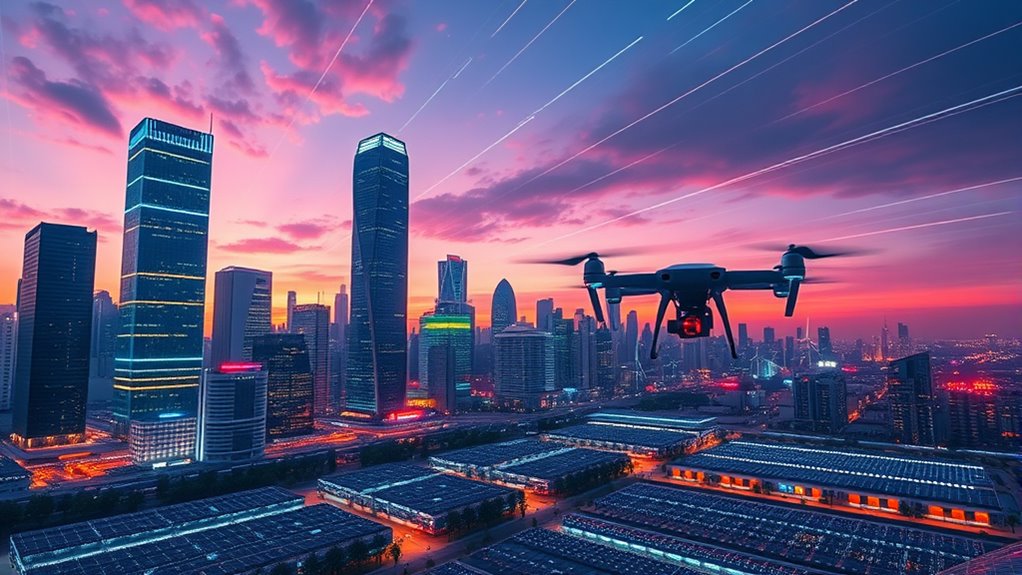
The US and China are engaged in a fierce competition over technological dominance, with export controls and resource access at the core of their rivalry. Since 2022, the US has imposed aggressive export bans on advanced AI chips and semiconductor equipment, aiming to slow China’s tech rise and maintain its hardware advantage. By mid-2025, these restrictions extended to specialized AI hardware, disrupting China’s supply chains. Meanwhile, China counters by forging new alliances through initiatives like the Digital Silk Road and cultivating alternative partners. The ongoing “Chip War” involves US bans on Chinese firms like Huawei and SMIC, while controlling access to critical minerals like gallium and germanium. This resource scramble fuels geopolitical tensions and complicates supply chains for smaller nations caught between the two superpowers. These resource conflicts further intensify the strategic competition, making resource security a critical aspect of the broader tech rivalry.

Foundations of Drone Warfare: Military Drones, UAV Technology, and Autonomous Weapons Explained — Predator, Reaper, Bayraktar, FPV Swarms, Loitering … of Unmanned Warfare (Drone Warfare Series)
As an affiliate, we earn on qualifying purchases.
As an affiliate, we earn on qualifying purchases.
Military Transformations Driven by Artificial Intelligence
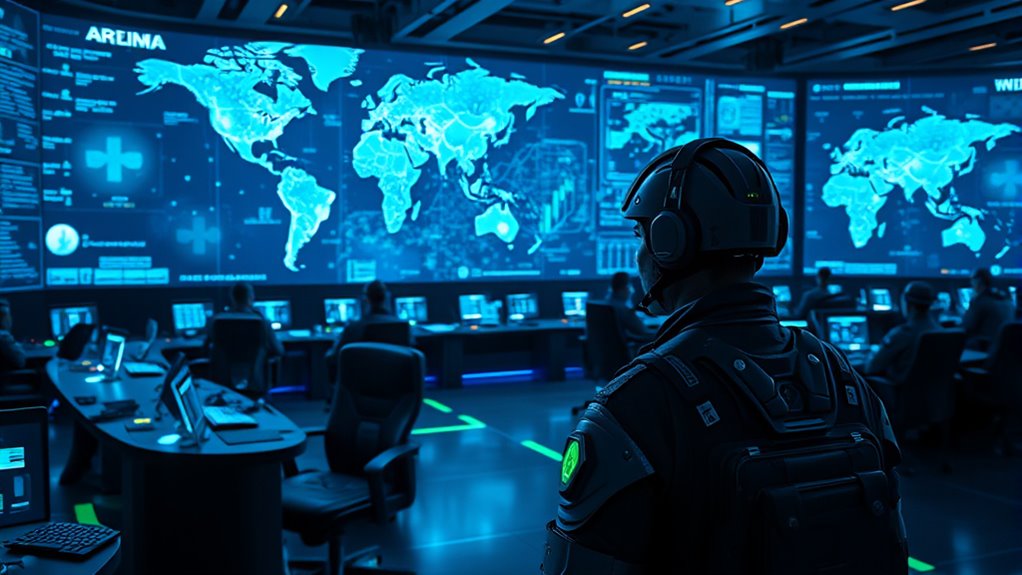
Artificial intelligence is revolutionizing military operations by drastically enhancing decision-making speed and accuracy on the battlefield. With real-time data processing and predictive analytics, you gain faster, more precise insights into threats and terrain. Autonomous systems like drones perform reconnaissance, threat detection, and terrain analysis with minimal human input, boosting situational awareness. AI-driven cyber defenses autonomously identify and neutralize intrusions, strengthening security. Predictive logistics forecast equipment failures, allowing preemptive maintenance that minimizes downtime. By automating repetitive tasks and assisting complex decisions, AI reduces cognitive load on personnel. Modular AI platforms enable interoperability across air, land, sea, space, and cyber domains, supporting unified command and control. These innovations make joint and coalition forces more effective, quickly adapting tactics and maintaining superiority in a rapidly evolving battlefield environment. Enhancing cybersecurity is also critical as AI’s role in cyber defense becomes increasingly vital in modern warfare.

AI In Cybersecurity: Simplifying Cyber Risk with Smart, Affordable Tools for Small Business Defense
As an affiliate, we earn on qualifying purchases.
As an affiliate, we earn on qualifying purchases.
Economic Shifts and Regional Impacts of AI Innovation

| Region | Expected GDP Growth by 2030 | Industry Benefits |
|---|---|---|
| China | 26% | AI, manufacturing, infrastructure |
| North America | 14.5% | IT, healthcare, finance |
| Europe | Slower growth | Automotive, energy |
| Emerging markets | Variable | Digital infrastructure, education |
| Others | Gradual gains | Consumer services, logistics |
Furthermore, understanding foreign exchange rates and currency fluctuations will be crucial for investors navigating the global economic landscape driven by AI advancements.
Challenges in Global Governance and Ethical Standards

As AI technology rapidly advances across borders, existing governance frameworks struggle to keep pace, leaving significant regulatory gaps. You’ll find that AI development and deployment span multiple jurisdictions, but most regulations remain national, making global oversight difficult. Models trained on international data influence users worldwide, yet national laws can’t fully address accountability. Private companies often set de facto global standards, raising legitimacy concerns, while multilateral institutions lag behind AI’s rapid evolution, widening governance gaps. Ethical standards around privacy, fairness, and non-discrimination are hard to enforce internationally, especially when companies, not governments, shape norms. AI’s use in law enforcement and social services risks amplifying bias. Accountability for harmful outcomes remains weak, and safeguarding marginalized communities across borders is a persistent challenge in establishing consistent global standards. International coordination remains limited, further complicating efforts to develop cohesive and enforceable global AI governance. Additionally, the lack of comprehensive cultural intelligence in regulatory approaches hampers the development of effective international standards that can adapt to diverse socio-political contexts.
Frequently Asked Questions
How Will AI Influence Future Diplomatic Relations Between Superpowers?
AI will substantially shape future diplomatic relations between superpowers by deepening competition and fostering cooperation. You’ll see nations leveraging AI for strategic advantage, which could escalate tensions or open doors for new treaties on governance and security. As a diplomat, you’ll need to navigate this complex landscape, balancing innovation with security concerns, encouraging transparency, and promoting multilateral efforts to prevent misuse and ensure stability in AI-driven geopolitics.
What Are the Environmental Impacts of AI Infrastructure Expansion Worldwide?
You’ll see AI infrastructure expansion considerably impacts the environment through increased energy consumption, water use, and resource extraction. As data centers grow, they demand more electricity, often from fossil fuels, boosting greenhouse emissions. Cooling systems use vast amounts of water, straining local supplies, especially in arid areas. Additionally, resource extraction for hardware raises sustainability concerns, while grid stress and delayed infrastructure upgrades challenge regional power stability worldwide.
How Might Ai-Driven Disinformation Campaigns Affect Global Stability?
You might find that AI-driven disinformation campaigns undermine global stability by spreading false narratives, fueling distrust, and creating confusion among populations. These campaigns can manipulate elections, destabilize governments, and escalate conflicts, especially when state actors use AI for strategic deception. As you navigate this landscape, it’s vital to support resilient information systems, promote media literacy, and push for international cooperation to counteract these destabilizing efforts effectively.
What Strategies Can Smaller Nations Use to Compete in AI Development?
You can compete in AI development by establishing clear national strategies aligned with your social and economic goals. Invest in education, upskilling, and inclusive capacity building for underserved groups. Foster partnerships with private sector, academia, and international allies to access resources and share knowledge. Promote open-source tools and cloud platforms to reduce costs. Focus on key sectors like healthcare and tourism to build resilient ecosystems that drive innovation and economic diversification.
How Does AI Integration in Civilian Life Reshape National Identities?
Imagine your daily routines woven with AI-powered tools, shaping your sense of belonging and culture. You see your heritage reflected in personalized media, feel safer under surveillance, and engage with cultural symbols differently. This integration transforms how you connect with your nation’s history and values, fostering a new, dynamic identity. As AI influences language, arts, and social norms, your sense of national pride evolves, blending tradition with technological innovation.
Conclusion
As you navigate this new era, remember that AI’s rapid rise reshapes power dynamics worldwide. Imagine a future where a single breakthrough in quantum AI shifts global influence overnight, much like the hypothetical scenario of a nation’s military drone swarms outpacing adversaries. This ongoing tech race demands your awareness and action, ensuring ethical standards and cooperation keep pace with innovation. The stakes are high—your choices today will shape tomorrow’s geopolitics in this new cold war.