
Thorsten Meyer | ThorstenMeyerAI.com | March 2026

Get tech for your team delivered free — and shop member deals
- Fast, free delivery on millions of items
- Access to Prime Big Deal Days deals on October 6–7
- Prime Video, Amazon Music and more included
Executive Summary
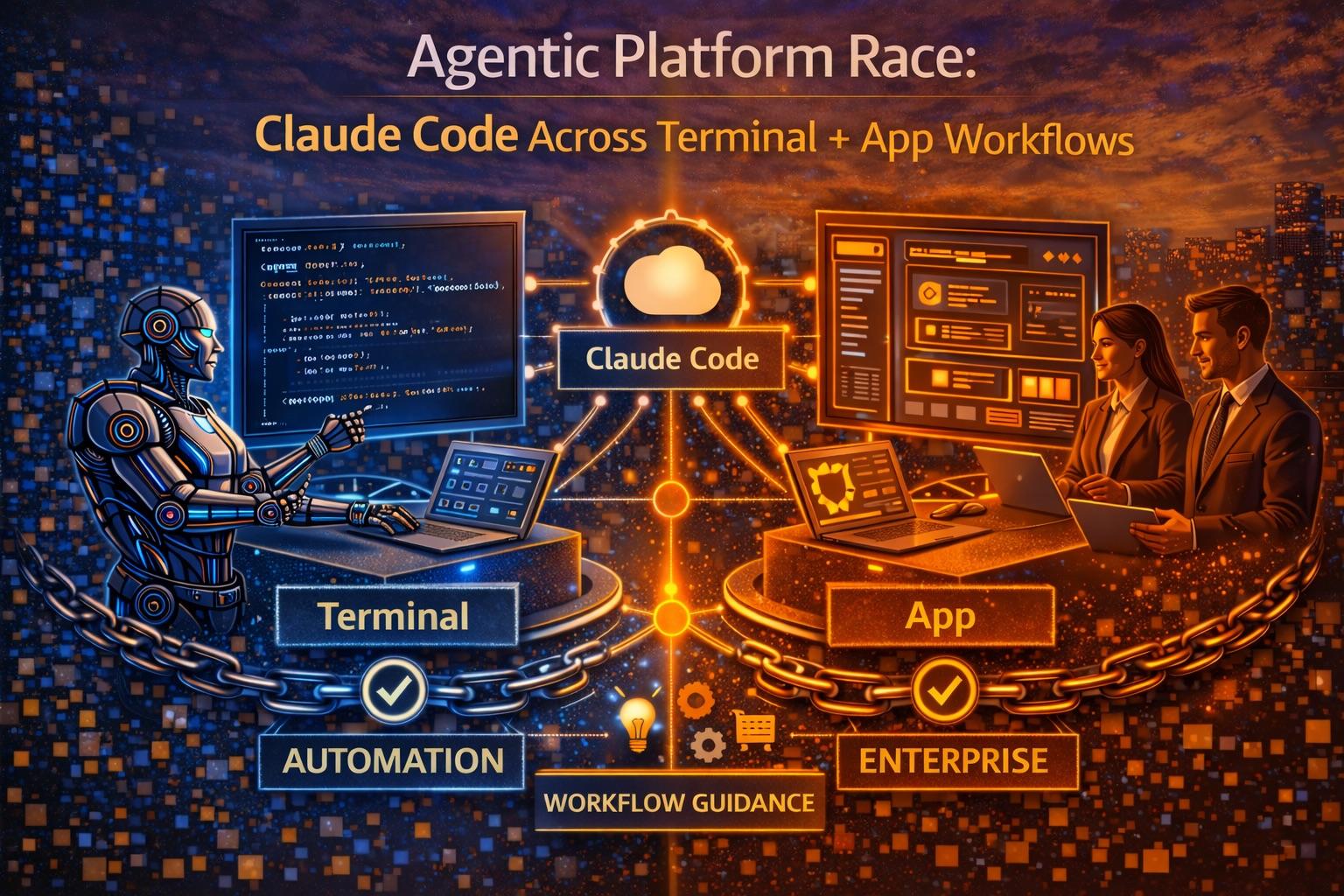
Claude Code-style terminal-plus-app workflows are reshaping how engineering teams interact with codebases. The model is not autocomplete — it is workflow compression: understand the repository, plan the change, execute edits, run checks, iterate with human oversight. In the six months since general availability, Claude Code has reached $2.5 billion in annualized run rate, enterprise use now exceeds half of all Claude Code revenue, and 92% of developers report using AI tools in some part of their workflow.
The productivity data is more complicated than the adoption data. Spotify reports 90% reduction in migration engineering time and 650+ agent-generated pull requests shipped monthly. The METR randomized controlled trial tells a different story: experienced developers using AI tools took 19% longer on real tasks — while perceiving a 20% speedup. GitClear’s analysis of 211 million changed lines shows code churn has doubled since pre-AI baselines. Veracode finds 45% of AI-generated code contains security flaws.
The gap between perceived and measured productivity is the central risk for enterprise rollout. Terminal-plus-app workflows are not inherently faster or slower — they are differently distributed. They compress writing and expand review. They accelerate prototyping and create new failure modes in production. The organizations that instrument the full delivery pipeline — not just code generation speed — will be the ones that capture durable value.
| Metric | Value |
|---|---|
| Claude Code ARR | $2.5B (Feb 2026) |
| Anthropic total ARR | $14B (Feb 2026) |
| Enterprise share of Claude Code revenue | >50% |
| Developers using AI tools | 92% |
| AI-generated code share | 41% of all code (2025) |
| Spotify: migration time reduction | 90% |
| Spotify: agent PRs shipped/month | 650+ |
| METR trial: actual time impact | 19% slower |
| METR trial: perceived impact | 20% faster |
| Code churn (post-AI vs. baseline) | 2x (GitClear) |
| Copy-paste code increase | 48% (GitClear) |
| AI code with security flaws | 45% (Veracode) |
| AI code causing breaches | 1 in 5 (Aikido, 2026) |
| PR review time increase | 91% (Faros AI) |
| Tasks completed (high AI adoption) | +21% |
| PRs merged (high AI adoption) | +98% |
| Bugs per developer (high AI adoption) | +9% |
| PR size increase | +154% |
| Org-level productivity correlation | None significant (Faros AI) |
| DORA: rework rate | New 5th metric (2025) |
| Developers reviewing AI code before commit | <50% (Sonar) |
| Advanced AI security strategy | 6% of orgs |
| OECD unemployment | 5.0% (stable) |
| OECD broadband (advanced) | 98.9% |
As an affiliate, we earn on qualifying purchases.
1. The Workflow Shift: From Code Generation to Execution Compression
The value of Claude Code-style workflows is not code generation. It is the compression of the full development cycle into a conversational loop: understand repository context, plan the change, execute edits across files, run tests and linters, iterate with human review — without leaving the terminal.
What the Workflow Actually Compresses
| Workflow Phase | Traditional | Terminal-Agent |
|---|---|---|
| Codebase orientation | Hours (manual exploration) | Minutes (agent reads, indexes, explains) |
| Change planning | Design doc + discussion | Conversational planning with immediate context |
| Multi-file edits | Manual per-file changes | Agent-coordinated cross-file execution |
| Test execution | Separate terminal/CI | Inline execution with immediate feedback |
| Review preparation | Manual PR construction | Agent-proposed PRs with context |
| Iteration cycle | Switch tools, reload context | Continuous context within session |
The Spotify Signal
Spotify’s integration of Claude Code via their internal “Honk” system — a background coding agent triggered from Slack, GitHub, or any MCP-connected tool — represents the most documented enterprise deployment. The results: 90% reduction in migration engineering time, 650+ agent-generated PRs shipped per month, roughly half of all Spotify updates now flowing through the system. Engineers describe code changes from natural language, and the agent handles execution.
This is not a productivity hack. It is a workflow architecture change. The engineer’s role shifts from writer to reviewer and approver.
The ARR Signal
Claude Code reached $1.1 billion ARR by end of 2025, six months after launch. By February 2026, that figure stands at $2.5 billion, with business subscriptions quadrupling since the start of the year. Enterprise use now represents over half of all Claude Code revenue. Anthropic’s total annualized revenue: $14 billion, with 80% from enterprise customers.
The adoption curve is not a question. The productivity curve is.
“The workflow shift is not typing speed. It is context-switching elimination: repo understanding, change planning, execution, testing, and review compressed into a single conversational session.”
developer workflow automation software
As an affiliate, we earn on qualifying purchases.
As an affiliate, we earn on qualifying purchases.
2. The Productivity Paradox: What the Data Actually Shows
The most important finding in the AI coding literature is not how fast developers write code with AI tools. It is the divergence between individual task speed, perceived productivity, and organizational delivery outcomes.
Individual vs. Organizational Impact
| Level | Metric | Finding | Source |
|---|---|---|---|
| Individual | Tasks completed | +21% more tasks | Faros AI |
| Individual | PRs merged | +98% more PRs | Faros AI |
| Individual | Task perception | 20% faster (perceived) | METR |
| Individual | Task reality | 19% slower (measured) | METR |
| Team | PR review time | +91% longer | Faros AI |
| Team | PR size | +154% larger | Faros AI |
| Team | Bugs per developer | +9% increase | Faros AI |
| Organization | DORA metrics | No significant improvement | Faros AI |
| Organization | Throughput | Flat at company level | Faros AI |
The METR Study in Detail
The METR randomized controlled trial recruited 16 experienced developers from large open-source repositories (averaging 22,000+ stars and 1 million+ lines of code). Developers worked on 246 real issues — bug fixes, features, and refactors that would normally be part of their regular work. Tools used: primarily Cursor Pro with Claude 3.5/3.7 Sonnet.
Result: developers using AI took 19% longer. After the study, developers estimated they were sped up by 20%. The perception gap was 39 percentage points.
Where the Time Goes
The bottleneck migration is the critical finding. AI tools compress code writing but expand downstream work:
| Phase | Impact | Mechanism |
|---|---|---|
| Code writing | Faster | Agent generation + autocomplete |
| Code review | 91% longer | Larger PRs, unfamiliar patterns, trust deficit |
| Quality assurance | More rework | Code churn doubled; 45% security flaws |
| Debugging | New failure modes | Agent-generated code with novel error patterns |
| Context maintenance | Session-dependent | Prompt drift between sessions; state loss |
Code Quality Evidence
| Quality Signal | Data | Source |
|---|---|---|
| Code churn (vs. pre-AI) | 2x increase | GitClear (211M lines) |
| Copy-paste code increase | +48% | GitClear |
| Security flaws in AI code | 45% | Veracode (100+ LLMs) |
| Java security failure rate | 72% | Veracode |
| AI code causing breaches | 1 in 5 | Aikido Security (2026) |
| Devs reviewing before commit | <50% | Sonar |
| High-risk vulns (2025→2026) | 8.3% → 11.3% | Aikido Security |
Uncertainty label: Claims of sustained “X% productivity gains” remain early-stage and organization-specific. The METR study is the most rigorous controlled trial to date, but covers early-2025 AI tools; current tools may perform differently. Spotify’s results are from a deeply integrated custom system, not out-of-the-box deployment.
“Developers believe AI makes them 20% faster. The controlled trial says 19% slower. The gap between perception and measurement is where enterprise productivity strategies go to die.”
As an affiliate, we earn on qualifying purchases.
3. Operational Risks: What Breaks at Scale
Terminal-plus-app workflows introduce three categories of operational risk that do not exist in traditional development or in simpler AI-assisted coding (autocomplete, chat).
Risk 1: Prompt-Context Drift
Each session with a coding agent builds a conversation context that influences all subsequent actions. When that session ends, context is lost. The next session starts with a different understanding of the codebase, different assumptions, and potentially different architectural decisions.
| Drift Vector | What Happens | Enterprise Impact |
|---|---|---|
| Session boundary | Context resets between sessions | Inconsistent changes across sessions |
| Team handoff | Different engineers, different prompts | Divergent implementation patterns |
| Model updates | Behavior changes with model versions | Regression in established workflows |
| Codebase evolution | Repo changes between agent runs | Stale assumptions in long-running tasks |
Risk 2: Policy Enforcement Gap
In traditional development, policy enforcement happens at defined checkpoints: linting, CI/CD, code review. Terminal-agent workflows collapse these checkpoints into a continuous loop where the agent both generates and validates code — often using its own judgment about what constitutes compliance.
| Policy Gap | Evidence | Mitigation |
|---|---|---|
| Security standards | 45% of AI code has flaws; <50% review | Mandatory security scanning pre-commit |
| Coding conventions | Agent may override team patterns | Policy-as-code in agent configuration |
| Architecture rules | Agent optimizes locally, not globally | Architecture guardrails in agent context |
| Dependency management | Agent adds packages without review | Lockfile change approval gates |
| Access controls | Agent inherits engineer permissions | Scoped execution credentials |
Only 6% of organizations have advanced AI security strategies. 75% cite security and compliance as the top requirement (KPMG). The gap between the requirement and the capability is where incidents happen.
Risk 3: Reproducibility Deficit
If an agent run is not fully logged — prompt, context, tool calls, outputs, model version — the change it produces cannot be reproduced, audited, or explained. In regulated industries, unexplainable code changes are a compliance liability.
| Reproducibility Element | Current State | Required State |
|---|---|---|
| Prompt history | Often transient (local terminal) | Persisted, versioned, searchable |
| Tool call logs | Partial (depends on config) | Complete execution trace |
| Model version | May not be recorded | Pinned and logged per session |
| Environment state | Local machine; variable | Standardized execution envelope |
| Decision rationale | In conversation (lost) | Extracted and stored as metadata |
“The reproducibility problem is not technical — it is organizational. Every unlogged agent session is a change that cannot be explained to an auditor, a regulator, or the developer who inherits the code.”
As an affiliate, we earn on qualifying purchases.
4. OECD Context: Distributed Teams, Not Distributed Governance
OECD regional broadband data shows household penetration exceeding 98% in advanced economies (e.g., German TL3 regions at 98.9%). Digital infrastructure supports distributed AI-assisted development teams across all OECD member states. The constraint is not connectivity.
Where the Constraints Are
| Factor | Data | Implication |
|---|---|---|
| Broadband access | 98.9% (advanced) | Infrastructure ready for distributed agent workflows |
| Unemployment | 5.0% (stable) | Tight labour market → agents augment scarce developers |
| Youth unemployment | 11.2% | Entry-level coding tasks most affected by automation |
| Dev AI adoption | 92% | Near-universal; governance is the differentiator |
| Advanced AI security | 6% of orgs | Governance lags adoption by an order of magnitude |
| Governance maturity | 21% (Deloitte) | 79% deploying without mature governance frameworks |
| Project cancellation | 40%+ (Gartner) | Governance gaps → failure regardless of tool quality |
The DORA Framework Evolution
The 2025 DORA report — 90% of developers using AI at work — added Rework Rate as a fifth core metric. This directly addresses the AI coding quality paradox: more code ships faster, but how much of it survives?
| DORA Metric | AI Impact | Implication |
|---|---|---|
| Deployment frequency | Increases (more PRs) | Volume up, but value per deployment unclear |
| Lead time for changes | Compresses (code writing) | But expands at review and validation |
| Failed deployment recovery | Unchanged or worse | Novel failure modes from agent code |
| Change failure rate | Mixed signals | More bugs per developer, but also more tests |
| Rework rate (new) | Key indicator | Tracks AI-generated code that requires revision |
Transparency note: OECD data does not directly measure code quality, security outcomes, or governance maturity in AI-assisted development. The indicators above are infrastructure and labour market proxies. Enterprise adoption constraints are organizational, not technological.
5. Practical Actions for Leaders
1. Standardize agent-assisted coding policies across all repositories. Define which agent workflows are permitted, which require approval, and which are prohibited. Specify: model versions allowed, context retention policies, output review requirements, and escalation triggers. No ad hoc local usage on production codebases.
2. Require run metadata capture for change provenance. Every agent-assisted code change must be accompanied by: session ID, model version, prompt summary, tool calls made, tests executed, and review status. This is not overhead — it is the audit trail that makes agent-assisted development defensible.
3. Separate exploratory autonomy from production deployment rights. Agents should have broad access for exploration, planning, and prototyping. Production changes require a different permission level with mandatory human review, security scanning, and policy compliance checks. The principle: read freely, write carefully.
4. Instrument the full delivery pipeline, not just code generation speed. Measure: code churn rate (how much agent code survives 2 weeks), rework rate (DORA’s new metric), review cycle time, defect escape rate, rollback frequency, and security finding density. Speed without quality is technical debt generation.
5. Evaluate policy-aware developer tooling. The next competitive battleground is coding agents that enforce enterprise standards by default, not by post-hoc review. Qodo’s intelligent Rules System — auto-generating rules from real code patterns and past review decisions — represents the emerging pattern. Evaluate tools that embed policy into the generation loop, not just the review loop.
| Action | Owner | Timeline |
|---|---|---|
| Agent-assisted coding policy | CTO + Engineering | Q2 2026 |
| Run metadata requirements | CTO + CISO | Q2 2026 |
| Permission tier separation | CISO + Engineering | Q2 2026 |
| Full pipeline instrumentation | CTO + Engineering Ops | Q2–Q3 2026 |
| Policy-aware tooling evaluation | CTO + Security | Q3 2026 |
What to Watch
Policy-aware developer tooling as the next battleground. Can coding agents enforce enterprise standards by default — coding conventions, security rules, architecture constraints, dependency policies — rather than relying on post-hoc review? The vendor that embeds governance into the generation loop, not just the review loop, wins the enterprise buyer who has been burned by the “fast but ungoverned” pattern.
The DORA rework rate as the standard AI coding metric. Individual task speed is a vanity metric. Rework rate — how much code requires revision after initial merge — is the signal that separates productive AI adoption from AI-accelerated technical debt. Watch for organizations that report rework rate alongside deployment frequency.
Convergence of terminal-agent and managed platform workflows. Claude Code operates locally; Codex operates in cloud environments. The market is moving toward hybrid: local exploration with cloud-governed execution. The winner will be the platform that offers terminal-speed iteration with enterprise-grade audit trails.
The Bottom Line
$2.5B ARR. 92% developer adoption. 90% migration time reduction (Spotify). 19% slower in controlled trial (METR). 2x code churn. 45% security flaws. 91% longer reviews. +98% more PRs. Zero significant organizational productivity correlation. 6% with advanced AI security. 21% with mature governance.
Terminal-plus-app workflows are real. The adoption is real. The workflow compression is real. The productivity data is contradictory — task speed up, organizational impact flat, quality signals concerning. The organizations that will capture durable value are not the ones that adopt fastest. They are the ones that instrument fully, govern by default, and measure what matters: not how fast the code was written, but how long it survived in production.
The agentic platform race for developer tools is not about which agent writes code fastest. It is about which agent produces code that does not need to be rewritten — and can prove it.
Thorsten Meyer is an AI strategy advisor who observes that the 39-percentage-point gap between perceived and measured AI productivity is, historically, the exact size of gap that separates technology adoption from technology value. More at ThorstenMeyerAI.com.
Sources
- Anthropic — Claude Code: Terminal Agent, $2.5B ARR, Enterprise >50% Revenue (Feb 2026)
- Anthropic — $14B Total ARR, 80% Enterprise Revenue, $30B Series G
- Spotify — Claude Code Integration: 90% Migration Time Reduction, 650+ Agent PRs/Month
- METR — Randomized Controlled Trial: 19% Slower, 20% Perceived Faster (2025)
- GitClear — Code Churn 2x, Copy-Paste +48% (211M Lines, 2020–2024)
- Veracode — 45% AI Code Security Flaws, 72% Java Failure Rate (100+ LLMs)
- Aikido Security — AI Code Causes 1 in 5 Breaches; High-Risk Vulns 8.3%→11.3% (2026)
- Faros AI — Productivity Paradox: +21% Tasks, +98% PRs, +91% Review Time, +9% Bugs, No Org Impact
- Sonar — <50% Developers Review AI Code Before Commit
- DORA — 2025 Report: 90% Dev AI Usage, Rework Rate as 5th Metric
- Qodo — Intelligent Rules System for AI Code Governance (Feb 2026)
- Bloomberg — AI Coding Agents Fueling Productivity Panic (Feb 2026)
- Developer Surveys — 92% AI Tool Usage, 41% Code AI-Generated (2025–2026)
- Gartner — 40% Enterprise Apps with Agents; 40%+ Projects Canceled by 2027
- Deloitte — 21% Mature Governance
- KPMG — 75% Security/Compliance Top Requirement
- OECD — 5.0% Unemployment, 11.2% Youth, 98.9% Broadband (Feb 2026)
© 2026 Thorsten Meyer. All rights reserved. ThorstenMeyerAI.com
Halloween Picks
halloween
As an affiliate, we earn on qualifying purchases.