By Thorsten Meyer — May 2026
Christopher Nolan’s Memento is about a man named Leonard who cannot form new memories. He is brilliant within any single scene — resourceful, observant, capable of complex reasoning in the moment — but he cannot compound. Every experience remains external. A Polaroid. A tattoo. A note in someone else’s handwriting. He can retrieve, but he cannot compress. By the end of the film, he has constructed an entire false reality out of the inability to integrate what happens to him.
This is the most important diagnostic metaphor in AI right now, and it is not mine. The framing comes from a recent a16z piece by Malika Aubakirova and Matt Bornstein on continual learning, and credit where it’s due — the Memento parallel is the cleanest description I have read of the constraint that Anthropic, OpenAI, Google DeepMind, and the rest of the frontier are operating under.
But the a16z piece is a research survey. It identifies the problem and maps the technical landscape. The piece I want to write is a strategic dispatch. Because if you take the Memento constraint seriously and trace it through to the enterprise AI economy that runs on top of these models, you arrive at a conclusion that is not yet priced into anyone’s spreadsheet:
The lab that cracks continual learning first does not just win a research milestone. It reshapes the trillion-dollar enterprise AI economy on a timeline that compresses every other capital allocation question in the sector.
The dispatch on the 2028 model lab endgame covered how six labs become two, three, or twelve. Continual learning is the variable that does not appear in any of those scenarios but should. Because the lab that solves it first does not slot into any of the three endstates I described — it produces a fourth, asymmetric one.
This is the case for why.
The Memento constraint.
Why continual learning is the trillion-dollar bottleneck nobody is pricing.
Every frontier AI system in 2026 is Leonard. Brilliant within any single conversation. Cannot compound. The lab that cracks continual learning first does not just win a research milestone — it reshapes the trillion-dollar enterprise AI economy on a timeline that compresses every other capital allocation question in the sector.
Every experience remains external.
It’s that he can never compound.
Three layers. Three different competitive dynamics.
Continual learning could happen at three layers of the system, and the strategic implications differ by layer. Each has a different cost structure, a different failure mode, and — most strategically important — a different competitive moat. Most production “memory” sits at Layer 3. The asymmetric outcome lives at Layer 1.
Context
Modules
Weights

Continual and Reinforcement Learning for Edge AI: Framework, Foundation, and Algorithm Design (Synthesis Lectures on Learning, Networks, and Algorithms)
As an affiliate, we earn on qualifying purchases.
As an affiliate, we earn on qualifying purchases.
The cost of working around the constraint.
Every memory layer in production right now exists because the model forgets. The vector database, the embedding compute, the retrieval orchestration, the engineering time spent debugging the gap between “the model knows this” and “we put it in the context window in a way the model used.” Conservatively for a Fortune 500: $3–8M/year per company.
The model can’t retain. The economy pays for it.
Vector databases at $5–50K/year per workload. Embedding compute on every query. Retrieval orchestration. Quality engineering. Workflow scaffolding. None of it is compounding learning. All of it is increasingly elaborate Polaroid-and-tattoo systems.
A continual-learning breakthrough does not improve enterprise AI margins by 5%. It eliminates a category of cost that compounds across every workflow at every customer. The company that produces this breakthrough captures economic surplus on a scale that none of the existing model-economics conversations are pricing.
memory augmentation devices for AI
As an affiliate, we earn on qualifying purchases.
As an affiliate, we earn on qualifying purchases.
Six labs racing. One probability distribution.
If the breakthrough is achievable on a 12–36 month horizon, the competitive question is which lab ships it first. Each has different strengths and constraints. The probability estimates below are judgment, not data — they reflect the strategic and research-bench positions visible in May 2026.
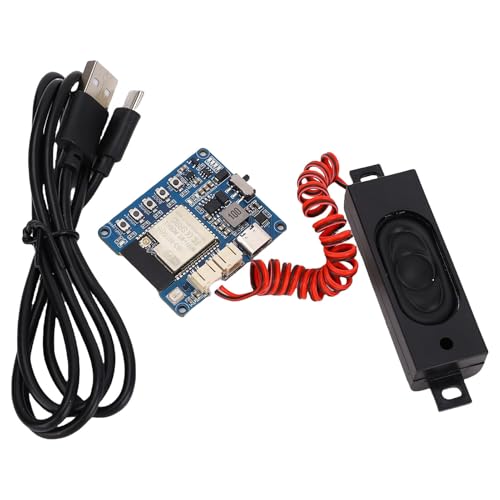
AI Voice Chat Module Type C Interface AI Large Model Support with Technology
- Interface Type: Type C interface for connectivity
- Battery Management: Built-in TP5400 battery management
- Integrated Components: Includes INMP441 microphone and amplifier
As an affiliate, we earn on qualifying purchases.
As an affiliate, we earn on qualifying purchases.
A fourth endstate the 2028 forecast didn’t price.
In the lab endgame piece I described three scenarios — Duopoly, Equilibrium, Stratification — for how six frontier labs become two, three, or twelve. Continual learning is the variable that does not appear in any of those scenarios but should. A Layer-1 breakthrough produces a fourth, asymmetric outcome.
One lab achieves a structural lead via a single capability breakthrough.
The lab that ships first does not just win a benchmark. It reshapes the architecture of every enterprise AI deployment in production. Within 60 days every CIO has to decide: stay with the current vendor and miss the capability, or migrate. Vendor switching costs are real but not infinite, and the productivity gain justifies migration cost for most workloads.
Migration decision wave
Enterprise CIOs forced to choose. Vendor lock-in calculus shifts overnight. Procurement cycles compress from 24–36 months to 6–12.
Market-share consolidation
First-mover captures 20–30 points of enterprise AI share that would have been distributed across the field. Closer to Scenario A duopoly — but compressed in time.
Capability propagates
Other labs implement their own versions. Open-weight catches up. Capability becomes table stakes. But the consolidation that happened in months 1–12 is durable.
Probability: 15–25%. Not a base case. Real enough that any portfolio with significant frontier-AI exposure should price it. The first-mover advantage compounds faster than any other lab can close it because the integration depth, workflow patterns, and customer-specific accumulated learning all sit with the lab that shipped first.
The lab that cracks continual learning first does not win a benchmark. It rewrites the AI economy. The race is on. It is mostly invisible from outside the labs.
Mind Mapping: Improve Memory, Concentration, Communication, Organization, Creativity, and Time Management (Mental Performance)
As an affiliate, we earn on qualifying purchases.
As an affiliate, we earn on qualifying purchases.
Three principles. By role.
Treat the memory layer as transitional infrastructure.
The vector database and retrieval orchestration you are building now is a substitute for continual learning. It will become less central when the breakthrough ships. Architect so the memory layer can be shrunk or replaced without re-architecting the workflow. Memory-layer contracts ≤24 months. No proprietary memory-orchestration platforms.
Capture validated experience now.
The most valuable input to a continual-learning model in 2027–2028 is a corpus of validated experience: tasks attempted, outcomes observed, corrections applied, customer-specific patterns. Build the corpus before you need it. Same dynamic as data lakes 2015–2018: the companies that built ahead ended up with structural advantage.
Maintain vendor optionality.
When continual learning ships, the first-mover has structural pricing power for 12–24 months. Enterprises locked into the wrong vendor pay a premium or accept missing the capability. Dual-vendor capability and portable workflow patterns are the negotiating leverage. The skills marketplace logic applies more strongly here.
Price Scenario D in your AI portfolio.
The probability is 15–25% on an 18-month horizon. Most public-equity AI exposure is priced for Scenarios A/B/C. The Scenario D upside is asymmetric — the lab that ships first sees compressed market-share consolidation that rewards the position 2–3× more than base-case scenarios. Cheap optionality, asymmetric payoff.
I. The constraint, in one sentence
Every frontier AI system in 2026 is Leonard.
Pause on that sentence. Anthropic’s Claude. OpenAI’s GPT-5. Google’s Gemini. xAI’s Grok. Meta’s Muse Spark. DeepSeek V4. Qwen 3.6. All of them. They are extraordinarily capable within any single conversation — within the scene. They cannot compound experience across conversations. They cannot integrate what happened on Monday into how they reason on Tuesday. They cannot learn that this specific customer prefers a specific framing, or that this codebase has its own internal idioms, or that this document review keeps surfacing the same six categories of issue. Each new conversation begins from the same base weights, frozen at training time, plus whatever the prompt happens to put in front of the model.
The official engineering term is the training-deployment boundary. Models compress experience into weights during training. Models do not compress experience into weights during deployment. They retrieve. They reason. They answer. Then the conversation ends, and from the model’s standpoint, it never happened.
Everything that has been engineered around this constraint — RAG, vector databases, longer context windows, agent harnesses, memory layers, multi-agent orchestration — is engineering around the absence of compounding learning. None of it is compounding learning. All of it is increasingly elaborate Polaroid-and-tattoo systems, architectures for an amnesiac, sometimes very good architectures, but architectures whose ceiling is bounded by what an amnesiac can do with external scaffolding.
The Memento metaphor names this honestly. The polite engineering term — “static models” — does not. Calling these systems “static” is like calling Leonard “non-compounding.” It’s accurate. It also doesn’t communicate that he is constantly tattooing notes onto his body to substitute for the function he no longer has.
II. The three layers of where learning could happen
Aubakirova and Bornstein get this right, and I’ll borrow their framing because it is the cleanest taxonomy in circulation. Continual learning could happen at three layers of the system, and the strategic implications differ by layer.
Layer 1 · Model weights (parametric). The model itself updates its parameters in response to deployment-time experience. Every conversation, every correction, every preference signal compresses into the weights. This is what training does. It is not what deployment does. Doing it during deployment is the deepest form of continual learning and the technically hardest. It runs into catastrophic forgetting (the new updates overwrite earlier knowledge), data lineage problems (which inputs caused which weight changes is increasingly opaque), and procurement obstacles (regulated industries cannot ship a model whose weights drift on Tuesdays).
Layer 2 · Modular adapters (LoRA, fine-tunes, expert layers). A frozen base model is augmented with smaller, purpose-built layers that update independently. The base stays auditable; the adapters carry the deployment-time learning. This is the architectural compromise that most enterprise deployment ends up at, because it preserves the regulatory and data-lineage properties of the frozen base while still capturing some of the compounding benefit. LoRA has been the workhorse pattern since 2023; the question through 2026 has been how far it scales and how cleanly it composes.
Layer 3 · Context and memory (in-context, retrieval-augmented). The model itself never changes. Experience is captured as text, vectors, or structured data outside the model, and reinjected at inference time as part of the prompt. This is where 95% of production “memory” implementations live today. Vector databases. Conversation history summarization. Per-user preference stores. Knowledge graphs. The agentic memory architectures that companies like LangChain, LlamaIndex, and a wave of memory-first startups have shipped over the last 24 months.
The three layers are not in opposition. The right architecture probably uses all three. But each layer has a different cost structure, a different failure mode, and — most strategically important — a different competitive dynamic. Layer 3 is mostly commoditized; the design patterns are public, the components are open source, the moat is execution rather than invention. Layer 2 is where most enterprise deployment is consolidating in 2026; LoRA and its successors are mature enough for production, the tooling is good, and the regulatory posture is cleaner than Layer 1. Layer 1 is the genuinely uncracked frontier, and it is where the asymmetric outcome lives.
III. The hidden tax on every enterprise AI deployment
The piece nobody has written is the financial accounting of operating without continual learning.
Take a Fortune 500 enterprise that has deployed Claude or GPT for, say, customer service, knowledge management, code assistance, and document review. The company has spent 18-36 months on the deployment. Forward-deployed engineers have wired the systems into Salesforce, ServiceNow, Confluence, GitHub, Workday. Every single one of those workflows has a memory layer that the company has built, paid for, and now maintains.
The memory layer is the substitute for the model’s inability to learn. It exists because the model forgets.
The cost structure of that memory layer is real and ongoing. Vector databases (Pinecone, Weaviate, Chroma, Qdrant) at $5-50K/year per workload. Embedding compute on every query. Retrieval orchestration logic that has to be maintained. Quality engineering to keep the retrieval relevant, because a memory layer that returns stale or irrelevant context is worse than no memory layer. Engineering time spent debugging the gap between “the model knows this” and “we put it in the context window in a way the model used.”
Conservatively, for a Fortune 500 deployment with 5-15 production AI workflows, the memory layer costs $1-3 million per year in infrastructure plus $2-5 million in engineering time. That is $3-8 million annually that is being spent specifically because the model cannot retain what it has been told.
Multiply that across the Fortune 500, then across every enterprise globally that is building production AI workflows. The order-of-magnitude estimate is $50-150 billion per year of global enterprise spend that exists because the model cannot retain what it has been told. This is not the cost of AI. This is the cost of working around the Memento constraint.
A continual learning breakthrough that meaningfully reduces this overhead does not improve enterprise AI margins by 5%. It eliminates a category of cost that compounds across every workflow at every customer. The company that produces this breakthrough captures economic surplus on a scale that none of the existing model-economics conversations are pricing.
This is the variable I think the AI lab endgame analysis has not absorbed.
IV. Why context windows are not the answer
The seductive line from the major labs through 2025-2026 has been: just make the context window bigger. If the model can see more text at once, the compounding-experience problem is solved by brute force. Anthropic shipped 1M-token Claude context in 2025; OpenAI matched it; Google has been pushing toward 10M tokens.
Aubakirova and Bornstein’s metaphor for this is exact: “the filing cabinet keeps getting bigger. But a bigger filing cabinet is still a filing cabinet.”
There are three reasons larger context does not solve continual learning.
Reason 1 · Effective vs. nominal context. A 1M-token context window means the model can technically receive 1M tokens. It does not mean the model uses all 1M tokens with equal effectiveness. Empirically, attention quality degrades meaningfully past 100-200K tokens for most reasoning tasks, and degrades sharply past 500K. The “lost-in-the-middle” effect is well-documented. A 1M-token context is mostly real estate, with effective attention concentrated at the beginning and end. The filing cabinet has a million drawers but the model only opens the first hundred and the last hundred.
Reason 2 · Agentic loop pressure. The dominant workflow in 2026 is not single-turn LLM calls. It is agentic loops — Claude Code, OpenAI’s enterprise agents, Anthropic’s sub-agents, the long-running workflows that take hours and span hundreds of tool calls. Each step in an agentic loop consumes context. By step 50, the context is filling. By step 100, it is full. The agent stops converging because the context contains too much accumulated state and not enough room for the next reasoning step. The major labs have responded by pushing toward larger context windows, which buys time but does not eliminate the underlying dynamic. Continual learning would let the agent compress the early steps into something internal, freeing context for the next steps. Without it, the agent’s effective horizon is bounded by context width.
Reason 3 · Cross-conversation persistence. Even an infinite context window does not help the system Monday through Friday, because each new conversation begins fresh. The user explains again. The codebase is re-read. The customer history is re-retrieved. The model relearns the same lessons in every session because it cannot retain them. A bigger context window helps within a single session. It does nothing for the compounding problem across sessions, which is most of where the productivity gain would come from.
The labs know this. The internal research at Anthropic, OpenAI, Google DeepMind, and Meta on continual learning is well-funded. The reason it has not shipped to production is not lack of investment; it is that the technical problem is hard, the failure modes are dangerous (catastrophic forgetting, alignment drift, data poisoning), and the regulatory posture for continually-updating models has not been worked out.
The race to crack it is on. It is mostly invisible from outside the labs.
V. Catastrophic forgetting and the alignment problem
The reason continual learning is hard is that the obvious approach — let the model update its weights in response to deployment-time data — has been tried, and it produces a category of failure that is genuinely scary.
Catastrophic forgetting. When a neural network is updated on new data, gradient descent moves the weights to fit the new data. The same gradient descent has no constraint that says “but preserve the existing weights for everything else the model knows.” So the new data overwrites earlier knowledge. The model that was updated on legal documents this morning now performs worse on medical questions this afternoon, because the legal-document gradients overwrote some of the medical knowledge that was encoded in shared parameters. McCloskey and Cohen named this in 1989. It is still the central problem.
Alignment drift. A model that was carefully aligned during training to refuse harmful requests, defer appropriately on uncertain claims, and avoid specific failure modes can have that alignment eroded by deployment-time updates. If users repeatedly push the model toward unsafe behavior and the model updates on those interactions, the model’s safety properties degrade. The technical term is “jailbreak persistence” — once jailbroken, a continually-updating model could remain jailbroken. The alignment teams at Anthropic and OpenAI consider this an unsolved problem.
Data lineage and audit. A frozen base model is auditable. You know what data went into training. You know the model’s properties. A model that updates continuously in response to deployment data is, after some weeks of operation, a different model than what was certified. From a regulated-industry compliance standpoint, this is unshippable until the audit and lineage problem is solved. Healthcare, financial services, government — none of them can deploy a model whose properties drift between certifications.
These are open problems, not fundamental impossibilities. A meaningful fraction of the research effort at the major labs is on solving them. Approaches include:
- Elastic Weight Consolidation (EWC) and successors: penalize updates that move parameters important for previously-learned tasks
- Modular architectures (mixture of experts, gated networks): isolate updates to specific routing paths
- Replay buffers: retain samples of earlier training data and interleave them with new data during updates
- Test-time training: update only at inference time on the current task, and reset between tasks
- External neural memory: separate the “knowledge store” from the “reasoning module” architecturally, so updates affect only the store
None of these has shipped to production at frontier scale yet. Each addresses some failure modes while introducing others. The integration into a system that maintains safety, capability, and auditability simultaneously is the open research frontier. Whoever cracks that integration first ships the breakthrough.
VI. The lab competition for the breakthrough
If you believe the breakthrough is achievable on a 12-36 month horizon — and I believe this is roughly the right window — then the competitive question is which of the major labs ships it first. Each has different strengths and constraints.
Anthropic is the lab with the deepest investment in alignment and interpretability research, which positions them well for the catastrophic-forgetting and alignment-drift problems. Their work on circuits-level interpretability (visible in the Mythos disclosure capability, in Constitutional AI, in the interpretability publications) gives them tooling for understanding what continual learning is doing to the model. Their constraint is capital intensity — frontier training is expensive, and Anthropic, even at $30-40B ARR, is balancing operational scale against research investment. The IPO in October 2026 either solves this constraint or compresses it.
OpenAI has the largest absolute research budget and the most aggressive product-velocity culture. The OpenAI bet would be that they ship a continual-learning capability into ChatGPT or the enterprise products before anyone else has a stable research approach, and iterate to safety afterwards. This is the OpenAI pattern across multiple capability launches. The risk is that an early, unsafe continual-learning ship produces an alignment-drift incident severe enough to trigger regulatory response — which would be the tail-risk scenario from the lab endgame piece.
Google DeepMind has the deepest research bench in the field and the longest publication record on continual learning specifically. The DeepMind continual learning work — going back to Synaptic Intelligence, Progress and Compress, the EWC papers — is foundational. The constraint is product velocity. DeepMind’s capability rarely ships into production at the speed Anthropic or OpenAI achieve. A DeepMind continual-learning breakthrough might land in a research paper before it lands in Gemini or Vertex AI.
Meta’s FAIR publishes aggressively on continual learning and has the open-weight distribution channel. A Meta breakthrough would land in Llama or Muse and propagate to the open-source ecosystem fastest. The constraint is the strategic clarity issue from the Q1 earnings dispatch — Meta’s ability to commit to a single capability direction is uncertain at the institutional level.
xAI is the dark horse. The merger with SpaceX gives xAI access to capital and a federal-distribution channel. Continual learning research at xAI is less visible publicly. If they shipped a breakthrough first it would be a surprise, but surprises happen.
The Chinese labs — DeepSeek, Qwen, Moonshot, Zhipu — are publishing increasingly competitive continual learning research. DeepSeek’s V4 architectural choices (Mixture of Experts at 1.6T parameters, with significant routing-level innovation) include components that could integrate with continual learning approaches. The Chinese sphere may not ship the breakthrough first — the constraints on frontier-tier capability still apply — but they are positioned to integrate breakthroughs from elsewhere quickly into their open-weight releases.
The probability distribution across labs is something like: Anthropic 25%, OpenAI 25%, Google DeepMind 20%, Chinese sphere collectively 15%, Meta 8%, xAI 5%, other 2%. This is judgment, not data.
VII. What changes when one of them ships it
Suppose Anthropic ships continual learning in Q2 2027. Or OpenAI does. Or Google. The specifics matter less than the structural consequence, which is this:
The lab that ships it first does not just win a benchmark. It reshapes the architecture of every enterprise AI deployment in production.
Within 60 days of the announcement, every enterprise CIO has to make a decision: stay with the current vendor and miss the continual-learning capability, or migrate to the lab that has shipped it. Vendor switching costs in enterprise AI are real but not infinite, and the productivity gain from continual learning is large enough to justify the migration cost for most workloads. The migration wave compresses what would normally be a 24-36 month enterprise procurement cycle into 6-12 months.
Within 12 months, the migration wave produces a market-share consolidation that resembles the Scenario A duopoly outcome from the 2028 endgame piece — but compressed in time. The lab that shipped first captures 20-30 points of enterprise AI market share that would otherwise have been distributed across the field. The labs that did not ship first either accelerate their own continual-learning research dramatically (which is hard to do faster than they’re already trying) or accept the structural disadvantage.
Within 24 months, the continual-learning capability has propagated. The other major labs have implemented their own versions, possibly worse, possibly better. Open-weight versions are appearing. The capability becomes table stakes rather than differentiation. But the market-share consolidation that happened in the first 12 months is durable — the integration depth, the workflow patterns, the customer-specific accumulated learning all sit with the first-mover, and switching back to a competitor means abandoning that compounding.
This is the asymmetric outcome that does not fit cleanly into Scenario A, B, or C from the lab endgame piece. It is closer to a fourth scenario — call it Scenario D · the Memento Singularity — in which one lab achieves a structural lead via a single capability breakthrough, and the lead compounds faster than any other lab can close it.
I did not include Scenario D in the endgame piece because the probability is moderate (15-25%) and the timing is genuinely uncertain. But the implications are large enough that any portfolio with significant frontier-AI exposure should price it.
VIII. What enterprises should do now
The strategic question for an enterprise CIO in May 2026 is not whether continual learning will happen — it will, on some timeline, in some form. The strategic question is how to position the existing AI deployment so that the eventual continual-learning capability is a benefit, not a forced re-architecture.
Three principles.
Principle 1 · Treat the memory layer as transitional infrastructure. The vector database and retrieval orchestration that you are building right now is a substitute for continual learning. It will become less central when continual learning ships. Architect the system so the memory layer can be shrunk or replaced without re-architecting the surrounding workflow. Specifically: do not let the memory-layer contracts run longer than 24 months, do not let workflow logic depend on memory-layer-specific APIs, and do not invest in proprietary memory-orchestration platforms that will be commoditized.
Principle 2 · Capture validated experience now. The single most valuable input to a continual-learning model in 2027-2028 will be a corpus of validated experience — tasks the system attempted, outcomes that were observed, corrections that were applied, customer-specific patterns that were learned. The enterprises that have collected this corpus during 2025-2026 and structured it well will have a transition advantage when continual learning ships. The enterprises that have run AI workflows without capturing the experience corpus will need to start from scratch. This is the equivalent of the data lake conversation from 2015-2018: the companies that built the corpus before they needed it ended up with a structural advantage. The same pattern repeats with experience corpora and continual learning.
Principle 3 · Maintain vendor optionality. When continual learning ships, the lab that shipped first has structural pricing power for 12-24 months. Enterprises that are locked into the wrong vendor at that moment pay a premium or accept missing the capability. Enterprises that have maintained dual-vendor capability or portable workflow patterns have negotiating leverage. The skills marketplace dispatch covered why portable cross-vendor skills are the hedge against vendor lock-in. The same logic applies more strongly here.
These three principles together cost meaningfully more than the single-vendor-deepest-integration approach that most enterprise AI procurement defaults to. They also produce a structural advantage when the continual-learning breakthrough ships. The cost-benefit analysis is the standard optionality calculation. For most Fortune 500 enterprises, the optionality is worth the cost. For many mid-market enterprises, it is not.
IX. The deeper signal
Continual learning is a technical capability. The reason it matters is that it is the variable that disambiguates the most important question in AI strategy right now: are AI systems going to remain tools that humans operate, or are they going to become systems that compound their own competence?
If frontier AI remains static — Memento — then the human-AI interaction pattern is recognizable. The AI is a brilliant tool. It assists. It accelerates. It does not surpass, because it cannot accumulate. Every conversation begins from the same baseline. Productivity gains are bounded by what a non-compounding tool can deliver, which is large but finite. The economic value capture is meaningful but does not redefine the labor question. This is the world the productivity-gap dispatches have been describing — large gains, but bounded, and absorbed across the economy through the standard channels.
If frontier AI achieves continual learning — even partial, even imperfect — then the dynamic changes. The system that has been deployed for a year has accumulated a year of compounding experience. The system deployed for three years has accumulated three years. The competence ceiling is no longer bounded by the training run; it is bounded by deployment time and experience volume. This is the world the post-labor economics conversations have been gesturing at without quite naming, because the technical capability that would produce the world has not shipped.
Aubakirova and Bornstein close their piece with the line: “We stand at the cusp of moving from amnesiac models to ones with a glimmer of experience. Otherwise, we will be stuck in our own Memento.” The line is correct. The strategic translation is that the moment from amnesia to experience is the moment when AI competence stops being a function of training compute and becomes a function of compounding deployment time.
That moment, when it arrives, ends one phase of the AI economy and starts another. The enterprises, investors, policymakers, and labs that are positioned for the transition capture disproportionate value. The ones that are not pay the cost of the transition while watching others capture the value.
The Memento metaphor is the cleanest single description of the constraint. It is also a warning. Leonard at the end of the film has constructed a false reality out of the inability to integrate his experience. The path from amnesic AI to compounding AI runs through technical work that, if done incorrectly, produces alignment-drift and capability-degradation problems severe enough to trigger regulatory response.
The race is on. It is mostly invisible. The lab that wins it does not just win a benchmark. It rewrites the AI economy.
The enterprise CIOs, the AI investors, the labs that read this piece carefully — they are the ones who will be positioned when the breakthrough ships. The ones who don’t are the ones paying the Memento tax for as long as it persists.
The race for continual learning is the most consequential AI capability competition that is not yet on most strategists’ maps. The lab that solves it first reshapes the trillion-dollar enterprise AI economy on a timeline that compresses every other capital allocation question in the sector.
About the Author
Thorsten Meyer is a Munich-based futurist, post-labor economist, and recipient of OpenAI’s 10 Billion Token Award. He spent two decades managing €1B+ portfolios in enterprise ICT before deciding that writing about the transition was more useful than managing quarterly slides through it. More at ThorstenMeyerAI.com.
Acknowledgment
The Memento metaphor and the three-layer taxonomy of continual learning (weights / modules / context) come from “Why We Need Continual Learning” by Malika Aubakirova and Matt Bornstein at a16z (2026). This piece extends their research framing into the strategic and capital-allocation questions that follow from it. Read the original at a16z.com/why-we-need-continual-learning.
Related Dispatches
- The 2028 Model Lab Endgame — scenario forecast
- Your AI Vendor’s AI Vendor — agent supply chain compromise (Vercel × Context AI)
- Single Digits — the April 2026 open-weight inflection
- The 27% Problem — Anthropic’s enterprise lead and Google’s $750M check
- The Bubble Is Not in Valuations — the productivity gap
- The Agent Trap — why 90% of AI launches are infrastructure liars
- The Channel Move — Anthropic × Wall Street PE channel acquisition
Sources
- Aubakirova, M. & Bornstein, M., Why We Need Continual Learning, a16z (2026)
- AI + a16z Podcast: Why We Need Continual Learning with Malika Aubakirova (2026)
- McCloskey, M. & Cohen, N. J., Catastrophic interference in connectionist networks: The sequential learning problem (1989) — foundational paper on catastrophic forgetting
- Kirkpatrick et al., Overcoming catastrophic forgetting in neural networks (PNAS 2017) — Elastic Weight Consolidation
- Sun et al., Test-Time Training with Self-Supervision (ICML 2020)
- Wang et al., A Comprehensive Survey of Continual Learning: Theory, Method and Application (TPAMI 2024)
- Li & Hoiem, Learning without Forgetting (TPAMI 2017)
- Lost-in-the-middle attention research: Liu et al. (2023) and follow-up work through 2025
- Anthropic Frontier Red Team, Claude Mythos Preview (2026-04-07)
- DeepSeek V4 technical report (2026-04-24)
- Memento (2000), directed by Christopher Nolan