
By Thorsten Meyer | October 27, 2026 | ThorstenMeyerAI.com

Get business pricing on tech for your team
- Business-only prices and quantity discounts
- Tax-exempt purchasing
- Multiple users, one account, clear invoices
For two years the AI story was about chips. This month it was about transformers, copper and batteries. On October 21, the data center operator Vantage reserved more than a gigawatt of factory capacity for a solid-state transformer that turns grid power straight into 800-volt direct current. Five days earlier, the Indiana utility NiSource signed a 20-year power deal with Microsoft that adds about 1,100 megawatts of generation and a 600-megawatt battery. And on October 26, an industry piece in Utility Dive asked what power engineers have been asking for a while: if one AI rack now draws as much as a small neighbourhood, why do we still feed it like an office server? Here is why data centers are moving to DC power and batteries, what the two deals actually show, which numbers are measurements and which are vendor claims, and what it all means for companies that plan capacity and for people who pay an electricity bill.
Key takeaways
- AI racks are outgrowing the old power design. The IEA says the power density of AI servers rose 11-fold between 2020 and 2025 and is set to quadruple again by 2027, when a single rack could draw as much at peak as 65 households.
- 800-volt DC is the industry’s answer. NVIDIA’s reference design converts 13.8 kV grid power to 800 V DC once, at the edge of the building, for 1 MW racks from 2027. NVIDIA claims 45% less copper and up to 5% better end-to-end efficiency; those are vendor figures.
- Batteries move from the back room to the main path. Heron Power’s transformer has storage built in to buffer AI’s power swings, and NiSource’s Microsoft deal comes with a 600 MW battery. The IEA expects 20–25 GW of batteries in data centers by 2030.
- The scarce resource is the connection, not the chip. Transformers take two to three years to arrive and grid connections five to ten years in many places (IEA). The US queue held about 2,300 GW at the end of 2024, and only 13% of earlier requests were ever built (Berkeley Lab).
- Households feel it, unevenly. US homes pay 18.21 cents per kWh on average this year, up from 17.30 cents in 2025, and wholesale prices in the PJM region are up 41% (EIA). Who pays for new plants and wires is now settled contract by contract.
Infographic 01 · From grid to rack
AI racks near a megawatt are outgrowing the AC power chain.
Why the industry is moving to 800-volt direct current: fewer conversions, less copper, batteries on the main path. The numbers are vendor figures with different baselines, so they cannot be added up.
Today: many conversions
Typical AC chain from the grid to the rack
- Medium-voltage AC from the grid
- Transformer steps it down to low-voltage AC
- UPS converts to DC for the batteries and back to AC
- Distribution units feed the racks
- Every server power supply converts AC to DC again
Each stage loses energy, and almost all of the loss becomes heat the cooling system must remove.
800 V DC: convert once, outside
NVIDIA reference design, full-scale production planned with Kyber racks in 2027
- 13.8 kV AC from the grid
- Converted once to 800 V DC at the edge of the site, batteries on the same DC bus
- 800 V DC busway to the racks
- Stepped down inside the rack, for 1 MW racks and beyond
Bridge for existing halls: a “sidecar” cabinet next to the rack converts AC to 800 V DC, while the old chain stays in place.
Power lost per MW delivered to the rack
kW, SMA white-paper model vendor model
What NVIDIA says 800 V DC changes
NVIDIA’s engineering claims claim
Sources: NVIDIA technical blog (20 May 2025, updated 31 Jul 2025); SMA America, sponsored content in Utility Dive (26 Oct 2026). Rack density: IEA, Key Questions on Energy and AI (Apr 2026) (AI server power density 11× from 2020 to 2025, a further 4× by 2027).
Powered by Thorsten Meyer AI
Products Worth Considering

Jackery HomePower 1000 Plus v2 Portable Power Station

DJI Osmo Pocket 4 Gimbal Camera Pro Kit, 18-Piece Bundle

Bose QuietComfort Wireless Bluetooth Headphones with Active Noise Cancellation, Mic, USB‑C Charging, Deep Bass, 24‑Hour Battery – White Smok
As an affiliate, we earn on qualifying purchases.
The power wall: why alternating current is running out of road
Data centers have run on alternating current for decades. Power arrives at medium voltage, is stepped down by transformers, passes through uninterruptible power supplies and distribution units, and is finally converted to low-voltage DC inside every server. Each conversion loses a little energy, and almost all of that loss turns into heat that the cooling system then has to remove.
The totals are growing too. The IEA sees global data center electricity use roughly doubling from 485 TWh in 2025 to 950 TWh in 2030, about 3% of world demand. In the US, data centers used 4.4% of all electricity in 2023 and could use 6.7% to 12% by 2028, according to Berkeley Lab. But the bigger problem is density. The old design was fine at 10 or 20 kilowatts per rack. It stops being fine near a megawatt. The IEA’s April 2026 report Key Questions on Energy and AI puts the jump plainly: AI server power density increased 11 times between 2020 and 2025 and is set to grow fourfold again by 2027. A rack “only the size of a large refrigerator” could then have the peak demand of 65 households.
NVIDIA laid out the physics in its 800 VDC technical blog (May 20, 2025, updated July 31, 2025). Feeding a 1 MW rack at today’s 54 volts would take up to 200 kg of copper busbar, and the power shelves alone would fill up to 64 rack units in its next-generation Kyber racks, “leaving no room for compute”. Its answer is to convert 13.8 kV grid power to 800 V DC at the perimeter of the facility and run DC to the racks. NVIDIA says this moves 85% more power through the same conductor size and needs 45% less copper than 415 V AC distribution, with up to 5% better end-to-end efficiency than current 54 V systems and up to 70% lower maintenance costs. Full-scale production is planned with Kyber systems in 2027. These are NVIDIA’s engineering claims, not independent measurements.
The new Utility Dive piece (October 26, 2026) is sponsored content by the inverter maker SMA America, so read it as a vendor’s case. Its white-paper model: delivering 1 MW through a traditional AC chain with conversion at the rack loses about 80 kW; converting medium-voltage AC to 800 V DC outside the building and distributing DC cuts that to about 20 kW. SMA also describes the bridge most operators will use first, the “sidecar”: a conversion cabinet next to the rack that lets 800 V racks run in halls built for AC, while most of the old conversion chain stays in place.

Why batteries come along
AI does not draw power smoothly. When thousands of GPUs start or pause a training step together, a campus load can swing hard within seconds. The IEA says these “large and rapid power swings” make energy storage critical, and that 20–25 GW of batteries could be installed in data centers by 2030, “potentially making them a grid asset if the incentives are right”.
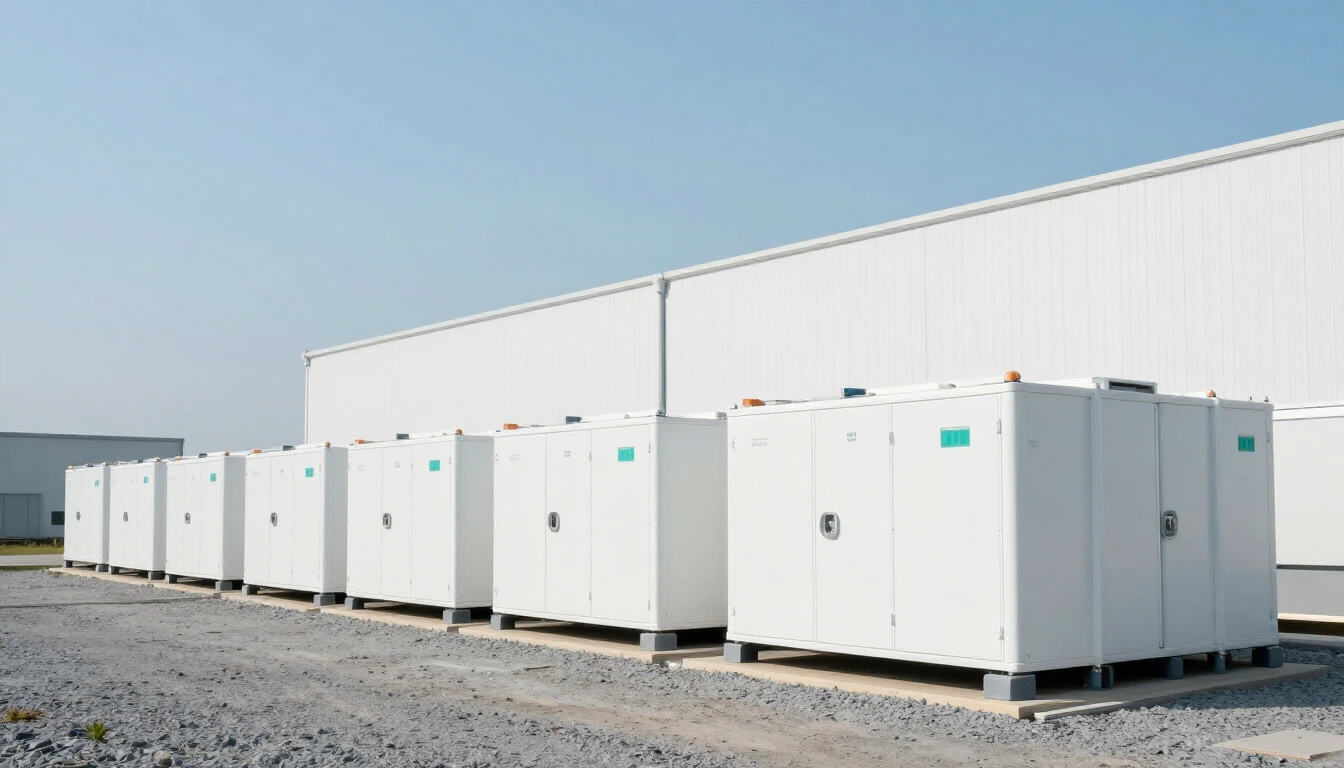
DC makes that simpler, because batteries are DC devices. In an 800 V design they can sit on the main power path instead of waiting behind a UPS for an outage. SMA argues that storage outside the building can smooth AI load swings, ride through grid disturbances and control how fast a site ramps back to full power. Heron Power puts that idea into one product.
What the two deals actually show
Vantage and Heron Power, October 21. According to the joint press release, Vantage “has secured over 1GW of manufacturing capacity” of Heron Link, a solid-state transformer that converts medium-voltage grid power directly to 800 VDC “with integrated energy storage”. Heron, a participant in NVIDIA’s 800 VDC ecosystem, says the design needs less equipment, floor space and installation labour than a conventional 480 V AC system and “targets more than 98.5% efficiency” from medium voltage to 800 VDC. Watch the verbs: secured capacity, targets efficiency. The release names no sites, delivery dates or prices. Energy-Storage.News adds that Heron has raised $200 million in two rounds since February.
NiSource and Microsoft, October 16. NiSource’s release covers a 20-year agreement to serve Microsoft’s planned campus in northwest Indiana from 2028. Its generation subsidiary GenCo adds about 1,100 MW to its pool, Microsoft “fully funds all generation and transmission required to serve its load”, and GenCo has contracted 600 MW of battery storage under a long-term tolling agreement. NiSource now projects $1.75 billion in savings for existing customers over the life of its data center contracts, up to $140 per customer per year. That is the company’s projection, not money anyone has seen yet. Microsoft’s Jeff Riles says the goal is to “ensure that our data centers don’t increase electricity prices for other ratepayers”. The model follows an earlier Amazon deal with 3 GW of new capacity, including a 400 MW / 1,600 MWh battery and two 1.3 GW gas turbines, Energy-Storage.News reports, and clean-energy advocates have called it anti-competitive.
One deal is factory capacity for power electronics, the other a utility contract. Both say the same thing: whoever brings power, conversion and storage online fastest wins the next round of AI capacity.
Infographic 02 · Two deals, one direction
A gigawatt of DC conversion and a utility deal with a 600 MW battery.
What Vantage/Heron and NiSource/Microsoft actually announced, and what the releases leave out.
Vantage + Heron Power
Announced 21 Oct 2026 · power electronics
- What it is: a solid-state transformer that turns grid power directly into 800 V DC, with energy storage built in
- Why: fewer conversion stages, less equipment, floor space and labour than 480 V AC, buffering of AI load swings claim
- Not disclosed: sites, delivery dates, prices
- Heron: participant in NVIDIA’s 800 V DC ecosystem; raised $200 million in two rounds since February (Energy-Storage.News)
Efficiency is a target, not a measurement.
NiSource + Microsoft
Announced 16 Oct 2026 · utility contract, northwest Indiana
- Term: 20 years, service from 2028
- Who pays: Microsoft fully funds generation and transmission for its load reported
- Savings: about $1.75 billion for existing customers over the contracts’ life, up to $140 per customer a year company projection
- Precedent: Amazon deal with 3 GW new capacity, incl. a 400 MW / 1,600 MWh battery and two 1.3 GW gas turbines (Energy-Storage.News)
One deal buys conversion, the other buys supply. Both buy time.Power, conversion and storage now decide how fast AI capacity comes online
Sources: Vantage and Heron Power release (21 Oct 2026); NiSource release (16 Oct 2026); Energy-Storage.News (26 Oct 2026).
Powered by Thorsten Meyer AI
The turn: capacity is now the scarce resource
The money is already committed. We covered Meta’s roughly $825 billion of future spending commitments and SpaceX’s $40 billion debt deal for GPUs in AI Pays Off Almost Nowhere Outside Tech. Anthropic’s S-1 names compute contracts of at least $114.5 billion with Google and $110 billion with Amazon. SpaceX now reports compute in gigawatts, 1.7 GW at September 30 (our Q3 check). In August we argued that the real unit of AI power is agents per gigawatt.
The physical world moves slower. The IEA lists transformer lead times of two to three years, gas turbine deliveries of around five years and grid connection waits of “five to ten years in many jurisdictions”. ERCOT, the Texas grid operator, has received 160 GW of interconnection requests from data centers, twice today’s global hyperscale and colocation capacity, though the IEA notes that many may be speculative. Berkeley Lab’s Queued Up 2025 counted about 2,300 GW of generation and storage waiting to connect in the US at the end of 2024; only 13% of the capacity that applied between 2000 and 2019 was ever built.
And someone has to install it. The US Bureau of Labor Statistics projects electrician jobs to grow 9% from 2025 to 2035, with about 72,700 openings a year, and names AI and data centers among the reasons.

So the question changes. It is no longer “how many GPUs can we buy?” but “how much power, cooling and floor space do we really have, where, and from when?” In many estates nobody can answer that with one number. Our October 4 piece on grid queues, curtailment and tariffs walked through four US markets where the headline power reservation and the usable capacity differ.
Infographic 03 · The real bottleneck
Transformers take years. Grid connections take longer.
Why capacity, not chips, sets the pace of the AI build-out, and where households feel it.
The waits that set the pace
years, IEA; bar = upper end of the range
ERCOT (Texas) has received 160 GW of data center connection requests, twice the global hyperscale and colocation capacity; many may be speculative (IEA).
What households pay
average US residential price, cents per kWh forecast for 2026–2027
- PJM wholesale prices: +41% in 2026 vs 2025, the largest regional rise; nationally the EIA points mainly to weather
- IEA warning: oversized connections and slow grid investment could raise prices in some places if unmitigated
- Demand: data centers worldwide 485 TWh in 2025, about 950 TWh by 2030 (IEA central projection)
Sources: IEA, Key Questions on Energy and AI (Apr 2026); Berkeley Lab, Queued Up 2025 (Dec 2025); EIA Short-Term Energy Outlook (Oct 2026).
Powered by Thorsten Meyer AI
Where capacity planning meets the power wall
Disclosure: Rymvard is built by Thorsten Meyer.
When power is the bottleneck, the fastest new capacity is often capacity an operator already has but cannot see: megawatts sold but idle, racks powered but unusable, SAP HANA memory reserved but never used. And in enterprise hosting, power is only half the bill. Where a virtual machine lands decides which licences are owed, because Oracle, Microsoft, VMware, Red Hat, SUSE and IBM count by the hardware underneath.
Rymvard is a capacity and licence ledger for enterprise hosting built around that problem. It joins power, racks, IT compute and HANA memory with those vendors’ licences in one ledger, across on-premises halls, public clouds and sovereign clouds. It reads from systems teams already run, such as DCIM, CMDB, metering, hypervisors, SAP landscapes and licence entitlements, and keeps each figure with its source, owner and timestamp. A fit-check tests space, power, cooling and recovery before a workload is placed; its AI recommends, and a person approves.
What exists today: the product runs on an illustrative example estate. Early access is open, and SAP hosting providers can start a four-week, read-only pilot on their own landscape. Pricing has not been set, and there are no customer results to report yet.
What this means for companies
- Hosting and colocation providers: plan 800 V DC at two speeds, sidecars in existing halls now and native DC in new builds from 2027. Ask suppliers for measured efficiency at your load, not modelled figures.
- Enterprise IT and SAP estates: AI, GPU clusters and HANA growth now compete for the same megawatts. Know what is free, stranded and reserved per site before you buy hardware or sign a cloud commitment, and check what a placement does to your licence position before it happens.
- Power contracts: “pay your own way” deals like Microsoft’s are becoming the price of admission. Expect to fund generation and transmission, or to accept flexible connections; the IEA recommends faster connections in return for demand response.
- Location choice: time to a grid connection is now a site criterion on par with land and tax. A queue position is not a power supply.
- Storage: treat batteries as part of the power design, not only as backup. Depending on the market, they may also earn money from grid services.
What this means for users
- Electricity prices: the EIA’s October outlook puts the average US residential price at 17.30 cents per kWh in 2025, 18.21 cents in 2026 and 18.68 cents in 2027. Wholesale prices in PJM, the grid that includes Virginia’s data center cluster, are up 41% this year; the EIA puts the national rise mainly down to weather, so data centers are one factor, not the only one.
- Who pays for the wires: the IEA warns that oversized connections and a mismatch between fast data centers and slow grid investment “could raise electricity prices in some places if unmitigated”. Deals that make the data center fund its own supply are the answer utilities now advertise; whether the promised savings arrive is something to check in rate filings, not press releases.
- Local debates: citing Data Center Watch, the IEA reports that in the second quarter of 2025, 20 US projects worth an estimated $98 billion were blocked or delayed. Expect more hearings on tariffs, land, gas plants and water. Useful questions at a town meeting: who funds the new lines, is there a large-load tariff, and does the site have to cut load in a grid emergency?
- Jobs: if you are an electrician, a lineworker or a power engineer, the AI boom is your boom too.

Honest limits
- The efficiency and copper figures come from vendors (NVIDIA, SMA, Heron) and are modelled or targeted, not independently measured at scale. They also use different baselines (54 V racks, AC with rack-level conversion, 480 V AC), so they cannot be added up.
- Native 800 V DC at scale is a 2027 story. Today the shift is mostly sidecars, reference designs and pilots, and Vantage’s gigawatt is reserved factory capacity with no published delivery dates.
- NiSource’s savings are projections, and the release does not state Microsoft’s contracted load.
- The IEA figures are central projections; ERCOT’s request volume includes speculative applications.
- Rymvard is the author’s own product. It is included because the article’s argument (capacity is the scarce resource) is the problem it addresses, and it is disclosed in that section.
Sources
- SMA America (sponsored content), “The push to DC: Why data centers are rethinking power architecture”, Utility Dive, October 26, 2026
- NVIDIA Technical Blog, “NVIDIA 800 VDC Architecture Will Power the Next Generation of AI Factories”, May 20, 2025 (updated July 31, 2025)
- Vantage and Heron Power Electronics, press release, October 21, 2026
- NiSource, press release via Business Wire / Yahoo Finance, October 16, 2026
- Energy-Storage.News, “Heron Power and NiSource announce US data centre and BESS-focused deals with Vantage, Microsoft”, October 26, 2026
- IEA, “Key Questions on Energy and AI”, April 2026
- Berkeley Lab, “Queued Up: 2025 Edition”, December 2025
- Berkeley Lab, “2024 United States Data Center Energy Usage Report”, news release January 15, 2025
- US Energy Information Administration, Short-Term Energy Outlook, October 2026
- US Bureau of Labor Statistics, Occupational Outlook Handbook, Electricians (last modified August 27, 2026)
- Rymvard, product site (read October 27, 2026)