
By Thorsten Meyer | November 1, 2026 | ThorstenMeyerAI.com

Get business pricing on tech for your team
- Business-only prices and quantity discounts
- Tax-exempt purchasing
- Multiple users, one account, clear invoices
On Thursday, 29 October, OpenAI’s chief executive Sam Altman sat down for a podcast and said something that made many PC owners wince. From “a global allocation perspective”, he said, it is “quite terrible” that so much of the world’s limited memory sits in people’s own computers, “being used 5% of the time”. Two days later, on Saturday, he was in Yongin, south of Seoul, in a room with about 50 of Samsung’s top executives.
Samsung makes much of the world’s memory. OpenAI needs a lot of it. And memory chips have become the scarcest part of the AI boom. So the question behind this meeting is bigger than one trip: who gets the world’s memory, the data centers or the devices on your desk? I checked what is confirmed about the meeting, what Altman actually said and in what context, and what the numbers say about the memory squeeze. Here is what it means for companies and for the rest of us.
Key takeaways
- The meeting is confirmed, the content is thin. Samsung confirmed that about 50 executives from its electronics, finance and biotech affiliates met Altman on 31 October at its training center in Yongin. Samsung framed it as AI leadership training. No new supply deal was announced, and Samsung did not release the attendee list.
- Memory was the subtext. Bloomberg reported that the visit aimed to deepen cooperation on memory chips and AI infrastructure “as global shortages intensify”. The Seoul Economic Daily reported that OpenAI’s chip-hardware chief traveled with Altman. Both companies already signed a letter of intent in October 2025, in which Samsung said OpenAI’s memory demand is projected to reach “up to 900,000 DRAM wafers per month”.
- The “quite terrible” line was about allocation, not about your PC being bad. In context, Altman argued that memory in personal computers sits idle most of the time, while scarce supply would be used more fully in shared data centers. The 5% figure is his estimate, not a measurement. He also runs a company that sells cloud AI.
- Memory now carries Samsung. In the third quarter, Samsung’s chip division earned 106.5 trillion won of the company’s 107.4 trillion won operating profit. Its phone and network business lost 0.6 trillion won, partly because of cost pressures.
- Prices keep rising, more slowly. TrendForce expects contract prices for conventional DRAM to rise another 10 to 15% in the fourth quarter, and warns that PC memory supply could decline in 2027 as more capacity shifts to servers.
- For companies and users, the risk is not empty shelves. It is higher prices and quieter cuts: less memory and storage in mainstream devices, and AI that is cheaper to rent than to run yourself.
Products Worth Considering

DJI Osmo Mobile 8 Gimbal with Mic Mini Transmitter, Infinity Black

Amazon Kindle Scribe (64GB) with Premium Pen, Metallic Jade

Amazon Kindle Scribe Colorsoft, 64GB, 11-Inch Color Display with Premium Pen
As an affiliate, we earn on qualifying purchases.
What happened in Yongin, and what is confirmed
Here is the state of play as of Sunday, 1 November, sorted by source.
- Confirmed by Samsung. About 50 presidents and senior executives from Samsung’s electronics, finance and biotech affiliates met Altman on Saturday, 31 October, at the Samsung Human Resources Development Center in Yongin. The theme, as the Korea Herald translated it: “The Next 10 Years Shaped by AI: The Enterprise’s Choice”. According to Samsung, they discussed where AI technology is heading, how it changes decision-making and management, and which new markets it opens. Samsung called it part of a leadership program for its AI transition.
- Altman’s message, as Samsung relayed it. Yonhap reported, citing Samsung, that Altman told the executives a competitive edge does not come from simply adopting AI, but from using it “to move faster, make better products and get ahead of competitors”. The Seoul Economic Daily quoted him with almost the same words.
- Reported by Bloomberg. Bloomberg wrote that Altman met the executives “to deepen cooperation on memory chips and AI infrastructure as global shortages intensify”. It also noted that Nvidia’s Jensen Huang and AMD’s Lisa Su have each visited South Korea twice since 2025 to strengthen supply ties.
- Reported by one Korean outlet. The Seoul Economic Daily reported that Richard Ho, the OpenAI vice president who leads its in-house AI chip work, accompanied Altman. It also reported, citing industry sources, that OpenAI’s own AI accelerator is expected to use Samsung’s next-generation high-bandwidth memory, HBM4. Neither company has confirmed that.
- Reported by Yonhap, citing industry sources. SK Group chairman Chey Tae-won met Altman in Seoul on the same day, together with executives from SK hynix, the other big Korean memory maker. What they discussed was not disclosed.
- Not announced. No new supply contract, no volumes, no prices. In Samsung’s account of the meeting, chips appear only as background, through the 2025 letter of intent.
This was Altman’s first visit to Samsung in about a year, according to the Seoul Economic Daily. The relationship has deepened in between. In October 2025, OpenAI and four Samsung companies signed a letter of intent. In June 2026, OpenAI said Samsung Electronics would roll out ChatGPT Enterprise and Codex to its employees in Korea and in its global device division. In July, Samsung’s executive chairman Lee Jae-yong visited OpenAI in San Francisco, the Korea Herald reported.
Infographic 01 · Confirmed, reported, not announced
What we actually know about Altman’s Samsung meeting
Samsung confirmed the meeting and framed it as AI leadership training. The memory angle comes from reporting. No deal was announced.
- Meeting with about 50 presidents and executivesConfirmed by Samsung
Electronics, finance and biotech affiliates; Samsung Human Resources Development Center. Theme: “The Next 10 Years Shaped by AI: The Enterprise’s Choice”.
- Altman: the edge comes from how you use AI, not from adopting itConfirmed by Samsung
As relayed by Samsung via Yonhap; quoted similarly by the Seoul Economic Daily.
- Aim: deeper cooperation on memory chips and AI infrastructureReported
Bloomberg, “as global shortages intensify”.
- OpenAI’s chip-hardware chief traveled along; HBM4 linkOne outlet
Seoul Economic Daily, citing industry sources. Not confirmed by either company.
- SK chairman Chey Tae-won met Altman the same dayOne outlet
Yonhap, citing industry sources. Content not disclosed.
- Volumes, prices, a new contractNot announced
Nothing announced. No statement from OpenAI on the visit.
How Samsung and OpenAI got here
- 1 Oct 2025Letter of intent: memory for Stargate, data centers, floating data centersSamsung and OpenAI announcement
- Jun 2026Samsung rolls out ChatGPT Enterprise and Codex to employeesOpenAI, as reported by the Korea Herald
- Jul 2026Samsung chairman Lee Jae-yong visits OpenAI in San FranciscoKorea Herald
- 29 Oct 2026Samsung’s record quarter; Altman’s “quite terrible” DRAM remarkSamsung results · Cheeky Pint podcast
- 31 Oct 2026Altman meets about 50 Samsung executives in YonginSamsung via Yonhap · Bloomberg
“Confirmed by Samsung” means Samsung’s own account, as relayed by Yonhap and the Korea Herald. A letter of intent is a statement of plans, not a purchase order.
Sources: Samsung via Yonhap, 31 Oct 2026, Korea Herald, 31 Oct 2026, Bloomberg via The Straits Times, 31 Oct 2026, Seoul Economic Daily, 1 Nov 2026, Samsung and OpenAI letter of intent, 1 Oct 2025.
Powered by Thorsten Meyer AI
What Altman actually said about the memory in your PC
The remark comes from an episode of Stripe co-founder John Collison’s podcast Cheeky Pint, published on YouTube on 29 October. I checked the passage against the recording; it runs from about 27 to 30 minutes in.
Collison asked why high memory prices had not yet brought more supply. Altman answered that “the invisible hand is failing right now”. For a very long time, he said, a memory maker would “invest $20 billion of capex to make $19 billion”. Now “these guys are each going to make like $100 billion of like free cash flow in a year”, but they remember how often they “almost went bankrupt by making too many fabs”, so they stay careful.
Then came the line that went around the internet:
> “A lot of people want local inference and somehow they assume that like the problem is solved now because we’re going to have open-source models. We’re going to be able to run them on our computers. And so we’re not going to need all the stuff in the data center. But from like a global allocation perspective actually it’s quite terrible to have everybody like have a bunch of the world’s limited supply of DRAM sitting in their own computer and being used 5% of the time. Like you want maximum utilization in the cloud if you’re trying to like deal with this very supply constrained environment.”
Later in the episode, he said the cost of chips and energy should come down, but “for it to go down, given how much value there is in this, supply’s got to go way up.”
Read in full, this is not “your PC is terrible”. It is an argument about where scarce memory does the most work. DRAM, the working memory in every computer and phone, does nothing useful while it waits. A server that runs AI for thousands of users keeps the same chips busy. That logic is sound as far as it goes.
But it has limits, and they matter:
- The 5% figure is Altman’s estimate. He gave no source, and I found none. Utilization depends heavily on what people do with their machines.
- Local AI is not only about memory. People run models on their own devices for privacy, for offline use, for speed and to avoid subscriptions. A utilization argument does not answer any of those.
- He has an interest. OpenAI sells AI that runs in its data centers. An argument that memory belongs in the cloud also fits its business. That does not make it wrong, but it is worth knowing who is making it.
- The memory makers have an interest too. They are earning record margins from the shortage. I covered that tension in SK hynix sees a memory shortage until 2030.
Why memory is the bottleneck of the AI boom
Two documents from the week explain why Altman flew to Korea.
Samsung’s third quarter (29 October). Samsung reported revenue of 195.3 trillion won and operating profit of 107.4 trillion won, which it says makes it the first tech company to exceed 100 trillion won of quarterly operating profit. Its chip division (Device Solutions) earned 106.5 trillion won of that, with the memory business setting new records. Samsung wrote that “strong demand momentum for servers led to higher market prices across all applications”. Its phone and network business posted an operating loss of 0.6 trillion won, with earnings down from a year earlier “due to cost pressures”.
Samsung is also spending more to build capacity. Capital expenditure reached 29 trillion won in the quarter, 12.2 trillion more than in the second quarter and 19.8 trillion more than a year earlier. By my arithmetic from those changes, that means about 9.2 trillion won in the third quarter of 2025 and 16.8 trillion in the second quarter of 2026. For the full year, Samsung expects about 84.4 trillion won. Its outlook for 2027 is blunt: “increasing AI-driven demand will far exceed the industry supply in comparison with 2026.”
The Stargate letter of intent (1 October 2025). In its announcement with OpenAI, Samsung said it would act as a “strategic memory partner” for OpenAI’s Stargate data-center program. “With OpenAI’s memory demand projected to reach up to 900,000 DRAM wafers per month,” Samsung would “contribute toward meeting this need”. The same letter covered Samsung SDS (designing and running AI data centers, and reselling ChatGPT Enterprise in Korea) and joint work by Samsung C&T and Samsung Heavy Industries on floating data centers at sea. A letter of intent is a statement of plans, not a purchase order, and the 900,000 figure is a projection of OpenAI’s demand, not a delivery schedule.
To put the scale in context, Bloomberg wrote this weekend that memory accounts for roughly a third of data-center spending, and that the five biggest players in the AI infrastructure race plan to spend more than $3 trillion in the coming years.
Infographic 02 · Memory carries Samsung
Almost all of Samsung’s profit now comes from chips
Two days before Altman’s visit, Samsung reported its best quarter ever. The chip division earned nearly all of it, while phones lost money under cost pressure.
Where the profit came from
Korean won, Q3 2026
Capital spending per quarter
Korean won · full-year 2026 plan about 84.4T
Division figures do not add up exactly to the company total because of other units and eliminations. The earlier capex values are my arithmetic from the changes Samsung reported. Not investment advice.
Source: Samsung Q3 2026 results, 29 Oct 2026.
Powered by Thorsten Meyer AI
The same wafers, two customers
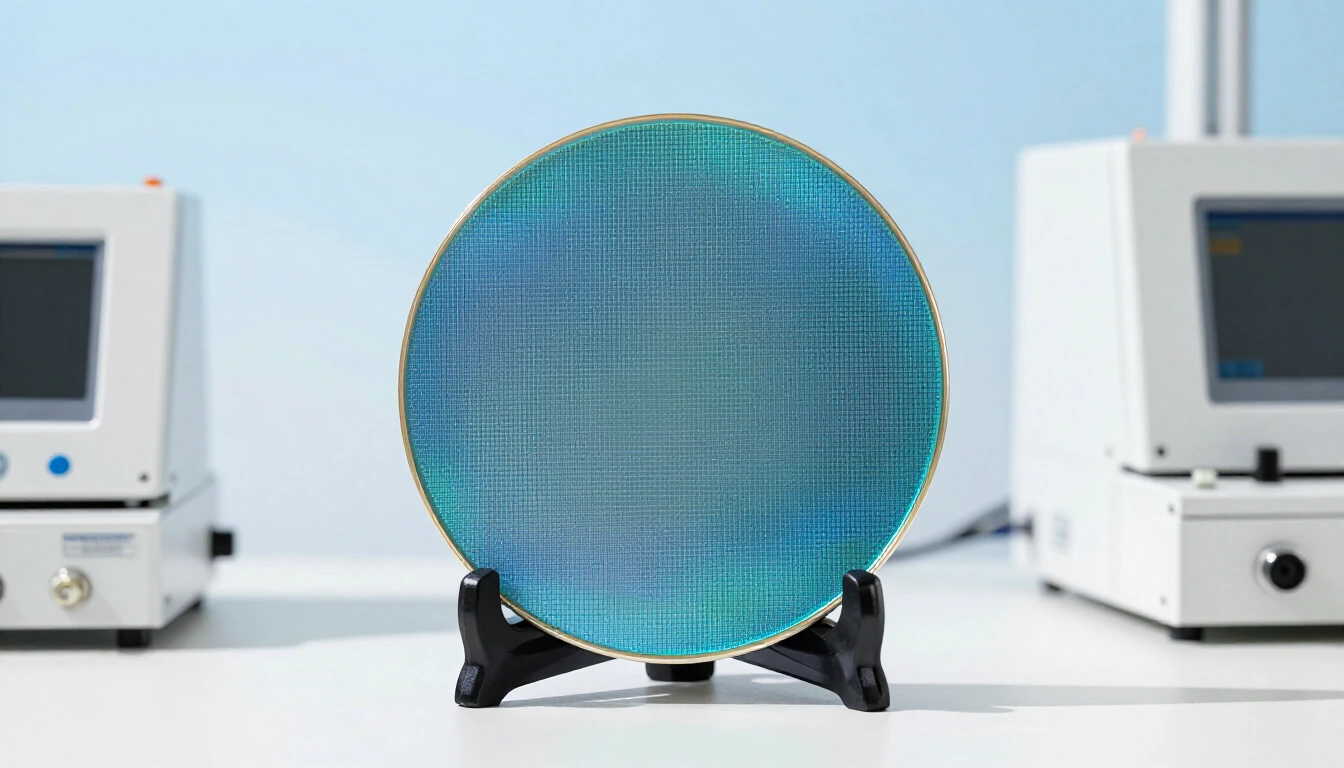
Here is the simple version of the squeeze. Memory chips start as silicon wafers. The same factories can make memory for AI servers, including the stacked high-bandwidth memory that sits next to AI chips, or ordinary memory for laptops and phones. When AI customers pay more and sign long contracts, the factories shift toward them.
TrendForce, a market research firm that tracks memory contract prices, described exactly that on 30 September. Suppliers “continue to prioritize advanced-process capacity for high-performance server products”, keeping the market undersupplied. It expects contract prices for conventional DRAM to rise another 10 to 15% in the fourth quarter, and NAND flash, the chips in SSDs, by 15 to 20%. The increases are slowing, TrendForce says, but they are still increases.
The effects on devices are already visible in TrendForce’s notes. PC makers are “reducing SSD capacities in mainstream models to lower BOM costs”, meaning the bill of materials. Notebook prices increasingly reflect higher component costs. And “the PC DRAM supply could decline in 2027 as more capacity shifts to server applications.”
That is the context for Altman’s remark. He was not announcing a plan to take memory out of PCs. But his argument and the market are pointing in the same direction: more of the world’s memory goes to data centers, and devices get what is left, at a higher price.
Infographic 03 · Same wafers, two customers
Who gets the world’s memory?
AI data centers and your devices draw on the same factories. When AI pays more, devices pay the difference.
Prices still rising, more slowly
TrendForce forecast · bar = top of range
PC makers are “reducing SSD capacities in mainstream models to lower BOM costs” (TrendForce).
The 2025 Stargate letter
Samsung’s wording
“With OpenAI’s memory demand projected to reach up to 900,000 DRAM wafers per month, Samsung will contribute toward meeting this need.”
A projection of demand in a letter of intent, not a delivery schedule.
Memory works harder in the cloud
DRAM in personal computers is “being used 5% of the time”; in a supply-constrained world “you want maximum utilization in the cloud”. The 5% is his estimate, not a measurement.
Why people run AI locally
Privacy, offline use, speed, no subscription. And the speaker sells cloud AI, while memory makers earn record margins from the shortage.
What it means
Budget for memory
Lock hardware quotes, check memory and SSD sizes in the spec, recheck local vs cloud costs yearly.
Same price, less inside?
Compare upgrade prices over weeks. Check whether a new laptop ships with less storage.
Three signals
Any Samsung–OpenAI supply terms. TrendForce’s next price forecast. Memory and SSD sizes in new devices.
My reading, as opinion: nobody is taking the memory out of your PC, but the market and Altman’s argument point the same way: more memory to data centers, devices get what is left at a higher price.
Sources: TrendForce, 30 Sep 2026, Samsung and OpenAI letter of intent, 1 Oct 2025, Cheeky Pint podcast, 29 Oct 2026, Bloomberg via The Straits Times, 31 Oct 2026.
Powered by Thorsten Meyer AI
What the meeting does not tell us
- No numbers. Nothing was announced about volumes, prices or delivery dates. Any claim that OpenAI “secured” a certain amount of Samsung memory in Yongin is not supported by what Samsung or OpenAI said.
- No OpenAI statement. I found no statement from OpenAI on the visit. Everything about the meeting comes from Samsung and from reporting.
- The chip angle is reported, not confirmed. The presence of OpenAI’s hardware chief and the HBM4 link come from the Seoul Economic Daily and its industry sources.
- The SK meeting is a black box. Yonhap reported it; nothing about its content is public.
What this means for companies
- Budget for memory, not just for AI licenses. If you plan to buy laptops, workstations or servers in the next 12 months, memory and storage are the parts most likely to raise the price. Lock in quotes where you can and check the memory and SSD sizes in the specification, not just the model name.
- Watch for quiet downgrades. TrendForce reports that PC makers trim SSD capacities in mainstream models. A familiar model number does not guarantee familiar specifications.
- Rethink “we’ll run it ourselves”. Running AI models on your own hardware still has good reasons: data protection, control, predictable costs. But the hardware got more expensive, and large providers have first claim on scarce supply. Compare the full cost of local and cloud honestly, and recheck it each year.
- If you rely on one AI provider, read its supply news. OpenAI’s ability to serve customers depends partly on contracts like the one with Samsung. A second, tested provider is cheap insurance.
What this means for users
- Nobody is coming for the memory in your PC. Altman’s remark was an argument about where future supply should go, not a plan. Your computer keeps its RAM.
- Upgrades and new devices may cost more, or come with less. If you need more memory or a bigger SSD, compare prices over a few weeks. If a new laptop costs the same as last year’s, check whether it ships with less storage.
- Local AI is still a choice worth having. Running a small model on your own device keeps your data at home and works offline. The trade-off is hardware cost, which right now is high.
- Expect AI services to keep moving to the cloud. That is convenient, but it means your data travels and your access depends on a subscription. Keep your own copies of important chats and files.
For how the AI build-out is financed, and who ends up paying, see Who pays for the AI data center boom?.
My reading
The meeting itself was a leadership seminar with a famous guest. The story is what surrounds it: an AI company whose growth depends on memory, a memory maker earning almost all of its profit from AI demand, and a CEO saying out loud that scarce memory is better used in data centers than on desks.
Altman’s allocation argument has a real point. Shared servers do use chips more fully than idle laptops. But “better utilization” is not the only value at stake. Privacy, independence and the ability to run software without asking anyone are worth something too, and they are exactly what local AI offers. When memory is scarce, those values get more expensive. That is a trade-off worth naming, not one to accept quietly.
Limits of this analysis
- I could read Samsung’s statement only as relayed by Yonhap, the Korea Herald, Bloomberg and The Next Web, which cite it. Samsung’s original Korean statement may contain more detail.
- Bloomberg’s report is quoted from its syndicated version in The Straits Times.
- The Altman quotes are taken from the published podcast. I transcribed them from its captions and checked them against the audio with a separate speech-recognition pass; single small words can differ between transcriptions. Filler words are kept as spoken.
- TrendForce forecasts are forecasts. Contract prices are negotiated between suppliers and large buyers; shop prices also depend on inventory and competition.
- Nothing here is investment advice. I make no forecast for any company’s shares.
Sources
Samsung statement via Yonhap News Agency, (LEAD) Samsung execs meet Open AI’s Sam Altman to discuss AI transformation (31 October 2026).
The Korea Herald, Samsung executives meet OpenAI’s Altman to discuss AI strategy (31 October 2026).
Bloomberg, OpenAI’s Altman Meets Samsung Executives as Chip Crunch Deepens (31 October 2026), as syndicated by The Straits Times.
Seoul Economic Daily, Sam Altman Meets 50 Samsung Presidents to Deepen AI Chip, HBM Ties (1 November 2026).
The Next Web, Sam Altman meets Samsung’s presidents days after his DRAM remark (31 October 2026).
Cheeky Pint with John Collison, Why Sam Altman is against a single superintelligence (29 October 2026), passage from about 27:00 to 29:45 and at about 38:30.
Samsung Electronics, Samsung Electronics Announces Third Quarter 2026 Results (29 October 2026).
Samsung Electronics, Samsung and OpenAI Announce Strategic Partnership To Accelerate Advancements in Global AI Infrastructure (1 October 2025).
TrendForce, AI Server Demand Sustains Memory Contract Price Increases in 4Q26, While Consumer-Side Pressure Persists (30 September 2026).
Company statements are quoted as their claims. Media reports are marked as reported. Nothing here is investment advice.
Researched and drafted with AI assistance, including Anthropic’s Claude.