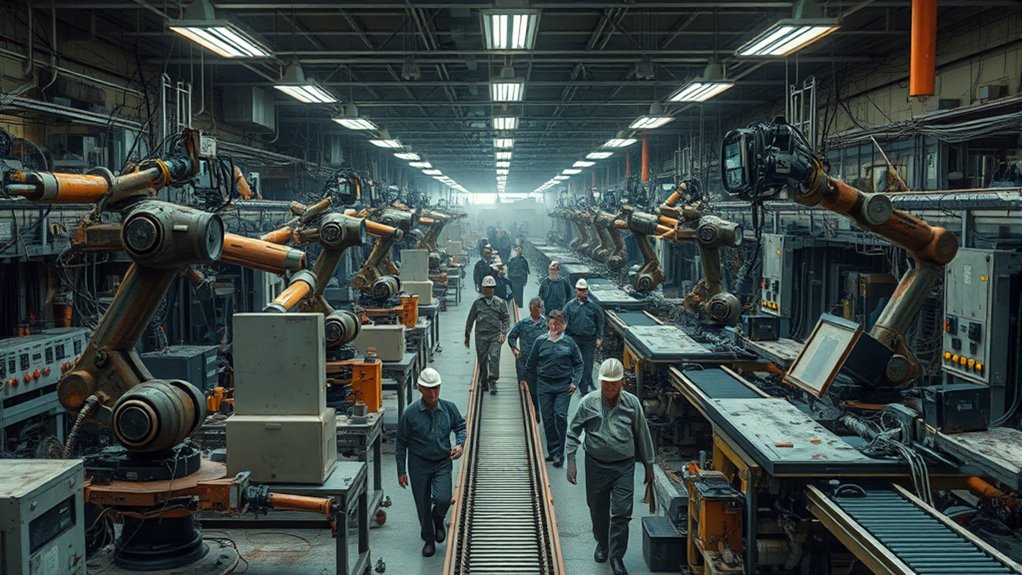

Automation has proved less effective in industries like healthcare, education, and social services than many predicted. These sectors rely heavily on human connection, nuanced judgment, and emotional intelligence, which machines struggle to replicate. Tasks involving complex decision-making, empathy, and adaptability still depend on skilled professionals. If you stick around, you’ll discover why human involvement remains essential and how industries are adapting despite automation challenges.

Get business pricing on tech for your team
- Business-only prices and quantity discounts
- Tax-exempt purchasing
- Multiple users, one account, clear invoices
Key Takeaways
- Healthcare relies heavily on human judgment, empathy, and adaptability, making full automation difficult despite technological advances.
- Education depends on emotional intelligence and personalized interaction, limiting automation’s effectiveness in teaching and mentorship roles.
- Social and interpersonal professions require genuine empathy and nuanced decision-making, which machines cannot fully replicate.
- Complex decision-making involving ethics, morals, or ambiguous situations remains challenging for automation across many industries.
- Human oversight continues to be essential in industries like manufacturing and customer service, where nuanced judgment and social skills are crucial.
As an affiliate, we earn on qualifying purchases.
Manufacturing: The Realities of Automation in Production Lines
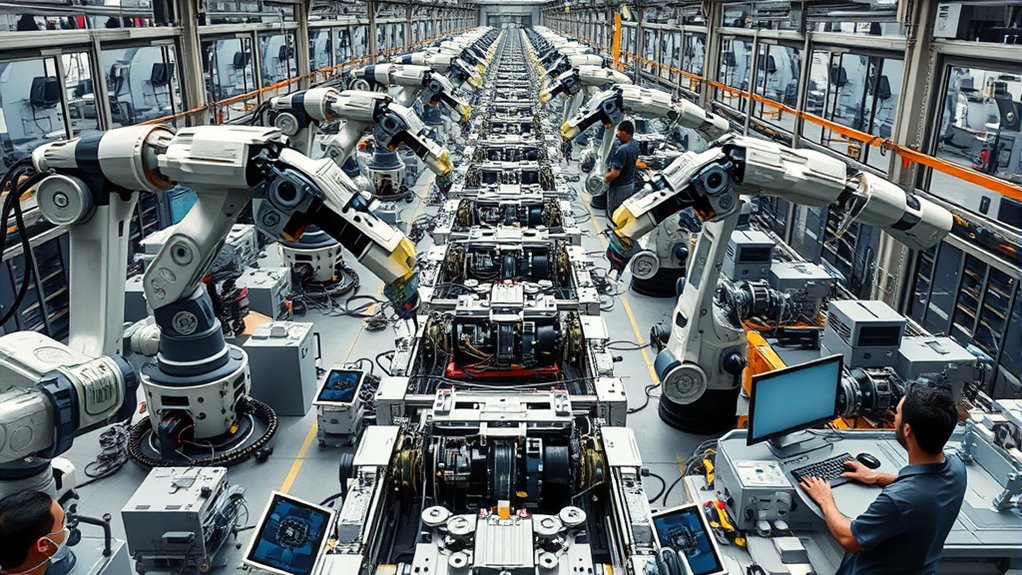
Automation has transformed manufacturing by streamlining repetitive tasks and increasing efficiency, but it isn’t a complete solution. While robots and AI handle many routine activities, human oversight remains essential. You’ll find that complex decision-making, quality control, and troubleshooting still require skilled workers. Automation boosts productivity and reduces costs, yet it can’t fully replace the nuanced judgment humans bring to the table. The technology also faces limitations, especially when tasks demand flexibility or adaptation. As a result, manufacturing companies increasingly use automation to complement human workers rather than replace them entirely. This hybrid approach helps maintain quality, manage unforeseen issues, and foster innovation in production lines. Advanced robotics continue to develop but still depend on human input for optimal operation.
empathy training for customer service agents
As an affiliate, we earn on qualifying purchases.
As an affiliate, we earn on qualifying purchases.
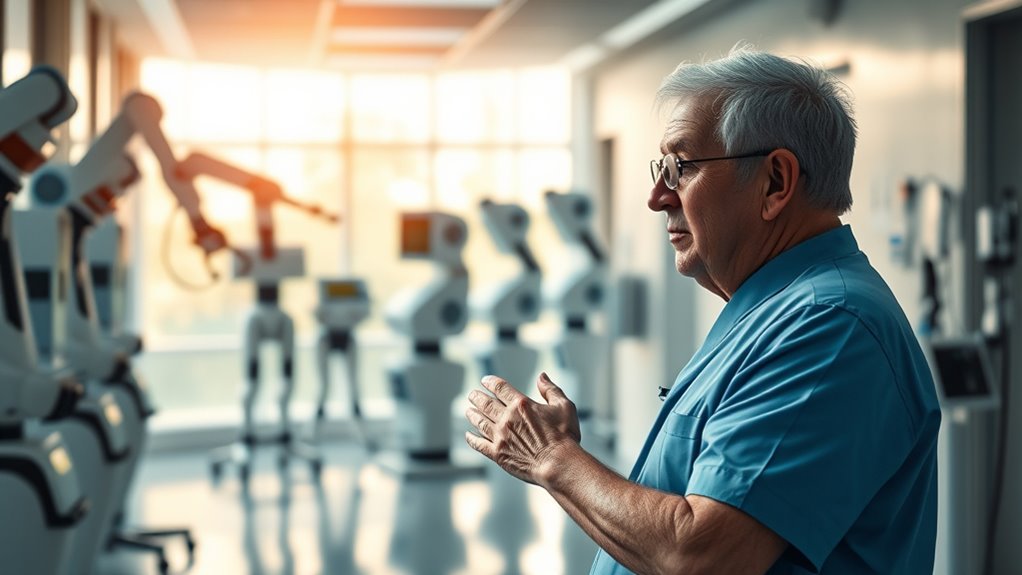
Healthcare involves complex, high-stakes decisions that technology struggles to replicate fully. You face situations where clinical judgment, intuition, and adaptability are essential. While AI and robotics assist with data analysis and procedures, they can’t replace the nuanced understanding and empathy required in patient care. Human connection builds trust, improves outcomes, and addresses emotional needs that machines can’t replicate. The variability of individual cases, ethical considerations, and unpredictable scenarios make full automation impractical. Medical professionals combine technological tools with their expertise to deliver personalized care. As a result, the industry finds automation most effective when it enhances human capabilities rather than replacing them. This balance preserves the compassionate, human element critical to effective healthcare delivery. Remote hackathons have demonstrated how technology can support healthcare innovation through collaboration without replacing essential human factors.
AI-powered patient monitoring devices
As an affiliate, we earn on qualifying purchases.
As an affiliate, we earn on qualifying purchases.
Customer Service: Balancing Automation and Human Empathy
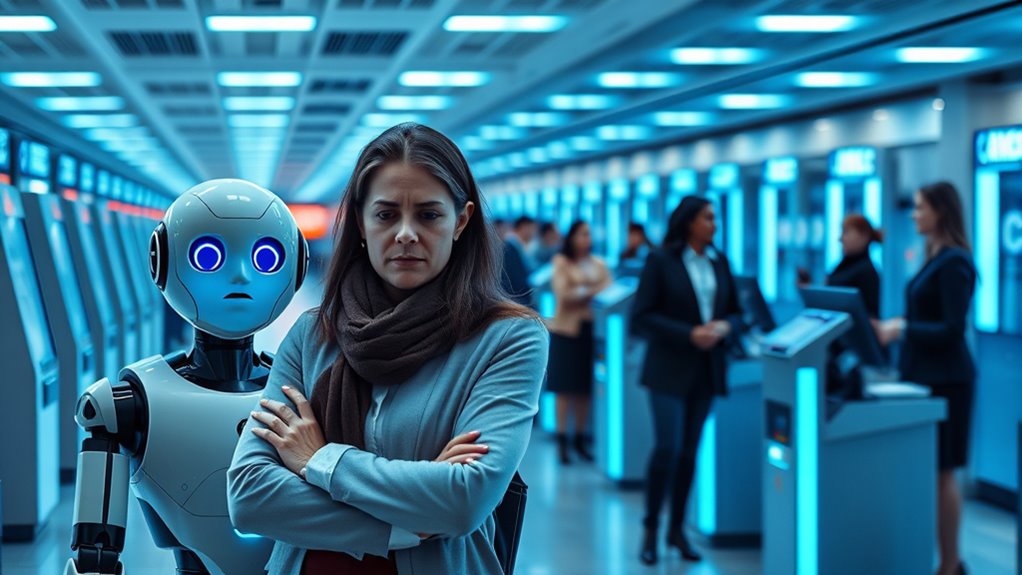
As technology advances, customer service teams increasingly rely on AI-powered tools to handle routine inquiries and streamline operations. You’ll notice chatbots answering common questions quickly, reducing wait times and cutting costs. However, customers still value human interaction for complex or emotional issues. While AI can simulate empathy, it lacks genuine understanding, making human agents essential for building trust and resolving nuanced problems. Additionally, understanding privacy policies and maintaining transparency about data collection can influence customer trust and satisfaction. Striking the right balance means deploying automation for efficiency, but ensuring your team is available for situations that demand empathy, judgment, and personal connection. You need to recognize where automation enhances service and where human touch remains irreplaceable. Ultimately, success depends on integrating AI thoughtfully, so customers feel both supported and understood at every touchpoint.
human oversight manufacturing automation
As an affiliate, we earn on qualifying purchases.
As an affiliate, we earn on qualifying purchases.
Education: The Challenges of Replacing Human Teachers
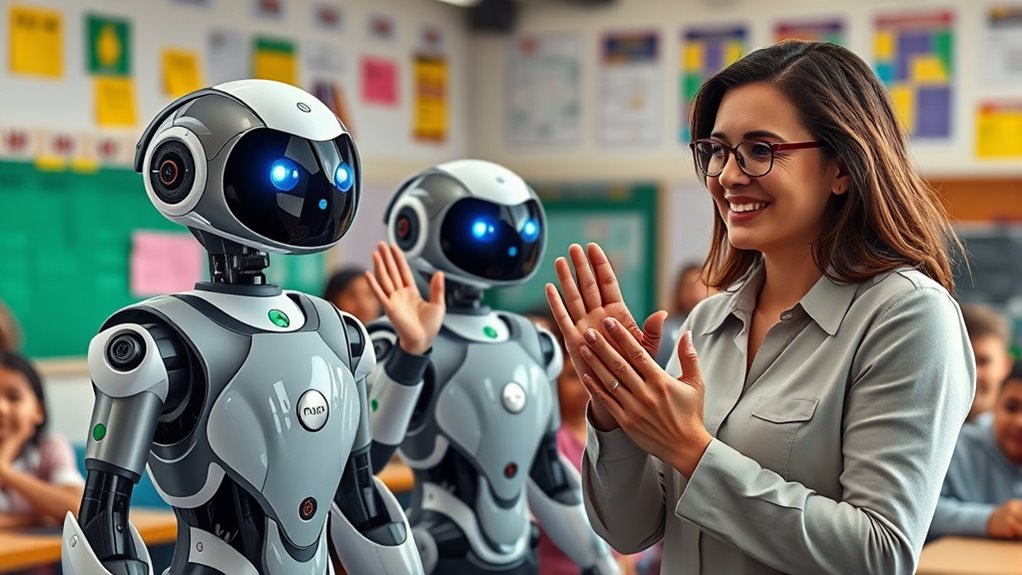
Replacing human teachers with technology faces significant challenges because teaching relies heavily on interpersonal skills, emotional intelligence, and real-time adaptation. You can’t easily program empathy or understand nuanced student needs. Here are four key points:
- Building relationships helps motivate students and creates a positive learning environment.
- Handling unpredictable classroom situations requires quick judgment and flexibility.
- Recognizing individual learning styles demands human insight beyond algorithms.
- Providing emotional support and mentorship involves genuine human connection.
- The complexity of all water parks and their dynamic environments makes full automation difficult to achieve.
While AI can offer personalized learning tools and automate administrative tasks, it can’t fully replicate the human element that fosters engagement, trust, and understanding. These qualities are essential for effective teaching and are difficult to substitute with technology.

You can’t underestimate the importance of empathy in social and interpersonal work, as machines struggle to replicate genuine emotional understanding. Complex decision-making often requires nuanced judgment and human intuition that automation cannot match. These qualities ensure that the human element remains essential in professions like healthcare, counseling, and social services. Furthermore, cultivating a growth mindset enables professionals in these fields to continuously adapt and improve their empathetic skills.
Empathy’s Unique Role
While automation has made significant strides in many fields, it cannot replicate the human capacity for empathy that is essential in social and interpersonal professions. Empathy enables you to connect deeply, understand nuanced emotions, and respond appropriately in complex situations. This human element fosters trust, comfort, and effective support. You should recognize that: 1. Empathy builds genuine relationships that machines can’t replicate. 2. It allows for tailored responses based on emotional cues. 3. It creates a safe space for vulnerable individuals. 4. It enhances communication, ensuring understanding beyond words. Additionally, the business of healthcare and counseling relies heavily on emotional intelligence that AI cannot truly emulate. No matter how advanced AI gets, the ability to perceive and share emotions remains uniquely human. Your empathy remains vital in professions like healthcare, counseling, and education, where emotional intelligence is irreplaceable.
Complex Decision-Making Skills
Despite advances in automation, complex decision-making in social and interpersonal professions remains firmly rooted in human judgment. You rely on intuition, empathy, and contextual understanding to make nuanced choices that machines can’t replicate. For example, healthcare professionals assess patient needs beyond data, considering emotional states and social factors. Educators adapt their methods based on individual student circumstances, which requires emotional insight and flexibility. Customer service agents handle complex issues by interpreting subtle cues and understanding human emotions. Automated systems struggle with ambiguity and moral dilemmas, making human oversight essential. While AI can assist with data analysis and routine decisions, the unpredictable nature of social interactions demands human intuition. Additionally, support hours for assistance, such as PlayStation support hours, demonstrate that human availability remains crucial in timely decision-making and personalized assistance. Ultimately, your judgment and interpersonal skills ensure quality and trust in these professions that automation cannot easily substitute.
Technological Limitations: When Robots Fall Short of Human Judgment
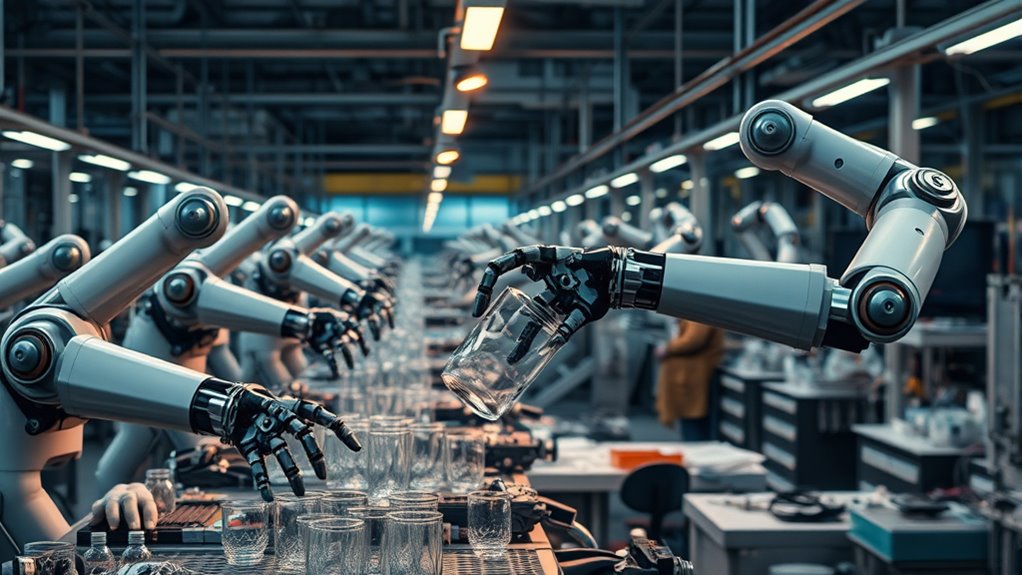
You might assume robots can handle complex decision-making, but they often lack the nuanced understanding humans bring. Creativity and innovation are still largely out of reach for automation, as machines struggle with novel ideas. Emotional intelligence remains a challenge, making it difficult for robots to truly connect on a human level. Additionally, comfort solutions for various needs require personalized adjustments that machines cannot easily replicate.
Nuances of Human Judgment
Technological advancements have made automation increasingly capable of handling routine and data-driven tasks, but robots still fall short when it comes to replicating human judgment. You’ll find that machines struggle with the subtlety, intuition, and contextual understanding humans naturally apply. Consider these nuances:
- Complex decision-making that relies on ethics, morals, or cultural awareness.
- Interpreting ambiguous or incomplete information that requires intuition.
- Adapting quickly to unpredictable situations with no predefined rules.
- Recognizing emotional cues and responding empathetically in sensitive scenarios.
- The importance of human judgment in maintaining ethical standards and cultural sensitivity.
While AI can process data efficiently, it lacks the depth of human insight needed for nuanced judgment. This gap highlights why many industries still depend on human expertise for critical decisions.
Creativity and Innovation Gaps
While machines excel at processing data and following predefined rules, they still fall short when it comes to creativity and innovation. Human ingenuity involves thinking outside the box, making intuitive leaps, and combining ideas in novel ways—areas where algorithms struggle. AI can generate content based on existing patterns, but it lacks genuine originality and the ability to envision entirely new concepts. Innovation often requires subjective judgment, cultural awareness, and emotional insight—qualities machines can’t replicate. As a result, industries that thrive on inventive thinking, like design, research, and strategic planning, remain resistant to full automation. You’ll find that human creativity continues to be essential for breakthroughs and novel solutions, highlighting the current technological limits of relying solely on machines for innovation-driven tasks.
Emotional Intelligence Challenges
Despite rapid advancements in AI and robotics, machines still struggle to replicate the nuanced human ability to interpret and respond to emotions. You might notice chatbots or robots handling simple tasks, but when it comes to understanding complex feelings, they fall short. This is because emotional intelligence encompasses subtle cues, context, and empathy that current technology can’t fully grasp.
You should consider:
- Contextual nuances that influence emotional responses are difficult for AI to interpret accurately.
- Empathy and compassion remain uniquely human traits essential in sensitive situations.
- Non-verbal communication, like tone and body language, is hard for robots to understand and mimic.
- Judgment and intuition, which guide empathetic responses, are beyond the reach of current AI capabilities.
Economic Factors and Automation Costs: Why Some Industries Lag
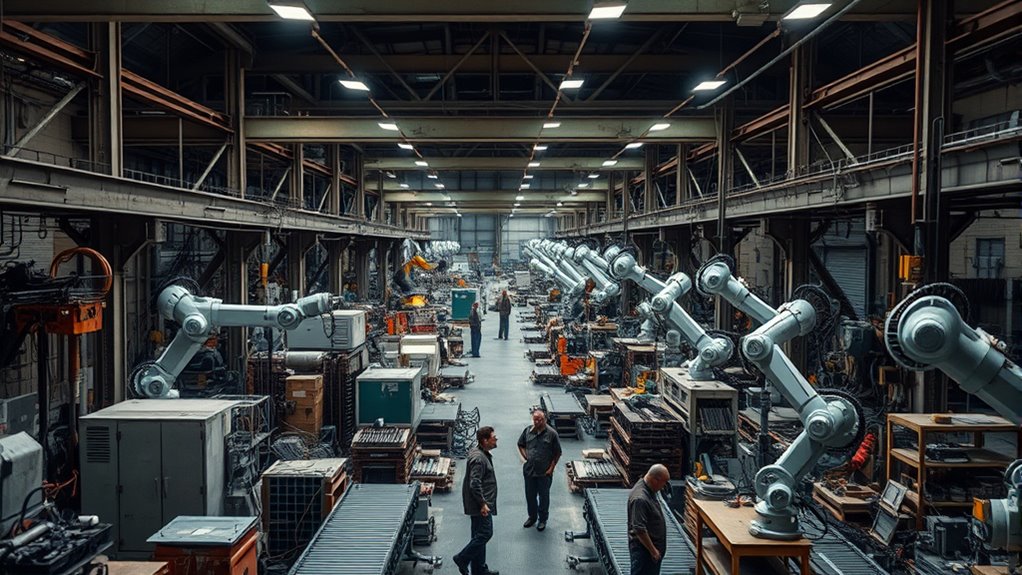
Economic factors play a pivotal role in determining how quickly and extensively industries adopt automation. If automation costs outweigh potential savings, companies hesitate to invest. High upfront expenses for advanced machinery or AI systems can be prohibitive, especially for small or medium-sized enterprises. Industries with slim profit margins may prioritize immediate labor costs over long-term automation benefits. Additionally, regions with high wages or strict regulations face increased costs, slowing automation adoption. Technological investments also require ongoing maintenance and upgrades, further raising expenses. When the return on investment isn’t clear or immediate, industries tend to delay automation projects. As a result, some sectors lag behind others, not because automation isn’t feasible, but because economic barriers make implementation less attractive or practical.
Adaptation and Evolving Roles: How Humans and Machines Collaborate
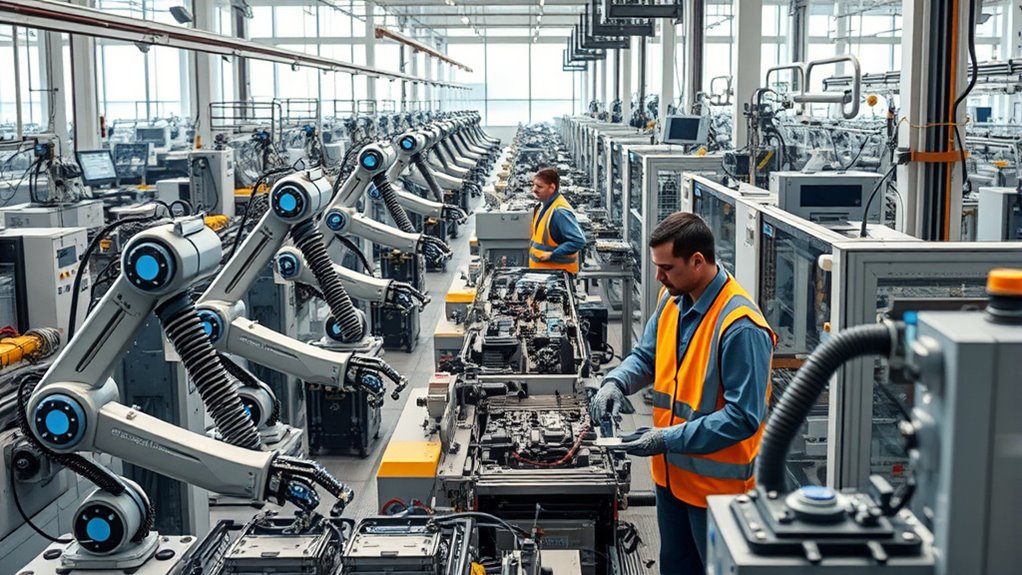
You can see how humans and machines are working together more than ever, each complementing the other’s strengths. As roles shift, you’ll find that new skills emerge, requiring you to adapt and grow alongside technology. This partnership isn’t just about replacing tasks; it’s about enhancing creativity and driving innovation collaboratively.
Human-Machine Partnership Dynamics
As automation technology advances, humans and machines are increasingly working together to enhance productivity and innovation. You play a crucial role in shaping this collaboration. Here’s how the partnership evolves:
- Complementary Skills: Machines handle repetitive tasks, freeing you to focus on strategic, creative, or interpersonal work.
- Shared Decision-Making: You interpret machine data, adding context and judgment that algorithms can’t replicate.
- Continuous Adaptation: As technology updates, you learn new tools, shifting roles and expanding your expertise.
- Feedback Loops: Your insights improve machine performance, creating a cycle of mutual enhancement.
This partnership relies on your adaptability, making automation an enabler rather than a replacement. Success hinges on balancing human intuition with machine efficiency.
Skill Shifts in Workforce
Humans and machines are increasingly working side by side, shaping new skill requirements as automation technology advances. You need to adapt by developing skills that complement automation, such as critical thinking, problem-solving, and emotional intelligence. As routine tasks become automated, your role shifts toward oversight, decision-making, and managing complex situations. Collaboration between humans and machines requires understanding how to interpret data from AI systems and how to intervene when automation falls short. Communication skills grow more essential, especially in industries like healthcare, education, and customer service, where empathy and nuance matter. Continuous learning and reskilling become indispensable to stay relevant. Embracing these evolving roles ensures you can leverage automation’s benefits while maintaining your unique human capabilities.
Enhancing Creativity Collaboratively
While automation handles routine tasks efficiently, the most innovative outcomes often arise from human-machine collaboration in creative processes. You can leverage machines to handle data-heavy tasks, freeing you to focus on ideation and strategic thinking. Collaborating effectively involves understanding each other’s strengths and adapting roles accordingly. Here are four ways to enhance creativity collaboratively:
- Use AI tools for brainstorming and generating new ideas faster.
- Combine human intuition with machine analysis for more refined concepts.
- Encourage feedback loops where humans refine machine outputs.
- Invest in training to improve your skills in managing and interpreting AI-driven insights.
Regional Variations: The Impact of Automation Across Different Economies
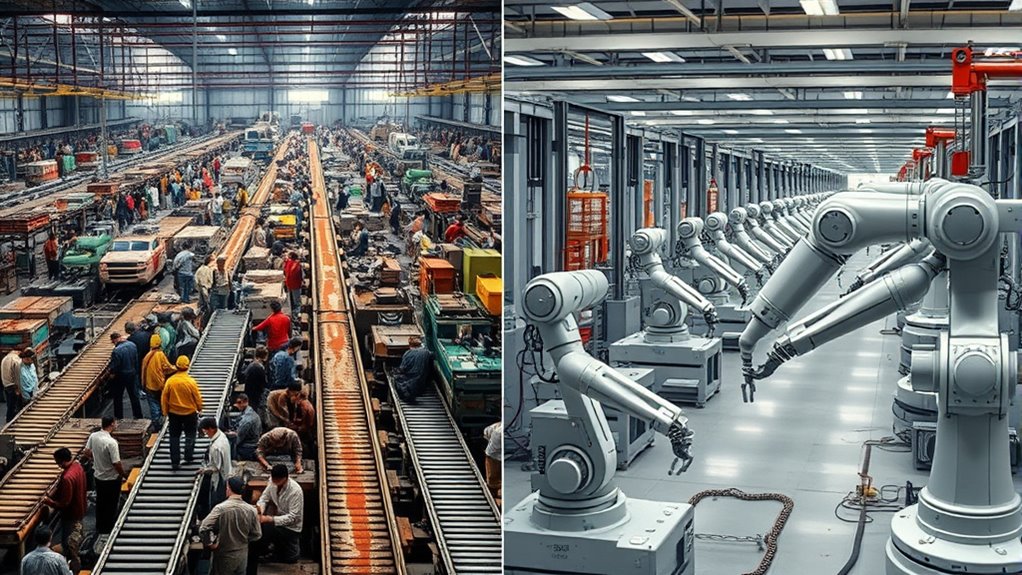
Automation impacts economies differently depending on their level of development, industry structure, and workforce readiness. In advanced economies, automation often replaces routine jobs but also creates new opportunities, especially in tech sectors. These countries typically have the infrastructure and skills to adopt new technologies quickly, though they face job displacement risks. In contrast, developing economies may struggle with automation due to limited infrastructure, high labor costs, and skill gaps, which slow adoption. Some regions rely heavily on industries less susceptible to automation, like agriculture or service sectors. Additionally, economic policies and social safety nets influence how automation affects employment and income distribution. Ultimately, regional differences shape the pace, scale, and social impact of automation, making its effects complex and varied across the globe.
Future Outlook: Overcoming Overestimations and Embracing Human-AI Synergy
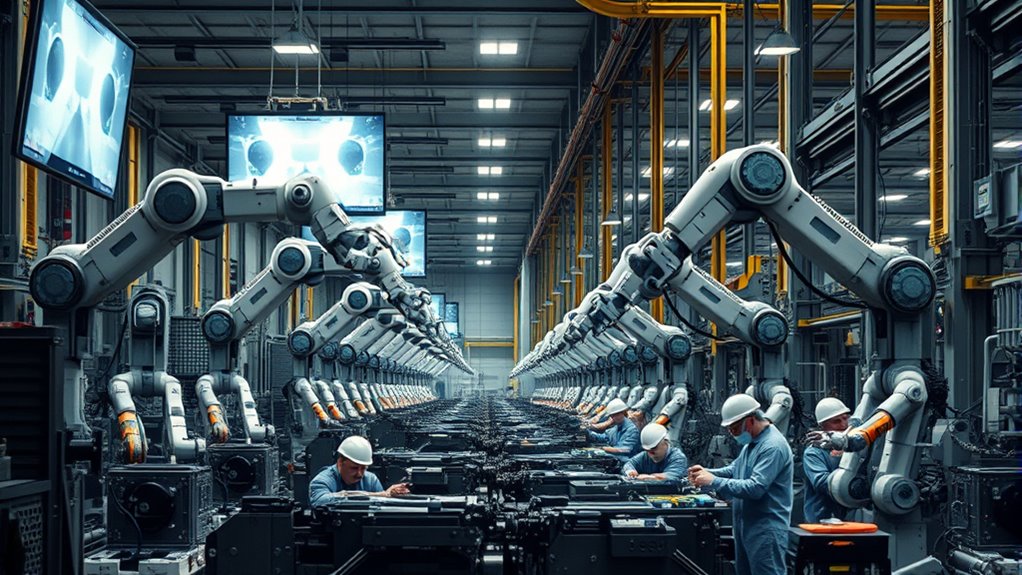
Despite the rapid advancements and widespread optimism about automation’s potential, many overestimations remain about what technology can achieve independently. To move forward, you need to focus on human-AI synergy. Here are four key strategies:
- Recognize that AI complements human skills, enhancing decision-making rather than replacing humans entirely.
- Invest in reskilling workers to adapt to new roles that leverage both human creativity and AI efficiency.
- Develop ethical frameworks to guide responsible AI deployment, ensuring transparency and trust.
- Foster collaboration between humans and machines, emphasizing areas where human judgment remains irreplaceable.
Frequently Asked Questions
How Do Cultural Differences Influence Automation Adoption?
You’ll find that cultural differences shape automation adoption considerably. In some cultures, there’s resistance to replacing human interactions with machines, valuing personal relationships and trust. Others embrace technology quickly, prioritizing efficiency. These attitudes influence how readily organizations implement automation, affecting policies and investments. Understanding local values and social norms helps you navigate this landscape, ensuring smoother integration and acceptance of automation in diverse cultural settings.
What Skills Are Essential for Future Human Workers?
You need to develop skills like critical thinking, creativity, and emotional intelligence. These abilities help you adapt to new challenges and work alongside automation effectively. Strong communication and problem-solving skills are also essential, as they enable you to collaborate with others and manage complex situations. Staying open to learning and reskilling ensures you remain valuable in a rapidly evolving job market, where human touch and innovation are irreplaceable.
How Does Public Perception Affect Automation Deployment?
Your perception of automation influences its deployment by shaping acceptance and trust. If you’re skeptical or fearful, companies might hesitate to implement new automation technologies, fearing backlash or poor public reception. Conversely, if you see automation as beneficial, you’re more likely to support its adoption. Public opinion can drive policy decisions and influence the pace of automation, ultimately affecting how quickly industries embrace technological changes.
What Legal Challenges Exist for Automating Sensitive Jobs?
You face legal challenges when automating sensitive jobs, such as healthcare or legal services, because regulations often lag behind technology. You must guarantee compliance with privacy laws, data security, and ethical standards, which can be complex. Liability issues arise if automation causes errors, and public trust plays a role. Managing licensing, licensing, and professional accountability adds layers of legal complexity that slow down or limit automation in these fields.
How Do Small Businesses Navigate Automation Costs?
You might wonder how small businesses tackle automation costs, and the answer isn’t straightforward. They often start small, focusing on automating specific tasks to save money without overextending. Leveraging affordable cloud-based tools or AI solutions helps reduce upfront expenses. Partnering with local providers or exploring grants and incentives can also ease financial strain, making automation manageable and boosting your competitive edge in a rapidly evolving market.
Conclusion
You might think automation would revolutionize every industry quickly, but that’s not always true. For example, manufacturing has only achieved about 20% automation in some sectors, showing how complex real-world conditions slow progress. Remember, industries like healthcare and education rely heavily on human connection, making full automation challenging. Instead of fearing overestimated promises, focus on how humans and machines can work together, creating smarter, more efficient workplaces.
Halloween Picks
halloween
As an affiliate, we earn on qualifying purchases.