By Thorsten Meyer | October 31, 2026 | ThorstenMeyerAI.com

Get business pricing on tech for your team
- Business-only prices and quantity discounts
- Tax-exempt purchasing
- Multiple users, one account, clear invoices
On Thursday evening, Intel reported its best data center growth in 15 years. On Friday, its stock fell about 29%, the worst day for the shares since the 1970s. In a few hours of trading, the stake the US government bought in August 2025 lost more value than the government had paid for it in the first place.
That sounds like a contradiction, and it is the most interesting part of this story. Intel is not losing because nobody wants its chips. It is losing because the AI boom is doing two things to it at once: it creates huge demand for server processors that Intel cannot build fast enough, and it pushes up memory prices so much that people buy fewer PCs, which is still Intel’s biggest business. Here is what happened, what the numbers say, what it means that Washington is now one of Intel’s largest shareholders, and what it means for companies and for you. Company figures come from Intel’s own filings and its earnings call; market moves are reported facts from the outlets named, with the date. This is not investment advice.
Key takeaways
- The drop. Intel closed at $65.76 on Friday, 30 October 2026, down about 29% from $92.07 the day before. By Yahoo Finance’s count, using closing prices back to May 1973, only one day was worse: 5 July 1974, when the stock fell nearly 30%. CNBC calls it the worst day since the 1970s.
- The trigger was the forecast, not the quarter. Third-quarter revenue rose 21% to $16.5 billion and beat Intel’s own guidance. But Intel guided fourth-quarter revenue to $15.0 to $16.0 billion, below the $17.1 billion analysts expected (LSEG, via CNBC), and its gross margin to fall from 44.1% to 38%.
- AI helps and hurts at the same time. Data Center and AI revenue jumped 78% to $7.3 billion. PC chip revenue fell 5%, and Intel expects it to drop more than 20% from the third to the fourth quarter, because AI data centers are soaking up memory and making PCs more expensive. A deadly accident at its factory in Israel adds about $300 million of lost revenue this quarter.
- Washington’s stake. The government holds 433.3 million shares it bought at $20.47 each, $8.9 billion in total, paid with chip grants Intel had been promised. At Thursday’s close they were worth about $39.9 billion, at Friday’s about $28.5 billion (Yahoo Finance’s arithmetic). CNBC put the one-day loss at about $12 billion. It is still a paper gain of roughly three times.
- What to watch. Three things decide the next year: whether Intel can make enough server chips, how long the memory squeeze keeps PCs expensive, and whether outside customers sign up for its factories. Intel’s finance chief already warned that positive free cash flow next year is unlikely.
Products Worth Considering

Bose QuietComfort Ultra Wireless Noise-Cancelling Headphones with Spatial Audio, Black

Apple Watch SE 3 GPS 44mm Smartwatch

Anker SOLIX S2000 Portable Power Station, 2,010Wh, 1,500W
As an affiliate, we earn on qualifying purchases.
What happened on Friday
Intel published its third-quarter results after the market closed on Thursday, 29 October. The stock closed that day at $92.07. On Friday it opened sharply lower and closed at $65.76, a fall of about 29%. Yahoo Finance calculated that the drop erased nearly $140 billion in market value.
“Worst day since the 1970s” has a precise meaning here. Yahoo Finance looked at Intel’s closing prices from May 1973 on, using data from Norgate Data. Only one day was worse: 5 July 1974, when the stock fell nearly 30%. Friday also beat the roughly 26% plunge of 2 August 2024. CNBC reported the same thing in shorter words: the stock’s worst day since the 1970s.
Intel did not fall alone. The Nasdaq Composite lost 2.9% on Friday, Nvidia fell 4%, Broadcom more than 5% and Qualcomm 11%, CNBC reported. A day earlier, Alphabet had its worst day on record. It was a bad week for anything tied to AI spending, which I covered in Same Night, Opposite Verdicts and in my piece on Amazon’s cash gap.
Some context matters, too. Intel’s stock had a wild 2026. It nearly quadrupled from the start of the year to a record on 22 June, Yahoo Finance calculated. Even after Friday it was still up nearly 80% for the year, but it had lost more than half its value since that peak.
Infographic 01 · One day, one stake
One trading day cost Washington more than it paid
Intel's stock fell about 29% on Friday after a weak forecast. Here is what that did to the shares the US government bought in August 2025, and how the price compares with what other buyers paid.
The government’s stake, on paper
433.3 million shares × price
- PaidAug 2025, at $20.47 a share$8.9B
- Thursday's close29 Oct 2026, $92.07$39.9B
- Friday's close30 Oct 2026, $65.76$28.5B
The one-day loss (about $11.4B) was larger than the $8.9B the government paid. The stake is still worth roughly three times its cost.
What different buyers paid per share
Red line: Friday’s close, $65.76
- US governmentAug 2025 · 433.3M shares$20.47
- SoftBankSep 2025 · 87M shares$23.00
- Nvidiaagreed Sep 2025 · 215M shares$23.28
- Public offeringAug 2026 · about 242M shares$95.00
2025 buyers are far above water; buyers of the August 2026 offering are about 31% below their price (my arithmetic).
Market prices as reported by Yahoo Finance and CNBC for 29–30 October 2026; no licensed price feed. Stake values: Yahoo Finance’s arithmetic with 433.3 million shares. Purchase prices from Intel’s 10-Q and the August 2025 agreement.
Sources: Yahoo Finance, 30 Oct · Yahoo Finance (stake), 30 Oct · CNBC, 30 Oct · Intel 10-Q, 30 Oct · Intel 8-K, 22 Aug 2025.
Powered by Thorsten Meyer AI
A strong quarter with a weak forecast
Here is the odd part: the quarter itself was good. In its results release on 29 October, Intel reported:
- Revenue: $16.5 billion, up 21% from $13.7 billion a year earlier.
- Profit per share: $0.52 on Intel’s adjusted (non-GAAP) basis, against its own guidance of $0.38. Under standard accounting (GAAP) it was $0.60.
- Gross margin: 44.1% adjusted, about two points above Intel’s guidance. Gross margin is the share of revenue left after the direct cost of making the chips.
- Data Center and AI: $7.3 billion, up 78% from $4.1 billion a year earlier, with an operating profit of $3.0 billion. Intel called it the segment’s strongest growth in 15 years.
Investors look forward, not back. For October to December, Intel guided revenue of $15.0 to $16.0 billion. The midpoint, $15.5 billion, is a billion dollars less than the quarter it just reported. Analysts had expected about $17.1 billion and adjusted profit of $0.43 a share, according to LSEG data cited by CNBC. Intel guided $0.25. It also expects its adjusted gross margin to fall to 38%.
Analysts reacted bluntly. D.A. Davidson cut its rating on the stock to neutral in a note titled “Not fixed yet,” CNBC reported. Bernstein’s Stacy Rasgon called the outlook “(in a word) terrible,” according to Yahoo Finance.
Infographic 02 · Why the stock fell
A strong quarter, a weak forecast
Intel beat its own targets for July to September. The guidance for October to December is what broke the stock.
Actual, forecast, expectation
Adjusted (non-GAAP) where marked
- RevenueQ3 actual$16.5BQ4 guidance$15.0–16.0BAnalysts expected$17.1B
- Profit per share, adjustedQ3 actual$0.52Q4 guidance$0.25Analysts expected$0.43
- Gross margin, adjustedQ3 actual44.1%Q4 guidance38.0%Fab 28 effect in Q4about 2 points
AI lifts one business, squeezes another
Q3 2026 revenue vs Q3 2025, and the Q4 outlook
- Data Center and AI: $7.3B+78%Operating profit $3.0B. Q4: up mid-teens % from Q3. Demand exceeds supply.
- Intel Foundry: $6.7B+58%Mostly Intel’s own chips; outside customers $411M. Operating loss $1.9B.
- PCs (client): $8.1B−5%Q4: down more than 20% from Q3. Intel sees PC units −12% in 2026, about −10% in 2027.
Four reasons Intel gives for the weak quarter ahead
- Memory squeeze: AI data centers buy up memory, PCs get pricier, buyers wait.
- Too little supply: Intel 3 yields still improving; advanced substrates are short industry-wide.
- Fab 28 in Israel: a deadly accident and an extended shutdown, about $300M less revenue in Q4.
- Fixed costs: fewer PC chips carry the same factory costs, so the margin falls.
Forecasts are Intel’s own. Analyst expectations are LSEG data as reported by CNBC. Segment revenues include sales between Intel units, so they do not add up to the total.
Sources: Intel Q3 2026 results, 29 Oct · Intel prepared remarks, 29 Oct · CNBC, 30 Oct.
Powered by Thorsten Meyer AI
Four reasons behind the forecast
Intel’s prepared remarks for the earnings call name the causes. In plain words:
- PCs got expensive, so people buy fewer. AI data centers buy enormous amounts of memory, so memory prices for everyone else went up. “Year-to-date system end-point prices have increased significantly,” said CEO Lip-Bu Tan. Intel now expects the number of PCs sold worldwide to fall about 12% in 2026, with the second half down more than 20%, and roughly another 10% in 2027. It does not expect a sustained recovery “until memory availability improves and pricing begins to normalize.” PC chip revenue fell 5% from a year earlier to $8.1 billion and is expected to fall more than 20% from the third to the fourth quarter. I wrote about the memory squeeze in The AI Boom Has Reached Your Shopping Basket.
- Intel cannot make enough server chips. Demand for its data center products “continues to meaningfully exceed available supply,” said finance chief Dave Zinsner. Tan named the bottlenecks: yields on the Intel 3 manufacturing process keep improving, but he says he is “demanding significant execution” from the team, and an industry-wide shortage of advanced substrates (the base layer a chip package sits on) limits output.
- A deadly accident in Israel. Earlier in October, what Tan called “an unfortunate and tragic accident” forced an extended shutdown of Fab 28, Intel’s factory in Israel. CNBC and Tom’s Hardware reported that an explosion there killed two workers and seriously injured a third. Intel’s guidance includes about $300 million less revenue and two points less gross margin in the fourth quarter, almost all from 10-nanometer server chips. Zinsner said the plant had been shut for about two weeks, and Tom’s Hardware reported a similar revenue hit in the first quarter of 2027.
- Fixed costs do not shrink with sales. A chip factory costs almost the same whether it runs full or half empty. When Intel makes fewer PC chips, each one carries more of that cost. That is the main reason the margin falls, according to the prepared remarks.
On top of that, Intel keeps spending. It expects about $20 billion of gross capital spending in 2026 and says 2027 will be “up strongly.” On the call, Zinsner said it is “probably not a dynamic where we are going to have positive free cash flow next year,” as quoted by Decrypt; TechCrunch reported the same warning. Free cash flow is the money left after running the business and paying for factories and machines.
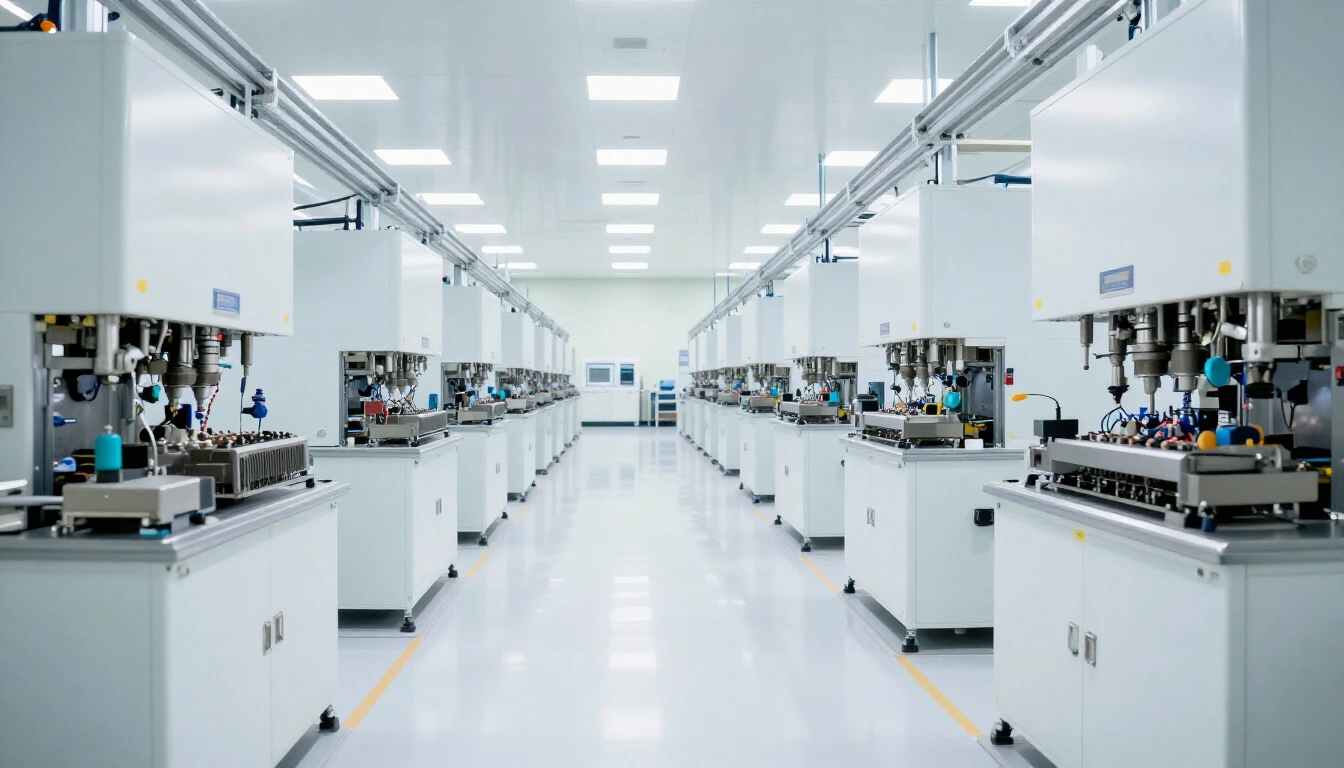
What went wrong in the AI chip race
It is tempting to say Intel “lost” the AI race. The truth is more uncomfortable, and more useful to understand.
Intel missed the first wave of the AI boom, the one built on graphics processors (GPUs) for training large models. Nvidia owns that market. Intel’s own AI accelerator for data centers, the GPU D-series formerly called Crescent Island, has only just been unveiled. Tan said it is “a new market for us, and it will take time to scale.”
The second wave is different. AI agents do many small steps: look something up, call a tool, check a result, move data. Intel argues that ordinary server processors (CPUs) do much of that work more efficiently than GPUs. By Intel’s own estimate, the market for server CPUs could grow from about $40 billion today to more than $200 billion within five years. That is Intel’s projection, not a measured fact, but the demand it reported is real: Data Center and AI revenue grew 78% in a year.
So the problem is not demand. It is three gaps:
- A manufacturing gap. Intel makes most of its chips itself. When yields lag, substrates run short or a factory stops, it cannot sell what customers want to buy. Rivals that rent capacity from TSMC face their own limits, but they do not carry the cost of the factories.
- A PC gap. The same AI build-out that lifts server demand makes PCs more expensive. Intel still earns more revenue from PCs than from data centers, so this hurts more than the server boom helps, at least for now.
- A foundry gap. Intel wants to manufacture chips for other companies, as TSMC does. Intel Foundry’s revenue rose 58% to $6.7 billion, but most of that comes from Intel itself; outside customers paid $411 million. The unit lost $1.9 billion in the quarter. Tan said he is “highly encouraged” by talks with potential customers for the coming 14A process and, according to CNBC, expects “a couple of customers ready to announce” in the next two quarters. Until those contracts are signed and public, that is a promise.
My reading: Intel’s turnaround is real in engineering terms, with better yields, lower costs per chip and a fuller order book. It is not yet real in cash terms. Friday’s drop shows how much of the 2026 rally was priced as if the hard part were already done.
The government’s stake, explained
Here is how Washington became a shareholder. On 22 August 2025, Intel signed a Warrant and Common Stock Agreement with the US Department of Commerce. The main terms, from Intel’s filings:
- The price. The government agreed to buy 433.3 million new shares at $20.47 each, $8.9 billion in total. At the time that was a 9.9% stake, the press release said, bought at a discount to the market price.
- Paid with grants. The money was not new spending. It came from $5.7 billion in CHIPS Act grants Intel had been awarded but not yet received, and $3.2 billion for the Secure Enclave program, which makes trusted chips for the Defense Department. In other words, a grant became an investment. Taxpayers now share the upside and the downside.
- Shares in escrow. About 274.6 million shares were issued at the closing on 27 August 2025. The other 158.7 million went into escrow and are released as Secure Enclave payments arrive. On 26 September 2026, 132 million were still in escrow, according to Intel’s quarterly report.
- A passive owner. The government has no board seat. It must vote with Intel’s board, with limited exceptions that protect its own interests.
- A warrant as a lock. The government can buy about 240.5 million more shares at $20 each, but only if Intel stops owning at least 51% of its foundry business. That makes splitting off the factories expensive.
- Selling rules. The shares could not be sold in the first year. After that, the agreement allows sales only in broad public offerings. Until the government sells, every gain and loss is on paper.
Now the arithmetic. Yahoo Finance multiplied the 433.3 million shares by the closing prices: about $39.9 billion on Thursday, about $28.5 billion on Friday. That is a loss of about $11.4 billion in one day, more than the $8.9 billion the government paid. CNBC estimated the loss at about $12 billion; the small gap comes from rounding and timing. Either way, the stake is still worth roughly three times its cost.
Washington is not the only strategic investor from 2025. Nvidia bought 215 million shares at $23.28 ($5 billion) and SoftBank 87 million at $23.00 ($2 billion), Intel’s 10-Q shows. CNBC estimated that Nvidia’s stake lost about $6 billion in value on Friday. The investors who are hurting are the ones who bought late: in August 2026, Intel sold about 242 million new shares at $95.00 each, raising $23 billion. At Friday’s close, those shares were worth about 31% less, by my arithmetic.
One more twist, for readers who like accounting. Because the escrowed shares are a liability on Intel’s books, Intel records a loss when its stock rises and a gain when it falls. In the first nine months of 2026, rising prices cost Intel a $12.6 billion accounting loss on them. Intel says it expects more such gains or losses as the price moves.
Infographic 03 · Washington as shareholder
How the government's Intel stake works
From grant to shareholder in one agreement: the timeline, the fine print and who carries the risk, from Intel's filings.
- 22 Aug 2025The dealCommerce Department agrees to buy 433.3M shares at $20.47, paid with $5.7B of CHIPS grants and $3.2B for Secure Enclave.
- 27 Aug 2025Closing274.6M shares issued; 158.7M shares go into escrow; warrant for about 240.5M more shares issued.
- 12 Aug 2026Intel sells new sharesAbout 242M shares at $95.00, $23B gross. The government's percentage shrinks.
- Late Aug 2026Lock-up endsAfter one year the government may sell, but only in broad public offerings.
- 26 Sep 2026Still in escrow132M shares not yet released; escrow liability on Intel's books: $13.7B.
- 30 Oct 2026Worst day since 1974Close $65.76. Stake worth about $28.5B, down about $11.4B in a day.
The mechanics in plain words
- Grant became equityMoney Intel had been promised as grants was turned into a share purchase. Taxpayers share upside and downside.
- Passive ownerNo board seat. The government votes with Intel's board, with limited exceptions.
- EscrowShares are released as Secure Enclave payments arrive. Unreleased at the end: half go to the government, half are cancelled.
- Warrant as a lockAbout 240.5M more shares at $20, only if Intel owns less than 51% of its foundry.
- Mirror accountingIntel books a loss when its stock rises and a gain when it falls: a $12.6B loss in Jan–Sep 2026.
- Open lawsuitA shareholder claims the deal is unlawful (filed March 2026); motions to dismiss are pending.
Who carries what
- Taxpayers: paper gains and losses, daily, until the stake is sold
- Intel: accounting swings and the duty to keep 51% of its factories
- Other shareholders: dilution and a large vote that follows the board
What is still open
- Whether and when the government sells (I found no report of a sale)
- How many escrowed shares are released before the program ends
- How the Delaware lawsuit ends
Sources: Intel 8-K, 22 Aug 2025 · Intel 8-K, 27 Aug 2025 · Intel 10-Q, 30 Oct · Yahoo Finance (stake), 30 Oct.
Powered by Thorsten Meyer AI
What it means that the state is a major shareholder
There are honest arguments on both sides, and Friday made both of them easier to see.
The case for it. Intel says it is the only company that does leading-edge chip research and manufacturing in the United States. Turning grants into shares means taxpayers keep part of the upside if the bet works, instead of handing over money for nothing. So far, on paper, it has worked: $8.9 billion became about $28.5 billion.
The case against it. A shareholder that is also the regulator, a customer through the Defense Department and the source of subsidies has conflicts that ordinary investors do not. Intel listed several of the risks itself in the August 2025 filing: the stake reduces other shareholders’ voting influence, could make deals harder, and could hurt sales abroad, where Intel made 76% of its 2024 revenue. A stockholder filed a derivative lawsuit in Delaware in March 2026 claiming the agreement was unlawful; the Commerce Department moved it to federal court, and the defendants asked for dismissal in May, according to the 10-Q. Those are claims, not findings.
The volatility point. Friday showed that a public stake swings with the market every day. That is fine for a long-term investor. It is uncomfortable when the investor is a government that likes to point to the gains, because the same logic applies to the losses. Yahoo Finance, citing a Cato Institute tracker, counts about 40 companies in which Washington now holds a stake. Intel is the largest and the most visible test of that approach to industrial policy. For another example of state money flowing into AI, see my piece on DeepSeek’s reported $16 billion round.

What this means for companies
- Plan PC refreshes around memory, not habit. Intel expects PC sales to keep falling through at least the first half of 2027 and higher device prices until memory supply eases. If your laptop fleet is due for replacement, compare the cost of extending devices by a year against buying now, and lock in prices early where you must buy.
- Server CPUs are rationed, too. Intel expects the industry to stay supply-constrained “throughout 2027 and into 2028.” If you run your own data centers or rent dedicated servers, reserve capacity early and qualify a second platform, so one vendor’s factory problem does not stop your projects.
- Check your supply chain for single points of failure. Fab 28 is one factory, and one accident cost Intel roughly $300 million in a quarter. Ask your hardware suppliers where their chips are made and what their fallback is.
- Foundry alternatives are thin. If you design your own chips, the realistic options for leading-edge manufacturing are TSMC, Samsung and Intel. Intel’s 14A process may become a US-based second source, but until customers announce contracts, treat it as an option, not a plan.
- Price in politics. A government shareholder can be an advantage in Washington and a liability abroad. Companies that buy from or partner with Intel outside the US should watch for foreign subsidy rules and procurement questions.
For how the rest of Big Tech is paying for the AI build-out that is squeezing memory and power, read Who Pays for the AI Data Center Boom?
What this means for users
- PCs may stay pricey for a while. Intel itself says it does not expect a sustained recovery until memory prices normalize. If your computer still does the job, there is no rush. If you need a new one, compare models with the memory you actually need instead of paying for more.
- “AI PC” labels are not the reason to buy. Intel’s AI PC revenue grew 35%, but the useful question is whether the machine runs the apps you use, with enough memory, for years.
- As a taxpayer, you own a piece of Intel. The government’s stake is public money. Its value can rise or fall by billions in a day. Until it is sold, those gains and losses exist only on paper.
- Your savings may be exposed. Intel is in most broad US stock index funds, so many pension and retirement accounts hold it. That is not advice to buy or sell; it is simply worth knowing what you own.

Honest limits
- Market data. Stock prices, market value and the value of the stakes are as reported by Yahoo Finance and CNBC for 29 and 30 October 2026 (Thursday’s close also by Business Insider). I did not use a licensed price feed. The one-day loss on the government’s stake is about $11.4 billion by Yahoo Finance’s arithmetic and about $12 billion by CNBC’s.
- “Worst since the 1970s” rests on Yahoo Finance’s calculation from Norgate Data closing prices back to May 1973. Data before that is not included.
- Forecasts are forecasts. Intel’s PC market estimates, its server CPU outlook and its $200 billion market projection are the company’s own expectations.
- Fab 28. The number of casualties comes from CNBC and Tom’s Hardware. Intel described the event as a “tragic accident” and has not, in the documents I read, given details on the cause.
- What I could not confirm. Whether the government has sold any shares since the lock-up ended. I found no report that it has.
- The free cash flow remark comes from the live call as quoted by Decrypt and summarized by TechCrunch; it is not in Intel’s written remarks.
Sources
- Intel, Q3 2026 results release, 29 October 2026, also filed as Exhibit 99.1 to Form 8-K.
- Intel, CEO and CFO prepared remarks, Q3 2026 earnings call, 29 October 2026.
- Intel, Form 10-Q for the quarter ended 26 September 2026, filed 30 October 2026 (escrowed shares, warrants, share sales, litigation).
- Intel, Form 8-K on the Warrant and Common Stock Agreement, 22 August 2025, with press release, and Form 8-K on the closing, 27 August 2025.
- CNBC, Intel stock has worst day since 1970s, wiping about $12 billion off government’s stake, 30 October 2026.
- Yahoo Finance, Intel stock plunges nearly 29%, its worst day since 1974, 30 October 2026.
- Yahoo Finance, Friday’s rout shaved over $11 billion off the US government’s stake in Intel, 30 October 2026.
- TechCrunch, Intel’s stock crashes, knocking $12B from government’s stake, 30 October 2026.
- Business Insider, Intel shares plunge 25% as it warns that the AI boom’s thirst for chips is hurting business, 30 October 2026.
- Tom’s Hardware, Deadly Intel Fab 28 explosion causes two-week shutdown, 30 October 2026.
- Decrypt, Intel stock suffers worst crash in 50 years as weak forecast overshadows AI chip demand, 30 October 2026 (free cash flow remark).
This article explains a market event and public filings. It is not investment advice, and it does not recommend buying or selling any security.