
Moonshot AI shipped Kimi K3 yesterday. Every write-up you’ll read today says the same thing: China caught up.

Get business pricing on tech for your team
- Business-only prices and quantity discounts
- Tax-exempt purchasing
- Multiple users, one account, clear invoices
That’s true, and it’s the less interesting half.
Subscribe to Kimi and get a guaranteed benefit — up to 1-Year Membership Credits.
Here’s the half nobody’s writing. K3 costs $3 per million input tokens and $15 per million output — roughly five times its predecessor, making it the most expensive model any Chinese lab has ever shipped, and landing it exactly on Claude Sonnet 5’s list price.
For two years the thesis about Chinese AI has been cheap alternative. Good enough, far cheaper, download it free. Moonshot just abandoned that position. They’ve priced K3 at Western mid-tier money because they think it’s worth Western mid-tier money.
A benchmark is a claim. A price is a claim the vendor has to live with. That’s the bigger signal — and it means the competition just moved from cost to capability, which is the fight Chinese labs now believe they can win.
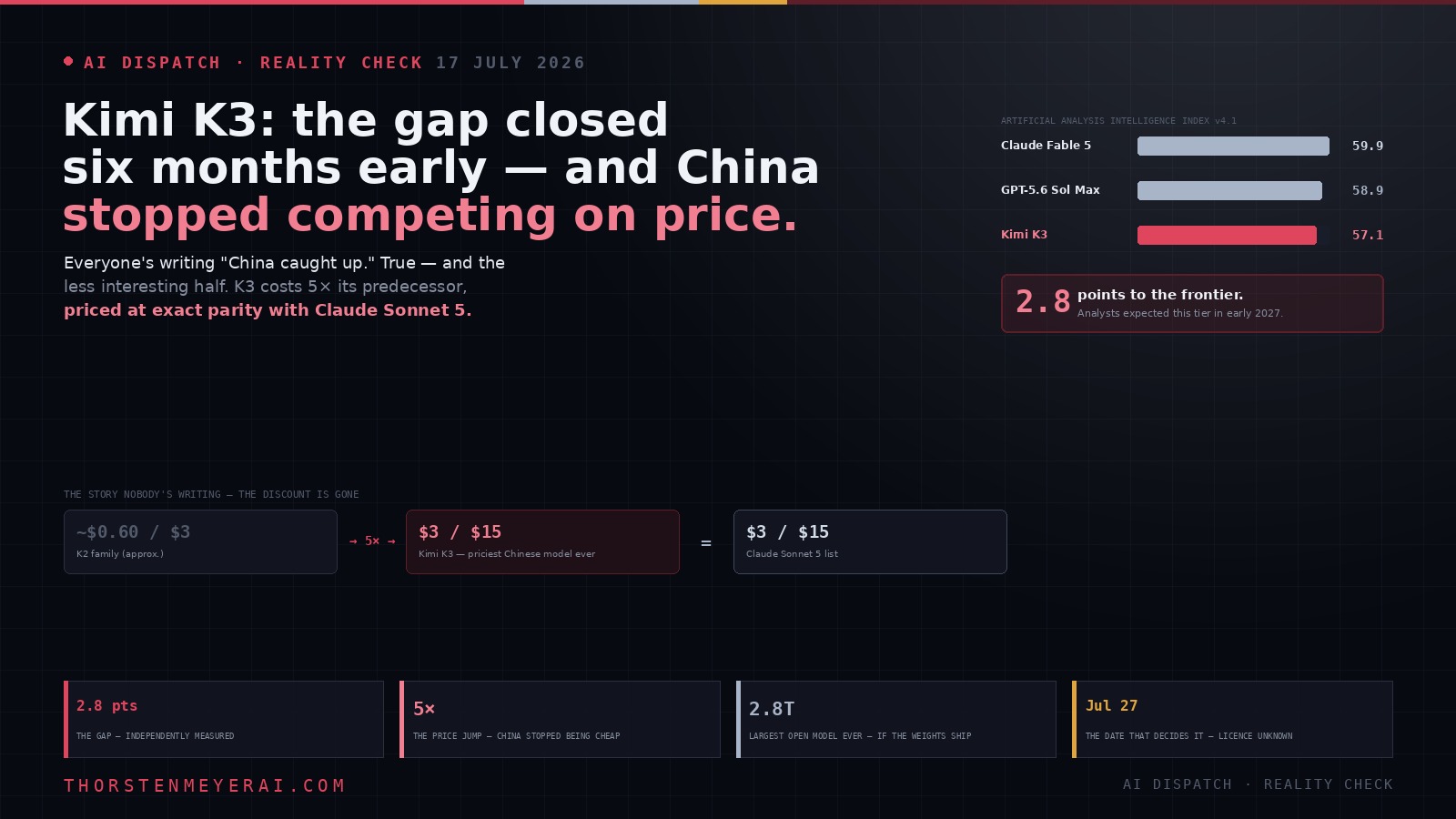
Kimi K3: the gap closed six months early — and China stopped competing on price
Every write-up today says “China caught up.” True — and the less interesting half. The other half: K3 costs 5× its predecessor, making it the most expensive Chinese model ever, priced at exact parity with Claude Sonnet 5. A benchmark is a claim. A price is a claim the vendor has to live with.
For two years the thesis was “cheap alternative.” Moonshot just abandoned it. Vendors discount when they’re compensating for something — Moonshot has stopped compensating. With Sonnet 5’s intro rate at $2/$10 through 31 Aug, K3 currently costs 50% more than the model it’s priced against. The competition just moved from cheap vs good to good vs good at the same price, with one of them open — and you can’t answer that with a discount.
The story we’ve told: export controls forced Chinese labs into efficiency. But K3 is 2.8T — the largest open model ever, ~3× K2, vs DeepSeek V4-Pro’s 1.6T. That’s not more with less. That’s more with more. Caveat: sparse MoE, active params undisclosed — total ≠ FLOPs. But if the controls were binding at the frontier, this model shouldn’t exist.
Anthropic has accused Moonshot, Z.AI, MiniMax, Alibaba & DeepSeek of “illicit” distillation — possibly well-founded; I can’t assess it. But one day earlier, Thinking Machines said Inkling’s post-training bootstrapped on Kimi K2.5 — reported as ecosystem health. Same verb, different flag, different word. If the distinction is real, someone should articulate it.
Two things changed, neither in the headlines. The discount is gone — anyone whose China strategy was “they’re cheaper” needs a new strategy. And the controls didn’t work — six months early, biggest model ever, from a lab that was supposed to be compute-starved, while Washington’s options narrow to loosening restrictions on its own labs, criminalising distillation, or subsidising American open weights. That’s not containment. It’s a menu of concessions. The gap is 2.8 points and closing. The price is Sonnet’s. The weights are ten days out. Everything that matters happens on 27 July.
The numbers, verified
First, correct the record: several outlets are reporting 2.7 trillion parameters. It’s 2.8 trillion. Moonshot’s own language is “our most capable model to date, with 2.8 trillion parameters.”
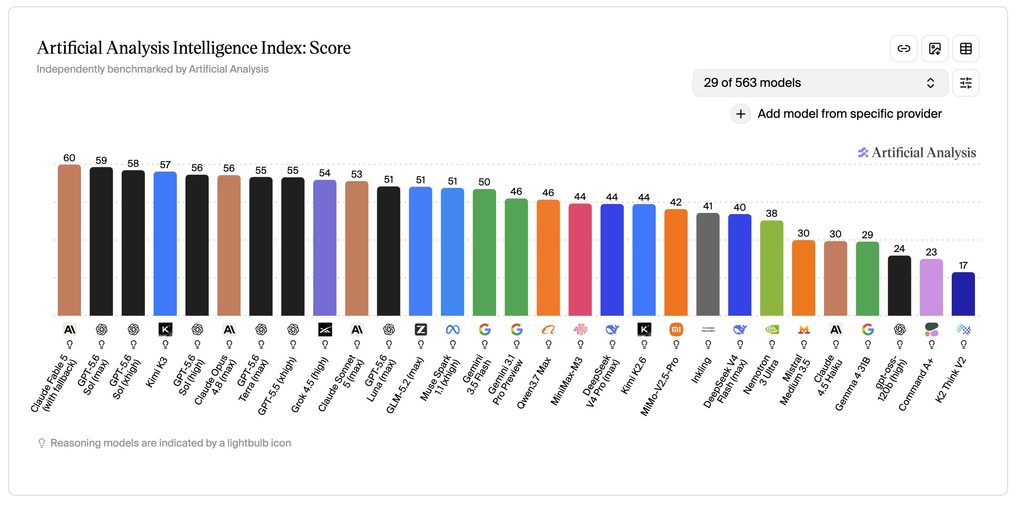
Architecture: a highly sparse Mixture-of-Experts routing 16 of 896 experts per token, plus shared experts, using Kimi Delta Attention and Attention Residuals for efficiency. The active parameter count has not been disclosed — which matters, and we’ll come back to it.
Specs: 1,048,576-token context. Native text, image, and video input. Always-on reasoning with a tunable reasoning_effort dial — though only the Max setting ships at launch. Released 16 July, live now in the Kimi app, Playground and API.
Scale: at 2.8T it’s the largest open-weight model announced, ahead of DeepSeek V4-Pro (1.6T), Xiaomi’s 1.02T, Z.AI’s 744B, and Moonshot’s own K2 family (1T). Moonshot’s chart of flagship open models since July 2025 shows the field hovering between 500B and 1T for a year — then a near-vertical jump.
And the caveat that outranks all of it: the weights aren’t out. Moonshot promises them by 27 July. Today, K3 is a hosted API with an open-weights promise. More on that below, because it’s the whole ballgame.
As an affiliate, we earn on qualifying purchases.
The gap, measured by someone other than Moonshot
Most coverage is quoting Moonshot’s own benchmark chart. Don’t. Use the independent numbers.
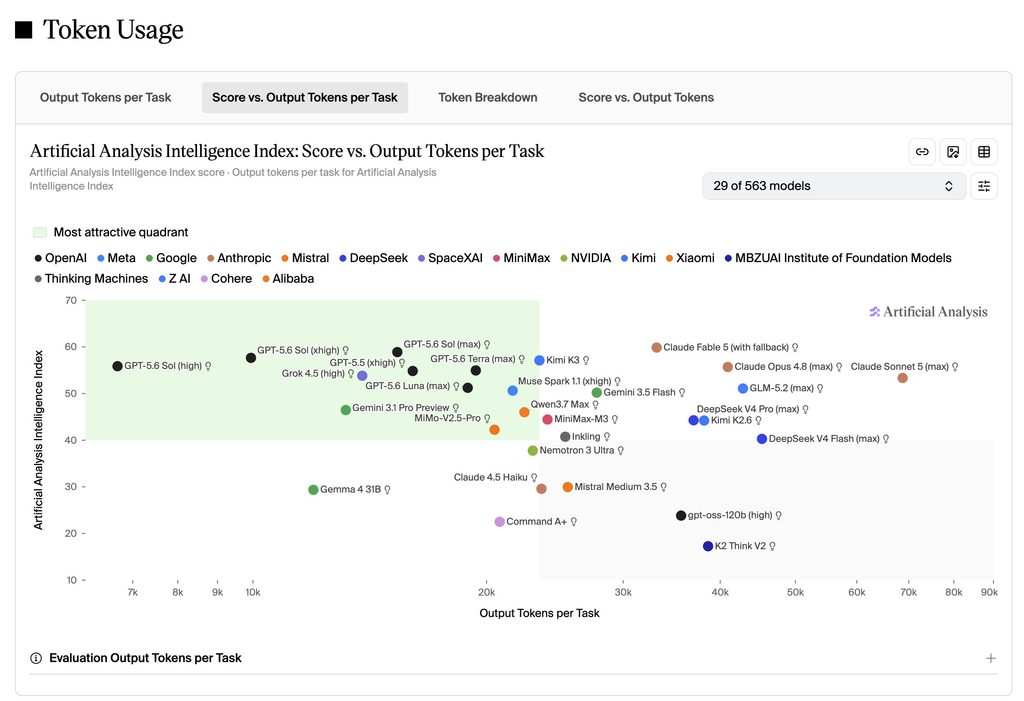
On Artificial Analysis Intelligence Index v4.1:
- Claude Fable 5 (with Opus 4.8 fallback): 59.9
- GPT-5.6 Sol Max: 58.9
- Kimi K3: 57.1
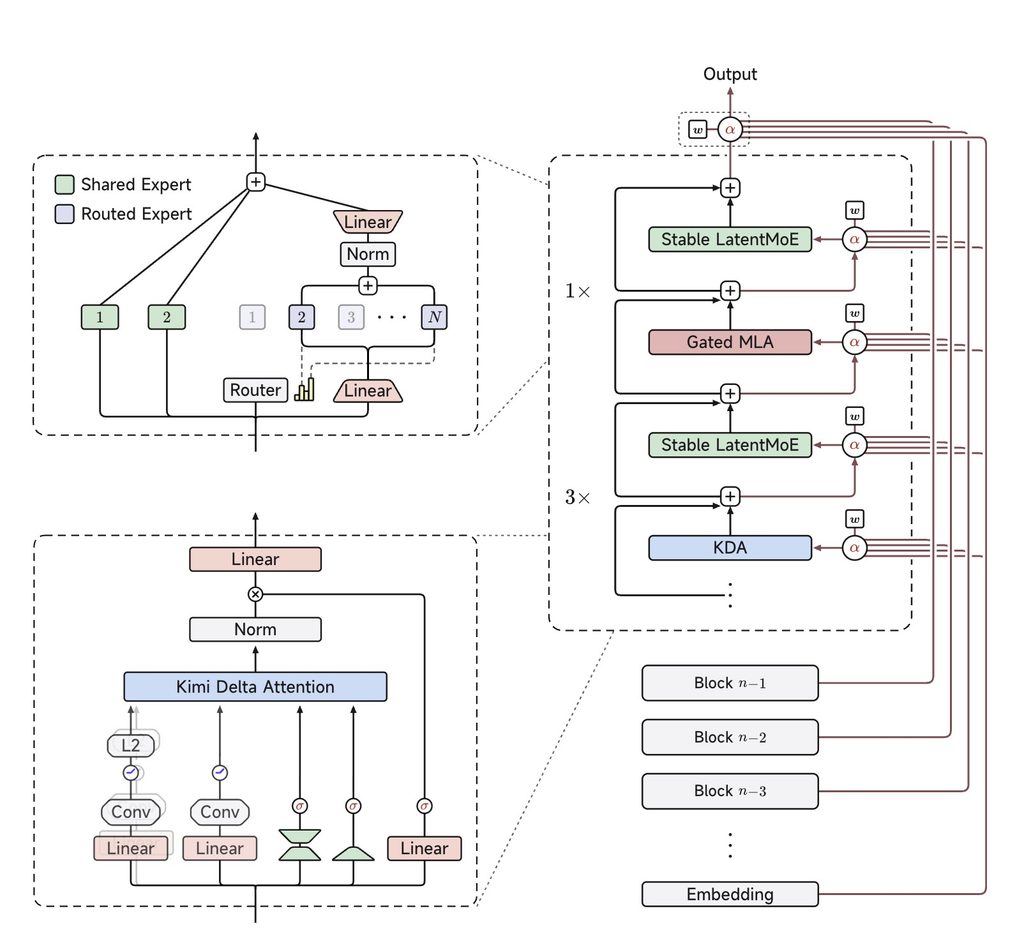
The gap to the frontier is 2.8 points. K3 lands as the fourth tested configuration and effectively the third model family — and sits just 0.54 points behind Sol xhigh. On Design Arena’s blinded web-dev evaluation it’s first. On AA’s long-horizon agentic tracker it posts a 732-point Elo jump over K2.6, reaching 1547.
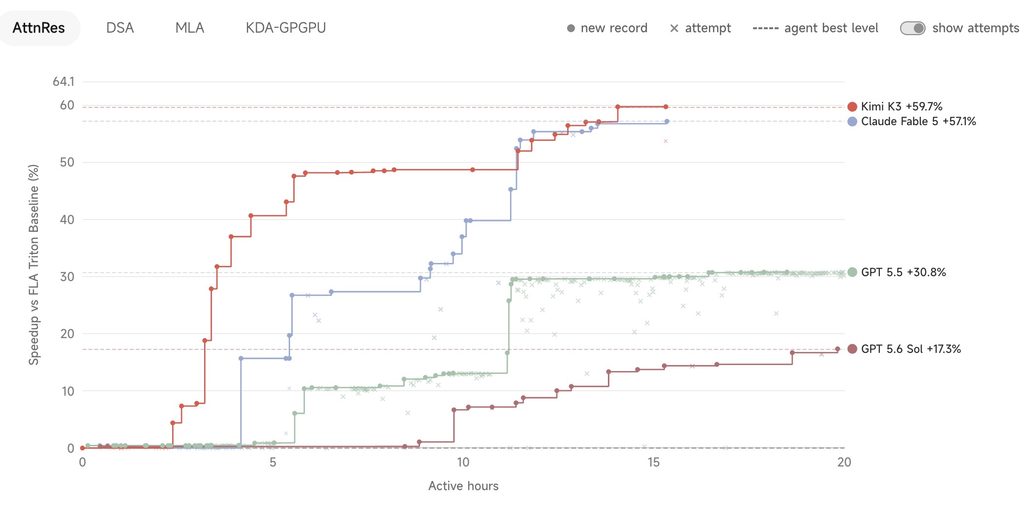
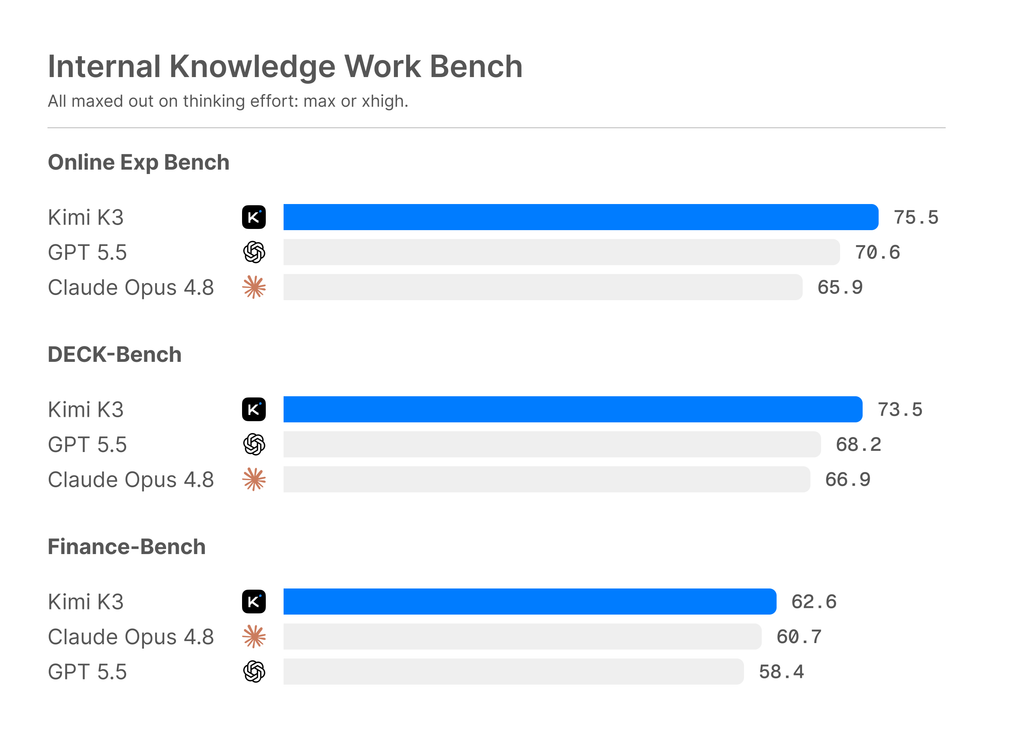
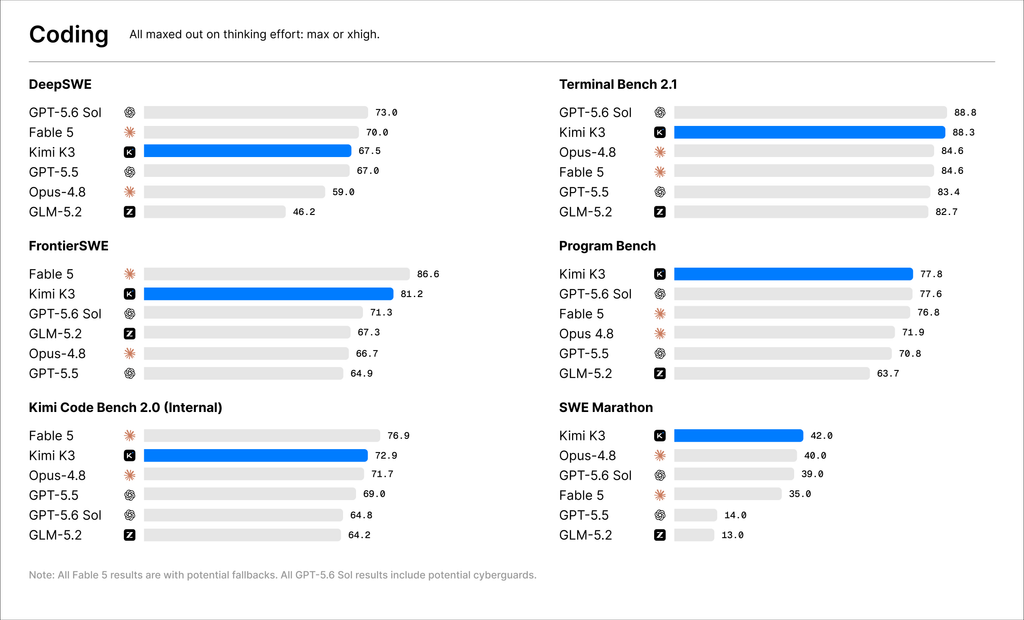
Moonshot’s self-reported results claim K3 mostly beats Claude Opus 4.8 max and GPT-5.5 high while losing to Fable 5 and GPT-5.6 Sol. The independent data broadly corroborates that shape — which is genuinely rare. Usually vendor charts don’t survive contact with a third party.
Analysts expected China to reach this tier in early 2027. It’s July 2026. Roughly six months early.
high-performance AI language models
As an affiliate, we earn on qualifying purchases.
As an affiliate, we earn on qualifying purchases.
The pricing story is the story
Sit with the price properly, because it inverts a narrative that’s been load-bearing since DeepSeek.
$3 / $15, with cached input at $0.30. That’s about 5× the K2 family. It is the most expensive model from any Chinese lab to date. And Claude Sonnet 5’s standard rate is also $3/$15 — meaning Moonshot has priced its flagship at exact parity with a Western mid-tier model. (With Sonnet 5 running an introductory $2/$10 through 31 August, K3 currently costs 50% more than the thing it’s priced against.)
Three consequences.
The “cheap Chinese alternative” framing is dead. You can no longer justify a Chinese model on cost alone at the frontier. That was the entire adoption argument for two years.
It’s a confidence signal, and confidence signals are informative. Vendors discount when they’re compensating for something. Moonshot has stopped compensating. You don’t price at Sonnet parity unless you believe you’re at Sonnet-plus capability — and the independent index says they’re well past it.
And it reframes the whole competition. It’s no longer cheap versus good. It’s good versus good, at the same price, with one of them open — if the weights land. That’s a much harder problem for a Western lab than price competition ever was, because you can’t answer it with a discount.
As an affiliate, we earn on qualifying purchases.
The scale story cuts against the efficiency narrative
Here’s the part that deserves more scrutiny than it’s getting.
The story we’ve all been telling — including in this publication — is that export controls forced Chinese labs into efficiency. Moonshot’s own president, Yutong Zhang, has said as much: they didn’t have the luxury of simply scaling up compute, so they focused on fundamental research and efficiency.
Fine. Now look at K3. 2.8 trillion parameters. The largest open model ever built. Nearly triple its predecessor.
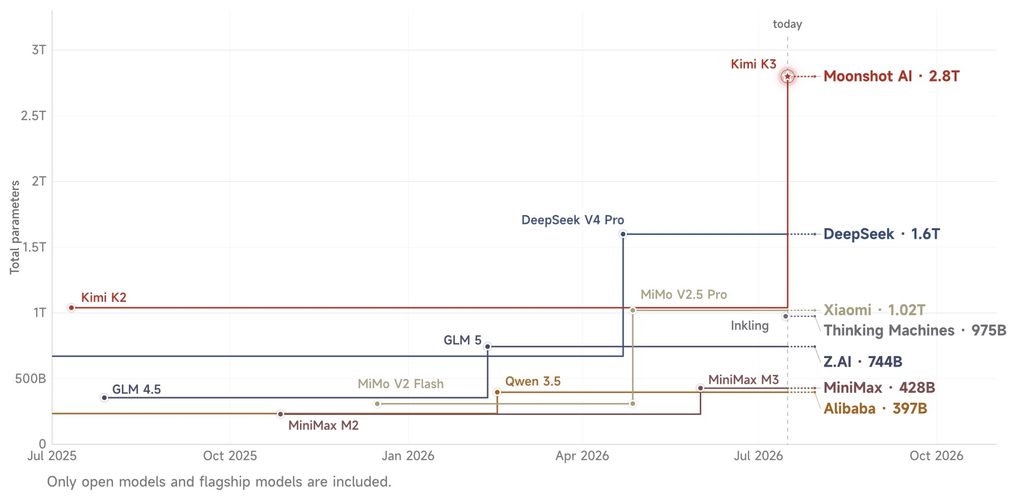
That is not doing more with less. That is doing more with more.
The honest caveat matters: this is a sparse MoE — 16 of 896 experts per token — so total parameters don’t translate linearly into training FLOPs, and Moonshot hasn’t disclosed the active count. That’s a meaningful gap in the public record, and anyone drawing hard compute conclusions from a headline parameter number is overreaching.
But a 2.8T-parameter training run is enormous under any accounting. So the policy question stands: if export controls were binding at the frontier, this model shouldn’t exist. Either the controls leak, or domestic silicon is working better than advertised, or the efficiency gains have made them non-binding at this scale. Every one of those is a failure of the control’s stated purpose — and the US policy menu now reportedly includes loosening restrictions on American labs to keep them ahead, penalising distillation, and encouraging American open-source models. Every option on that menu is an admission.
As an affiliate, we earn on qualifying purchases.
The distillation asymmetry
This needs care, so let me be precise.
Anthropic has accused Moonshot, Z.AI, MiniMax, Alibaba and DeepSeek of “illicit” distillation — training on the outputs of larger Western models. Those accusations may well be substantiated; I have no way to assess the evidence, and I’m not asserting they’re wrong.
But hold them next to a fact from one day earlier.
Thinking Machines released Inkling on 15 July and stated openly that its post-training bootstrap ran on synthetic data generated by open-weight models including Kimi K2.5. That was reported — including here — as ecosystem health. This is how open weights are supposed to work.
So: an American lab uses a Chinese model’s outputs to train its flagship → the open ecosystem functioning as designed. A Chinese lab allegedly uses American models’ outputs → illicit distillation.
The asymmetry may be entirely justified. There could be licence terms, terms-of-service breaches, or differences of scale and consent that distinguish the two cases cleanly. But nobody is making that argument. They’re applying different words to the same verb depending on which flag is on the building. If the distinction is real, someone should articulate it — because right now “distillation” appears to mean learning from a model I don’t like.
The 24-hour lap
Which brings us to an uncomfortable piece of timing.
15 July: Thinking Machines ships Inkling — Apache 2.0, natively multimodal, honestly marketed, the best American open-weight model, and second in the open field behind GLM-5.2. A genuinely strategic release, and this publication said so.
16 July: Kimi K3 lands at 57.1 on the independent index — ahead of every open-weight model in existence, and fourth overall.
America’s flagship open-weight release was bootstrapped on Kimi K2.5 and lapped by Kimi K3, in twenty-four hours.
That’s not a knock on Thinking Machines. Inkling is a good model and a better strategy than most. It’s a statement about pace — and about how quickly “best American open model” became a smaller claim than it sounded on Wednesday.
Read the licence before the leaderboard
Now the discipline, because this publication’s own rule applies here and almost nobody is following it.
K3 is not open yet. As of today it is a hosted API with a promise. Weights are due by 27 July. And:
- The licence is unpublished. That is the whole ballgame. Inkling’s story was Apache 2.0 — a real, permissive, checkable licence. K3’s terms are unknown. It could be Apache. It could be a bespoke community licence with use restrictions. Nobody writing “largest open model ever” today knows which.
- The technical report is unpublished, and the active parameter count is undisclosed.
- The 1M context is a maximum, not an entitlement. Kimi Code’s own documentation caps Moderato users at 256K; 1M requires higher tiers, and third-party tools may need it explicitly configured.
- Only Max reasoning ships at launch — the effort dial that makes the cost curve interesting isn’t usable yet.
- And at 2.8T, self-hosting this is a datacentre problem, not a workstation one. “Open weights” and “runnable weights” remain different claims.
Everyone calling K3 “the largest open-source model ever released” today is describing a press release. Check on 27 July. The licence decides whether this is a landmark or a very good API with good intentions.
What this does to the argument I made yesterday
Honesty requires a self-correction.
Yesterday this publication published the strongest case against AI sovereignty, and its first and best argument was that the capability gap is the product — that the best open model sat roughly five points behind the frontier, that the gap compounds daily, and that sovereignty buys you a permanent discount on capability.
Today the gap is 2.8 points. In an open-weight model. At Sonnet pricing. Twenty-four hours later.
That argument just got materially weaker, and I’m not going to pretend otherwise. If the gap keeps closing at this rate, “just use the best model” stops being obviously correct — because the best open model becomes good enough that the sovereignty tax starts buying something real rather than buying a handicap.
The caveats still hold — not open yet, licence unknown, one day of independent data, and 2.8T means you’re not self-hosting it in a cupboard. But the direction of travel is unambiguous, and it’s moving against the argument I made on Thursday.
The take
Two things changed yesterday, and neither is the one in the headlines.
The discount is gone. Chinese frontier models are no longer the cheap option — they cost exactly what Sonnet costs. The competition has moved from price to capability, which is the fight Moonshot now thinks it wins. Anyone whose China strategy was built on “they’re cheaper” needs a new strategy.
And the controls didn’t work. Six months ahead of schedule, the largest model ever built, from a lab that was supposed to be starved of compute — while Washington’s policy options have narrowed to loosening restrictions on its own labs, criminalising distillation, or subsidising American open weights. That’s not a containment strategy. That’s a menu of concessions.
For anyone actually building: the date that matters is 27 July. Until the weights and the licence land, K3 is an excellent hosted API from a Chinese vendor at Western prices, which is a genuinely strange sentence to have to write. If the licence is permissive, this is the most consequential open-weight release of the year and the sovereignty maths changes for everyone. If it isn’t, it’s a very good API and the headlines were premature.
The gap is 2.8 points and closing. The price is Sonnet’s. The weights are ten days out. Everything that matters happens on the 27th.
Sources: Moonshot AI’s Kimi K3 launch materials, platform documentation and pricing pages (2.8T parameters, 16-of-896 expert routing, Kimi Delta Attention, 1,048,576-token context, text/image/video input, Max-only reasoning at launch, $3/$15/$0.30 pricing, weights promised by 27 July 2026); Simon Willison’s launch-day analysis; Artificial Analysis Intelligence Index v4.1 scores (Fable 5 59.9, GPT-5.6 Sol Max 58.9, K3 57.1, Sol xhigh +0.54) and the long-horizon Elo tracker (1547, +732 vs K2.6) via AA and aggregating coverage (kingy.ai, trilogyai, buildfastwithai, felloai, graphify, OpenRouter, officechai); Sonnet 5 comparison pricing and the introductory $2/$10 rate through 31 August; Yutong Zhang’s World Economic Forum remarks; Thinking Machines’ Inkling release (15 July) and its stated use of Kimi K2.5 for post-training data; Anthropic’s distillation accusations against Moonshot, Z.AI, MiniMax, Alibaba and DeepSeek, and reported US policy deliberations on distillation penalties and open-source encouragement, per Fortune, Bloomberg and CNBC reporting. Moonshot’s own benchmark claims are self-reported; the AA figures are independent but one day old and await broader replication. The active parameter count, licence terms and technical report were unpublished at the time of writing. Analysis and framing are the author’s; not investment advice.
Halloween Picks
halloween
As an affiliate, we earn on qualifying purchases.