
Technological change is rapidly displacing many jobs, with estimates that over 41% could disappear within five years. While some new roles may emerge, the gap between job losses and creation is large, especially in sectors like manufacturing, retail, and tech. Many workers face tough shifts, and not all displaced jobs will be replaced quickly or easily. To understand whether future job growth can keep pace, you’ll want to explore how organizations and governments are responding.
Open a free Amazon Business account
Business pricing, bulk buying and tax-exempt orders.
As an affiliate, we earn on qualifying purchases.
Key Takeaways
- Not all displaced jobs will be replaced; many roles will vanish faster than new ones can emerge.
- Only about 78 million new jobs are projected to offset the 92 million jobs lost by 2030.
- Skills gaps and lack of reskilling can prevent displaced workers from transitioning into new roles.
- Technological advancements may create more complex, higher-skilled jobs, but not for everyone.
- Long-term economic and social stability depends on effective policies for workforce adaptation and reskilling.
digital literacy training courses
As an affiliate, we earn on qualifying purchases.
As an affiliate, we earn on qualifying purchases.
The Current Landscape of Job Displacement

The current landscape of job displacement reflects rapid changes driven by technological advances, especially AI. You’re witnessing a shift where hundreds of thousands of workers have already lost jobs to automation, with 13.7% of US workers reporting job loss to robots. While new jobs are expected to create about 14% of today’s employment by 2030, 8% of current roles will vanish. The job market remains somewhat stable, with a net growth of 7%, or around 78 million jobs, driven by structural changes. However, professional roles like analysts, lawyers, and HR associates are shrinking due to AI’s efficiency. Despite steady employment growth and economic progress, the displacement of white-collar jobs signals a significant transformation in how work is structured. Broadening digital access and AI advancements are expected to transform 60% of businesses by 2030, highlighting the scale of change ahead. Additionally, the ongoing evolution underscores the importance of job market adaptability for workers facing these shifts. The increasing reliance on automation technology also emphasizes the need for workforce reskilling and continuous learning to remain competitive in the evolving employment landscape. Moreover, the rapid pace of technological change underscores the importance of labor market resilience in adapting to these disruptions. For example, many workers are turning to resources and tools such as career counseling and retraining programs to navigate these challenges effectively. Furthermore, understanding the impact of Gold IRA Rollovers can be a strategic move for workers aiming to secure their financial future amidst these job market changes.
reskilling and upskilling programs
As an affiliate, we earn on qualifying purchases.
As an affiliate, we earn on qualifying purchases.
How Technology Is Reshaping the Workforce

Technological advances are fundamentally reshaping how work gets done and what skills are required. You now need digital skills to stay competitive—92% of jobs demand them—yet about a third of workers lack basic digital literacy. This shift drives rapid change: AI is expected to generate $4.4 trillion in productivity gains long-term, which underscores the importance of adapting to new tools and processes. Increased reliance on automation technologies is accelerating the pace of transformation across sectors. The integration of AI-driven security systems is also enhancing workplace safety and data protection. Additionally, the use of predictive modeling helps organizations forecast workforce trends and plan accordingly. As AI continues to evolve, its capabilities in data analysis are enabling more informed decision-making at all organizational levels. Moreover, digital literacy is becoming a critical component for workforce resilience in an increasingly automated environment. 1. Workplaces are investing heavily in AI, but most still aren’t fully mature, creating uncertainty. 2. Robotics and automation will transform industries by 2030, displacing some roles while creating new ones. 3. Productivity soars—88% of leaders see technology boosting efficiency, especially through AI and software development. 4. Skills are evolving fast—AI, cybersecurity, and data analysis are in high demand, demanding continuous learning to keep up. This technological wave demands adaptability—embracing new skills is essential for survival.
As an affiliate, we earn on qualifying purchases.
The Rate of Job Losses Due To Automation
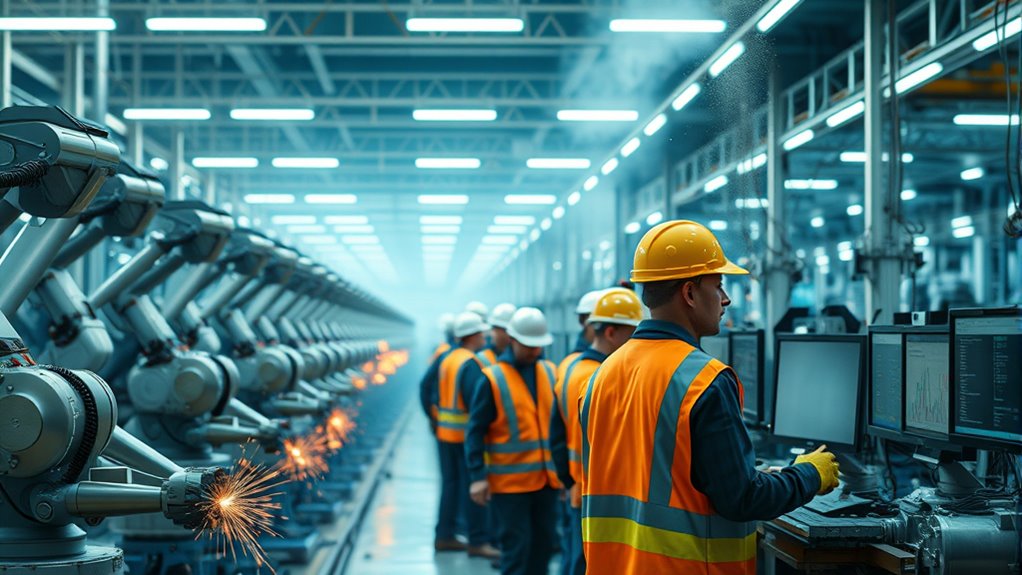
You might notice that job losses from automation are happening at different speeds across industries, with some sectors losing jobs faster than others. The energy, mining, and manufacturing sectors are already experiencing significant displacement, while others see slower changes. Understanding these sectoral variations helps you grasp how quickly automation is transforming the job landscape. Additionally, the adoption of electric vehicles and related technologies, such as electric dirt bikes, impacts labor markets by shifting demand towards new skills and industries like electric vehicle manufacturing. As automation advances, some industries are also integrating advanced robotics to improve efficiency, which further influences employment patterns. Recognizing the pace of technological change can help workers and policymakers prepare for ongoing shifts in employment. Furthermore, the rise of Gold IRA investments exemplifies how financial strategies evolve alongside technological disruptions, offering alternative avenues for wealth preservation amid job market shifts. Staying informed about industry-specific automation trends can help workers adapt to these rapid changes effectively.
Displacement Speed Trends
Automation is accelerating rapidly, and job losses are happening at a concerning pace. The speed of displacement could be shocking:
- Up to 300 million jobs might be lost globally to AI.
- Over a third of all business tasks could be automated by 2025.
- AI is projected to replace more than 41% of jobs in the next five years.
- Already, 14% of workers have faced job loss due to automation or AI.
- Widespread automation could affect 1.2 billion employees and impact $14.6 trillion in wages, highlighting the vast scale of potential disruption. Additionally, the integration of sustainable practices in logistics is becoming a crucial aspect of managing these transitions.
- The rate of automation growth is relentless, with 718,000 industrial robots shipping in 2026. It may take another 20 years to automate half of current tasks worldwide, and adopting advanced AI technologies can further accelerate this timeline.
- As industries evolve, the importance of re-skilling and workforce adaptation becomes more evident to mitigate the impact on employment opportunities. The pace of technological change continues to outstrip many workers’ ability to adapt quickly, emphasizing the need for proactive measures.
A new significant challenge facing policymakers is preparing the workforce for rapid technological shifts, requiring innovative educational strategies.
The rapid pace leaves many workers vulnerable, highlighting how quickly the workforce is being reshaped by technology.
Sectoral Loss Variations
Different industries face varying risks of job losses as automation advances, with some sectors experiencing rapid and widespread displacement while others remain relatively stable. In North America’s energy, utilities, and mining sectors, nearly half of the jobs could be automated by 2030, especially roles involving routine or hazardous tasks. The retail sector also faces significant threats, with about 41 million jobs at risk by 2040 due to self-checkouts, AI customer service, and e-commerce growth. Manufacturing has already shed around 1.7 million jobs since 2000, as robots replace manual roles. Vulnerability depends heavily on job functions; repetitive tasks are more at risk than complex, social, or creative roles. Regional differences and workforce adaptability further influence how quickly sectors lose or gain jobs amid automation. Understanding the role of automation in employment can help anticipate future job market shifts and inform workforce development strategies. Additionally, the impact of privacy and cookie management can shape how companies tailor their workforce and customer interactions in an increasingly digital economy. Moreover, the emergence of new jobs in areas like catering and delivery demonstrates how some sectors adapt by creating roles that complement automation rather than replace human workers. Recognizing sectoral loss variations can assist policymakers and businesses in designing targeted training programs to mitigate unemployment risks effectively. Furthermore, home furnishings companies are exploring innovative ways to retain human jobs by integrating automation with personalized services, illustrating the nuanced impact of technology.
As an affiliate, we earn on qualifying purchases.
Sectors Most Affected by Technological Changes
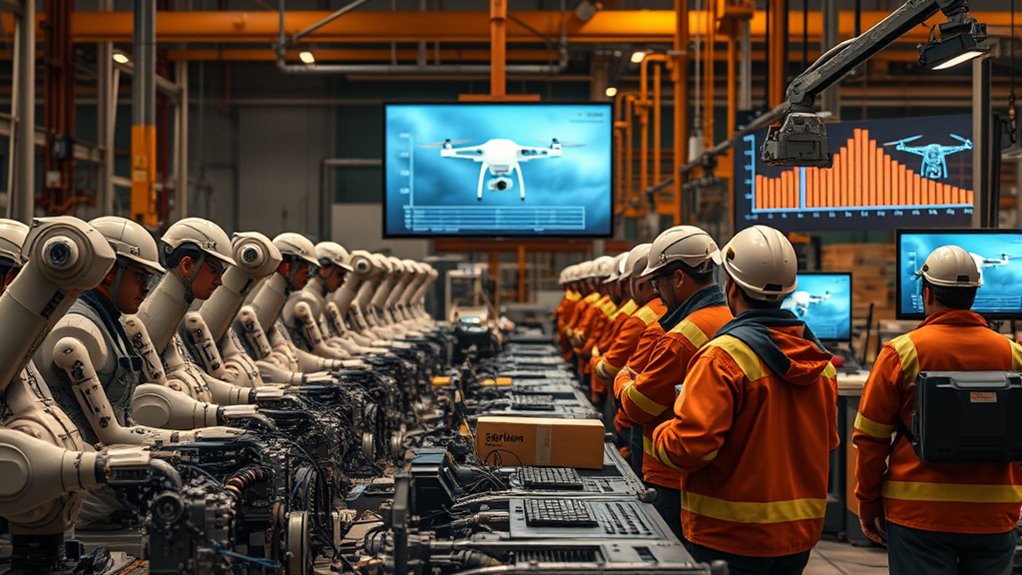
You’ll notice that the tech sector is seeing a surge in layoffs as automation and AI take over roles. Meanwhile, manufacturing jobs are declining due to increased use of robotics and machine learning. These shifts highlight which industries are most vulnerable to rapid technological change and which are adapting quickly.
Tech Sector Layoffs Surge
The tech sector is experiencing a significant surge in layoffs, driven by rapid technological advancements and shifting market dynamics. You might feel the instability firsthand as over 22,000 workers are affected this year, with more than 23,400 laid off just in April. March saw nearly 8,834 job cuts, highlighting the ongoing turbulence. Key factors fueling these layoffs include automation, outsourcing, and financial pressures. Consider these impacts:
- Thousands face sudden unemployment, disrupting lives and communities.
- Companies like Microsoft and Google are restructuring, shedding thousands of jobs.
- The industry’s shift toward automation means roles are disappearing faster than new ones are created.
- Despite a 13% decline in layoffs compared to last year, job security remains fragile.
- Understanding Bitcoin IRA options and market trends can help workers explore alternative paths for financial stability amidst industry upheaval. Additionally, awareness of somatic therapy can support individuals coping with job loss-related stress and anxiety.
This wave of layoffs underscores the uncertain future of tech employment.
Manufacturing Job Declines
Manufacturing jobs are declining sharply as automation and artificial intelligence take over tasks that once relied on human labor. In 2024, the sector lost around 90,000 jobs nationwide, with the Midwest feeling the brunt. Specific industries like motor vehicles and parts saw a sharp drop, losing 4,700 jobs in April 2025. Since peaking at 19.5 million in 1979, manufacturing employment has steadily fallen to about 11.5 million by 2009, partly due to economic fluctuations and rising interest rates. Automation is replacing many workers, especially in durable goods, which saw a net loss of 3,000 jobs in March 2025. While some non-durable goods sectors gained 4,000 jobs, overall, technological advancements continue to reshape the manufacturing landscape, often at the expense of employment opportunities.
The Gap Between New Job Creation and Displacement

As automation and AI continue transforming the job market, a key challenge emerges: the gap between the jobs being displaced and the new opportunities being created. You might feel hopeful about new roles, but the reality is complex.
- Over 92 million jobs could vanish by 2030, impacting nearly 8% of current employment—causing widespread uncertainty.
- Only about 78 million new jobs are expected to offset this loss, leaving a significant shortfall.
- About 22% of today’s jobs will undergo structural change, demanding new skills.
- A skills mismatch means many displaced workers may struggle to find suitable roles, prolonging economic and personal hardship.
This disparity highlights a critical challenge: job growth isn’t always keeping pace with displacement, risking long-term instability.
Skills in Demand: Preparing for the Future

To stay ahead in the changing job market, you need to focus on developing emerging skill sets like AI, data analysis, and cybersecurity. Reskilling and retraining are essential as technology transforms industries and roles. By proactively updating your skills, you can better prepare for the opportunities and challenges ahead.
Emerging Skill Sets
Preparing for the future job market means developing a diverse set of skills that align with emerging technological and human demands. These skills will help you stay relevant and competitive in a rapidly evolving landscape. First, mastering Artificial Intelligence (AI) and Data Analytics opens doors to high-demand roles shaping industries. Second, honing Cybersecurity expertise protects organizations from rising digital threats, making you indispensable. Third, cultivating Creative Thinking and Resilience fuels innovation and helps you adapt to change. Fourth, building Leadership and Strategic Planning skills enables you to guide teams and influence business success. Embracing these emerging skill sets guarantees you’re prepared for the jobs of tomorrow, giving you confidence in steering an uncertain future.
Reskilling and Retraining
With technological advancements rapidly transforming industries, staying ahead means continuously updating your skills through reskilling and retraining. Nearly 85% of employers now prioritize workforce reskilling, recognizing the skills gap will impact 60% of staff by 2027. Reskilling is cost-effective, with 79% of L&D professionals agreeing it’s cheaper than hiring new talent. It helps prevent job displacement—by 2025, 85 million jobs could vanish—but also creates new opportunities. To succeed, organizations support tailored training, leadership, and technology integration. Here’s why reskilling matters:
| Key Benefits | Critical Skills Needed |
|---|---|
| Job preservation | Digital literacy, AI, automation |
| Economic resilience | Creativity, critical thinking |
| Cost-effective investment | Adaptability, innovation |
| Social inclusion | Sustainability, lifelong learning |
How Governments and Companies Are Responding

Governments and companies are actively adjusting their strategies to address the disruptions caused by technological advancements. They’re implementing policies to support workers through retraining and upskilling, ensuring they’re prepared for new roles. Regulatory frameworks are being created to manage AI’s impact, protecting fair labor practices. Investments in education and training programs help workers gain skills in emerging technologies like cybersecurity and AI. Social support systems, such as unemployment benefits and career counseling, are being strengthened to ease passages. Additionally, governments incentivize innovation, encouraging companies to develop new technologies that create fresh job opportunities.
- You may find new training programs that empower you with future-proof skills.
- Social safety nets aim to cushion the blow of job losses.
- Companies are diversifying roles, focusing on human-centered skills.
- Innovation incentives aim to generate new employment pathways.
Challenges in Transitioning to New Roles
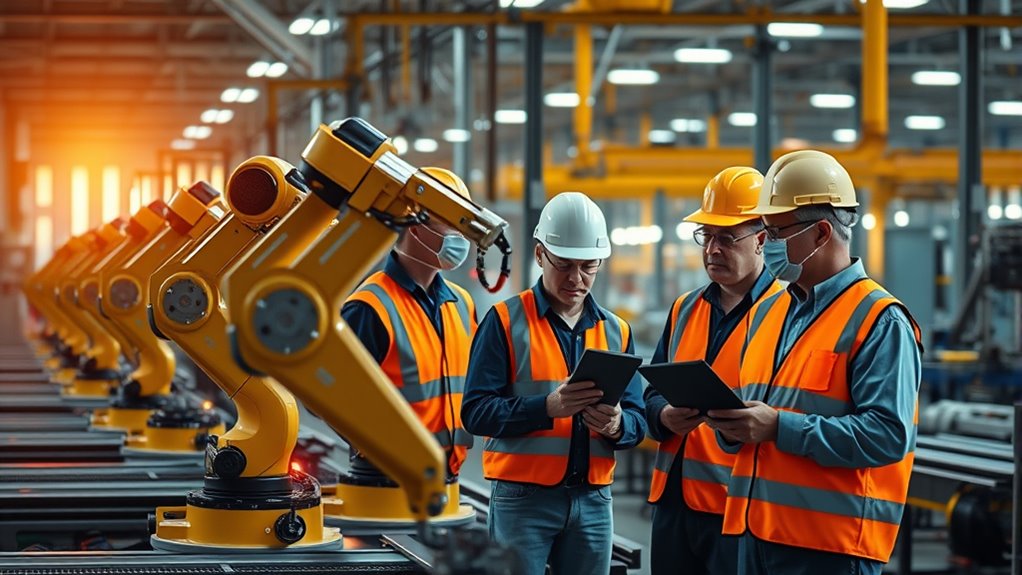
Moving to new roles amid rapid technological change presents significant challenges that can hinder your ability to adapt. Skills gaps are a major hurdle; by 2025, half of all workers will need reskilling due to automation and AI. Many struggle to acquire relevant skills because training opportunities are inadequate, especially in sectors where skills become obsolete quickly. Digital literacy upgrades are essential, yet often unavailable or limited. Demographic issues compound these difficulties—aging populations and declining workforce participation reduce the pool of qualified candidates. Psychological barriers, like fear of skill inadequacy and low job satisfaction, add to the complexity. Geographic and industry disparities further slow progression efforts, especially in rural areas and less diversified regions. Systemic issues like workforce disengagement also weaken retraining efforts, making successful role shifts even more challenging.
Economic Factors Influencing Job Markets

Economic factors play a crucial role in shaping job markets, as they directly influence the number of new jobs created and the stability of employment. Your job prospects depend on these forces, which can either boost or hinder employment growth.
- When GDP grows rapidly, expect more jobs and stronger opportunities.
- Moderate inflation can energize hiring, but high inflation creates uncertainty and stalls progress.
- Slow economic growth risks displacing millions of jobs by 2030, shaking job security.
- A resilient labor market reflects cautious hiring, balancing layoffs and growth amid economic turbulence.
Understanding these factors helps you navigate employment challenges, as the economy’s pulse directly impacts your career stability and chances for advancement.
Building Resilience in the Face of Automation

As automation transforms industries at a rapid pace, building resilience becomes essential for adapting to these changes. You need to develop critical skills like creative thinking, resilience, flexibility, and agility, as demand for these skills rises. However, many organizations lack proper training programs; 75% expect employees to optimize processes, but only 8% provide formal education. You might face the need to shift to new roles—up to 28% of workers may need to switch occupations due to automation. Embracing continuous learning and skill development is crucial. Automation can boost your productivity and job satisfaction by reducing repetitive tasks, but overcoming resistance and skill gaps is key. Staying adaptable and proactive ensures you can thrive amid technological shifts and remain valuable in the evolving workforce.
Frequently Asked Questions
How Long Does It Typically Take to Retrain Displaced Workers?
You’re wondering how long it takes to retrain displaced workers. Typically, retraining programs last around six months, which helps provide immediate support after job loss. Displaced workers usually spend between 10 to 20 weeks without work while shifting into new roles. The process can vary based on individual skill levels, program accessibility, and economic conditions, but most retraining efforts aim to quickly equip you with the skills needed for reemployment.
What Industries Are Most Likely to Recover Quickly From Automation?
Think of industries like resilient trees in a storm—they bend but don’t break. The manufacturing sector, for example, is expected to recover by 2025, thanks to technological advances and workforce training. As automation takes root, this industry slowly regrows, creating new roles in AI and tech development. You’ll see rapid rebounds here, driven by innovation, strategic investments, and a focus on evolving workforce skills.
Can Universal Basic Income Effectively Offset Job Displacement Caused by AI?
You might wonder if a universal basic income can truly offset job displacement caused by AI. It can provide essential financial security, giving you a safety net during times of change. UBI allows you to retrain and adapt to new roles without immediate financial pressure. However, its success depends on sustainable funding and complementary policies like education. While it offers promise, ongoing research is crucial to understand its long-term effectiveness in AI-driven economies.
How Do Cultural Differences Influence Workforce Adaptation to Automation?
So, you think everyone’s on the same page about automation? Think again! Cultural differences shape how you embrace or resist new tech. In individualistic societies, you’re keen to automate for personal gain, but in collectivist cultures, you prefer human judgment. Adjusting strategies to fit local values isn’t just smart—it’s essential. Without this cultural finesse, your automation efforts may flop, leaving you with more headaches than productivity.
What Role Do Small Businesses Play in Job Creation Amid Technological Shifts?
You should know that small businesses are essential in job creation during technological shifts. They make up most U.S. firms, employ nearly half the workforce, and create the majority of new jobs. Despite challenges in adopting new tech, small businesses innovate and adapt, often outpacing larger companies in growth. Their resilience and entrepreneurial spirit help sustain employment, making them key players in economic stability and local community development amid changing technology landscapes.
Conclusion
While technology transforms tasks and terrains, it doesn’t guarantee guaranteed growth or guaranteed gains. You must recognize the relentless ripple of change, reconcile the risks, and remain resilient. Embrace evolving roles, educate yourself, and stay adaptable. Remember, the future isn’t fixed — it’s flexible. By balancing innovation with initiative, you can navigate the noise, harness opportunities, and help shape a sustainable, secure, and scalable tomorrow.
Fall Picks
fall essentials
As an affiliate, we earn on qualifying purchases.