Taxing robots could help fund our future by generating revenue from automation gains, supporting social programs, and easing job shifts. Keep in mind, implementing such taxes involves balancing innovation with social impacts, steering through complex policies, and international cooperation. While still debated, these measures aim to guarantee technology benefits everyone. If you’re curious about how these strategies might shape our society, there’s much more to explore.
Key Takeaways
- Robot taxes can generate revenue to fund social programs like retraining and public services.
- Taxing automation discourages excessive robot adoption, potentially slowing economic growth.
- International cooperation is essential to prevent tax evasion and ensure fair implementation.
- Revenue from robot taxes may be insufficient alone, requiring complementary policies for a sustainable future.
- Ethical and social considerations influence the effectiveness and acceptance of robot taxation policies.
Top picks for "reality check robot"
Open Amazon search results for this keyword.
As an affiliate, we earn on qualifying purchases.
The Rationale Behind Robot Taxes
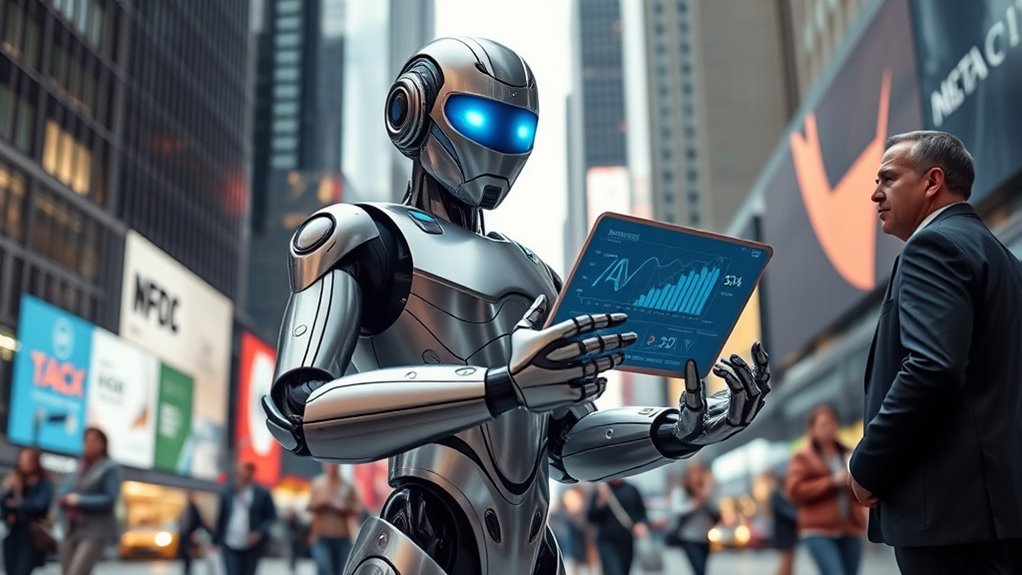
The idea behind robot taxes stems from concerns that automation may threaten jobs and economic stability. You’re likely aware that companies increasingly replace human workers with robots and AI systems capable of autonomous decisions. To address this, a robot tax proposes taxing businesses that automate extensively, aiming to discourage excessive automation. This approach also encourages companies to deliberate the social impact of automation, rather than solely focusing on profits. Additionally, implementing such taxes involves understanding the potential financial risks and ensuring compliance with evolving regulations to prevent loopholes and unintended consequences. Recognizing the complexity of AI integration is essential for designing effective and fair taxation policies. Moreover, the debate around robot taxes often highlights the importance of future-proofing policies to adapt to rapid technological advancements. Incorporating insights from modern technological solutions, such as advanced monitoring systems, can help in developing more accurate and adaptable tax frameworks. Furthermore, understanding the economic implications of automation helps policymakers craft balanced strategies that promote innovation while safeguarding employment.
Economic Benefits and Challenges

Implementing a robot tax offers several potential economic benefits that could reshape how societies manage automation’s impact. It can help redistribute wealth, generating revenue to support displaced workers, and incentivize companies to retain human labor, slowing job loss. The funds could also foster new jobs in sectors like healthcare and green energy, or support programs like UBI, reducing income inequality. Additionally, a well-designed robot tax can promote economic sustainability by encouraging responsible automation practices. Moreover, such a tax could motivate companies to invest in human-centric innovation to complement automation, ensuring a balanced economic growth. By carefully evaluating the cost-benefit aspects, policymakers can better address the potential downsides of implementing such taxes. A comprehensive regulatory framework can help manage the complexities associated with taxing automation. However, challenges exist: higher operational costs may deter investment, and taxes could slow innovation. The tax’s impact depends on whether it’s placed on manufacturers or employers, and implementation complexity adds hurdles. Embracing self-awareness and understanding economic implications can help shape more effective policies.
Learning From South Korea’S Approach

South Korea’s approach to managing automation through taxation offers valuable insights into balancing innovation with social welfare. Since implementing the Robot Tax Law in 2017, the country has reduced tax incentives for robotics investments, encouraging businesses to examine automation costs more carefully. Tax deductions for automation investments, ranging from 3 to 7 percent, were decreased by 2 percent, influencing how companies allocate resources. Research shows that cutting tax credits can boost employment and slow wage inequality, highlighting a strategic shift toward supporting workers. Additionally, these reforms have increased government revenue, creating positive fiscal externalities. South Korea’s experience demonstrates how targeted tax policies can steer automation investments while addressing social concerns—offering a practical model for other nations contemplating similar measures. South Korea has the highest robot density globally, with 1,000 robots per 10,000 employees, which underscores its commitment to automation and the importance of tax policies in managing its impact. Implementing such policies requires careful assessment of the economic effects of automation, including how it influences the labour market to ensure balanced growth and social stability. For example, understanding the impact on employment is essential for designing effective tax strategies that promote inclusive development. Moreover, evaluating the cost-benefit balance of automation helps policymakers develop sustainable solutions that support both technological advancement and social well-being. Recognizing the role of regulatory frameworks can further enhance the effectiveness of these policies in achieving desired social and economic outcomes.
Balancing Innovation and Social Welfare

Balancing innovation with social welfare requires carefully calibrated policies that encourage technological progress while protecting societal interests. A robot tax can slow automation, giving society time to adapt and reducing inequality. It is also essential to consider the impact on water resources as automation expands across industries, ensuring sustainable development. The ideal tax rate ranges from 1% to 3.7%, depending on economic conditions, and may decrease as robot saturation increases. While increased profits from automation often don’t fully offset lost employment taxes, a robot tax can help redistribute wealth and support workers displaced by automation. It can fund essential public services, including education, retraining, elder care, and social welfare programs. Additionally, robot taxes can promote strategic automation, encouraging firms to adopt technologies thoughtfully and preserve jobs. Implementing social safety nets can further cushion the impact on vulnerable populations during this transition. Effective policies must balance fostering innovation with safeguarding social well-being to create a sustainable, equitable future. Recognizing the importance of educational toys can further support workforce development and lifelong learning. Moreover, understanding the role of digital literacy in modern society is crucial for preparing future generations for an increasingly automated world.
Future Prospects and Policy Considerations

As countries consider adopting a robot tax, defining its scope and ensuring international cooperation become critical to avoid competitive disadvantages. You need clear rules on which industries and AI functions to tax, preventing distortions and unfair advantages. International collaboration helps prevent tax havens and race-to-the-bottom strategies. Considerations include:
- Establishing whether to tax manufacturers or employers, affecting implementation and compliance.
- Creating a regulatory framework that balances innovation with social needs. Effective regulation is essential to address the rapidly evolving landscape of AI and automation. Additionally, understanding the technological advancements driving automation is crucial for crafting effective policies, as they influence the scope and application of taxation measures. Recognizing the importance of industry-specific impacts can help tailor policies to different sectors and mitigate unintended consequences.
- Ensuring the tax supports public services and worker retraining programs.
- Addressing ethical concerns, such as AI consciousness and social equity, to maintain public trust.
- Recognizing that the legislative process involved in enacting such policies requires careful navigation of political and economic interests. Moreover, fostering international cooperation can help harmonize standards and prevent competitive disadvantages for nations adopting robot taxes.
These policy considerations shape the future of robot taxation, requiring careful planning to maximize benefits and minimize drawbacks in an interconnected world.
Frequently Asked Questions
How Do Robot Taxes Impact Small and Medium-Sized Enterprises Differently?
You’ll find that robot taxes hit small and medium-sized enterprises (SMEs) differently because they usually have tighter budgets and less resources for compliance. These taxes can make automation cost-prohibitive, slowing innovation and growth. SMEs might struggle with administrative burdens, and higher costs could push some to relocate or reduce employment. However, if revenues are used wisely, they could support SME growth through training and innovation programs.
What Measures Ensure Fairness Between Human Workers and Automated Systems?
You should know that implementing fairness measures is vital to balance human workers and automated systems. Studies show that hybrid decision-making is perceived as fairer, increasing acceptance by up to 30%. To guarantee fairness, you can use transparency, continuous monitoring, and active bias mitigation. These strategies help maintain trust, prevent systemic discrimination, and protect human dignity, making automation more equitable and fostering a collaborative environment between people and machines.
Can Robot Taxes Effectively Prevent Unemployment Spikes During Automation Transitions?
You might wonder if robot taxes can prevent unemployment spikes during automation. While taxing robots could fund retraining programs and slow job displacement, it’s not a guaranteed solution. Automation’s impact depends on how policies adapt and how businesses respond. By implementing targeted support and investing in worker skills, you can better manage shifts. However, relying solely on robot taxes may not fully prevent employment disruptions as technology continues to evolve.
How Might International Cooperation Influence Global Robot Tax Policies?
You see, international cooperation can shape global robot tax policies by creating a unified approach that promotes fairness and stability. When countries work together, they can set consistent rules, prevent tax evasion, and avoid harmful competition. This collaboration encourages responsible AI development, supports social welfare, and guarantees no nation gains an unfair advantage. Ultimately, it helps build a balanced, predictable framework that benefits everyone in the evolving automation economy.
What Are the Potential Risks of Over-Regulation on Technological Innovation?
Are you aware of how over-regulation risks stifling innovation? When regulations become too burdensome, they can increase costs and create uncertainty, discouraging firms from investing in new technologies. This can slow down progress and limit competitive advantages. Do you realize that balancing regulation with flexibility is essential? Too much red tape might prevent breakthroughs, so crafting smart policies is vital for fostering continuous technological advancements and economic growth.
Conclusion
As you consider whether taxing robots can truly fund our future, ask yourself: are you prepared to embrace change and shape policies that balance innovation with social welfare? Imagine a world where technology advances hand-in-hand with economic stability, ensuring no one’s left behind. It’s a complex challenge, but with thoughtful policies, you can help pave the way toward a sustainable, inclusive tomorrow—where progress benefits everyone, not just the machines.