By Thorsten Meyer | October 29, 2026 | ThorstenMeyerAI.com

Get business pricing on tech for your team
- Business-only prices and quantity discounts
- Tax-exempt purchasing
- Multiple users, one account, clear invoices
You stand at a fruit stand and ask your glasses which fruit has the most fiber. A thin box appears around the answer. That is not a concept video. It is one of the example questions on Google’s own help page for the glasses that went on sale yesterday.
On October 28, Google and XREAL launched XREAL AURA, the first wired glasses that run Android XR, Google’s operating system for headsets and glasses. AURA costs from $1,099 for a limited time, the glasses weigh under 95 grams, and Gemini is built in. Gemini can look at what is in front of you, the room and the screens floating in it, and help. That is useful. It also puts a camera on your face that can send what it sees to Google, with other people in the picture. Here is what AURA is, what testers found, how it compares, and what it means for companies and users.
Key takeaways
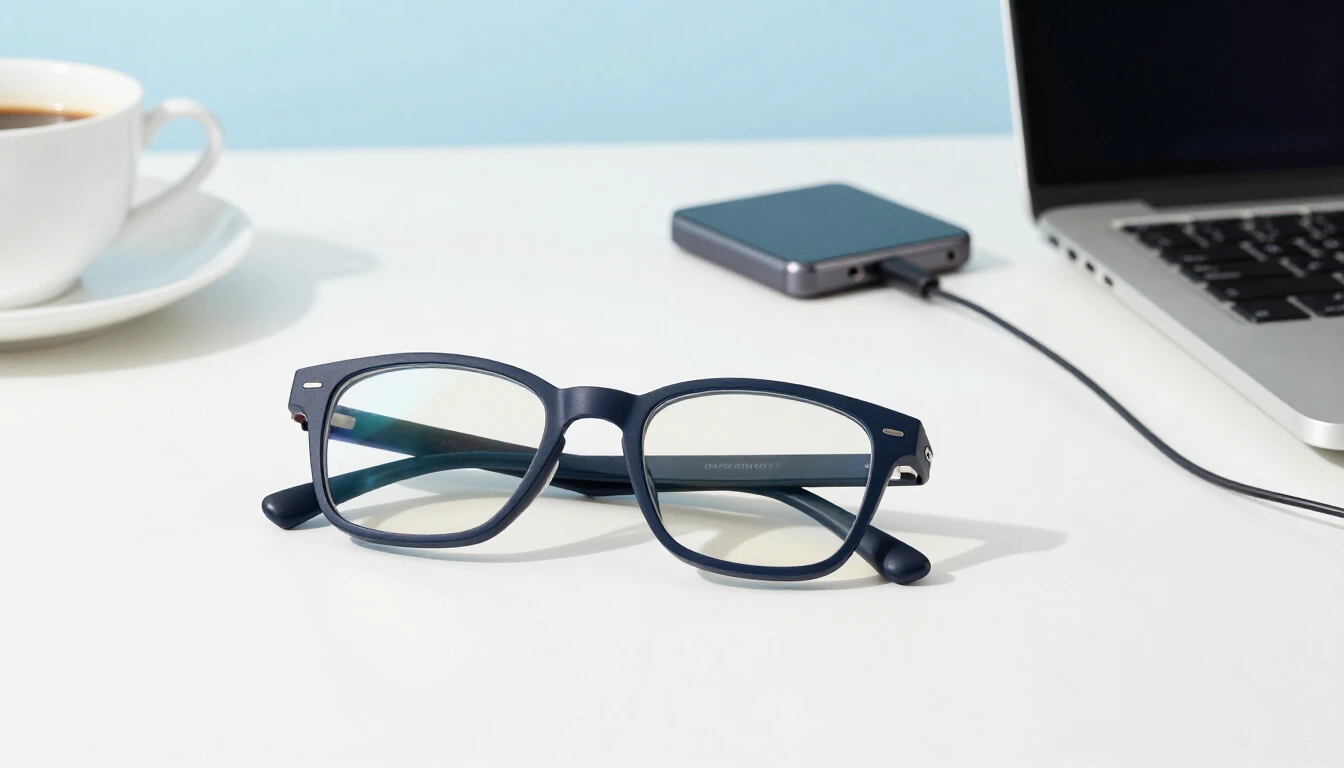
- What it is: see-through glasses (you look at the real world through the lenses) with two small screens, wired to a phone-sized “puck” that holds the chip and the battery. Glasses 95 g, puck 265 g, a 70-degree field of view, Android apps from Google Play plus over 150 apps made for XR (XREAL specs; Google, October 28).
- What Gemini does: when you share your view, Gemini sees your room and your virtual screens, answers questions about them and can mark objects with a box. Google’s own help page tells you to ask people for permission before you include them in your view.
- Price and markets: $1,099 (12 GB/256 GB) or $1,299 (16 GB/512 GB) through December 2026, regular price $1,279 and $1,499. Orders in the U.S., Canada and South Korea, Japan from November 2 according to Google. Shipping from mid-November. More countries in 2027, says XREAL, with no dates. Buyers must be 18 or older.
- The trade-off: far lighter on your head than Apple Vision Pro (from $3,699) or Samsung’s Galaxy XR ($1,799.99), but a first-generation product. Every hands-on so far was a supervised demo of pre-release units, and there is no official battery-life figure.
- The privacy bill: a camera with a privacy light, view sharing that stays off until you turn it on, and Gemini’s default of keeping your activity for 18 months. Companies need a camera-glasses policy before the first pair walks into the office.
Products Worth Considering

Anker SOLIX S2000 Portable Power Station, 2,010Wh, 1,500W

DJI Mic 3 Wireless Microphone System (2 Transmitters, 1 Receiver, Charging Case)

Jackery HomePower 3000 Portable Power Station with Two 200W Solar Panels
As an affiliate, we earn on qualifying purchases.
What AURA is, in plain words
Think of AURA as a laptop screen you wear like sunglasses. Two small Sony micro-OLED displays (1920 × 1200 pixels per eye, up to 120 Hz) sit behind prism optics in the frame. You look through the lenses at the real room, and the apps float on top of it. That is the big difference to Apple Vision Pro or Samsung’s Galaxy XR. Those are enclosed headsets that show you the room through cameras. AURA shows you the room through glass.
The heavy parts sit in the puck: Qualcomm’s new Snapdragon Reality Elite chip, which debuts in AURA, 12 or 16 GB of memory, a 4,455 mAh battery, a small fan, a touchpad and a fingerprint button. A cable runs from the glasses to the puck in your pocket. A second USB-C port on the puck takes power or a laptop’s video signal.
What you can do with it, according to Google and XREAL:
- Work: open several Android apps around you, add a Bluetooth keyboard and mouse, and plug in a laptop. With “Wired Mirroring”, the laptop screen appears as a window you can place and resize, with no software to install.
- Watch: stream YouTube, Google TV and other services on a large virtual screen. The lenses darken in five steps to fade out the room.
- Play: Android games, games from a PC or handheld console over USB-C, and hand-tracked games made for XR.
- Ask Gemini: about what is on your screens or in the room.
Infographic 01 · XREAL AURA in plain words
Light glasses, a heavy puck, and Gemini in between.
AURA splits the device in two: what has to sit on your face, and what can ride in your pocket. All figures are XREAL’s and Google’s own.
On your head: the glasses
You see the real room through the lenses. The apps float on top.
- Two Sony micro-OLED displays, 1920 × 1200 pixels per eye, up to 120 Hz
- Lenses darken in five steps, by hand or automatically
- Two tracking cameras for your hands and position
- One high-resolution camera with a privacy LED
- Speakers next to each ear, four microphones
- Two sizes for the distance between your eyes, prescription lenses possible
In your pocket: the puck
The heavy parts, on a cable.
- Qualcomm Snapdragon Reality Elite chip (debuts in AURA)
- 12 GB / 256 GB or 16 GB / 512 GB
- 4,455 mAh battery, a small fan
- Touchpad and fingerprint button
- Second USB-C port: power, or a laptop’s video signal (“Wired Mirroring”)
What Gemini does
- Helps across your apps and windows
- With view sharing on: sees your screens and the room
- Can mark an object with a box
Google docs
Makers’ claims
- “3 ms” motion-to-photon latency
- “48 TOPS” of AI processing
- “Always-on AI visual processing” in the X1S chip, not explained
vendor figures
Not published
- An official battery-life figure
- Independent full reviews (only demos so far)
- Prices in Canada, Japan, Korea in this article
XREAL told Android Authority: about 4–5 h of streaming (single source).
A laptop screen you wear like sunglasses, with the computer in your pocket.Thorsten Meyer · my reading
Sources: XREAL specs, accessed 29 Oct 2026; XREAL, 28 Oct 2026; Google, 28 Oct 2026; Android Authority, 6 Sep 2026.
Powered by Thorsten Meyer AI
What “Gemini sees what you see” really means
Gemini on AURA works in two layers. Without sharing, you talk to it about your apps: tidy up these windows, find this place in Maps, explain this video. With view sharing switched on, Gemini Live gets your full view. Google’s help page says that includes “digital content on your device and physical space visible from your device”. Then you can ask about the real world, and Gemini can draw a box around what matters, for example: “Show me which fruit has the most fiber.”
Three details matter for privacy:
- Sharing is a choice. You turn view sharing on in the Gemini app on the glasses, and you can turn it off. If you disable it in Gemini’s settings, the glasses ask for your consent again before the next share.
- The room is only visible with clear lenses. To share the physical space on wired glasses, you have to turn dimming off.
- The hand-tracking cameras are a separate system. Google says the images of your hands that Android XR uses for tracking are “processed in real-time and deleted; they are never stored on device nor sent to Google” (Android XR Help).
One question stays open. XREAL’s spec page says its in-frame X1S chip handles “always-on AI visual processing”. XREAL does not explain what that means for the camera, the privacy light or any data. I found no answer. Ask XREAL in writing before you sign a purchase order.
Price, availability, and a price cut before the first pair shipped
On October 7, XREAL announced a starting price of $1,279 (XREAL). Three weeks later, at launch, it called a “surprise limited time offer”: $1,099 for the 12 GB/256 GB model and $1,299 for 16 GB/512 GB, through December 2026. People who had already paid the old price get the difference back: $180 or $200 (XREAL, October 28; XREAL shop page).
Availability outside the U.S. is narrow. Google says orders opened on October 28 in the U.S., Canada and South Korea, and open on November 2 in Japan. XREAL’s own release lists all four countries as launch markets. Shipping starts in mid-November. XREAL says “more markets” follow in 2027, without dates. Google’s help page limits Gemini Live on wired glasses to Canada, Japan, Korea and the U.S., with a signed-in personal Google Account. If you live in Europe, you cannot order AURA from XREAL today.
How it compares (prices checked October 29, 2026)
All figures are the makers’ own.
- XREAL AURA: see-through glasses with a puck. $1,099 launch offer (regular $1,279). Glasses 95 g, puck 265 g. No official battery-life figure; XREAL told Android Authority before launch that it should last about four to five hours of streaming.
- Samsung Galaxy XR: an enclosed headset on the same Android XR platform. $1,799.99. 545 g plus a 302 g battery. Up to 2 hours of general use, 2.5 hours of video (Samsung, October 2025; Samsung store).
- Apple Vision Pro (M5): an enclosed headset. From $3,699 in Apple’s U.S. store. 750 to 800 g plus a 353 g battery. Up to 2.5 hours of general use (Apple). Apple’s new Siri AI, which also runs on Vision Pro, is partly based on Google’s Gemini models (see Apple’s Quiet AI Week).
- Meta Ray-Ban Display: everyday-style glasses with a small display in the right lens and a wristband for control. $799 in the U.S., €899 in Germany. Up to six hours of mixed use. A glanceable screen, not a spatial workspace (Meta, September 23, 2026; Meta, September 2025).
- Meta VR Glasses: announced, not on sale. About 100 g, with the battery and chips in a puck. $1,299.99, spring 2027 (Meta, September 23, 2026).
My reading: AURA’s real rival is not Vision Pro. It is Meta’s VR Glasses, which follow the same idea (light glasses, heavy puck) but arrive months later. AURA’s head start is Android: the apps already exist.
Infographic 02 · How it compares
About an eighth of Vision Pro’s weight on your head, under a third of its price.
Makers’ own prices and specs, checked on 29 October 2026. Different device types: compare what you need, not just the numbers.
Starting price, USD
Checked 29 Oct 2026. AURA: launch offer through December 2026.
Weight on your head
Battery or puck not counted; it sits elsewhere.
Vision Pro bar: lower end of Apple’s range.
See-through glasses
XREAL AURA · Meta VR Glasses (2027)
- Real room through glass
- Light on the face, puck on a cable
- AURA battery life: no official figure
Closed headsets
Apple Vision Pro · Samsung Galaxy XR
- Room shown through cameras
- Wider view, more immersion
- Vision Pro up to 2.5 h, Galaxy XR up to 2 h general use
Display glasses
Meta Ray-Ban Display
- Small screen in the right lens
- Glanceable, not a workspace
- Up to 6 h mixed use, €899 in Germany
AURA’s real rival is not Vision Pro. It is Meta’s VR Glasses: same idea, months later.Thorsten Meyer · my reading
Sources: XREAL specs, accessed 29 Oct 2026; Apple specs + U.S. store; Samsung newsroom + U.S. store; Meta, 23 Sep 2026; Meta Connect 2026. Comparison and rival: Thorsten Meyer.
Powered by Thorsten Meyer AI
What people who wore it say
No outlet has published a full review yet. These are impressions from demos of pre-release hardware between December 2025 and September 2026:
- The display impresses. Road to VR praised the “sharpness and brightness” (December 2025). Engadget found it “extremely sharp and bright”, even outdoors in the sun (May 2026).
- The controls are learnable. Android Authority stopped thinking about the gestures after about ten minutes (September 2026). XDA wore AURA for close to 40 minutes without discomfort and had Gemini guide it through an app on a plugged-in Mac (September 2026).
- The optics have limits. Road to VR saw “obvious pupil swim”, a warping when you move your head that can make some people dizzy, and said that even undimmed, the lenses darken the room like sunglasses. AURA has no eye tracking. The Ghost Howls found the vertical field of view limiting, noticed a small lag in hand tracking and felt pressure on the nose and ears after about 30 minutes (August 2026).
- Heat and software. Engadget’s puck got “a bit hot” outside in almost 90-degree heat. In Android Authority’s demo, the YouTube app crashed.

The privacy bill: you, the people around you, and your screen
You. When you share your view, Gemini Live recordings and transcripts are stored in your Gemini Apps Activity if the “Keep Activity” setting is on. By default, that activity is deleted after 18 months; you can choose 3 or 36 months instead. Google says it does not use Gemini Live audio, video and screen shares to improve its services by default, but transcripts of Live chats are used to improve its models while Keep Activity is on. Some chats are read by human reviewers, and those are kept for up to three years, disconnected from your account. With Keep Activity off, chats are still kept for up to 72 hours (Gemini Apps Privacy Hub).
The people around you. AURA has a high-resolution camera with a privacy LED. The Ghost Howls saw a white light near the center camera turn on whenever the camera was in use, for example when Gemini analyzed the surroundings. But bystanders cannot opt out, and most will not know what a small white light means. I found no statement on whether AURA warns you if the light is covered; Meta says its display glasses do (Meta). Google’s own advice is plain: “ask for people’s permission before including them in your view.” It is the same problem as Meta’s Muse reading messages of people who never signed up, one step closer to your face.
Your screen. Google pitches AURA as a private screen: the display “is visible only to you, you can open a confidential document in a public space with peace of mind”. That holds for the person in the next seat. It does not hold for Gemini once you share your view. Google’s help page itself warns about “passwords, payment details, or medications”.
Infographic 03 · Where your view goes
Your view, Gemini, and how long it stays.
What Google’s own help and privacy pages say happens to what AURA sees. Defaults as of 29 October 2026; they can change.
- Hand trackingImages of your hands: processed in real time, then deleted“never stored on device nor sent to Google” · Google
- Gemini, no sharingHelps with your apps and windowsAsk it to tidy windows, find a place in Maps, explain a video
- View sharing onGemini Live gets your full view: screens and roomYou switch it on; turn dimming off to share the room · Google
- Activity onStored in Gemini Apps Activity, auto-deleted after 18 months by defaultChoose 3 or 36 months. Live transcripts help train Google’s models; Live audio, video and screen shares do not, by default
- Human reviewA sample is read by reviewers and kept up to 3 yearsDisconnected from your account; not deleted when you delete your activity
- Activity offStill kept up to 72 hoursTo answer you and keep the service safe
For companies: the camera-glasses policy
- No-camera zones: labs, HR, medical areas, desks with customer data
- View sharing off on company devices unless a task needs it
- Tell people when the camera is on
- Retention set by IT, not by each user
- Ask Google: Gemini Live needs a personal Google Account
For you: day-one settings
- Auto-delete: 3 months
- Decide whether Keep Activity stays on
- View sharing off until you need it
- PIN or fingerprint on the puck
- No passwords, payment data or other people’s faces in a shared view
Open questions
- What does XREAL’s “always-on AI visual processing” mean for the camera and the LED?
- Does AURA warn you if the privacy light is covered? Meta says its display glasses do.
- How does Gemini Live work on managed company devices?
The screen is private from the person next to you. It is not private from Gemini once you share your view.Thorsten Meyer · my reading
Sources: Android XR Help: perception data; Android XR Help: Gemini Live; Gemini Apps Privacy Hub; Meta product page. Policy and settings advice: Thorsten Meyer.
Powered by Thorsten Meyer AI
What this means for companies
The use cases are real, and Google names them: help from a remote expert while you work on a piece of equipment, information laid over a physical space, 3D design, and talking information into a system of record instead of typing it. AURA is managed like other Android devices: managed Google Play, zero-touch enrollment, fully managed mode, Play Protect, verified boot and encryption (Google Cloud, October 28).

- Field service and support: the strongest case, in my view. A technician sees the manual and a remote colleague’s notes while both hands stay on the job. Start with a small pilot and measure time per job, errors and fatigue.
- Office and travel: a portable multi-monitor setup for people who will actually wear glasses for hours. Test that first; comfort reports so far cover 30 to 40 minutes.
- Retail: expect customers in camera glasses before you equip your staff. Decide what your store policy is.
- Write the camera-glasses policy now: no-camera zones (labs, HR, medical areas, desks with customer data on screen), view sharing off on company devices unless a task needs it, a rule to tell people when the camera is on, and retention settings set by IT, not by each user.
- Check the account question: Google’s help page says Gemini Live on Android XR needs a signed-in personal Google Account. Ask Google how that works on managed company devices before you build a workflow on it.
- Mind the borders: AURA is sold in four countries. Using it in the EU means your own data-protection review, and there is no local sale or support yet.
What this means for users
- Buy now if you travel a lot and want a big private screen, you play on a handheld or PC and want a bigger one, or you develop apps and want to build for Android XR early. The launch price runs to the end of December, and XREAL’s U.S. shop lists a 30-day return window.
- Wait if you want all-day glasses (95 g plus a cable is not that), you need precise input by eye, you live outside the four launch countries, or you want independent tests of battery life and comfort. Meta’s VR Glasses in spring 2027 will be the direct comparison.
- Change these settings on day one: set Gemini’s auto-delete to three months, decide whether Keep Activity stays on, leave view sharing off until you need it, lock the puck with a PIN or fingerprint, and never share your view while passwords, payment data or other people’s faces are in it.
Honest limits
- Vendor claims: most numbers here come from Google, XREAL, Apple, Samsung and Meta. “Under 95 grams”, “3 ms” motion-to-photon latency and “48 TOPS” of AI processing are XREAL’s own figures.
- Single source: the four to five hours of streaming is what XREAL told Android Authority before launch. The 12-megapixel camera is from XDA; XREAL’s page only says “high-resolution”.
- Pre-release demos: every hands-on used early hardware in controlled demos. Software, comfort and battery life can change by the time units ship.
- Moving targets: $1,099 is a limited offer. Japan’s order date differs between Google (November 2) and XREAL’s release (launch day).
- My reading: that Meta’s VR Glasses are the real rival and that field work is the strongest business case are my assessments, not facts.
Verdict
AURA is the first pair of glasses that runs the full Android XR system and lets an AI look at the world with you. For travel, gaming and hands-busy work, that is new. Google is pushing from both ends this week: glasses that see the world, and with Genie 4, a model that generates worlds. But AURA is a first-generation device with a cable, a puck and a camera on your face. Buy it for the screen, use Gemini on purpose, and make your privacy decisions before the glasses make them for you.
Sources
- Google (Shahram Izadi), “XREAL AURA: Wired XR glasses to watch, work, and play”, October 28, 2026
- Google Cloud / Android Enterprise (Will Ro, Sean Ginevan), “Step into a new dimension with XREAL AURA”, October 28, 2026
- XREAL, AURA product page and specifications, accessed October 29, 2026
- XREAL, “XREAL AURA Launches as the First Wired XR Glasses Powered by Android XR”, PR Newswire, October 28, 2026
- XREAL, “XREAL AURA Starts at $1,279”, PR Newswire, October 7, 2026
- Google, Android XR Help, “Use Gemini Live on Android XR”, accessed October 29, 2026
- Google, Android XR Help, “Your perception tracking data in Android XR”, accessed October 29, 2026
- Google, Gemini Apps Privacy Hub, accessed October 29, 2026
- Samsung, “Introducing Galaxy XR”, October 2025, and Samsung U.S. store, price checked October 29, 2026
- Apple, Apple Vision Pro technical specifications, and Apple U.S. store, price checked October 29, 2026
- Meta, “Making Meta Ray-Ban Display More Useful to More People”, September 23, 2026; Meta, “Meta Ray-Ban Display”, September 17, 2025; Meta, “Everything We Announced at Meta Connect 2026”
- Hands-on reports: Road to VR (Ben Lang), December 8, 2025 · Engadget, May 20, 2026 · Tom’s Guide (Jason England), May 20, 2026 · The Ghost Howls, August 27, 2026 · Android Authority (Adamya Sharma), September 6, 2026 · XDA (Mahnoor Faisal), September 9, 2026
- Road to VR (Scott Hayden), launch report with accessory prices, October 28, 2026
Related on ThorstenMeyerAI.com: Meta’s Muse can read your messages even if you never signed up · Apple’s Quiet AI Week · Google’s Genie 4 builds worlds you can walk into