For most buyers, I’d start with the Bambu Lab P2S Combo: its printer-and-AMS package makes multicolor projects more accessible while offering a strong all-around feature set. The Bambu Lab A1 Combo is a more approachable choice for hobbyists, while the Snapmaker U1 stands apart for its four-toolhead system. The main tradeoffs are whether you need an enclosed printer, how you want to handle multiple filaments, and how much setup and material waste you’re willing to accept. A faster or more elaborate printer is not automatically the better fit if your projects are small or single-color. Read on for how these 10 3D printers compare and which type of maker each one suits.

Get business pricing on tech for your team
- Business-only prices and quantity discounts
- Tax-exempt purchasing
- Multiple users, one account, clear invoices
Complete the kit


Key Takeaways
- The P2S Combo takes the lead for buyers seeking one package that combines an enclosed printer with an included multicolor material system.
- The P1S and P1S Combo are distinct choices: the standalone P1S suits buyers who want an enclosed printer without bundled multicolor hardware, while the Combo adds AMS convenience.
- The A1 and A1 Combo favor accessibility over an enclosed CoreXY setup, making them sensible picks for hobbyists whose materials and workspace suit an open-frame printer.
- The Snapmaker U1 changes the multicolor tradeoff with four toolheads; buyers should compare that approach with filament-switching systems and consider whether their projects justify the added complexity.
- The lineup spans more than one kind of speed or value: the Adventurer 5M emphasizes fast CoreXY printing, while the Kobra X, AD5X, and K2 Combo offer different routes into multicolor printing.
| Bambu Lab P2S Combo – P2S 3D Printer with AMS 2 Pro (Multi‑Color) |  | Best Overall for Fast Multi-Material Printing | Printing speed: Up to 600 mm/s | Printer type: CoreXY | Multi-material system: AMS 2 Pro, with filament drying | VIEW LATEST PRICE | See Our Full Breakdown |
| Bambu Lab P1S Combo 3D Printer with AMS – Multi‑Color Printing |  | Best Enclosed Value Pick | Printer type: CoreXY | Printing speed: Up to 500 mm/s | Multi-color capacity: Up to 16 colors or materials with AMS | VIEW LATEST PRICE | See Our Full Breakdown |
| Bambu Lab A1 Combo + LED Lamp Kit (with AMS Lite) |  | Best for Quiet DIY Lighting Projects | Acceleration: 10,000 mm/s² | Calibration: Automatic | Multi-color system: AMS Lite; package inclusion should be verified | VIEW LATEST PRICE | See Our Full Breakdown |
| Creality K2 Combo 3D Printer with CFS |  | Best for a Large Build Area and CFS Color Expansion | Build volume: 260 x 260 x 260 mm | Printing speed: Up to 600 mm/s | Color system: CFS; up to 16 colors with multiple units | VIEW LATEST PRICE | See Our Full Breakdown |
| Anycubic Kobra X Multicolor 3D Printer |  | Best for Native Multi-Color Printing | Technology: FDM | Build volume: 260 x 260 x 260 mm | Maximum print speed: 600 mm/s | VIEW LATEST PRICE | See Our Full Breakdown |
| Bambu Lab A1 FDM 3D Printer |  | Best for Beginners | Printer type: FDM | Acceleration: 10,000 mm/s² | Noise level: ≤48 dB | VIEW LATEST PRICE | See Our Full Breakdown |
| Snapmaker U1 3D Printer with 4-Toolhead and 5-Second Tool Changer |  | Best for Multi-Material Printing | Build volume: 270 x 270 x 270 mm | Maximum print speed: 500 mm/s | Tool changer time: 5 seconds | VIEW LATEST PRICE | See Our Full Breakdown |
| Bambu Lab P1S 3D Printer |  | Best Enclosed Printer | Printer type: FDM | Print speed: 500 mm/s | Acceleration: 20,000 mm/s² | VIEW LATEST PRICE | See Our Full Breakdown |
| FLASHFORGE Adventurer 5M 3D Printer, All-Metal CoreXY, 600mm/s Max Travel |  | Best for Fast Single-Material Prototyping | Structure: All-metal CoreXY | Maximum travel speed: 600 mm/s | Acceleration: 20,000 mm/s² | VIEW LATEST PRICE | See Our Full Breakdown |
| Flashforge AD5X Multi-Material 3D Printer |  | Best Compact Multicolor Pick | Print speed: Up to 600 mm/s | Acceleration: Up to 20,000 mm/s² | Color capability: 4-color multi-material | VIEW LATEST PRICE | See Our Full Breakdown |
| 3d printer | Item weight | Product dimensions | Model number | Acceleration |
|---|---|---|---|---|
| Bambu Lab P2S Combo | — | — | PF004-U+SA007-AU | — |
| Bambu Lab P1S Combo 3D Printer | 47.5 pounds | 15.31 x 18.03 x 15.31 inches | P1S Combo | — |
| Bambu Lab A1 Combo + LED Lamp | 28.5 pounds | 23.01 x 21.06 x 16.77 inches | PF002-A+SA005-EU | 10,000 mm/s² |
| Creality K2 Combo 3D Printer w | 65.9 pounds | 16.93 x 16.54 x 21.06 inches | — | — |
| Anycubic Kobra X Multicolor 3D | 20.9 pounds | — | — | — |
| Bambu Lab A1 FDM 3D Printer | 22 pounds | 21.76 x 20.83 x 12.87 inches | PF002-A | 10,000 mm/s² |
| Snapmaker U1 3D Printer with 4 | 57.9 pounds | 22.6 x 13 x 14.2 inches | — | — |
| Bambu Lab P1S 3D Printer | 38.9 pounds | 15.31 x 18.03 x 15.31 inches | P1S | 20,000 mm/s² |
| FLASHFORGE Adventurer 5M 3D Pr | — | — | — | 20,000 mm/s² |
| Flashforge AD5X Multi-Material | 22 pounds | 14.8 x 16.26 x 14.29 inches | — | Up to 20,000 mm/s² |
More Details on Our Top Picks
Bambu Lab P2S Combo – P2S 3D Printer with AMS 2 Pro (Multi‑Color)
The Bambu Lab P2S Combo is my strongest all-around pick for buyers who want fast printing and integrated multi-material handling without piecing together a separate system. Its 600 mm/s CoreXY speed suits rapid prototypes, while the AMS 2 Pro adds color and material changes plus filament drying—a practical help when moisture-sensitive filament needs attention. AI failure detection and automatic calibration also reduce the amount of setup and monitoring expected from the owner. Compared with the Bambu Lab P1S Combo, this model pushes speed higher and includes the more advanced AMS 2 Pro, but it takes up more space and remains a heavy machine. The combo matters: the printer alone does not provide multi-color printing, so buyers wanting that capability should choose this bundle rather than the standalone configuration.
Pros:- Up to 600 mm/s printing speed supports quick iteration on prototypes.
- AMS 2 Pro combines multi-color and multi-material changes with filament drying.
- AI failure detection and automatic calibration reduce setup and monitoring work.
- Adaptive airflow is designed to support more consistent printing.
Cons:- The 18 x 22 x 18-inch body and 46.3-pound weight limit placement flexibility.
- Multi-color printing depends on the included AMS 2 Pro; the printer by itself does not provide it.
Best for: Makers and small design teams who want high-speed printing, multi-color capability, and filament drying in one ready-to-use setup.
Not ideal for: Buyers with limited bench space, frequent printer moves, or no need for multi-color printing; the printer is large and heavy, and the AMS bundle may add capability they will not use.
- Printing speed:Up to 600 mm/s
- Printer type:CoreXY
- Multi-material system:AMS 2 Pro, with filament drying
- Dimensions:18 x 22 x 18 inches
- Weight:46.3 pounds
- Model number:PF004-U+SA007-AU
- Manufacturer:Shenzhen Tuozhu Technology Co., Ltd
Our verdict“Choose the P2S Combo if you want a fast, feature-rich printer with multi-material handling built in and have room for its substantial footprint.”
Bambu Lab P1S Combo 3D Printer with AMS – Multi‑Color Printing
The Bambu Lab P1S Combo is a sensible choice for buyers who want an enclosed, fast printer with a clear route to multi-color work. Its 500 mm/s speed and automatic bed leveling make it well suited to frequent prototyping, while the enclosure helps when printing materials such as ABS or ASA. Setup is described as taking about 15 minutes, giving new owners a less involved start than a printer that needs extensive manual calibration. Compared with the newer Bambu Lab P2S Combo, the P1S is slower and lacks the listed AMS 2 Pro filament-drying feature, but it still offers a broad supported-material list and capacity for up to 16 colors or materials with AMS. That capability depends on the AMS unit; buyers should also note that carbon- and glass-fiber-reinforced polymers are not recommended.
Pros:- Enclosed design is better suited to materials such as ABS and ASA than an open-frame printer.
- Up to 500 mm/s speed and automatic bed leveling support quick, repeatable prototyping.
- AMS can enable printing with up to 16 colors or materials.
- Approximate 15-minute setup makes it approachable for newer owners.
Cons:- Multi-color printing requires the AMS unit.
- Carbon- and glass-fiber-reinforced polymers are not recommended.
- At 47.5 pounds, it is heavy, and its footprint is relatively large.
Best for: Makers who want an enclosed printer for PLA, PETG, ABS, or ASA projects and plan to add multi-color printing through the AMS.
Not ideal for: Users who need carbon- or glass-fiber-reinforced filament support, want the P2S Combo’s higher listed speed, or need a compact machine to move often.
- Printer type:CoreXY
- Printing speed:Up to 500 mm/s
- Multi-color capacity:Up to 16 colors or materials with AMS
- Supported filament:PLA, PETG, TPU, PVA, PET, ABS, ASA; capable of PA and PC
- Product dimensions:15.31 x 18.03 x 15.31 inches
- Item weight:47.5 pounds
- Model number:P1S Combo
- Manufacturer:Bambu Lab
Our verdict“Pick the P1S Combo if an enclosure and broad everyday material support matter more than the P2S Combo’s higher speed and AMS 2 Pro features.”
Bambu Lab A1 Combo + LED Lamp Kit (with AMS Lite)
The Bambu Lab A1 Combo with LED Lamp Kit has a more focused appeal than the enclosed P1S or high-speed P2S: it is aimed at makers creating illuminated décor, gifts, and other lamp projects. Automatic calibration helps reduce manual setup, while active motor noise canceling is a welcome trait for a printer used in a shared home or hobby room. The listed 10,000 mm/s² acceleration supports fast movement without making speed the only selling point. Compared with the Bambu Lab P1S Combo, the A1 package emphasizes the lamp kit and quiet operation rather than an enclosed design for advanced filaments. Its AMS Lite enables multi-color printing when included, but the product details also say it may need to be purchased separately, so buyers should verify bundle contents. Its large footprint is another mismatch for small work areas.
Pros:- LED lamp kit gives this bundle a clear fit for illuminated DIY projects.
- Automatic calibration reduces manual setup steps.
- Active motor noise canceling suits shared home or hobby spaces.
- AMS Lite supports multi-color printing when included in the package.
Cons:- AMS Lite may need to be purchased separately, so bundle contents need checking.
- Its 23.01 x 21.06 x 16.77-inch dimensions take up substantial space.
- At 28.5 pounds, it is less convenient to move than a compact desktop printer.
Best for: Home makers who want to print illuminated décor, personalized gifts, or other lighting projects and value automatic calibration and quieter operation.
Not ideal for: Buyers who need an enclosed printer for advanced filament work, have limited table space, or expect multi-color printing without confirming that AMS Lite is included.
- Acceleration:10,000 mm/s²
- Calibration:Automatic
- Multi-color system:AMS Lite; package inclusion should be verified
- Included project accessory:LED lamp kit
- Noise feature:Active motor noise canceling
- Product dimensions:23.01 x 21.06 x 16.77 inches
- Item weight:28.5 pounds
- Model number:PF002-A+SA005-EU
Our verdict“Choose the A1 Combo if lamp projects and quieter home printing are priorities, but confirm the AMS Lite is included if you want multi-color output.”
Creality K2 Combo 3D Printer with CFS
The Creality K2 Combo stands out for combining a 260 x 260 x 260 mm build volume with a CFS color system, giving buyers room for larger objects and a path to as many as 16 colors when multiple CFS units are connected. Its 95% pre-assembly and auto-leveling are intended to shorten setup, while an AI camera can monitor for print failures. Against the lighter Anycubic Kobra X, the K2 is much heavier and does not list native four-color printing, but its CFS approach and step-servo motors make it a distinct option for users who value monitoring and quiet operation. The maximum color count requires extra CFS units, and the 65.9-pound chassis is difficult to reposition. Its build volume is generous for desktop work, not a substitute for industrial-scale equipment.
Pros:- 260 x 260 x 260 mm build volume accommodates larger desktop prints.
- CFS supports multi-color printing and can reach up to 16 colors with multiple units.
- 95% pre-assembly, auto-leveling, and AI camera monitoring simplify setup and oversight.
- Step-servo motors and balanced fans are designed for quieter operation.
Cons:- The 65.9-pound weight makes moving or repositioning the printer difficult.
- Reaching the maximum 16-color capability requires multiple CFS units.
- The build volume will not fit very large industrial projects.
Best for: Makers who want a 260 mm cube build area, camera-based failure monitoring, and the option to expand CFS multi-color printing.
Not ideal for: Users who need a lightweight printer, expect 16 colors from one CFS setup, or plan to print objects larger than the stated build volume.
- Build volume:260 x 260 x 260 mm
- Printing speed:Up to 600 mm/s
- Color system:CFS; up to 16 colors with multiple units
- Assembly:95% pre-assembled
- Extruder:Next-generation direct drive
- Supported materials:PLA, PETG, ABS, PLA-CF
- Product dimensions:16.93 x 16.54 x 21.06 inches
- Item weight:65.9 pounds
Our verdict“Pick the K2 Combo if you want a roomy desktop build area and an expandable CFS system, and can accommodate its heavy frame.”
Anycubic Kobra X Multicolor 3D Printer
The Anycubic Kobra X is the clearest fit here for buyers who want multi-color printing without starting with an add-on system: it supports native four-color printing, with expansion to as many as 19 colors using additional ACE 2 Pro units. The 260 x 260 x 260 mm build volume and 600 mm/s maximum speed put it in the same broad performance class as the Creality K2 Combo and Bambu Lab P2S Combo. Its 20.9-pound weight is a major practical difference from the 65.9-pound K2, though the Kobra X’s overall dimensions still call for a dedicated space. AI monitoring and auto-bed leveling add convenience, and dual-band Wi-Fi and LAN offer flexible connections. Expansion is not free of complications: extra units are needed beyond four colors, and ACE 2 Pro and ACE Pro units are incompatible.
Pros:- Native four-color printing avoids relying on a separately added color system for basic multi-color work.
- Color capacity can expand to as many as 19 with additional ACE 2 Pro units.
- 260 x 260 x 260 mm build volume and up to 600 mm/s speed support varied, faster projects.
- AI monitoring, auto-bed leveling, Wi-Fi, and LAN provide useful automation and connection options.
Cons:- Expansion beyond four colors requires additional ACE 2 Pro units.
- ACE 2 Pro and ACE Pro units are incompatible with each other.
- Filament spools are not included.
Best for: Makers who want four-color printing built in, a full 260 mm cube build area, and the option to expand color capacity later.
Not ideal for: Buyers who want maximum color capacity without additional hardware, need to mix ACE 2 Pro and ACE Pro units, or expect filament spools to be included.
- Technology:FDM
- Build volume:260 x 260 x 260 mm
- Maximum print speed:600 mm/s
- Native color printing:4 colors
- Expandable color capacity:Up to 19 colors with additional ACE 2 Pro units
- Nozzle temperature:300°C
- Supported materials:PLA, PETG, TPU, PVA, ASA
- Connectivity:Dual-band Wi-Fi (2.4G/5G), LAN
- Item weight:20.9 pounds
Our verdict“Choose the Kobra X if built-in four-color printing and a lighter frame matter more than avoiding future expansion purchases.”
Bambu Lab A1 FDM 3D Printer
The Bambu Lab A1 is the easiest fit here for a first-time printer owner who wants setup help built into the machine. Full-auto calibration handles bed leveling and Z-offset, while active flow rate compensation helps keep extrusion consistent as print speed changes. Its touchscreen and quick-swap nozzle also reduce the friction of routine adjustments. Compared with the enclosed Bambu Lab P1S, the A1 is a simpler starting point, but the P1S is the stronger choice for a wider range of advanced filaments. The A1 can print in multiple colors only with a separately purchased AMS lite or a bundle, so it is not a complete multicolor solution on its own. At 22 pounds, it is also less convenient to move than its beginner-friendly setup might suggest.
Pros:- Full-auto calibration handles bed leveling and Z-offset.
- Active flow rate compensation supports consistent extrusion at speed.
- Quiet operation with active motor noise canceling and a stated noise level of 48 dB or less.
- Simplified touchscreen and quick-swap nozzle make routine operation easier.
Cons:- Multicolor printing requires the separate AMS lite or a combo bundle.
- Its 22-pound weight makes it less convenient to relocate than a lighter desktop printer.
Best for: First-time hobbyists, families, and students who want automated calibration and a straightforward touchscreen workflow.
Not ideal for: Buyers who need an enclosed printer for advanced filaments or want multicolor printing without buying an additional AMS lite.
- Printer type:FDM
- Acceleration:10,000 mm/s²
- Noise level:≤48 dB
- Product dimensions:21.76 x 20.83 x 12.87 inches
- Item weight:22 pounds
- Model number:PF002-A
Our verdict“Choose the A1 if you want an approachable first printer with automated setup, but pick the P1S if an enclosure and broader filament capability matter more.”
Snapmaker U1 3D Printer with 4-Toolhead and 5-Second Tool Changer
The Snapmaker U1 is the lineup’s specialist for prints that combine different materials, rather than just different colors. Its four toolheads let it pair rigid filament with flexible TPU or water-soluble PVA support, while the five-second tool change is designed to reduce the pauses and material waste associated with swapping tools. That makes it more versatile for functional parts than the Flashforge AD5X, which supports four-color multi-material printing but lists a narrower set of compatible materials. The U1’s CoreXY system is rated for speeds up to 500 mm/s, though the Flashforge Adventurer 5M and AD5X advertise up to 600 mm/s. The tradeoff is substantial: at nearly 58 pounds, the U1 is much heavier than those Flashforge options and needs a dedicated, spacious workspace.
Pros:- Four toolheads support true multi-material jobs, including flexible and water-soluble materials.
- Five-second automatic tool changes are designed to cut changeover pauses and filament waste.
- CoreXY motion system supports a listed maximum print speed of 500 mm/s.
- Automatic calibration, AI monitoring, and a built-in model library offer useful guidance and workflow support.
Cons:- At 57.9 pounds, it is difficult to move compared with the 22-pound Flashforge Adventurer 5M and AD5X.
- Its 22.6 x 13 x 14.2-inch dimensions call for a dedicated workspace.
- Its listed maximum speed is lower than the up-to-600 mm/s figures for the Flashforge Adventurer 5M and AD5X.
Best for: Makers and small product teams printing assemblies that combine rigid parts, flexible sections, or soluble support material.
Not ideal for: Casual hobbyists with limited desk space, or anyone who prioritizes a lighter machine and the highest listed travel speed.
- Build volume:270 x 270 x 270 mm
- Maximum print speed:500 mm/s
- Tool changer time:5 seconds
- Number of toolheads:4
- Compatible materials:PLA, PVA, TPU, PETG, PCTG, ABS, ASA, PA, PC
- Product dimensions:22.6 x 13 x 14.2 inches
- Item weight:57.9 pounds
- Warranty:1 year
Our verdict“Choose the U1 for practical multi-material work across four toolheads, not for a lightweight printer or the highest advertised speed.”
Bambu Lab P1S 3D Printer
The Bambu Lab P1S earns its place as the enclosed option for buyers who want high speed without limiting themselves to basic PLA projects. Its enclosure and automatic bed leveling support a more contained, repeatable workflow, while the listed 500 mm/s print speed and 20,000 mm/s² acceleration suit people who value throughput. Compared with the open-frame Bambu Lab A1, the P1S is better suited to advanced filament work; the A1 is lighter on setup complexity but does not offer the same enclosed design. The P1S can print up to 16 colors or multiple materials when paired with the optional AMS, so that capability adds an accessory requirement rather than coming built into this listing. Its 38.9-pound weight and sizeable footprint also make it a less flexible choice for crowded desks.
Pros:- Enclosed design is better suited than the open Bambu Lab A1 to projects using advanced filaments.
- Listed print speed of 500 mm/s and acceleration of 20,000 mm/s² support faster production.
- Automatic bed leveling reduces setup steps and helps repeatability.
- Optional AMS support enables up to 16 colors and multi-material printing.
Cons:- Multicolor and multi-material printing require the optional AMS accessory.
- At 38.9 pounds, it is heavier than the 22-pound A1 and Flashforge Adventurer 5M.
- Carbon- and glass-fiber-reinforced polymers are not recommended.
Best for: Makers who want an enclosed, fast FDM printer for PLA, PETG, ABS, ASA, or other listed compatible filaments.
Not ideal for: Buyers seeking a lightweight machine, built-in multicolor hardware, or support for carbon- or glass-fiber-reinforced polymers.
- Printer type:FDM
- Print speed:500 mm/s
- Acceleration:20,000 mm/s²
- Supported filaments:PLA, PETG, TPU, PVA, PET, ABS, ASA
- Other listed material capability:PA and PC
- Product dimensions:15.31 x 18.03 x 15.31 inches
- Item weight:38.9 pounds
- Model number:P1S
Our verdict“Pick the P1S if an enclosure and broad everyday filament support matter more than low weight or included multicolor hardware.”
FLASHFORGE Adventurer 5M 3D Printer, All-Metal CoreXY, 600mm/s Max Travel
The FLASHFORGE Adventurer 5M makes the most sense when fast, straightforward prototyping matters more than color changes or a larger build area. Its all-metal CoreXY structure lists a maximum travel speed of 600 mm/s, and one-click automatic bed leveling keeps setup manageable for newer users. A three-second nozzle change is useful when switching between detail work and larger, faster prints, though alternative nozzle sizes are optional. Unlike the Flashforge AD5X, the Adventurer 5M is not presented as a four-color multi-material system; that makes it a simpler fit for single-material jobs, while the AD5X is the clearer pick for color switching. The 220 mm cubed build volume is also smaller than the Snapmaker U1’s, and the 22-pound chassis is not especially portable.
Pros:- All-metal CoreXY structure lists maximum travel speed of 600 mm/s.
- One-click automatic bed leveling simplifies setup.
- Three-second nozzle changes make maintenance and nozzle swaps faster.
- Direct-drive extruder reaches 280°C and the dual-sided PEI platform supports practical print workflows.
Cons:- The standard 0.4 mm nozzle may not suit fine-detail or large-volume jobs; other sizes are optional.
- Its 220 x 220 x 220 mm build volume is smaller than the Snapmaker U1’s 270 mm cubed volume.
- At 22 pounds, it is not especially easy to carry between workspaces.
Best for: New users and prototyping-focused makers who want fast single-material prints, simple leveling, and quick nozzle swaps.
Not ideal for: Buyers who need multi-color printing, a larger build volume, or fine-detail and wide-nozzle options included as standard.
- Structure:All-metal CoreXY
- Maximum travel speed:600 mm/s
- Acceleration:20,000 mm/s²
- Build volume:220 x 220 x 220 mm
- Extruder temperature:280°C direct drive
- Nozzle:0.4 mm standard; 0.25–0.8 mm optional
- Nozzle change time:3 seconds
- Warm-up time:35 seconds to 200°C
Our verdict“Choose the Adventurer 5M for quick, uncomplicated single-material prototyping, but choose the AD5X if four-color printing is a priority.”
Flashforge AD5X Multi-Material 3D Printer
The Flashforge AD5X brings four-color capability to a compact CoreXY printer, making it the more focused choice for makers who want color changes without stepping up to a heavier multi-toolhead machine. Its Intelligent Filament System handles color switching, while full-auto calibration helps reduce first-layer setup work. The AD5X is a better match for multicolor projects than the single-material Adventurer 5M, and it is much lighter than the four-toolhead Snapmaker U1. The compromise is material flexibility: the U1’s separate toolheads are designed for combinations such as rigid, flexible, and soluble-support materials, while the AD5X’s listed compatibility is narrower. Its 600 mm/s maximum speed and vibration compensation are appealing for quick prints, but the side-by-side spool arrangement needs room around the machine.
Pros:- Intelligent Filament System supports four-color multi-material printing.
- Listed maximum print speed of 600 mm/s and acceleration of 20,000 mm/s² suit faster workflows.
- Full-auto calibration and leveling help simplify first-layer setup.
- CoreXY all-metal motion with vibration compensation is designed for stable printing.
Cons:- Multiple filament spools arranged side by side need dedicated surrounding space.
- Its listed material range is narrower than the Snapmaker U1’s, which supports materials including PVA, TPU, PA, and PC.
- At 22 pounds, it is not a particularly portable desktop printer.
Best for: Makers who want four-color printing in a relatively compact 22-pound CoreXY machine and mainly use the listed compatible filaments.
Not ideal for: Users who need four independent toolheads for broader material combinations, or who cannot allocate space for multiple side-by-side filament spools.
- Print speed:Up to 600 mm/s
- Acceleration:Up to 20,000 mm/s²
- Color capability:4-color multi-material
- Structure:CoreXY all-metal motion
- Compatible materials:PLA, TPU, PETG, SILK, PLA-CF, PETG-CF
- Product dimensions:14.8 x 16.26 x 14.29 inches
- Item weight:22 pounds
- Manufacturer:Zhejiang Flashforge 3D Technology Co., Ltd
Our verdict“Choose the AD5X for compact four-color printing with listed common materials, but choose the Snapmaker U1 for broader multi-material toolhead work.”
How We Picked
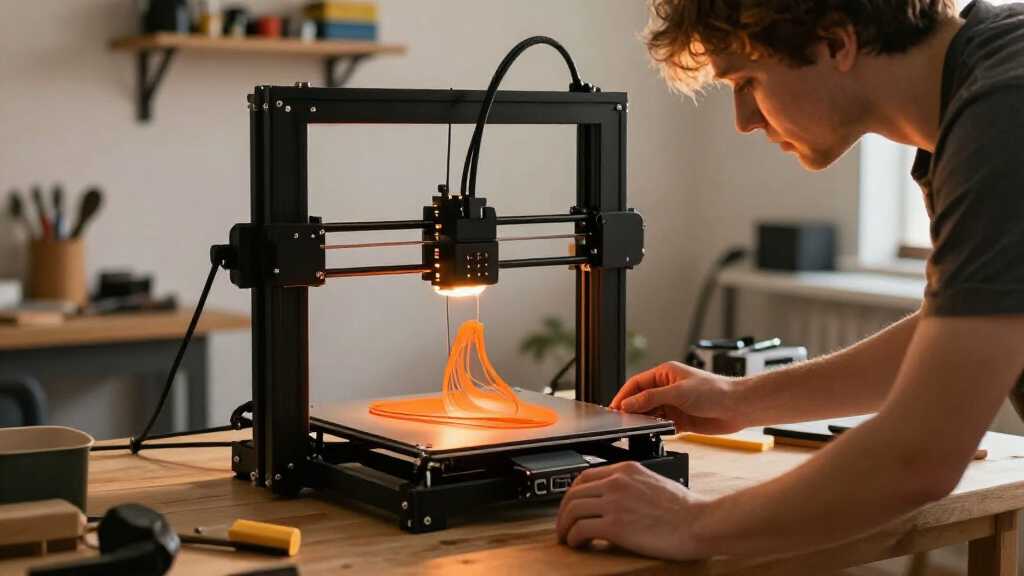
I compared these 10 3D printers on the factors that affect ownership and finished projects: print-system design, material handling, enclosure, ease of setup, expected maintenance, versatility, and how clearly each model fits a buyer type. I gave added weight to whether a multicolor bundle includes its material-handling hardware, since an advertised capability is less useful if buyers must source a separate system. I also separated enclosed CoreXY models from open-frame machines rather than treating headline speed as the only measure of performance.
The order favors well-rounded usefulness first, then narrower strengths such as accessible operation, multicolor methods, or speed-focused design. The P2S Combo ranks first as the most complete general-purpose bundle in this group. Other models rank lower when their appeal depends on a more specific need, such as an open-frame workspace, a four-toolhead workflow, or a standalone printer without bundled multicolor hardware. Since needs vary, a lower-ranked printer can still be the better match for a particular buyer.
| 3d printer | Model number |
|---|---|
| Bambu Lab P2S Combo | PF004-U+SA007-AU |
| Bambu Lab P1S Combo 3D Printer | P1S Combo |
| Bambu Lab A1 Combo + LED Lamp | PF002-A+SA005-EU |
| Creality K2 Combo 3D Printer w | — |
| Anycubic Kobra X Multicolor 3D | — |
| Bambu Lab A1 FDM 3D Printer | PF002-A |
| Snapmaker U1 3D Printer with 4 | — |
| Bambu Lab P1S 3D Printer | P1S |
| FLASHFORGE Adventurer 5M 3D Pr | — |
| Flashforge AD5X Multi-Material | — |
Factors to Consider When Choosing 3d Printers
Before choosing among these 3D printers, I’d match the machine to the objects you plan to make and the effort you want to spend on setup and upkeep. A printer’s headline speed or color count can distract from practical questions such as material compatibility, available space, and how often you’ll switch filaments.
Choose an Enclosure Based on Materials and Workspace
An enclosure can help manage drafts and temperature around the print, which matters more for some materials and larger parts than for small PLA projects. It also contains moving parts and can help keep dust or curious hands away, but it takes up more room and may require attention to ventilation. Open-frame printers can be easier to access and suit many everyday hobby prints, though they offer less environmental control. A common mistake is buying an enclosed machine solely because it sounds more capable, then using only materials that do not need that setup. Match the enclosure to the materials you expect to print, not to an imagined future project list.
Decide Whether Multicolor Printing Will Earn Its Keep
Multicolor printing can add labels, visual accents, or separate material properties to a model, but it introduces more decisions than single-color work. Filament-switching systems and printers with multiple toolheads handle material changes differently, so compare their workflow rather than counting colors alone. Frequent changes can add print time and create purge waste, especially when each layer uses several colors. If most of your parts are functional and single-color, a simpler printer may be easier to live with. For occasional decorative prints, consider whether manual filament changes meet your needs before paying for an automated system.
Treat Speed Claims as One Part of Print Quality
Maximum travel speed describes how quickly a print head can move, not how quickly every useful part will finish at acceptable quality. Geometry, layer height, material, cooling, and the printer’s motion system all shape real print time and surface finish. A fast machine may save time on repeated production jobs, while a slower, simpler model can be more than adequate for weekend projects. Avoid comparing printers using a single maximum-speed figure without checking which conditions produced it. Think about your typical model size and how often you need a finished part, then weigh speed against setup, noise, and consistency.
Check Build Volume Against Your Actual Models
Build volume matters when a design must print in one piece, but a larger machine can demand more bench space and make routine access less convenient. Many models can be split into sections and assembled, which may be practical for props or larger household parts. That approach adds design work and can leave seams that need finishing. Measure your workspace as well as your largest intended object, including room to load filament and reach the build plate. Buying for a rare oversized print can be a poor trade if the machine crowds the area used for every project.
Factor in the Work Between Prints
Ownership includes more than starting a file: users may need to clean the build surface, replace consumables, clear a nozzle, or adjust a print that has detached. Automated features can reduce some routine steps, but they do not remove the need to learn basic troubleshooting. Filament storage matters too, since moisture can affect print results and some materials need more care than others. Before choosing, check how the printer handles common maintenance and whether replacement parts and instructions are easy to find. A machine that fits your willingness to troubleshoot can be a better long-term choice than one with a longer feature list.
Compare the Full Workflow, Not Just the Printer
A printer is part of a workflow that may also include a slicer, a computer or phone, filament storage, and post-processing tools. Consider how you will prepare models, transfer files, monitor jobs, and manage multiple materials. Bundles can make setup simpler, but only if the included accessories match how you plan to print. Buyers who want a straightforward first machine may value a familiar software path more than advanced tuning options. Makers who expect to experiment with materials or production may prefer a system that leaves room for more involved workflows.
Frequently Asked Questions
Should I buy a multicolor bundle or start with a single-filament printer?
I’d choose a multicolor bundle if you already have projects that need color changes, labels, or multiple materials in one print. If your main goal is learning basic modeling and making functional parts, a single-filament printer can keep the workflow simpler. Multicolor systems add material management and can increase print time and waste. You can also begin with single-color work and add complexity once you know what you print most. Let your project list, rather than the feature itself, make the decision.
Is an enclosed 3D printer worth choosing over an open-frame model?
An enclosure is more compelling if you expect to print materials that benefit from a controlled environment or want a more contained machine. For many common hobby prints, an open-frame model may be sufficient and easier to access. Enclosed printers can be larger and still need suitable ventilation depending on the material and workspace. Check the manufacturer’s material guidance and plan where the printer will sit before deciding. If your use is mostly small, everyday prints, enclosure alone may not justify choosing a more complex setup.
Does a higher maximum speed mean a printer will finish my models faster?
Not always. A maximum travel figure does not account for the time spent laying down material, changing filaments, cooling layers, or printing detailed geometry. The same printer can behave differently depending on the model, settings, and material. Speed matters most when you regularly run jobs where reduced print time has a practical benefit. For occasional projects, ease of setup and dependable results may matter more than the highest advertised movement speed.
How should I choose between filament switching and multiple toolheads?
Compare the actual workflow each system uses and the kinds of prints you plan to make. Filament-switching setups can offer convenient color changes, while multiple toolheads use a different method for managing materials and may suit some complex workflows. Neither approach makes every multicolor print quick or waste-free. Check material compatibility, changeover behavior, and the space or maintenance the system adds. If you only need color on a few occasional prints, manual changes may be enough.
Which features matter most for a first 3D printer?
For a first machine, I’d prioritize a clear setup process, accessible troubleshooting, and a workflow you can understand over advanced features you may not use. Consider whether you want an open or enclosed printer, how much space you have, and which materials you expect to print. A multicolor system can be appealing, but it also adds decisions about filament and print settings. Look for a model that fits your first projects and leaves you room to learn. You can add complexity later when you have a clearer sense of your needs.
Conclusion
For the broadest mix of enclosed printing and included multicolor capability, I recommend the Bambu Lab P2S Combo as best overall. The Bambu Lab P1S is my best value-style pick for buyers who want an enclosed printer without a bundled AMS, while the Bambu Lab A1 Combo is the best fit for beginners who want an approachable multicolor package and do not need an enclosure. For a premium, specialized workflow, consider the Snapmaker U1 and its four-toolhead design; for speed-focused CoreXY printing, look at the FLASHFORGE Adventurer 5M. Buyers seeking other multicolor routes can compare the Creality K2 Combo, Anycubic Kobra X, and Flashforge AD5X, while the standalone A1 and P1S suit those who prefer a simpler printer package. Choose by the materials, colors, and print sizes you expect to use—not by the longest feature list.