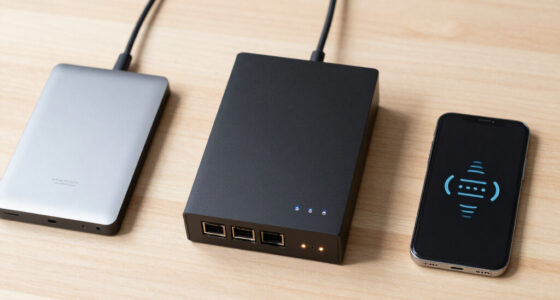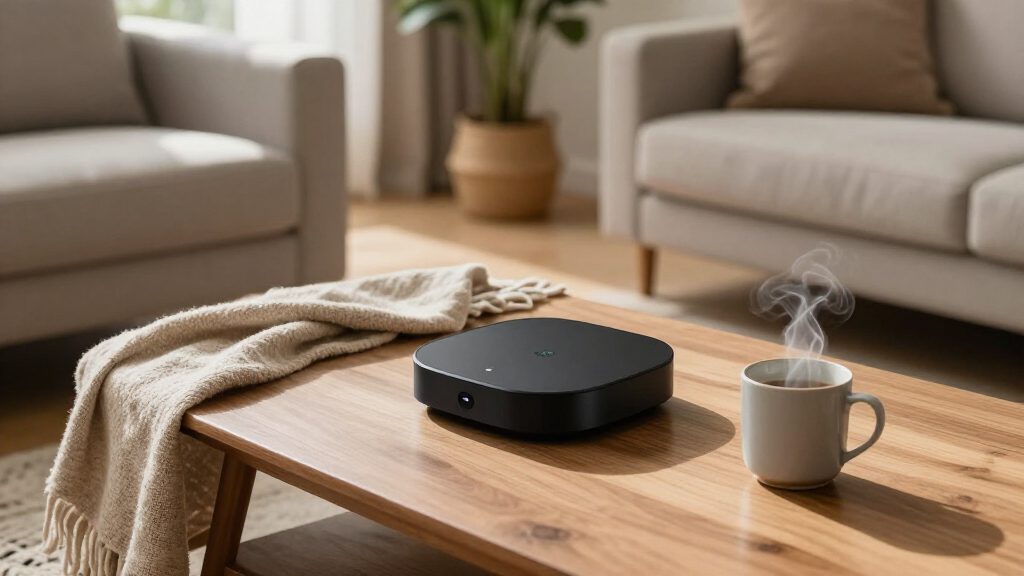
AI-powered home automation devices are transforming how we manage our living spaces, offering smarter, more intuitive control over lights, security, energy, and more. The Hubitat Elevation C-8 Pro stands out as the best overall choice thanks to its local control and extensive automation capabilities. For those prioritizing affordable yet versatile options, the Linkind Matter Smart Plug offers broad compatibility at a lower price. Meanwhile, the iSG Box SE is ideal for beginners seeking a straightforward setup. However, buyers face tradeoffs between complexity, cost, and customization. Continue reading for a detailed comparison that will help you pick the right device for your smart home goals.
Listen free for 30 days with Audible
Thousands of audiobooks and originals — cancel anytime.
Start your free trialAs an affiliate, we earn on qualifying purchases.
Key Takeaways
- Top picks balance local control and cloud connectivity, with many favoring local processing for privacy and speed.
- Compatibility across platforms like Matter, Apple HomeKit, and Google Home is a key differentiator for versatility.
- Energy monitoring features are now common, but the best devices integrate seamlessly into automation routines.
- Ease of setup varies widely; beginner-friendly options tend to have simpler interfaces but fewer advanced features.
- Price ranges reflect complexity and capabilities, with higher-cost devices offering more customization and control.
| AI-Powered Smart Home Devices |  | Best Overall | VIEW LATEST PRICE | See Our Full Breakdown | |||
| SwitchBot AI Hub Bundle with PTC Plus 5MP Camera, Smart Home Integration, Pan Tilt Indoor Camera |  | Best for Indoor Monitoring & Local Storage | Camera Resolution: 5MP | Pan-Tilt Range: 360° horizontal, 115° vertical | Storage: 16GB MicroSD, expandable | VIEW LATEST PRICE | See Our Full Breakdown |
| SwitchBot AI Hub with OpenClaw Support, Local NVR Camera Storage, Home Assistant Pre-Installed, Matter Bridge, Dual-Band Wi-Fi, 16GB MicroSD Included |  | Best for Advanced Automation & Local Control | OpenClaw Support: Yes | Camera Storage: 16GB MicroSD, expandable | Compatibility: SwitchBot cameras, Video Doorbell, RTSP cameras | VIEW LATEST PRICE | See Our Full Breakdown |
| Linkind Matter Smart Plug with Apple Home, Alexa, Siri, Google Home Compatibility | 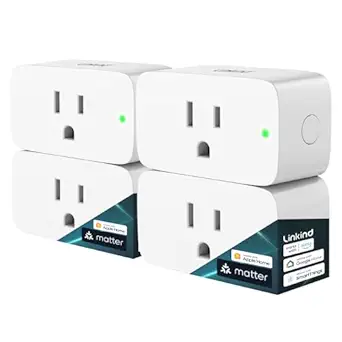 | Best for Easy Multi-Platform Control | Power Capacity: 1800W 15A | WiFi Support: 2.4GHz only | Certifications: FCC | VIEW LATEST PRICE | See Our Full Breakdown |
| Shelly 1 Gen4 UL, Smart Relay Switch, Wi-Fi, Zigbee, Matter, Dry Contact | 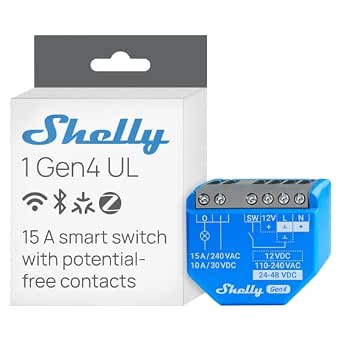 | Best for In-Wall Automation & Multi-Protocol Support | Certification: UL | Connectivity: Wi-Fi, Zigbee, Matter, Bluetooth | Channels: 1 (15A) | VIEW LATEST PRICE | See Our Full Breakdown |
| Emporia Energy Monitor with 16 Sensors and 4 Smart Plugs Bundle |  | Best Overall Home Energy Management System | Sensors: 16 sensors | Smart Plugs: 4 Wi-Fi smart plugs | Compatibility: iOS, Android, Alexa | VIEW LATEST PRICE | See Our Full Breakdown |
| Home Energy Monitor Lite – Real-Time Electricity Usage & Power Consumption Meter |  | Best Value for Real-Time Energy Monitoring | Monitoring Circuits: Up to 10 | Connectivity: Wi-Fi and Ethernet | Supported Power Systems: Single-phase, three-phase (TN/TT) | VIEW LATEST PRICE | See Our Full Breakdown |
| Local AI Voices Command Processor for Home Automation Systems |  | Best Offline Voice Control Solution | Recognition Distance: 3-5 meters | Power Consumption: 1mA standby | Commands: 30+ customizable | VIEW LATEST PRICE | See Our Full Breakdown |
| AI-Powered Smart Home Guide 2026: A Step-by-Step Guide to Designing, Optimizing, and Mastering a Fully Automated Smart Ecosystem |  | Best for Strategic Home Automation Planning | VIEW LATEST PRICE | See Our Full Breakdown | |||
| Hubitat Elevation C-8 Pro Smart Home Hub, Local Control and Automations |  | Best for Advanced, Local-Control Smart Homes | Protocols: Z-Wave 800, Zigbee 3.0, Matter 1.5, Bluetooth | Device Compatibility: Over 1,000 devices from 100+ brands | Processor: 2.0 GHz | VIEW LATEST PRICE | See Our Full Breakdown |
| Shelly Pro RGBWW PM Wi-Fi & LAN Smart LED Controller with Power Metering |  | Best for Customizable Lighting and Energy Monitoring | Channels: 5 | Voltage: up to 24 VDC | Current per channel: 6 A | VIEW LATEST PRICE | See Our Full Breakdown |
| AI Powered Smart Home Guide for Beginners 2026 |  | Best for Newcomers Building a Smarter Home Step-by-Step | VIEW LATEST PRICE | See Our Full Breakdown | |||
| iSG Box SE Smart Home Hub with Preinstalled Home Assistant |  | Best for Advanced Automation and Protocol Compatibility | Compatibility: Over 2,500 brands, Matter, Zigbee, Z-Wave | Pre-installed Software: Home Assistant, HACS, integrations | Protocols: Zigbee, Z-Wave, Matter | VIEW LATEST PRICE | See Our Full Breakdown |
More Details on Our Top Picks
AI-Powered Smart Home Devices
This AI-driven collection stands out for its broad integration capabilities and ability to enhance overall home automation and security. Unlike the SwitchBot AI Hub bundles, which focus more on local control and device-specific automations, this option offers a more comprehensive, seamless approach to connecting various systems. Its main tradeoff lies in the limited detail on specific features and the need for compatible infrastructure, meaning users without existing smart home setups might find it less straightforward. This pick is ideal for those seeking a centralized, intelligent home system that adapts across multiple devices and platforms.
Pros:- Enhances home automation and security through AI integration
- Seamless compatibility with various smart home systems
- Provides intelligent convenience for daily routines
Cons:- Limited details available about specific features
- Lacks user reviews or ratings for validation
- Requires existing compatible smart home infrastructure
Best for: Homeowners who want an all-in-one, AI-enhanced automation system that integrates with diverse devices.
Not ideal for: Tech novices or those with limited smart home infrastructure, due to the vague feature set and setup complexity.
Our verdict“This device is best suited for users seeking a unified, intelligent smart home experience with broad device compatibility.”
SwitchBot AI Hub Bundle with PTC Plus 5MP Camera, Smart Home Integration, Pan Tilt Indoor Camera
This bundle shines for its high-resolution 5MP camera with full 360° coverage and local storage options, making it ideal for detailed indoor surveillance. Compared to the SwitchBot AI Hub with OpenClaw support, which emphasizes broader automation protocols, this bundle focuses on high-quality video monitoring. The main tradeoff is that AI features, like activity recognition, require a subscription, and setup can be technical for less experienced users. It’s perfect for those prioritizing comprehensive indoor security with flexible storage options and full-room coverage.
Pros:- High-resolution 5MP camera with 360° pan-tilt for complete room coverage
- Supports local storage with expandability for long-term recordings
- Integrates with multiple smart home platforms and devices
Cons:- AI features depend on a subscription model
- Setup requires some technical knowledge
- Limited to 2.4GHz Wi-Fi networks
Best for: Homeowners needing reliable, high-quality indoor surveillance with expandable storage and automation support.
Not ideal for: Casual users or those without technical skills, as setup can be complex and AI features require ongoing subscriptions.
- Camera Resolution:5MP
- Pan-Tilt Range:360° horizontal, 115° vertical
- Storage:16GB MicroSD, expandable
- Connectivity:2.4GHz Wi-Fi
- Supported Devices:Wi-Fi, Bluetooth, Matter, RTSP cameras
Our verdict“Ideal for security-focused users who want flexible, high-quality indoor video monitoring with expandable storage options.”
SwitchBot AI Hub with OpenClaw Support, Local NVR Camera Storage, Home Assistant Pre-Installed, Matter Bridge, Dual-Band Wi-Fi, 16GB MicroSD Included
This hub offers a powerful combination of local automation control and AI features, supporting OpenClaw for device connections and local camera storage, making it suitable for tech-savvy users. Unlike the camera-centric bundle, this device emphasizes the hub’s ability to connect multiple devices, process local automations, and support protocols like Matter and Home Assistant. The main limitation is that AI features require a subscription, and it does not include IR control. It’s geared toward users who want a robust, expandable automation backbone for their smart home ecosystem.
Pros:- Supports OpenClaw and multiple device integrations
- Local storage options for recordings with expandability
- Pre-installed Home Assistant and Matter support for extensive automation
Cons:- AI features require a paid subscription
- Does not include IR control for traditional devices
- Setup can be complex for less experienced users
Best for: Experienced smart home enthusiasts seeking a versatile, AI-enabled hub with local storage and protocol support.
Not ideal for: Beginners or those who prefer plug-and-play solutions, due to setup complexity and subscription costs.
- OpenClaw Support:Yes
- Camera Storage:16GB MicroSD, expandable
- Compatibility:SwitchBot cameras, Video Doorbell, RTSP cameras
- Home Assistant:Pre-installed
- Matter Bridge:Yes
- Wi-Fi:Dual-Band
- Max Camera Support:8 cameras
Our verdict“Best for users who want a flexible, protocol-rich hub capable of advanced automation and local processing.”
Linkind Matter Smart Plug with Apple Home, Alexa, Siri, Google Home Compatibility
This smart plug prioritizes simple setup and broad platform compatibility, making it a versatile addition for users with multiple voice assistants. While the SwitchBot devices focus more on cameras and hubs, the Linkind plug offers straightforward control over appliances and lights. Its main tradeoff is limited to 2.4GHz Wi-Fi support, and some features might require a Matter hub or controller. This makes it ideal for those seeking an uncomplicated, reliable way to control devices across popular ecosystems without complex wiring or extensive setup.
Pros:- Easy setup with control across major platforms
- Supports offline LAN communication for reliability
- Compact design with safety features
Cons:- Limited to 2.4GHz Wi-Fi networks
- Requires a Matter hub or controller for some features
- Features may need additional hardware for full functionality
Best for: Homeowners wanting an easy-to-use, multi-platform smart plug for routine appliance control.
Not ideal for: Power users seeking advanced automation features or multi-protocol device support beyond Wi-Fi.
- Power Capacity:1800W 15A
- WiFi Support:2.4GHz only
- Certifications:FCC
- Compatibility:Apple Home, Alexa, Google, SmartThings, AiDot
- Hub Requirement:Matter-certified hub or controller
Our verdict“Perfect for users who want a straightforward, multi-platform smart plug with reliable control and scheduling.”
Shelly 1 Gen4 UL, Smart Relay Switch, Wi-Fi, Zigbee, Matter, Dry Contact
The Shelly 1 Gen4 excels in in-wall automation, supporting a broad array of protocols like Wi-Fi, Zigbee, and Matter, making it a flexible choice for controlling lighting, garage doors, and HVAC. Compared to the more device-focused SwitchBot bundles, this relay switch provides a compact, install-in-wall solution for direct control of existing wiring. Its main tradeoffs include the need for electrical knowledge for installation and a load limit of 15A, which might not suit all high-power appliances. This device is ideal for those wanting a seamless, protocol-rich automation upgrade within their existing wiring infrastructure.
Pros:- Supports multiple protocols including Zigbee, Wi-Fi, and Matter
- Compact, in-wall design fits standard electrical boxes
- Remote control and scheduling support across platforms
Cons:- Electrical installation required, not a DIY plug-in
- Limited to 15A load capacity
- No built-in physical controls
Best for: Homeowners comfortable with electrical work, seeking versatile, multi-protocol in-wall automation.
Not ideal for: Renters or those uncomfortable with electrical wiring, due to installation complexity and load limits.
- Certification:UL
- Connectivity:Wi-Fi, Zigbee, Matter, Bluetooth
- Channels:1 (15A)
- Contact Type:Dry contact
- Voltage Compatibility:12V, 24-48V DC
- Warranty:3 years
Our verdict“Ideal for experienced DIYers wanting a multi-protocol, in-wall automation switch that integrates seamlessly into existing wiring.”
Emporia Energy Monitor with 16 Sensors and 4 Smart Plugs Bundle
This bundle stands out for offering comprehensive home energy oversight, combining 16 sensors with smart plugs for detailed monitoring and control. Compared to simpler solutions like the Home Energy Monitor Lite, it provides more granular data and integrates with solar net metering, making it ideal for eco-conscious homeowners. However, the setup can be complex, requiring technical patience, and the price may be steep for those only seeking basic energy tracking. Its ability to handle whole-home and circuit-level data makes it a versatile choice for serious energy savers. The system’s integration with popular smart home platforms enhances automation possibilities, though initial configuration might challenge less tech-savvy users.Pros:- Provides detailed energy data for entire home and circuits
- Includes smart plugs for remote control and automation
- Supports solar net metering and integrates with major smart home platforms
- User-friendly app for tracking and automation
Cons:- Requires careful setup and configuration
- Installation complexity may deter casual users
- Higher price point compared to basic energy monitors
Best for: Homeowners seeking detailed, whole-house energy insights and automation, especially those with solar setups or high energy costs.
Not ideal for: Casual users or renters who need simple monitoring or who prefer plug-and-play solutions without complex setup.
- Sensors:16 sensors
- Smart Plugs:4 Wi-Fi smart plugs
- Compatibility:iOS, Android, Alexa
- Features:Whole-home energy tracking, real-time control, automation, solar net metering
Our verdict“This system is best suited for energy-conscious homeowners who want in-depth control and are prepared for a more involved setup process.”
Home Energy Monitor Lite – Real-Time Electricity Usage & Power Consumption Meter
This monitor offers real-time data on electricity consumption, supporting up to 10 circuits with flexible connectivity options, making it suitable for those wanting efficiency insights without overpaying. Compared to the Emporia bundle, it’s less comprehensive but more affordable and easier to deploy, especially for smaller setups. Its limited CT clamps in the Lite version restrict expansion, and it lacks a built-in display, relying instead on app or web access. Still, AI-powered analysis helps optimize energy use, and the support for both Wi-Fi and Ethernet ensures flexible connectivity for most homes. While not ideal for very large or complex systems, it fills a vital role for those seeking actionable energy data on a budget.Pros:- Real-time energy monitoring with AI insights
- Flexible connectivity options including Wi-Fi and Ethernet
- Supports up to 10 circuits (expandable from 3 clamps)
- Compatible with home automation systems like Home Assistant
Cons:- Limited to 3 CT clamps in the Lite version, restricting expansion
- No built-in display; relies on app or web interface
- Requires proper configuration for different power systems
Best for: Homeowners or small businesses wanting straightforward, real-time energy insights with easy connectivity.
Not ideal for: Large households or those with complex multi-phase systems needing extensive circuit monitoring and detailed analytics.
- Monitoring Circuits:Up to 10
- Connectivity:Wi-Fi and Ethernet
- Supported Power Systems:Single-phase, three-phase (TN/TT)
- Data Retention:45 days (minute), 36 months (monthly/yearly)
- Certifications:FCC, CE, UL/IEC
- Installation:Circuit panel, embedded spring terminals
Our verdict“Ideal for budget-conscious users seeking real-time, AI-enhanced energy insights for small to medium systems.”
Local AI Voices Command Processor for Home Automation Systems
This module excels at providing instant, privacy-preserving voice control with built-in AI, making it a strong choice for prototyping and privacy-focused setups. Unlike cloud-based systems like Alexa or Google Assistant, it processes commands locally, ensuring quick responses and data security. Its limited recognition distance and the need for technical integration make it less suitable for casual users or noisy environments. The customizable commands and low power draw are advantageous for DIY projects, but its technical complexity might deter beginners. It’s best for developers or advanced users who want offline voice control without relying on external servers, balancing privacy and responsiveness.Pros:- Offline voice recognition with fast response
- Supports over 30 customizable commands
- Low power consumption ideal for battery-powered projects
- Compatible with development boards for rapid prototyping
Cons:- Limited recognition range compared to cloud systems
- Requires technical skills for integration
- Potential noise interference in loud environments
Best for: Tech-savvy DIY enthusiasts and developers designing privacy-focused home automation prototypes.
Not ideal for: Non-technical users or households needing broad recognition range and simple setup.
- Recognition Distance:3-5 meters
- Power Consumption:1mA standby
- Commands:30+ customizable
- Interfaces:UART, I2C, GPIO
- Noise Tolerance:under 60dB
Our verdict“Perfect for developers seeking a privacy-centric, offline voice control module for custom automation projects.”
AI-Powered Smart Home Guide 2026: A Step-by-Step Guide to Designing, Optimizing, and Mastering a Fully Automated Smart Ecosystem
This guide offers detailed strategies for creating a seamless, AI-enhanced smart home ecosystem, making it valuable for those starting from scratch or refining existing setups. While it lacks hardware details like the Emporia system or Hubitat hub, its comprehensive approach helps users understand how to leverage AI for automation and energy management. Its focus on theory and methodology makes it less practical for immediate hardware deployment, especially for advanced DIYers who prefer hands-on instructions. Nonetheless, for homeowners eager to understand the big picture and develop a tailored automation plan, this guide provides a clear, structured roadmap.Pros:- Step-by-step strategies for smart ecosystem design
- Covers latest AI techniques for automation
- Useful for both beginners and advanced users
- Focuses on planning and optimization
Cons:- Lacks specific product or hardware details
- More theoretical than practical for immediate installation
- May not satisfy users seeking hands-on guides
Best for: Homeowners and enthusiasts wanting to learn strategic automation design and AI integration for future-proof smart homes.
Not ideal for: Those seeking immediate, hardware-based solutions or detailed technical setup instructions.
Our verdict“A valuable resource for strategic thinkers planning their smart home ecosystem, rather than those needing instant hardware solutions.”
Hubitat Elevation C-8 Pro Smart Home Hub, Local Control and Automations
This hub excels by processing automations locally, offering rapid responses and enhanced privacy compared to cloud-dependent hubs. Its support for a broad range of protocols—Z-Wave, Zigbee, Matter, Bluetooth—makes it highly versatile, accommodating over 1,000 devices from various brands, surpassing the capabilities of simpler hubs like the Home Energy Monitor Lite. While its setup may challenge less experienced users, the long-term benefits include continuous updates and robust integration options. For those managing a complex smart environment demanding fast, reliable automation, the Hubitat C-8 Pro delivers superior control and flexibility, but it demands a certain technical aptitude for configuration.Pros:- Supports multiple protocols including Z-Wave, Zigbee, Matter, Bluetooth
- Processes automations locally for speed and privacy
- Supports over 1,000 devices from many brands
- Free, continuous software updates with new features
Cons:- Setup and configuration require technical knowledge
- Advanced features may need careful review of documentation
- Device compatibility can vary with some brands
Best for: Advanced smart home users needing local control, broad device compatibility, and privacy-focused automation.
Not ideal for: Beginners or casual users who prefer plug-and-play hubs with minimal setup complexity.
- Protocols:Z-Wave 800, Zigbee 3.0, Matter 1.5, Bluetooth
- Device Compatibility:Over 1,000 devices from 100+ brands
- Processor:2.0 GHz
- RAM:2 GB
- Connectivity:Wi-Fi, Ethernet
- No Subscription:Yes
Our verdict“This hub is well-suited for experienced users building a highly customizable, privacy-conscious smart home ecosystem with fast automation response.”
Shelly Pro RGBWW PM Wi-Fi & LAN Smart LED Controller with Power Metering
This versatile LED controller excels at managing complex lighting setups, supporting RGB, RGBW, and CCT configurations with five independent channels. Compared with simpler controllers, its built-in power metering transforms it into an energy management tool, giving it an edge for users seeking both ambiance and efficiency. However, its setup can be daunting for newcomers due to the need for Wi-Fi or LAN connections and the detailed configuration process. The DIN-rail form factor makes it suitable for residential and commercial installations, offering flexible integration into existing systems. While not ideal for those with minimal technical experience, it appeals strongly to users who want granular control and energy insights from their lighting.
Pros:- Supports multiple lighting profiles and customizable scenes
- Built-in power metering for real-time energy monitoring
- Easy integration with Alexa, Google Home, iOS, and Android
- Flexible DIN-rail installation suits various setups
Cons:- Requires Wi-Fi or LAN connection, limiting placement options
- Complex setup may be intimidating for users without technical experience
Best for: Homeowners or small business owners who want advanced lighting customization combined with energy monitoring capabilities
Not ideal for: Beginners or casual users who prefer plug-and-play solutions and minimal setup complexity
- Channels:5
- Voltage:up to 24 VDC
- Current per channel:6 A
- Total current:16 A
- Power metering:Yes
- Form factor:DIN-rail
- Compatibility:Alexa, Google Home, iOS, Android
Our verdict“This controller makes the most sense for users needing detailed lighting control combined with energy insights, willing to handle a more involved installation.”
AI Powered Smart Home Guide for Beginners 2026
This guide stands out for its approachable, step-by-step instructions that demystify smart home technology for newcomers, making it a practical starting point. Unlike the more technical iSG Box SE, which presumes familiarity with Home Assistant, this guide caters to those just beginning to explore automation and AI integration. Its broad coverage includes energy efficiency, security, and connected devices, but it lacks specific technical details or user reviews, which may leave some advanced users wanting more depth. It’s ideal for users who want a clear, comprehensive pathway to modernize their homes without prior experience, though it doesn’t replace hands-on technical resources for more complex setups.
Pros:- Easy-to-follow, step-by-step instructions
- Covers a wide range of smart home topics
- Designed specifically for beginners
Cons:- Lacks detailed technical specifications
- No customer reviews or scores to assess effectiveness
Best for: Homeowners new to automation who need a clear, easy-to-follow introduction to smart home concepts and implementation
Not ideal for: Experienced users seeking detailed technical specifications or advanced automation strategies
Our verdict“This guide is best suited for beginners eager to start their smart home journey with clear guidance and broad overview.”
iSG Box SE Smart Home Hub with Preinstalled Home Assistant
The iSG Box SE excels at supporting a wide array of devices, thanks to its compatibility with over 2,500 brands and protocols like Zigbee, Z-Wave, and Matter. Pre-installed with Home Assistant, it offers advanced automation possibilities for tech-savvy users who want local control and privacy, unlike cloud-dependent hubs. The built-in Apple HomeKit bridge adds convenience for Apple users, but the need to purchase separate Zigbee or Z-Wave USB sticks can be a stumbling block for beginners. Its complexity might overwhelm users unfamiliar with Home Assistant, but for those ready to craft sophisticated, multi-protocol systems, this hub offers unmatched flexibility and control.
Pros:- Supports a broad spectrum of smart devices and protocols
- Pre-installed with Home Assistant for deep automation
- Local control enhances speed and privacy
- Built-in Apple HomeKit bridge for Apple ecosystem users
Cons:- Requires purchase of Zigbee or Z-Wave USB sticks separately
- Can be complex to set up for those unfamiliar with Home Assistant
- No included USB sticks for protocols
Best for: Tech-savvy homeowners or enthusiasts aiming for a highly customizable, protocol-agnostic smart home system
Not ideal for: Beginners or users who prefer simple, out-of-the-box solutions without extra purchases or technical setup
- Compatibility:Over 2,500 brands, Matter, Zigbee, Z-Wave
- Pre-installed Software:Home Assistant, HACS, integrations
- Protocols:Zigbee, Z-Wave, Matter
- HomeKit Integration:Built-in bridge
- Control:Apps, voice, chat commands
- Connectivity:Requires separate USB sticks
Our verdict“This hub suits users who want a powerful, protocol-agnostic system with extensive automation capabilities and are comfortable with technical configuration.”
How We Picked
Our evaluation focused on performance, ease of use, compatibility, and value. We prioritized devices that support multiple platforms and offer robust automation features, especially those with local processing to reduce latency and enhance privacy. Build quality and user interface simplicity were also key factors, ensuring that both tech-savvy users and newcomers can benefit. The ranking reflects how well each product balances these criteria while offering reliable, scalable solutions for a variety of smart home setups.Factors to Consider When Choosing AI-powered Home Automation Devices
Choosing the right AI-powered home automation device involves understanding your specific needs, technical skill level, and budget. Some devices excel in customization, while others prioritize ease of setup. Considering compatibility, control methods, and future expandability can prevent costly mismatches. Additionally, evaluate whether local control or cloud reliance aligns better with your privacy preferences and internet stability. This guide highlights critical factors to ensure you select a device that integrates smoothly into your lifestyle.Compatibility and Ecosystem Integration
Ensure the device supports the smart home platforms you already use, such as Apple HomeKit, Google Home, or Amazon Alexa. Compatibility determines how easily the device can work with your existing ecosystem and other smart devices. Some devices, like the Linkind Smart Plug, offer broad platform support, while others may favor specific ecosystems. Mismatched devices can lead to frustration, limited functionality, or the need for additional hubs or bridges, increasing complexity and cost.
Local Control vs Cloud Dependency
Deciding between local processing and cloud reliance can significantly impact performance and privacy. Devices with local control, like the Hubitat Elevation C-8 Pro, respond faster and keep data within your network, reducing security risks. Cloud-dependent options may offer more features or easier updates but can suffer from latency or outages. Consider your internet stability and privacy preferences when choosing between these approaches, especially if automation is critical to your routines.
Ease of Setup and User Interface
Beginners should look for devices with intuitive apps and straightforward installation processes. More advanced users might prefer options with extensive customization options, but these often come with steeper learning curves. Reading user reviews about setup experiences can reveal hidden complexities or support issues. Remember, a device with a well-designed interface can save hours of frustration and improve overall satisfaction.
Expandability and Future Proofing
Smart home needs evolve over time. Choosing devices that support standards like Matter or Zigbee can future-proof your setup, allowing easier addition of new devices. Modular systems, like the Shelly Pro RGBWW, enable you to expand your automation gradually without replacing existing hardware. Be cautious about vendor lock-in; devices tied to proprietary platforms may limit your options as your ecosystem grows.
Energy Monitoring and Automation Capabilities
Energy management is increasingly integrated into home automation, helping you reduce costs and environmental impact. Devices like the Emporia Energy Monitor provide real-time data and automation triggers based on usage patterns. However, consider whether the energy features are worth the extra cost or complexity for your needs. Seamless integration with your automation routines maximizes the value of these features.
Frequently Asked Questions
Can I use multiple AI-powered devices from different brands together?
Yes, but compatibility depends on the standards and ecosystems supported. Devices supporting open standards like Matter or Zigbee tend to work more seamlessly together, regardless of brand. It’s wise to choose devices that support your primary platform to avoid integration issues. Using a central hub or controller that consolidates these standards can also improve interoperability and simplify management.
Do I need technical skills to install and manage these devices?
The level of technical skill required varies widely. Some devices, like the iSG Box SE, are designed for plug-and-play setup suitable for beginners. Others, like the Hubitat Elevation, offer advanced customization that might require familiarity with home automation protocols. Reading product documentation and user reviews can help you gauge whether a device matches your comfort level or if you need additional support.
Are AI-powered home automation devices secure against hacking?
Security depends on the device’s design and your network practices. Devices with local control and regular firmware updates tend to be more secure. Always change default passwords, enable two-factor authentication when available, and keep firmware up to date. Choosing devices from reputable manufacturers with transparent security policies can further reduce risks.
How do I decide between a hub-based system and standalone devices?
Hub-based systems, like the Hubitat Elevation, centralize control and often support more complex automations, making them ideal for larger or more intricate setups. Standalone devices are simpler and usually easier for quick setup, suitable for smaller or less complex needs. Consider your automation goals, technical comfort, and whether you plan to expand your system when making your choice.
Will these devices work if my internet goes out?
Devices with local control capabilities will continue functioning during internet outages, maintaining automation routines and device responsiveness. Cloud-dependent devices may lose functionality or become unresponsive until internet service resumes. For critical automation, prioritize devices with local processing options to ensure uninterrupted operation during connectivity issues.
Conclusion
For those seeking a comprehensive, scalable smart home, the Hubitat Elevation C-8 Pro offers unmatched local control and customization, making it the best overall choice. Budget-conscious buyers will find the Linkind Matter Smart Plug provides broad compatibility at an accessible price point. Beginners or those with simple needs should consider the iSG Box SE for easy setup without sacrificing essential features. For advanced users wanting deep integration and future-proofing, options like the Shelly Pro RGBWW or Emporia Energy Monitor deliver sophisticated automation and energy management capabilities. Tailoring your pick to your technical skills, ecosystem preferences, and automation ambitions will lead to the best experience.
As an affiliate, we earn on qualifying purchases.Flea & tick season Picks
flea and tick prevention