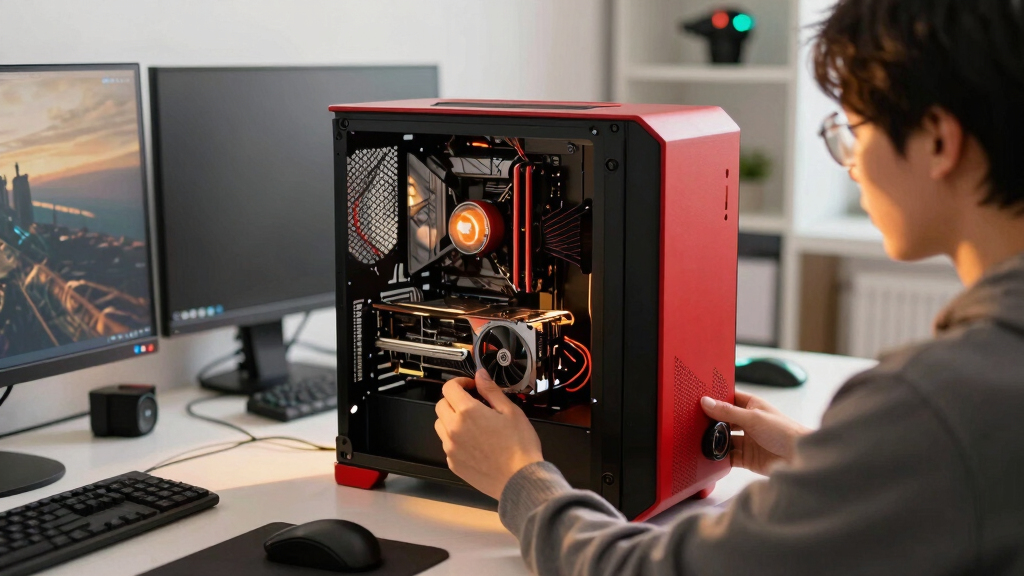

The best graphics cards prime day deals are the ones where the discount changes the buying decision, not just the checkout total. My best overall pick is the MSI Gaming RTX 5070 12G Ventus 2X OC White because it balances newer Blackwell features, fast GDDR7 memory, and a more practical dual-fan design than the flashier premium cards. The MSI RTX 4060 Ventus 2X Black 8G OC stands out as the value pick for lighter 1080p builds, while the MSI Gaming RTX 5070 Ti 16G Gaming Trio OC is the stronger choice for buyers chasing higher frame rates and more VRAM headroom. The main tradeoffs are price versus performance, 12GB versus 16GB memory, cooling size, case fit, and whether a Prime Day discount is large enough to justify skipping an older card like the RTX 4070 Super. Continue reading for the full breakdown by buyer type.
Key Takeaways
- The MSI Gaming RTX 5070 12G Ventus 2X OC White is the best overall deal target because it offers the cleanest mix of current-gen performance, compact sizing, and likely sale value.
- The two RTX 5070 Ti 16GB cards are better long-term buys than the RTX 5070 models for demanding games, but only if the Prime Day gap is not too wide.
- The MSI RTX 4060 Ventus 2X Black 8G OC is the easiest recommendation for first-time upgraders, though its 8GB VRAM makes it less future-friendly.
- The ASUS Dual RTX 4070 Super OC is still worth watching if it drops below newer RTX 5070 pricing, but its older display outputs and GDDR6X memory make the discount matter more.
- Compact and cooling needs split the field: the Gigabyte RTX 5070 Ti WINDFORCE OC SFF fits smaller builds better, while the larger AORUS and Gaming Trio cards make more sense in roomy cases.
| MSI Gaming RTX 5070 12G Ventus 2X OC White Graphics Card |  | Best White-Build Deal | GPU: NVIDIA GeForce RTX 5070 | Architecture: NVIDIA Blackwell | Memory: 12GB GDDR7 | VIEW LATEST PRICE | See Our Full Breakdown |
| Gigabyte GeForce RTX 5070 Ti WINDFORCE OC SFF Graphics Card |  | Best Performance Deal | GPU: NVIDIA GeForce RTX 5070 Ti | Memory: 16GB GDDR7 | Memory Interface: 256-bit | VIEW LATEST PRICE | See Our Full Breakdown |
| MSI GeForce RTX 4060 Ventus 2X Black 8G OC Graphics Card |  | Best Budget 1080p Upgrade | GPU: NVIDIA GeForce RTX 4060 | Architecture: NVIDIA Ada Lovelace | Memory: 8GB GDDR6 | VIEW LATEST PRICE | See Our Full Breakdown |
| GIGABYTE AORUS GeForce RTX 5070 Master 12G Graphics Card |  | Best Premium RTX 5070 Deal | GPU: NVIDIA GeForce RTX 5070 | Architecture: NVIDIA Blackwell | Memory: 12GB GDDR7 | VIEW LATEST PRICE | See Our Full Breakdown |
| ASUS Dual GeForce RTX 4060 Ti EVO OC Edition |  | Best 16GB Midrange Pick | GPU: NVIDIA GeForce RTX 4060 Ti | Architecture: NVIDIA Ada Lovelace | Memory: 16GB GDDR6 | VIEW LATEST PRICE | See Our Full Breakdown |
| MSI Gaming RTX 5070 Ti 16G Gaming Trio OC Graphics Card |  | Best High-End Prime Day Pick | GPU: NVIDIA GeForce RTX 5070 Ti | Architecture: NVIDIA Blackwell | Memory: 16GB GDDR7 | VIEW LATEST PRICE | See Our Full Breakdown |
| ASUS Dual GeForce RTX 4070 Super OC Edition Graphics Card |  | Best Compact Value Pick | GPU: NVIDIA GeForce RTX 4070 Super | Architecture: NVIDIA Ada Lovelace | Memory: 12GB GDDR6X | VIEW LATEST PRICE | See Our Full Breakdown |
More Details on Our Top Picks
MSI Gaming RTX 5070 12G Ventus 2X OC White Graphics Card
I rank the MSI Gaming RTX 5070 12G Ventus 2X OC White highest for shoppers building around a clean white case who still want a current-gen Blackwell RTX 5070 rather than an older card on sale. Compared with the GIGABYTE AORUS GeForce RTX 5070 Master 12G, this MSI card is the more restrained pick: fewer luxury flourishes, a smaller two-fan cooler, and a simpler Ventus design. That makes it easier to justify if the Prime Day price drops sharply. The tradeoff is that its 12GB 192-bit memory gives it less headroom than the Gigabyte RTX 5070 Ti WINDFORCE OC SFF with 16GB, and the listed 4K maximum resolution is lower than the 8K-capable cards here.
Pros:- White Ventus design suits light-colored builds better than the black MSI RTX 4060 Ventus 2X
- NVIDIA Blackwell architecture and DLSS 4 make it more forward-looking than the RTX 4060 and RTX 4060 Ti options
- 12GB GDDR7 memory is a stronger match for modern 1440p gaming than 8GB cards
- Metal backplate and nickel-plated copper baseplate support durability and heat transfer
Cons:- 12GB VRAM and 192-bit bus trail the 16GB RTX 5070 Ti and ASUS RTX 4060 Ti options for memory-heavy tasks
- Dual-fan cooler may have less thermal margin than larger triple-fan cards
- Listed maximum resolution is 3840 x 2160, below the 8K output claims on several alternatives
Best for: White PC builders who want a current RTX 50-series card for high-refresh 1440p or mainstream 4K gaming when the Prime Day discount is strong.
Not ideal for: 8K display users or heavy creator workloads that benefit from 16GB of VRAM and a wider memory bus.
- GPU:NVIDIA GeForce RTX 5070
- Architecture:NVIDIA Blackwell
- Memory:12GB GDDR7
- Memory Interface:192-bit
- GPU Clock:2557 MHz
- Outputs:3 x DisplayPort 2.1a, 1 x HDMI 2.1b
- Maximum Resolution:3840 x 2160
- Dimensions:12.3 x 3.4 inches
- Warranty:3-year manufacturer warranty
Bottom line: This is my pick for a white-themed RTX 5070 deal, as long as the discount keeps it well below the pricier RTX 5070 Ti cards.
Gigabyte GeForce RTX 5070 Ti WINDFORCE OC SFF Graphics Card
The Gigabyte GeForce RTX 5070 Ti WINDFORCE OC SFF earns the performance slot because it combines an RTX 5070 Ti GPU, 16GB of GDDR7, and a 256-bit memory bus. That makes it a better Prime Day target than the MSI RTX 5070 Ventus 2X OC White if the gap narrows, since the extra memory bandwidth should age better for demanding games and creator apps. I also like that the dual BIOS gives buyers a choice between quieter running and higher performance, something the simpler RTX 4060 Ventus does not match. The catch is price and system fit: this card can land in a higher cost band, and its triple-fan WINDFORCE cooler asks for a stronger power supply and enough airflow inside the case.
Pros:- RTX 5070 Ti GPU gives it more gaming headroom than the RTX 5070 and RTX 4060-class cards
- 16GB GDDR7 and 256-bit bus are well matched to high-resolution textures and heavier creative workloads
- WINDFORCE triple-fan cooler and dual BIOS add flexibility for performance or quieter operation
- DisplayPort 2.1a and HDMI 2.1b outputs support high-end monitor setups
Cons:- Higher expected price means the Prime Day discount needs to be meaningful
- Requires a capable power supply and good case airflow
- Triple-fan cooling can be a poor fit for cramped systems despite the SFF branding
Best for: Enthusiast gamers with a modern power supply who want the strongest Prime Day value among the listed RTX 50-series cards.
Not ideal for: Budget 1080p players or compact-case owners who do not have the cooling, clearance, or power budget for a higher-output GPU.
- GPU:NVIDIA GeForce RTX 5070 Ti
- Memory:16GB GDDR7
- Memory Interface:256-bit
- Core Clock:2497 MHz
- Memory Clock:30000 MHz
- Cooling:WINDFORCE triple-fan system
- BIOS:Dual BIOS performance/silent modes
- Outputs:3 x DisplayPort 2.1a, 1 x HDMI 2.1b
- Maximum Resolution:7680 x 4320
Bottom line: This is the card I would watch first for a serious Prime Day performance deal if the sale price comes close to standard RTX 5070 models.
MSI GeForce RTX 4060 Ventus 2X Black 8G OC Graphics Card
The MSI GeForce RTX 4060 Ventus 2X Black 8G OC sits in the value lane: I would pick it only if Prime Day pricing makes it much cheaper than the ASUS Dual RTX 4060 Ti EVO OC or any RTX 5070 deal. Its role is clear. The 8GB GDDR6 memory and 128-bit bus are best suited to 1080p gaming, esports, and lighter streaming setups, while DLSS 3 gives it a useful boost in supported games. Compared with the MSI RTX 5070 Ventus 2X OC White, though, this is a smaller step in long-term headroom, not a future-facing splurge. The dual TORX Fan 4.0 cooler keeps the design simple, but shoppers chasing 1440p ultra settings or large texture packs should move up.
Pros:- Likely to be one of the most affordable cards in this lineup during Prime Day
- DLSS 3 support helps stretch performance in compatible games
- Compact dual-fan layout is easier to fit than larger RTX 5070 Ti models
- Three DisplayPort outputs plus HDMI 2.1 support multi-monitor setups
Cons:- 8GB VRAM and 128-bit memory interface limit long-term headroom
- Less suitable for high-resolution gaming than the RTX 4060 Ti 16GB and RTX 5070 cards
- Dual-fan cooling is simpler than the larger WINDFORCE designs
Best for: 1080p gamers upgrading an older desktop who want the lowest sensible Prime Day entry point into DLSS 3 and ray tracing.
Not ideal for: Players buying for 1440p ultra settings, heavy ray tracing, or games that already push past 8GB of video memory.
- GPU:NVIDIA GeForce RTX 4060
- Architecture:NVIDIA Ada Lovelace
- Memory:8GB GDDR6
- Memory Interface:128-bit
- Boost Clock:2505 MHz
- Cooling:2 x TORX Fan 4.0
- Outputs:3 x DisplayPort 1.4a, 1 x HDMI 2.1
- Maximum Resolution:7680 x 4320
- Interface:PCI Express
Bottom line: This is the bargain pick I would buy for 1080p, but only if the sale price is far below the 16GB and RTX 50-series alternatives.
GIGABYTE AORUS GeForce RTX 5070 Master 12G Graphics Card
The GIGABYTE AORUS GeForce RTX 5070 Master 12G is the premium RTX 5070 pick, and I would treat it differently from the MSI RTX 5070 Ventus 2X OC White. Both use 12GB GDDR7 on a 192-bit interface, but the AORUS model leans into a heavier build, PCIe 5.0, and a WINDFORCE cooling system for buyers who care about thermals and board quality as much as raw specs. Compared with the Gigabyte RTX 5070 Ti WINDFORCE OC SFF, it still gives up the Ti GPU, 16GB memory, and wider bus, so it should not cost too close to that card. Its 2.25 kg weight also makes case support and clearance more relevant than with the simpler MSI RTX 4060 Ventus.
Pros:- Premium AORUS build is more robust than basic dual-fan RTX 5070 designs
- WINDFORCE cooling system is better suited to sustained gaming loads
- PCIe 5.0 and DLSS 4 pair well with a modern platform upgrade
- 7680 x 4320 maximum resolution supports high-end display setups
Cons:- 12GB VRAM trails the 16GB RTX 5070 Ti and ASUS RTX 4060 Ti options
- Heavy 2.25 kg card may need careful case support
- A premium RTX 5070 loses value if priced too close to an RTX 5070 Ti
Best for: Buyers with a sturdy ATX case who want a more polished RTX 5070 card and are waiting for a premium model to receive a real Prime Day cut.
Not ideal for: Small-form-factor builders or shoppers who can find an RTX 5070 Ti deal for only a modest step up in price.
- GPU:NVIDIA GeForce RTX 5070
- Architecture:NVIDIA Blackwell
- Memory:12GB GDDR7
- Memory Interface:192-bit
- Interface:PCIe 5.0 / PCI-Express x16
- Memory Clock Speed:2600 MHz
- Cooling:WINDFORCE cooling system
- Maximum Resolution:7680 x 4320
- Weight:2.25 kg
Bottom line: This is my premium RTX 5070 choice for buyers who want cooler hardware and a stronger build, provided the Prime Day price stays below RTX 5070 Ti territory.
ASUS Dual GeForce RTX 4060 Ti EVO OC Edition
The ASUS Dual GeForce RTX 4060 Ti EVO OC Edition is the card I would shortlist when memory capacity matters more than owning the newest RTX 50-series chip. Its 16GB GDDR6 gives it more room for large textures, mods, and creator workloads than the MSI RTX 4060 Ventus 2X Black 8G OC, while DLSS 3 keeps it relevant for supported games. Against the Gigabyte RTX 5070 Ti WINDFORCE OC SFF, though, the ASUS card is clearly a midrange play: older GDDR6 memory, fewer next-gen features, and less high-end gaming muscle. The 2.5-slot dual-fan design also needs more space than some entry cards, so the deal has to beat RTX 5070 pricing by a fair margin to make sense.
Pros:- 16GB VRAM gives it more breathing room than the 8GB MSI RTX 4060
- DLSS 3 support helps improve frame rates in compatible games
- Axial-tech fans with 0dB mode balance cooling and low-noise desktop use
- HDMI 2.1a and DisplayPort 1.4a support modern high-resolution displays
Cons:- GDDR6 memory is slower and older than the GDDR7 used by the RTX 5070 cards
- 2.5-slot size may crowd smaller cases or nearby expansion cards
- Needs a strong discount because RTX 5070 deals offer newer architecture
Best for: 1440p value shoppers, modded-game players, and entry-level creators who want 16GB of VRAM without paying RTX 5070 Ti money.
Not ideal for: Buyers who care most about next-gen Blackwell features, GDDR7 bandwidth, or maximum ray-traced frame rates.
- GPU:NVIDIA GeForce RTX 4060 Ti
- Architecture:NVIDIA Ada Lovelace
- Memory:16GB GDDR6
- Clock Speed:2625 MHz in OC Mode
- Cooling:Axial-tech dual-fan design
- Noise Feature:0dB technology
- Outputs:DisplayPort 1.4a, HDMI 2.1a
- Maximum Resolution:7680 x 4320
- Slot Size:2.5-slot design
Bottom line: This is the midrange deal I would buy for 16GB memory on a tighter budget, but only when it undercuts the RTX 5070 options clearly.
MSI Gaming RTX 5070 Ti 16G Gaming Trio OC Graphics Card
I would rank the MSI Gaming RTX 5070 Ti Gaming Trio OC above the ASUS Dual RTX 4070 Super when the deal price makes a real dent, because its 16GB GDDR7 memory, 256-bit bus, and Blackwell platform give it more room for demanding 1440p, 4K, and creator workloads. Compared with the Gigabyte RTX 5070 Ti WINDFORCE OC SFF, this MSI leans harder into cooling with its TRI FROZR 4 design, so it makes more sense in a roomy build where noise and sustained clocks matter. The catch is size and likely price: this is not the bargain hunter’s card, and smaller cases may make the triple-fan cooler awkward. For Prime Day, I would only move on it if the discount narrows the gap versus cheaper RTX 5070 and RTX 4070 Super options.
Pros:- 16GB GDDR7 memory gives it more headroom for demanding games and creator workloads
- TRI FROZR 4 triple-fan cooling is built for sustained performance with lower noise
- Modern DisplayPort 2.1a and HDMI 2.1b outputs suit high-resolution monitors
- Factory OC 2580 MHz clock positions it as a stronger RTX 5070 Ti option
Cons:- Likely needs a larger case than compact dual-fan cards
- Only makes deal sense if the sale price drops close to lower-tier alternatives
- Higher power and platform demands than an RTX 4060 or RTX 4070 Super build
Best for: PC builders targeting high-refresh 1440p or entry 4K gaming who have a roomy case and want a discounted upper-tier RTX 50-series card.
Not ideal for: Small-form-factor builders or deal shoppers who only need mainstream 1080p performance, since the large cooler and premium tier may be overkill.
- GPU:NVIDIA GeForce RTX 5070 Ti
- Architecture:NVIDIA Blackwell
- Memory:16GB GDDR7
- Memory Interface:256-bit
- GPU Clock Speed:2580 MHz
- Outputs:3 x DisplayPort 2.1a, HDMI 2.1b
- Maximum Resolution:7680 x 4320
- Cooling:TRI FROZR 4 with STORMFORCE fans
- Warranty:3-year manufacturer warranty
Bottom line: This is the Prime Day pick I would watch for buyers who want high-end RTX 50-series performance without jumping to the very top of the stack.
ASUS Dual GeForce RTX 4070 Super OC Edition Graphics Card
The ASUS Dual GeForce RTX 4070 Super OC earns its spot as the smarter midrange Prime Day target, especially if the MSI Gaming RTX 5070 Ti stays expensive. Its 12GB GDDR6X memory, DLSS 3 support, and 2550 MHz OC clock fit buyers who want strong 1440p gaming without paying for a newer Blackwell card. Against the ASUS Dual RTX 4060 Ti EVO 16GB, this model trades lower VRAM for much stronger class performance, while its 2.56-slot dual-fan design is easier to place than larger triple-fan cards like the MSI Gaming Trio. The tradeoff is longevity: 12GB can feel tighter in heavy texture packs or creator projects, and DisplayPort 1.4a is older than the RTX 50-series outputs. I would treat this as a value play, not a future-proof luxury buy.
Pros:- Strong 1440p value when discounted below RTX 50-series cards
- 2.56-slot dual-fan build improves case compatibility
- DLSS 3 and Ada Lovelace ray tracing support help newer games run smoother
- 0dB technology keeps light workloads quieter
Cons:- 12GB VRAM is less forgiving than 16GB cards in demanding games and creator apps
- DisplayPort 1.4a is older than the DisplayPort 2.1a outputs on RTX 50-series options
- Dual-fan cooler may have less thermal headroom than larger triple-fan cards
Best for: Gamers upgrading a standard desktop for strong 1440p performance who want a cooler, shorter card than many triple-fan models.
Not ideal for: Buyers chasing 4K longevity, heavy modded games, or newer display connectivity, since 12GB VRAM and DisplayPort 1.4a are the limits here.
- GPU:NVIDIA GeForce RTX 4070 Super
- Architecture:NVIDIA Ada Lovelace
- Memory:12GB GDDR6X
- GPU Clock Speed:2550 MHz OC mode / 2520 MHz default mode
- Interface:PCIe 4.0 / PCI-Express x16
- Outputs:HDMI 2.1, DisplayPort 1.4a
- Slot Design:2.56-slot
- Fans:2 Axial-tech fans with 0dB technology
- Warranty:3-year warranty
Bottom line: This is the card I would pick from a Prime Day deal list when price, 1440p performance, and case fit matter more than maximum spec headroom.
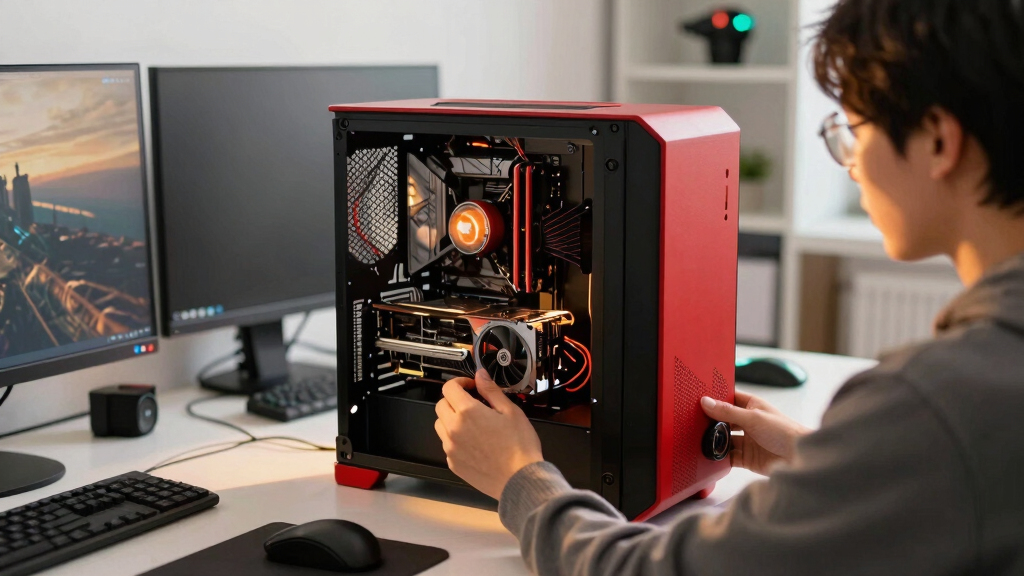
How We Picked
I ranked these graphics cards prime day deals by asking which card becomes the smarter buy when sale pricing enters the picture. Raw performance mattered, but I weighted it against VRAM capacity, memory generation, cooling design, case compatibility, display outputs, and how much each card needs a discount to make sense. A deal on a weaker card is not automatically better; I looked for models where the sale price would line up with a clear buyer need.
The order also reflects upgrade practicality. The RTX 5070 and RTX 5070 Ti cards sit higher because they bring newer architecture and GDDR7 memory, while the RTX 4060 and RTX 4060 Ti models move down because their value depends heavily on budget pricing. Premium designs like the GIGABYTE AORUS RTX 5070 Master earn points for cooling and build quality, but they lose ground when a simpler card gives most buyers similar real-world benefit for less money.
Factors to Consider When Choosing Graphics Cards Prime Day Deals
Choosing between graphics cards prime day deals is less about grabbing the biggest percentage discount and more about matching the card to the monitor, case, power supply, and games it will actually serve. I use the sale price as the final filter, not the starting point.
Match The GPU To Your Monitor
A buyer with a 1080p monitor does not need the same card as someone using a high-refresh 1440p display. The MSI RTX 4060 Ventus is easier to justify for budget 1080p gaming, while the RTX 5070 and RTX 5070 Ti cards make more sense when higher settings and smoother frame rates matter. Paying for a premium card while staying on a basic monitor can waste the best part of the upgrade. On the other hand, buying too low can make a new 1440p monitor feel held back from day one. I would treat the monitor resolution as the first sorting rule before comparing sale prices.
Do Not Overpay For A Small Discount
Prime Day pricing can make an expensive card look tempting, but the final price matters more than the markdown badge. A GIGABYTE AORUS RTX 5070 Master with a modest discount may still cost more than a faster or more practical RTX 5070 Ti deal. The same logic applies to the ASUS Dual RTX 4070 Super OC, which needs aggressive pricing to beat newer RTX 5070 options. I would compare the sale price against nearby models, not against the original list price. A good deal should change which card wins for a specific buyer, not merely make a premium card slightly less expensive.
Pay Attention To VRAM
VRAM is one of the easiest specs to misread because more is not always better, but too little can age poorly. The RTX 4060 8GB can still fit budget gaming well, yet it has less room for heavier texture packs and newer games than the 16GB models. The ASUS Dual RTX 4060 Ti EVO OC 16GB offers more memory, but buyers should still weigh whether its performance class matches the price. The RTX 5070 Ti cards combine 16GB with stronger overall horsepower, which is why they rank better for long-term 1440p builds. I would pay more for VRAM when the GPU itself is strong enough to use it well.
Check Case Fit Before Buying
Large graphics cards can turn a simple sale purchase into a frustrating rebuild. The Gigabyte RTX 5070 Ti WINDFORCE OC SFF is the standout for smaller systems because it targets compact fit without dropping into entry-level performance. By contrast, the MSI Gaming Trio and AORUS Master designs are better suited to cases with more clearance and airflow. Slot thickness, card length, and power cable space all matter before checkout. I would measure the case and check power connector clearance before assuming any Prime Day deal will fit.
Cooling Design Affects Noise And Value
Cooler size changes more than temperatures; it can affect noise, sustained boost behavior, and whether the card feels pleasant in daily use. The AORUS RTX 5070 Master and MSI RTX 5070 Ti Gaming Trio lean toward stronger cooling, which can be useful in demanding builds. The Ventus and Dual cards are more restrained, often making them better for buyers who care about price and fit. A premium cooler is worth paying for when the card will be pushed hard for long sessions. For lighter gaming, I would rather put the money toward a faster GPU tier than a fancier cooler on a slower card.
Frequently Asked Questions
Which Graphics Card In This Roundup Is The Best Overall Prime Day Deal?
My best overall target is the MSI Gaming RTX 5070 12G Ventus 2X OC White. It sits in the strongest middle ground between budget and premium, with newer Blackwell architecture, GDDR7 memory, and a practical dual-fan design. Compared with the RTX 5070 Ti cards, it should be easier to catch at a price that feels reasonable for many upgraders. Compared with the RTX 4060 and RTX 4060 Ti models, it has more performance headroom for modern games. I would pick it first if the sale price lands well below the higher-end 5070 Ti options.
Should I Buy An RTX 5070 Ti Instead Of An RTX 5070 On Prime Day?
An RTX 5070 Ti makes sense if the price gap is modest and the system is aimed at higher-refresh 1440p gaming or heavier creative workloads. The MSI RTX 5070 Ti Gaming Trio OC is the stronger premium option here, while the Gigabyte RTX 5070 Ti WINDFORCE OC SFF is better for smaller cases. The RTX 5070 models are better value targets if the Ti cards stay expensive. I would not pay a large premium just for the Ti name unless the extra 16GB configuration and performance headroom match the rest of the build. The better deal depends on the final sale gap, not just the model tier.
Is The RTX 4060 Still Worth Buying During Prime Day?
The MSI RTX 4060 Ventus 2X Black 8G OC can still be a smart Prime Day buy for a budget 1080p gaming PC. Its appeal is price discipline: it should be much cheaper than the RTX 5070 cards to make sense. The drawback is the 8GB VRAM limit, which gives it less breathing room for future games and higher texture settings. Compared with the ASUS RTX 4060 Ti 16GB, it is simpler and cheaper, but less flexible. I would choose it for an entry-level upgrade, not for a long-term high-settings build.
When Is The ASUS Dual RTX 4070 Super OC A Better Buy Than A Newer RTX 5070?
The ASUS Dual RTX 4070 Super OC becomes attractive when its Prime Day price drops far enough below comparable RTX 5070 cards. It remains a strong 1440p option, and the 12GB GDDR6X setup is still capable for many gaming PCs. The tradeoff is that it is an older-generation card with older display output specs than the RTX 5070 models. If the discount is shallow, I would lean toward the newer MSI RTX 5070 Ventus instead. If the price cut is aggressive, the RTX 4070 Super may be the smarter performance-per-dollar play.
Which Card Should I Pick For A Small Form Factor PC?
The Gigabyte GeForce RTX 5070 Ti WINDFORCE OC SFF is the clearest fit for a compact build in this lineup. It offers the stronger 5070 Ti class and 16GB GDDR7 memory without aiming for the oversized cooler style of the Gaming Trio or AORUS Master cards. That makes it better suited to smaller cases where length, thickness, and airflow are limited. The drawback is that compact high-performance cards can run warmer or louder than larger premium designs. I would choose it when case fit matters as much as frame rates.
Conclusion
For most buyers, I would start with the MSI Gaming RTX 5070 12G Ventus 2X OC White as the best overall graphics card Prime Day deal target because it balances newer features, size, and likely value. The MSI RTX 4060 Ventus 2X Black 8G OC is my best value and best for beginners pick if the goal is an affordable 1080p upgrade. For premium performance, the MSI Gaming RTX 5070 Ti 16G Gaming Trio OC is the card I would watch first, while the Gigabyte RTX 5070 Ti WINDFORCE OC SFF is the better choice for compact cases. The ASUS Dual RTX 4070 Super OC is the deal-hunter pick if its price undercuts newer RTX 5070 cards by a clear margin. The right choice comes down to the sale gap, monitor resolution, case space, and how long the card needs to stay relevant.