
Get business pricing on tech for your team
- Business-only prices and quantity discounts
- Tax-exempt purchasing
- Multiple users, one account, clear invoices
Experience the Deep: Abyssal Station as a Physical Dive
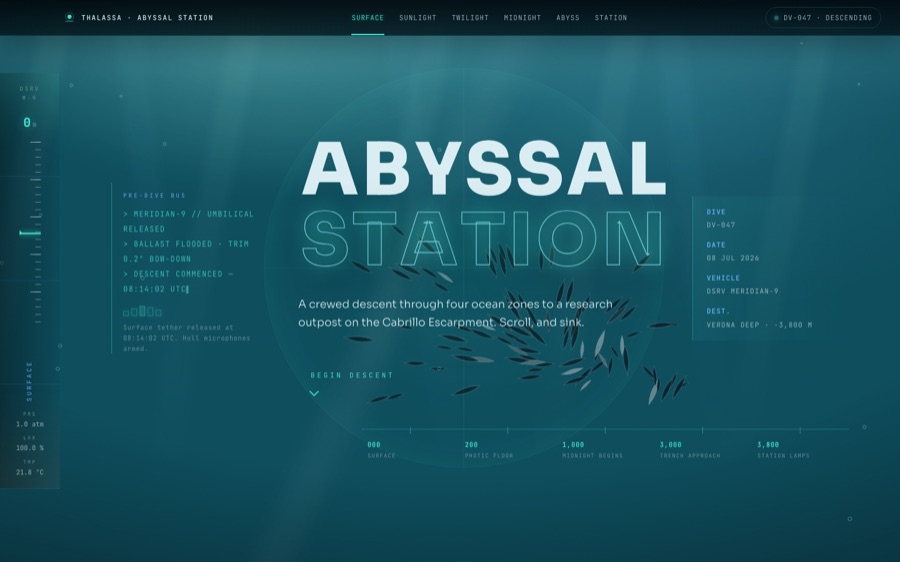
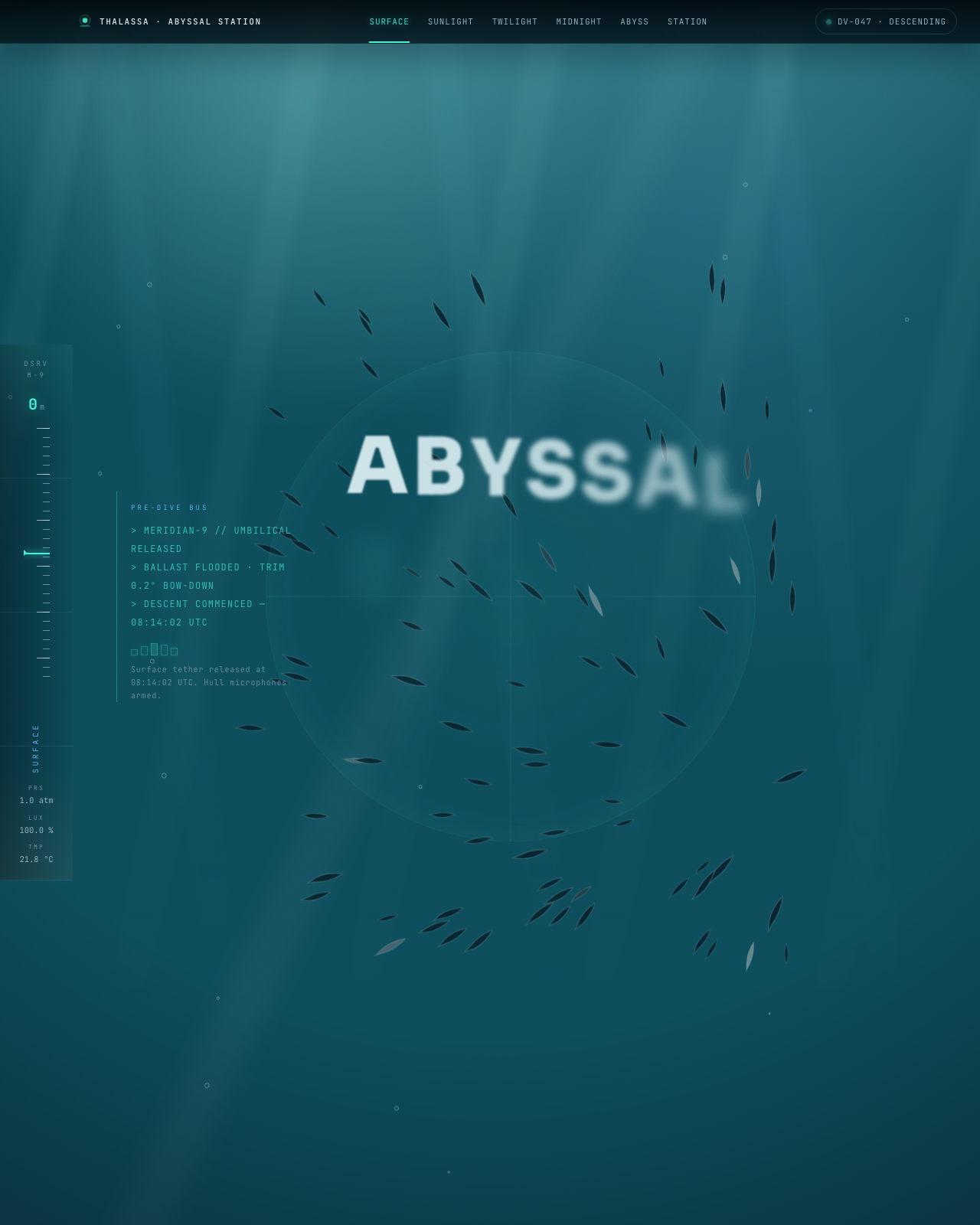
In this AI-crafted web experience, scrolling mimics a descent into the ocean’s depths. As you navigate, the page dynamically transforms, revealing a surreal underwater world that responds to your movement, culminating in a vivid, emotionally charged finale color — the abyssal black. The signature technique? A seamless, scroll-driven depth engine that anchors every visual and interactive element to a precise simulated water depth, creating an immersive journey that feels like sinking into the ocean itself.
Designing Depth with a Unified Palette and Interactivity
The visual language of Abyssal Station is anchored in a carefully curated palette inspired by the ocean’s layers, from deep cyan to inky black, layered with textured SVG grain and subtle gradients that evoke underwater textures. The core technique marries CSS variables and JavaScript-driven interpolation to synchronize background shifts, lighting, and UI states with the virtual depth. This interaction is orchestrated through a master scroll anchor, which measures the user’s position and interpolates all dependent systems—such as lighting decay, particle drift, and creature animations—creating a cohesive sense of immersion. The site’s canvas engine breathes life into stylized aquatic entities, each reacting to depth and scroll, while particle drift adds a sinking sensation, reinforcing the physicality of the descent. All elements are designed with accessibility in mind, including self-hosted fonts, reduced-motion fallbacks, and keyboard navigation, ensuring the experience remains inclusive and self-contained.
The Three-Phase Build, Critique, and Certification Pipeline
The creation of Abyssal Station followed a rigorous iterative process: first, the build phase involved translating the conceptual descent into a layered, scroll-responsive web experience driven by a custom depth engine. Next, a thorough critique examined the fluidity of interactions, visual harmony, and accessibility standards, refining the animation timings and visual cues. Finally, the art director validated the experience, ensuring it conveyed both the technical mastery and emotional resonance intended. This guide documents the process, providing insights into aligning technical execution with artistic intent to produce a compelling, immersive journey.
The full build notes live in the room’s design guide.
Want this? Paste this into your AI coding agent
Build a single-page showcase website from this art-direction brief. Work like an elite creative frontend engineer; commit totally to the direction.
BRIEF (room 06 of 175, “abyssal”):
ABYSSAL STATION — deep-sea research outpost. Fiction: a crewed station descending through ocean zones. Aesthetic: scientific HUD over living water. Palette: surface teal #0e4d5c graded to hadal black #01060a; bioluminescent cyan #46f0d9 and cold blue #6ab8ff glows. Fonts: sora (display), jetbrains-mono (HUD/data). SIGNATURE: the page IS a descent — a fixed depth meter (left rail) counts meters as you scroll; background color, light level and pressure readout interpolate continuously with depth; canvas creatures per zone: schooling particle fish (sunlight zone), pulsing jellyfish built from bezier bell + tentacle physics (twilight), anglerfish lure glow + marine snow (midnight), ghostly amphipods (trench). Zone title cards with facts. Reaching the bottom triggers a quiet finale: station lights flick on. Unforgettable: 3,800 meters of scroll that genuinely feels like sinking.STACK: pure HTML/CSS/JS, no build step, no frameworks, no CDNs or external requests of any kind; self-hosted fonts only; every visual is code (CSS/SVG/canvas/WebGL) — no image assets required.
QUALITY BAR: flawless at 390px, 834px and 1440px with zero horizontal overflow; tap targets >= 44px; semantic landmarks, focus-visible styles, body-text contrast >= 4.5:1; prefers-reduced-motion pauses or simplifies heavy animation; rAF loops pause when the tab is hidden; hold 60fps (cap particle counts, avoid layout thrash); rich invented content everywhere — real-sounding names, numbers and program notes, never lorem ipsum; orchestrate one beautiful staggered load moment plus scroll and hover surprises. FORBIDDEN: Inter/Roboto/Arial/system-ui, purple-gradient-on-white, and cookie-cutter hero+cards+footer layouts.
PROCESS: iterate in three documented passes — (1) build plus builder self-critique, (2) merciless external critique finding and fixing at least ten real problems, (3) art-director elevation from good to unforgettable. Screenshot at all three widths every pass and fix everything you can see.
— Original brief by Claude Fable 5 (art director), executed by the FABLE/175 pipeline.
— This room lives at https://fable-25-830.netlify.app/sites/abyssal/
This is the verbatim art-direction brief that produced the room — exposed by the exhibition itself via the “Prompt” link in the room’s footer.
Explore the Depths Yourself
Visit the live Abyssal Station experience to dive into this AI-built underwater odyssey. Browse all 175 inspired sites at the main hub and discover how this technique can elevate your own interactive projects.
Visit the live room → · Browse all 175 rooms
Previously in Wing I
- Room 4: FOLIUM — A Living Herbarium
- Room 1: HELIOS — Live Solar Observatory · Station HLX-1
- Room 5: KINETIKA — The Type Foundry That Refuses to Sit Still
FABLE / 175 is a finished exhibition of 175 fundamentally different websites, each built end-to-end by an AI. This article is part of our series walking through it room by room.
scroll-driven web animation tools
As an affiliate, we earn on qualifying purchases.
As an affiliate, we earn on qualifying purchases.
underwater-themed interactive display
As an affiliate, we earn on qualifying purchases.
As an affiliate, we earn on qualifying purchases.
immersive ocean depth simulation
As an affiliate, we earn on qualifying purchases.
As an affiliate, we earn on qualifying purchases.
web-based deep-sea exploration experience
As an affiliate, we earn on qualifying purchases.
As an affiliate, we earn on qualifying purchases.
Halloween Picks
halloween
As an affiliate, we earn on qualifying purchases.