
By Thorsten Meyer | October 31, 2026 | ThorstenMeyerAI.com

Get business pricing on tech for your team
- Business-only prices and quantity discounts
- Tax-exempt purchasing
- Multiple users, one account, clear invoices
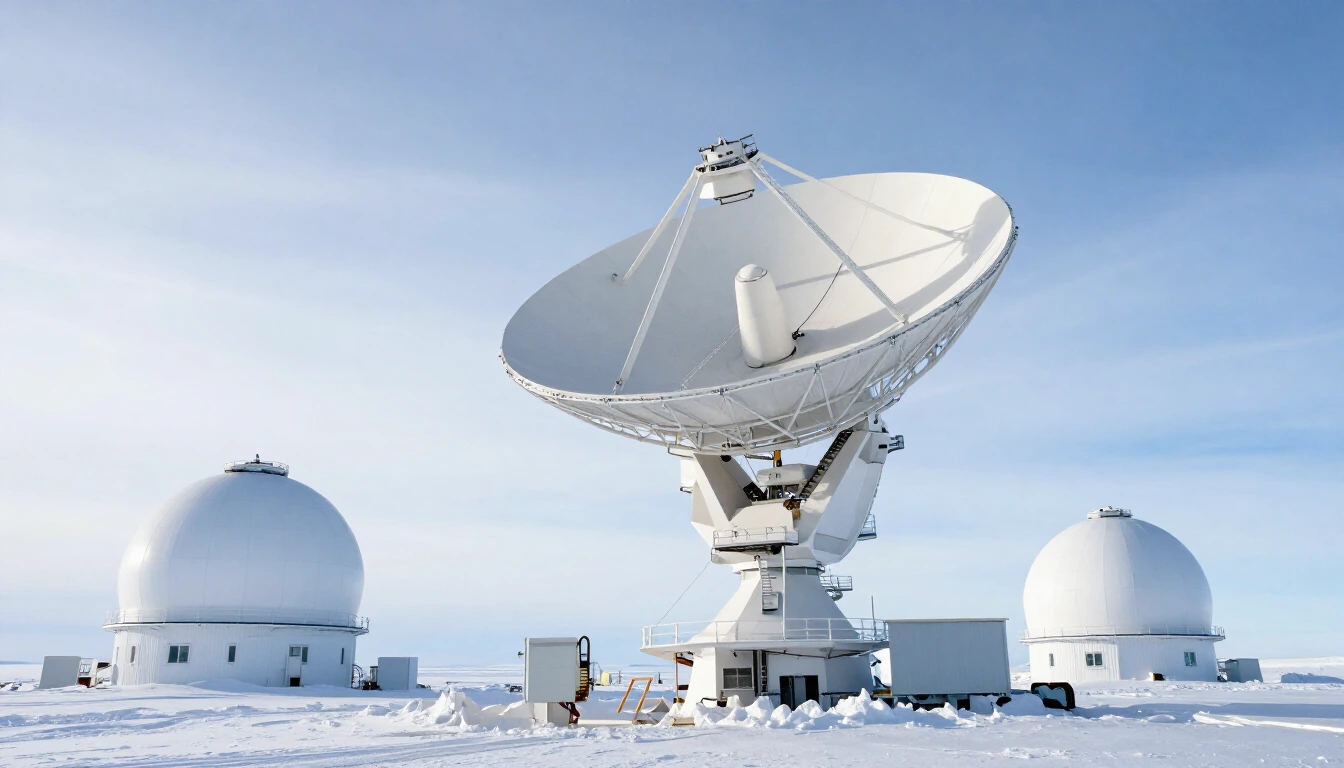
This week, a small satellite passed over Svalbard, the Norwegian islands near the North Pole, and sent three lines down to a ground station:
Blue marble below / Data streams in silent grace / Starlight feeds my core.
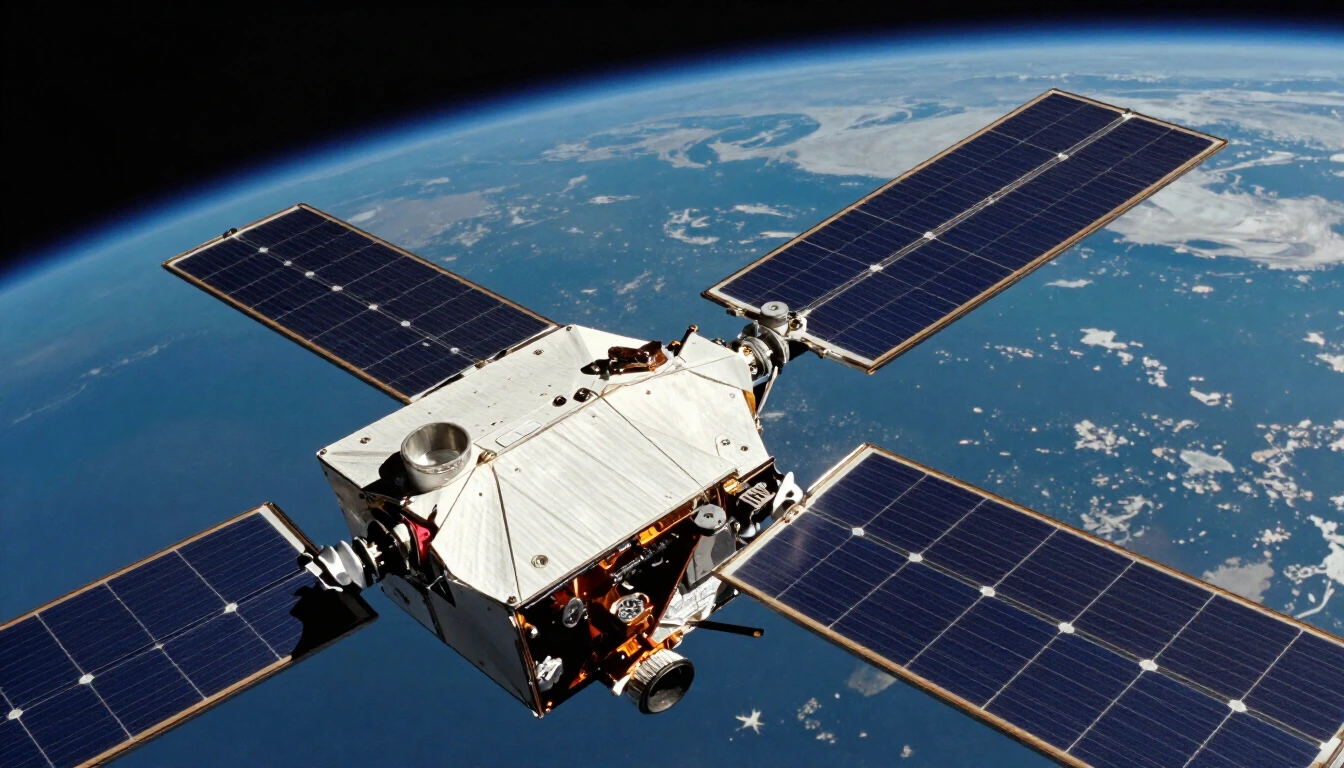
The poem came from Gemma 4, Google’s open AI model, running on a Google TPU, the chip Google builds for its data centers. Google calls it “the first-ever AI response from a data center class TPU in orbit.” It is the first real result of Project Suncatcher, Google’s long-term plan to see whether AI computing could one day move into space, where the sun almost never sets. Here is what actually flew, why anyone would put a data center in orbit, what the numbers in Google’s own research say about the cost, the limits nobody has solved yet, and what it means for companies and for you.
Key takeaways
- It works, at small scale. Google’s prototype, built with the satellite company Planet, launched on 1 October on a SpaceX rideshare mission. After a few weeks of checks, it answered its first prompt this week (Google, 30 October).
- It is tiny. According to TechCrunch, the satellite carries four TPUs but makes only up to about 1 kilowatt of power, so it can run one chip at a time, in bursts of roughly 20 minutes. For comparison, the nuclear power deal Google signed on Earth on 6 October adds 890 megawatts, about 890,000 times as much.
- It is not the first AI chip in orbit. In November 2025 the startup Starcloud launched an Nvidia H100 data center GPU and later ran Google’s own Gemma model on it, CNBC reported. Google’s difference is the plan: tight clusters of satellites linked by lasers, working like one computer.
- The reason is energy. Google says a solar panel in the right orbit can be up to eight times more productive than on Earth. On the ground, US data centers used about 4.4% of the country’s electricity in 2023, and the US Department of Energy expects 6.7% to 12% by 2028.
- The price decides it. In Google’s paper, a kilowatt in orbit costs about $14,700 a year in launch costs at today’s prices, but about $810 if launch falls to $200 per kilogram, close to what US data centers pay for power. Getting there would take roughly 1,800 Starship launches.
- The hard problems are still ahead. Heat in a vacuum, radiation, repairs nobody can make, links to the ground, and about 47,000 tracked objects already in orbit. This satellite is the first step, not the answer.
Products Worth Considering

Jackery Explorer 1000 v2 Portable Power Station

Anker SOLIX S2000 Portable Power Station, 2,010Wh, 1,500W

Jackery Explorer 300 Portable Power Station, 292Wh
As an affiliate, we earn on qualifying purchases.
What happened, step by step
Google first described Project Suncatcher on 4 November 2025 in a research post and a preprint paper. The idea: constellations of solar-powered satellites, each carrying TPUs, flying very close together and connected by laser links. Back then, Google said its next milestone was a “learning mission” with Planet to launch two prototype satellites by early 2027.
It went faster, but smaller. On 1 October 2026, Google’s first prototype reached orbit aboard SpaceX’s Transporter-18 rideshare mission. Google wrote that it had confirmed contact and the satellite was “operating as expected.” On the same day it published a peer-reviewed version of its research in the journal Joule.
TechCrunch reported the hardware details. The satellite is based on a standard Planet platform. It carries four TPUs and generates up to about 1 kilowatt. Because of power and heat limits, it can only switch on one TPU at a time: TechCrunch described 15-minute bursts before launch and about 20 minutes this week. It flew alongside more than 100 other spacecraft.
Then came about three weeks of commissioning. Google says the checklist included powering up the host computer and the TPU trays and running early machine learning tests. This week came what Google calls its “Hello World” moment. During a ground-station pass, engineers uplinked a prompt asking Gemma 4 for a haiku about being in space. “As the satellite passed by Svalbard, Norway, the downlinked poem confirmed success,” Google wrote. Engineers then tried space-themed limericks and asked the payload to report its own technical status. A Google spokesperson told TechCrunch the satellite was “operating nominally.”
What comes next, in Google’s words: “a series of tests to evaluate how TPUs perform under thermal stress and radiation exposure in orbit.” If those go well, the next milestone is “twin interconnected satellites in 2027.” TechCrunch adds that those two will generate more power and test optical links between satellites.
Infographic 01 · What flew and what it did
One satellite, four chips, one haiku
Google’s Project Suncatcher prototype is the first test of whether its AI data center chips can work in orbit. Here is what is on board and how it got there.
- 4 Nov 2025Project Suncatcher announcedResearch post and preprint; plan: two prototypes with Planet by early 2027
- 1 Oct 2026Prototype launchedSpaceX Transporter-18 rideshare, built with Planet; peer-reviewed paper in Joule
- Oct 2026About three weeks of commissioningHost and TPU trays powered up, early machine learning tests
- Week of 26 Oct“Hello World”First prompt to Gemma 4; the haiku came down during a pass over Svalbard, Norway
- NextHeat and radiation tests in orbitHow the TPUs behave under thermal stress and real space radiation
- 2027Twin interconnected satellitesMore power and laser links between satellites (Google, TechCrunch)
Scale check
The satellite vs. one power deal on Earth
890 MW = 890,000 kW, about 890,000 times the prototype (my arithmetic). The prototype bar is drawn at a visible minimum; to scale it would be invisible.
Not the first AI chip in orbit
Starcloud-1, launched November 2025 (CNBC)
- Carried one Nvidia H100, a data center GPU
- Trained a small language model in orbit
- Ran Google’s open model Gemma up there in December 2025
- Google’s claim is narrower: the first response from a data center class TPU in orbit
Sources: Google, 30 Oct 2026 · Google, 1 Oct 2026 · Google Research, 4 Nov 2025 · TechCrunch, 30 Oct 2026 · TechCrunch, 1 Oct 2026 · Google and Constellation, 6 Oct 2026 · CNBC, 10 Dec 2025.
Powered by Thorsten Meyer AI
The twist: not the first AI in orbit
The headline “first data center satellite” needs a footnote. In early November 2025, Starcloud, a startup backed by Nvidia, launched a satellite with an Nvidia H100, the GPU that fills many AI data centers on Earth. In December 2025, CNBC reported that Starcloud had trained a small language model in orbit and was running and querying Gemma, Google’s open model, up there. Google’s model, in other words, reached orbit before Google’s chip did.
So what is new? Google’s claim is narrower: the first response from a data center class TPU in orbit. The bigger difference is the design. TechCrunch notes that Suncatcher is “largely alone” in planning high-speed links between satellites so they can run one job together. Starcloud and others plan to run AI on individual satellites. Google’s paper sketches clusters of 81 satellites within a radius of about one kilometer, with neighbors only 100 to 200 meters apart, at an altitude of about 650 kilometers. Flying that close lets laser links carry the data rates a training cluster needs. Google says a bench test already reached 1.6 terabits per second with a single pair of transceivers.
Others are working on the software side. On 30 October TechCrunch also reported that the startup Satlyt tested software in orbit that decides which computer in a network should run which task.
Why put a data center in space at all?
Because on Earth, the bottleneck has moved from chips to electricity.
More sun, almost all the time
Google’s argument is simple. The sun emits more than 100 trillion times humanity’s total electricity production. In a “dawn-dusk” orbit, which follows the line between day and night, a satellite sees the sun almost constantly. Google says a solar panel there can be up to eight times more productive than on Earth and needs far fewer batteries. No clouds, no night, no winter.
On Earth, power is the scarce part
In its 2024 report, Lawrence Berkeley National Laboratory found that US data centers used about 4.4% of US electricity in 2023, or 176 terawatt-hours. For 2028 it projected 6.7% to 12%, or 325 to 580 terawatt-hours. That is why tech companies now sign decades-long power contracts. On 6 October, Google and Constellation Energy announced a 20-year agreement to pay for upgrades at 11 nuclear reactors that add 890 megawatts, the first by 2028. I explained who pays for deals like that in Who Pays for the AI Data Center Boom?, and why data centers are rebuilding their power systems in The AI Race Now Runs on Electricians.
Land, cooling water, grid connections and local permits are the other side of the problem. A satellite in orbit needs no plot of land, no cooling water and no grid connection. That is the pitch.
And the cooling? It is harder, not easier
Space is cold, so cooling should be free, right? Not quite. Space is a vacuum, and a vacuum works like a thermos: there is no air or water to carry heat away. A chip in orbit can only shed heat by radiating it from large panels. Google’s paper calls thermal management “a critical optimization challenge for power-dense TPUs operating in a vacuum” and plans heat pipes and radiators. That is one reason the prototype runs only one chip at a time.
What is real today, and what is still a vision
Real, as of this week:
- One satellite in orbit, built on a standard Planet platform, with four TPUs on board.
- The TPU boots, runs a current AI model and sends answers to the ground during station passes.
- Ground radiation tests: Google tested its Trillium TPU in a particle beam. The chip’s memory showed first irregularities only after about three times the dose expected over five years in orbit, and there were no hard failures up to the highest dose tested.
Still a plan:
- Two linked satellites with more power in 2027.
- Laser links between satellites at the speeds a data center needs. Google’s analysis puts the requirement on the order of 10 terabits per second per link, far above today’s commercial links of 1 to 100 gigabits per second.
- Clusters of dozens of satellites, and eventually “gigawatt-scale constellations.”
- Prices that make all of this competitive. TechCrunch describes Suncatcher as a classic Google moonshot aimed at infrastructure that is economical in the 2030s.
Infographic 02 · Real vs. vision
What the haiku proves, and what it doesn’t
One working chip in orbit is a milestone. A data center in orbit is a different machine. The gap is where the hard problems sit.
Real today Verified
As of 30 Oct 2026
- One satellite in orbit, on a standard Planet platform
- TPU boots, runs Gemma 4 and answers during ground-station passes
- Ground tests: TPU memory showed first irregularities only after about 3× the expected five-year dose
- No hard failures up to the highest dose tested
Still a plan Vision
Google targets and design studies
- 2027: two linked satellites with more power
- Laser links on the order of 10 Tbps each; commercial links today: 1–100 Gbps
- Clusters like the illustrative 81 satellites within a 1 km radius, 100–200 m apart
- Economics aimed at the 2030s; “gigawatt-scale constellations” later
Six limits nobody has solved yet
From Google’s paper, TechCrunch and ESA
- RadiationSilent bit flips: about 1 error per 3 million inferences in Google’s estimate; harder for training.
- HeatA vacuum works like a thermos. Heat leaves only through radiator panels.
- PowerAbout 1 kW runs one TPU for minutes. A cluster needs far more.
- Talking to EarthAnswers come down during station passes. Fast optical ground links are unsolved.
- RepairsNobody can swap a failed chip. Spares and a five-year life mean regular replacement.
- TrafficAbout 47,330 tracked objects and 1.5 million debris pieces of 1–10 cm in orbit.
Sources: Google, 30 Oct 2026 · Google Research, 4 Nov 2025 · Google paper, arXiv v2, 17 Jun 2026 · TechCrunch, 30 Oct 2026 · ESA statistics, 23 Oct 2026.
Powered by Thorsten Meyer AI
The money: what a kilowatt in orbit costs
Google’s paper does not claim to be an economic feasibility study. But it does one useful comparison: what it costs to launch one kilowatt of solar-powered satellite capacity into low orbit, spread over the satellite’s life, versus what a data center on Earth pays for one kilowatt of power per year.
- At today’s launch price of about $3,600 per kilogram (a reusable Falcon 9), a satellite design like SpaceX’s Starlink v2 mini works out to about $14,700 per kilowatt per year, just for launch.
- At $200 per kilogram, the same design costs about $810 per kilowatt per year.
- On Earth, US data centers pay about $570 to $3,000 per kilowatt per year for power, depending on electricity prices and how efficient the building is.
So at $200 per kilogram, orbit could roughly match terrestrial power costs. The comparison is deliberately narrow: launch costs against power costs. It leaves out the chips, which are needed in both places, the buildings on Earth, and the cost of building the satellites themselves, which the authors say a strict like-for-like comparison would need.
The catch is the road to $200. Google’s authors estimate that SpaceX has cut launch prices by about 20% for every doubling of the mass it has launched. Keeping that pace would require about 370,000 tonnes of payload, or about 1,800 Starship launches by about 2035, roughly 180 a year. Even with 72% less launched mass, the authors estimate about $300 per kilogram, or about $1,200 per kilowatt per year, still within the range of power costs on Earth. TechCrunch notes that Starship has never flown more than five times in a year, and that both Google and SpaceX need it to become fully and rapidly reusable for their orbital data center plans. (SpaceX’s own ambitions are far bigger, as I wrote about its third-quarter results.) One more dependency worth knowing: Alphabet, Google’s parent, is a major investor in SpaceX, TechCrunch reports.
Infographic 03 · The price of a kilowatt
Orbit could compete at $200 a kilogram
Google’s paper compares what it costs to launch a kilowatt of solar-powered satellite into low orbit with what a data center on Earth pays for a kilowatt of power.
Launch cost per kilowatt per year vs. power on Earth
Starlink v2 mini–type satellite, launch spread over a five-year life; US data center power spend for comparison
Per kilowatt per year. Launch only: chips (needed in both places), buildings and the cost of the satellites themselves are not included. Google’s authors say this is not an economic feasibility study.
How the price could fall
Google’s learning-curve reading of SpaceX data
- SpaceX prices fell about 20% for every doubling of mass launched.
- Keeping that pace needs about 370,000 tonnes more payload.
- At 200 tonnes a flight: about 1,800 Starship launches, roughly 180 a year.
- Result: below $200/kg by about 2035.
Why it might not
Dependencies named in the sources
- Starship has never flown more than five times in a year
- The forecast is “highly sensitive” to its starting point, the authors write
- Google and SpaceX both need Starship to be fully and rapidly reusable
- Alphabet is a major investor in SpaceX (TechCrunch)
Sources: Google paper, arXiv v2, 17 Jun 2026 (Table 1 and launch cost analysis) · TechCrunch, 1 Oct 2026 · TechCrunch, 30 Oct 2026.
Powered by Thorsten Meyer AI
The limits nobody has solved yet
- Radiation. Charged particles can flip bits in a chip’s memory and corrupt results without any alarm. Google’s updated paper estimates roughly one silent error per 3 million inferences for typical transformer workloads (assuming one inference per second). Project lead Travis Beals told TechCrunch the rate is “very low” for inference, “like one in a million,” but already a problem for a giant training run on thousands of chips for months.
- Heat. As above: no air, only radiators. This is what the prototype is testing next.
- Power. One kilowatt runs one TPU for minutes. A useful cluster needs far more.
- Talking to Earth. The prototype answers during ground-station passes. Google’s paper says high-bandwidth optical links to the ground still have to overcome atmospheric turbulence and precise beam tracking; the record it cites is NASA’s 200 gigabits per second in 2023. A dawn-dusk orbit also means longer delays to some places on the ground.
- Repairs. On Earth, a technician swaps a failed chip. In orbit, nobody comes. Google’s answer for now is spare capacity. Its paper plans for a five-year satellite life, so whole fleets would have to be replaced regularly.
- Traffic. The European Space Agency counts about 47,330 objects regularly tracked in orbit and estimates about 1.5 million pieces of debris between one and ten centimeters (statistics updated 23 October 2026). Clusters flying a few hundred meters apart depend on flawless collision avoidance. Google’s paper proposes machine-learning flight control for that; with a single satellite in orbit, it has not been demonstrated yet.
What this means for companies
- Nothing changes in your cloud bill this year or next. Capacity, prices and waiting lists are decided on Earth, by power contracts, grid connections and debt. That is where the money goes right now.
- The energy squeeze is the real signal. When one of the world’s biggest compute buyers tests data centers in orbit, it tells you how hard power has become on the ground. If you plan your own AI capacity, secure power and grid access first.
- Watch three milestones. The 2027 twin-satellite test with laser links, Starship’s real launch rate, and the price per kilogram to orbit. Those decide whether orbit becomes a real option in the 2030s.
- If it comes, it will start with patient work. Based on Google’s radiation findings, my reading is that the first workloads to fit orbit would be inference and batch jobs that can tolerate delays, not giant training runs or apps where every millisecond counts.
What this means for users
- Nothing changes on your phone. No product runs on this satellite. The haiku came from Gemma 4, an open model.
- The reason Google is looking up is the reason AI reaches your daily life. Electricity, land and grid upgrades are where the AI boom meets households, including the question of who pays for new power lines.
- The sky is shared. More satellites mean more traffic and more debris risk in orbits everyone relies on, from weather to navigation.
Honest limits of this article
- Google’s posts do not state the prototype’s mass, altitude or TPU generation. The hardware details (four TPUs, about 1 kilowatt, one chip at a time) come from TechCrunch, which spoke with Google.
- TechCrunch reported 15-minute bursts before launch and about 20 minutes this week. I give both.
- The Joule version of Google’s paper was not accessible to me. I used the revised preprint (arXiv, version 2, June 2026). TechCrunch’s reporting on the peer-reviewed version matches its key launch figures (about 1,800 Starship launches).
- The Starcloud results come from CNBC’s reporting and company statements in December 2025; I did not find an independent test of them.
- Cost figures are Google’s estimates under stated assumptions, not prices anyone can buy today.
Sources
- Google, Project Suncatcher prototype satellite response (30 October 2026)
- Google, Project Suncatcher prototype satellite is in orbit (1 October 2026)
- Google Research, Exploring a space-based, scalable AI infrastructure system design (4 November 2025)
- Agüera y Arcas et al., Towards a future space-based, highly scalable AI infrastructure system design, arXiv preprint, version 2 (17 June 2026); peer-reviewed version in Joule (October 2026)
- TechCrunch, Google’s first data center satellite is online and writing poetry (30 October 2026)
- TechCrunch, Google thinks SpaceX’s Starship has to launch 1,800 times before space data centers get off the ground (1 October 2026)
- The Verge, Google’s satellite AI server transmits its first response to Earth (30 October 2026)
- CNBC, Nvidia-backed Starcloud trains first AI model in space (10 December 2025)
- TechCrunch, Satlyt takes another step toward turning satellites into space data centers (30 October 2026)
- US Department of Energy, DOE releases new report evaluating increase in electricity demand from data centers (20 December 2024)
- Constellation Energy, Google and Constellation announce agreement to bring 890 MW of new nuclear capacity to the PJM grid (6 October 2026)
- European Space Agency, Space Environment Statistics (updated 23 October 2026)