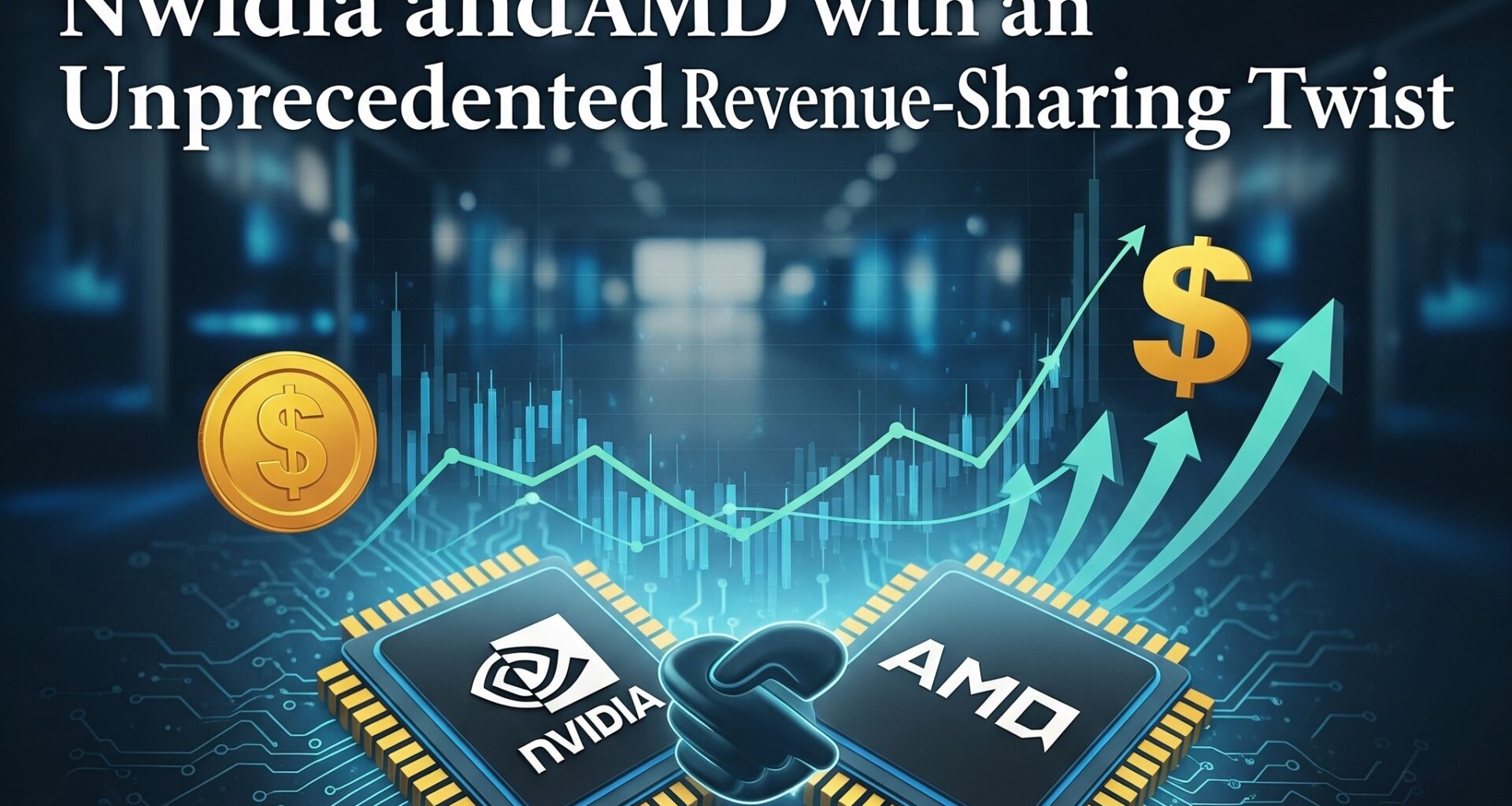

In a dramatic policy U-turn, the United States has cleared Nvidia and AMD to resume sales of specialized AI chips to China—reopening one of the world’s most lucrative markets and introducing a first-of-its-kind revenue-sharing deal with the U.S. government.

Get business pricing on tech for your team
- Business-only prices and quantity discounts
- Tax-exempt purchasing
- Multiple users, one account, clear invoices

The reversal marks a sharp departure from the strict export controls imposed in April 2025 under the Trump administration, which halted even “compliant” models such as Nvidia’s H20 and AMD’s MI308. At the time, both companies warned of severe financial fallout: Nvidia projected an $8 billion quarterly revenue loss, while AMD anticipated an $800 million shortfall.
High-level lobbying—including meetings between Nvidia CEO Jensen Huang and President Trump—proved decisive. By July, Washington agreed to fast-track export licenses for both chipmakers. Markets reacted instantly, with Nvidia stock jumping up to 8% and AMD gaining 5% on the news.
But the green light came with an unprecedented condition: both companies must remit 15% of all China AI chip sales to the U.S. Treasury. Analysts believe this is the first instance of American firms being required to share foreign-market revenues as a condition for export licensing—an arrangement the Financial Times described as “direct government involvement in global commercial flows.”
The policy shift is part of a broader thaw in U.S.–China trade relations. In June, Beijing agreed to restart rare earth mineral and magnet exports—critical to U.S. manufacturing—after a year-long freeze. Chinese exports of these materials to the U.S. have since surged by 660%, easing supply chain strains.
While the H20 and MI308 chips are less advanced than top-tier GPUs still barred from export, they provide valuable computational capacity to Chinese AI developers. Industry experts warn that even “watered-down” chips could help China strengthen its AI capabilities, underscoring the fine line between national security and economic opportunity.
For Nvidia and AMD, the deal reopens a market worth billions, while signaling a new era in which trade policy, industrial strategy, and national security are deeply intertwined. The revenue-sharing requirement could set a precedent for future high-tech exports—blurring the boundaries between corporate profits and geopolitical strategy.
As an affiliate, we earn on qualifying purchases.
As an affiliate, we earn on qualifying purchases.
As an affiliate, we earn on qualifying purchases.
high performance AI computing hardware
As an affiliate, we earn on qualifying purchases.
As an affiliate, we earn on qualifying purchases.
Halloween Picks
halloween
As an affiliate, we earn on qualifying purchases.